The legality of possessing realistic imitation firearms in open areas is a complex issue governed by a patchwork of federal, state, and local regulations. These regulations often concern the visibility and manner of transport of items resembling actual weapons. Failure to comply with these regulations may result in confiscation, fines, or even legal charges. For instance, some jurisdictions require that such items be transported in a closed container, while others prohibit their display in any public setting.
Understanding these regulations is crucial for responsible ownership and use. The ability to distinguish between legally permissible activities and unlawful conduct protects individuals from inadvertent legal ramifications. Furthermore, knowledge of these rules fosters a safer environment for the general public, as it mitigates the potential for misinterpretation and alarm. Historically, increases in reported incidents involving imitation firearms have prompted stricter legislative responses, highlighting the continuous need for awareness and adherence to the law.
This article will delve into specific legal frameworks, permissible usage scenarios, and recommended safety practices pertaining to handling and transporting these items. It will also examine the factors that determine legality across different regions and provide guidance on how to remain compliant with applicable laws.
Guidance on the Legality of Possessing Airsoft Guns in Public Spaces
Adherence to the following guidance is paramount for responsible handling and lawful possession of airsoft guns in public areas. Understanding and implementing these practices minimizes the risk of legal complications and promotes public safety.
Tip 1: Secure Transport: Always transport airsoft guns in a closed case or container. This practice minimizes the risk of misidentification and avoids alarming the public.
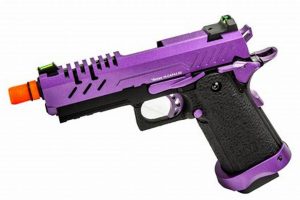
Tip 2: Orange Tip Integrity: Ensure the orange tip, indicating that the item is not a real firearm, is securely affixed and not obscured. This visual cue is critical for distinguishing the device from an actual weapon.
Tip 3: Local Ordinance Review: Thoroughly research and understand local ordinances pertaining to imitation firearms. Regulations vary significantly between jurisdictions, and compliance is mandatory.
Tip 4: Avoid Brandishing: Never brandish or display an airsoft gun in a manner that could be perceived as threatening. Such actions can lead to immediate intervention by law enforcement.
Tip 5: Designated Areas Only: Limit usage to designated areas, such as sanctioned airsoft fields or private property, where use is explicitly permitted and regulated.
Tip 6: Parental Supervision: If minors are involved, ensure constant and direct parental supervision. Educate them on safe handling practices and the legal ramifications of misuse.
Tip 7: Documentation: Retain proof of purchase and any relevant documentation related to the airsoft gun. This documentation can be useful in clarifying ownership and intent if questioned.
These guidelines emphasize responsible ownership and lawful conduct. By diligently following these recommendations, individuals minimize the risk of legal repercussions and contribute to a safer community environment. Prioritizing caution and awareness is paramount when handling items that resemble real firearms.
The following sections of this article will address specific legal frameworks and address hypothetical scenarios to further clarify the intricacies of the regulations.
1. Local Ordinances

Local ordinances represent a critical layer of regulation directly impacting the legality of possessing airsoft guns in public. These ordinances, enacted at the municipal or county level, often introduce restrictions beyond those imposed by state or federal laws. Understanding and adhering to these local rules is paramount to avoid legal repercussions.
- Definition of “Public”
Local ordinances frequently define “public” space differently. What constitutes a public area under one municipality’s code may not be considered as such in another. For example, a city park may be explicitly designated as a public space where airsoft guns are prohibited, while a privately-owned but publicly accessible shopping center might have its own, distinct rules. These definitions directly influence where possession is permissible.
- Permit Requirements
Certain localities require permits for the possession of items resembling firearms, including airsoft guns, even if they are otherwise legal under state law. These permit requirements can involve background checks, registration fees, and mandatory safety courses. Failure to obtain the necessary permit can result in fines, confiscation of the airsoft gun, or even criminal charges.
- Transportation Restrictions
Local ordinances often specify how an airsoft gun must be transported to be considered legally compliant. These restrictions may mandate that the airsoft gun be stored in a locked case, unloaded, and out of sight. Some ordinances may even prohibit the transportation of an airsoft gun through certain areas, such as school zones, regardless of whether it is properly stored.
- Discharge Restrictions
While some areas may permit the possession of airsoft guns, local ordinances invariably restrict their discharge in public areas. These restrictions aim to prevent public alarm, property damage, and potential injuries. Violating these discharge restrictions can lead to significant penalties, including fines, arrest, and confiscation of the airsoft gun.
The diversity of local ordinances necessitates thorough research prior to possessing or transporting an airsoft gun in any given location. Websites of municipal and county governments often provide access to these ordinances, and contacting local law enforcement agencies can offer further clarification. Compliance with these local rules is crucial for ensuring that the possession remains within the bounds of the law.
2. Visible Orange Tip

The presence of a visible orange tip on an airsoft gun serves as a crucial visual indicator distinguishing it from a real firearm. This distinction plays a significant role in determining whether an individual can legally possess the airsoft gun in a public setting.
- Federal Regulation Compliance
United States federal law mandates that airsoft guns, among other imitation firearms, be marked with a minimum 6mm wide blaze orange tip. This requirement is intended to prevent misidentification and potential misuse. Failure to comply with this federal regulation directly impacts the legality of possessing the airsoft gun in a public setting, potentially leading to confiscation and legal penalties.
- Reduced Risk of Misinterpretation
A clearly visible orange tip significantly reduces the likelihood that law enforcement officers or members of the public will mistake the airsoft gun for a real firearm. This diminished risk of misinterpretation is paramount in public areas, where the presence of a perceived weapon can cause alarm and trigger a law enforcement response. The absence or obscuring of the orange tip increases the chances of such misidentification, potentially resulting in serious legal consequences.
- State and Local Law Enforcement
While federal law mandates the orange tip, state and local law enforcement agencies often rely on this visual cue to assess the potential threat posed by an individual possessing what appears to be a firearm. The presence of the orange tip can influence how law enforcement responds to the situation, potentially avoiding escalation. Conversely, the absence of the orange tip may lead to a more assertive and potentially confrontational response from law enforcement.
- Liability Considerations
Possessing an airsoft gun without a visible orange tip can increase an individual’s liability in the event of an incident. If someone were to mistake the airsoft gun for a real firearm and take defensive action, the individual possessing the unmarked airsoft gun could be held liable for damages or injuries. Maintaining the visible orange tip demonstrates a commitment to responsible ownership and reduces the risk of such liability.
In conclusion, the visible orange tip is not merely a cosmetic feature but a critical element determining the legality and safety of possessing an airsoft gun in public. Its presence mitigates the risk of misidentification, influences law enforcement response, and reduces potential liability, thereby increasing the likelihood that possession will be deemed lawful and responsible.
3. Secure Transportation
Secure transportation constitutes a pivotal determinant in the legality of possessing an airsoft gun in public. The manner in which such items are transported directly impacts public perception and reduces the potential for misinterpretation, thereby influencing whether its presence is deemed permissible under applicable laws and regulations. Improper or negligent transport can lead to the immediate conclusion that the item is being handled irresponsibly, resulting in legal intervention, even if possession itself is otherwise legal.
For example, transporting an airsoft gun in a locked case, out of sight, and unloaded minimizes the likelihood of alarming the public or creating the impression of a threat. Conversely, openly carrying an airsoft gun, even with an orange tip, can be perceived as menacing, regardless of its non-lethal nature. Jurisdictions often impose specific requirements for transportation, mandating closed containers, trigger locks, and separate storage of ammunition. Failure to adhere to these requirements, even with a valid permit for possession, can result in fines, confiscation, or even arrest. Court cases involving individuals charged with weapons violations often hinge on the circumstances surrounding the transport of the item in question, highlighting the practical significance of this aspect.
In summation, secure transportation is not merely a matter of personal preference but a legal imperative. It reduces the potential for public alarm, mitigates the risk of misidentification, and demonstrates a commitment to responsible ownership. Adherence to established guidelines regarding the secure transport of airsoft guns is critical for ensuring lawful possession in public spaces and avoids potential legal ramifications. Challenges in this area arise from the patchwork of differing regulations across jurisdictions, necessitating diligent research and compliance with the specific requirements of each locality.
4. Brandishing Prohibited

The prohibition against brandishing is intrinsically linked to the legal permissibility of possessing an airsoft gun in public. Brandishing, defined as the act of displaying an item resembling a firearm in a threatening or intimidating manner, directly negates any potential legality afforded to mere possession. Even in jurisdictions where open or concealed carry of airsoft guns may be permitted under specific circumstances, brandishing invariably constitutes a violation of the law, subjecting the individual to arrest and prosecution. The cause-and-effect relationship is direct: legal possession is nullified by the act of brandishing. For instance, an individual legally transporting a cased airsoft gun to a designated field could face criminal charges if they remove the gun from its case and display it in a manner reasonably perceived as threatening. This underscores the critical importance of responsible handling; the intent behind the display, rather than simply the act of possessing the item, determines its legality.
The practical significance of this understanding extends to law enforcement interactions. Officers responding to reports of a possible weapon being brandished will assess the situation based on observable actions and perceived intent. Even if the item is later identified as an airsoft gun, the initial perception of threat created by brandishing can lead to the use of force and subsequent legal action. Furthermore, civil liability may arise from the distress caused by brandishing, regardless of whether criminal charges are pursued. Examples include lawsuits for emotional distress or negligent infliction of psychological harm stemming from the fear induced by the display of what appeared to be a real firearm.
In summary, the prohibition against brandishing serves as a crucial safeguard against the misuse of items resembling firearms. It is not simply an addendum to the regulations governing possession but rather a fundamental principle that dictates the boundaries of lawful conduct. The challenges lie in the subjective nature of what constitutes “threatening” behavior, requiring individuals to exercise caution and awareness in all public interactions involving airsoft guns, regardless of their legal status in that jurisdiction. Understanding this interplay between possession and brandishing is paramount for responsible and lawful conduct.
5. Designated Areas
The concept of designated areas is inextricably linked to the question of possessing airsoft guns in public. These areas, explicitly sanctioned for airsoft activities, represent exceptions to the general restrictions often imposed on imitation firearms in public settings. The absence of such a designated area invariably leads to the prohibition of airsoft gun use, and potentially even possession, within a given locale. This connection is causal: the designation creates a legal space for the activity, while its absence precludes it. The existence and adherence to rules within designated airsoft fields allow for safe and regulated engagement, significantly reducing the potential for public alarm or misinterpretation, which are primary concerns in unrestricted public environments.
Real-world examples illustrate this connection. Sanctioned airsoft fields, often located on private property or in specially zoned public spaces, operate under stringent safety guidelines and insurance policies. Participants are required to adhere to rules regarding protective gear, velocity limits, and acceptable conduct. These designated areas provide a controlled environment where the risks associated with airsoft are mitigated. Conversely, attempts to use airsoft guns outside these designated areas, such as in parks, residential neighborhoods, or on public streets, invariably result in intervention by law enforcement and potential legal repercussions. These instances highlight the practical significance of designated areas in defining the legal boundaries of airsoft activity.
In conclusion, the legal permissibility of possessing airsoft guns in public depends heavily on the presence of designated areas. These areas provide a controlled environment that minimizes risk and allows for responsible engagement in the activity. Understanding the limitations imposed outside these designated areas is critical for avoiding legal complications. The challenge lies in ensuring awareness of local regulations and the specific boundaries of designated areas, as these can vary considerably from one jurisdiction to another. The relationship is clear: designated areas create an exception; their absence enforces the prohibition.
6. Parental Supervision

The presence or absence of parental supervision directly affects the legality and responsible handling of airsoft guns by minors in public areas. The ability of a minor to possess and use an airsoft gun lawfully is contingent upon adequate adult oversight, as legal frameworks often place responsibility for the minor’s actions directly on the parent or guardian. Without responsible parental supervision, even otherwise permissible airsoft gun activities can quickly transition into illegal or dangerous situations, potentially leading to legal penalties for both the minor and the supervising adult. The causal relationship is undeniable: supervision promotes responsible use, while its absence increases the risk of misuse and legal consequences.
The practical significance of parental supervision extends beyond legal compliance to encompass safety and ethical considerations. Supervised usage typically involves instruction on safe handling practices, adherence to local regulations, and understanding the potential dangers associated with airsoft guns. For instance, a parent actively involved in teaching a child about responsible gun handling, proper storage, and the importance of not brandishing the airsoft gun in public contributes significantly to ensuring the child’s actions remain within the bounds of the law and pose no threat to public safety. Real-world examples showcase instances where unsupervised minors have misused airsoft guns, resulting in property damage, injuries, and alarm among the public, leading to legal intervention and highlighting the critical role of parental involvement in preventing such occurrences.
In conclusion, parental supervision is not merely a suggested guideline but a crucial component in determining the legality and responsible execution of airsoft gun activities involving minors in public. The lack of adequate supervision amplifies the risk of legal violations, safety hazards, and ethical breaches. The challenges involve enforcing consistent standards of supervision and ensuring parents are fully aware of their responsibilities under the law. Prioritizing robust parental involvement is paramount for ensuring the safe and lawful use of airsoft guns by minors within public spaces.
7. Proof of Purchase
The possession of documentation evidencing lawful acquisition directly influences the ability to demonstrate compliance with regulations pertaining to airsoft guns in public areas. While possessing documentation alone does not automatically legalize otherwise prohibited conduct, its absence can raise suspicion and impede the ability to establish legitimate ownership. The capacity to furnish proof of purchase, such as a receipt or bill of sale, serves as a key element in substantiating a claim of legal ownership, particularly when challenged by law enforcement or questioned by concerned citizens. The cause-and-effect relationship is evident: providing credible documentation can mitigate misunderstandings, while lacking such evidence can escalate scrutiny and potential legal intervention.
For example, an individual transporting an airsoft gun in a manner consistent with local ordinances may still be questioned by law enforcement. If that individual can readily produce a receipt demonstrating the item was purchased legally from a recognized retailer, the interaction is more likely to be resolved quickly and favorably. Conversely, if no such documentation is available, officers may conduct further investigation to determine the origin and legality of the item, potentially leading to delays, confiscation, or even charges. Real-world incidents have shown instances where the absence of proof of purchase has led to prolonged detentions and legal battles, highlighting the practical significance of maintaining accurate records of ownership. The ability to demonstrate that the item was not stolen or illegally modified relies heavily on the presentation of corroborating evidence.
In conclusion, the possession of proof of purchase, while not a guarantee of legality, acts as a critical supporting element in establishing lawful ownership and facilitating compliance with regulations governing airsoft guns in public. The challenges involve maintaining readily accessible records and understanding the specific documentation requirements within different jurisdictions. The connection underscores the importance of responsible ownership and proactively addressing potential challenges to legitimacy. Proof of purchase, therefore, is not merely a formality but a component of responsible and potentially lawful possession.
Frequently Asked Questions Regarding Airsoft Guns in Public
The following addresses common inquiries concerning the legal status of imitation firearms in public settings. It is intended for informational purposes and should not substitute for professional legal advice.
Question 1: What factors determine if it is permissible to possess an airsoft gun in a public area?
The legality hinges on adherence to federal, state, and local regulations. Key factors include the presence of a visible orange tip, secure transportation in a closed container, compliance with local ordinances regarding possession and discharge, and the absence of any intent to brandish or threaten. Laws vary significantly, so comprehensive research is essential.
Question 2: Is transporting an airsoft gun to a designated playing field the same as openly carrying it in public?
No. Transport to a designated field typically requires the airsoft gun to be stored in a closed case or container and unloaded. Openly carrying the airsoft gun, even with an orange tip, can be construed as brandishing, potentially resulting in legal action, regardless of intent.
Question 3: Does federal law supersede state and local laws regarding airsoft guns?
Federal law establishes minimum standards, such as the orange tip requirement. However, state and local jurisdictions retain the authority to enact more restrictive regulations. Compliance with all applicable laws is mandatory.
Question 4: If a minor is caught with an airsoft gun in public, who is held responsible?
Responsibility typically falls on the minor’s parents or legal guardians. Many jurisdictions have laws holding adults accountable for the actions of their children, particularly when those actions involve items that resemble firearms.
Question 5: Is a permit or license required to own or possess an airsoft gun?
Permit or license requirements vary greatly depending on location. Some jurisdictions mandate permits for all imitation firearms, while others only require them for specific types or uses. Thoroughly researching local ordinances is crucial to determine whether a permit is necessary.
Question 6: What are the potential consequences of violating laws related to airsoft guns in public?
Consequences range from fines and confiscation of the airsoft gun to criminal charges, including misdemeanors or felonies. The severity depends on the specific violation, applicable laws, and the individual’s prior criminal history.
These questions and answers offer a foundational understanding of the legal landscape. Individual circumstances may warrant further investigation and consultation with legal counsel.
The next section will explore specific hypothetical scenarios to illustrate the application of these principles.
Airsoft Guns in Public
The legality surrounding possession is a multifaceted issue, dependent on a complex interplay of federal, state, and local regulations. Key determinants include adherence to the orange tip mandate, secure transportation protocols, the absence of brandishing, and compliance with jurisdictional-specific ordinances. Furthermore, parental supervision plays a crucial role when minors are involved, and the ability to provide proof of purchase can significantly influence the outcome of any legal inquiry. Failure to comply with even one aspect of these interconnected stipulations can result in legal penalties, ranging from fines to criminal charges. Ignorance of the law offers no defense.
The responsibility for understanding and abiding by these regulations rests solely with the individual. Lawmakers continually re-evaluate imitation firearm regulations in response to emerging safety concerns and public perception. Therefore, continuous vigilance and proactive research are essential for responsible ownership and lawful conduct. Prudent action dictates the adherence to all regulations.