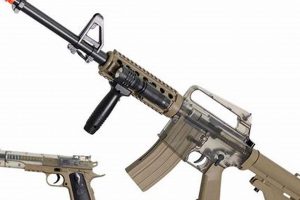
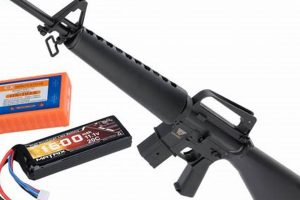
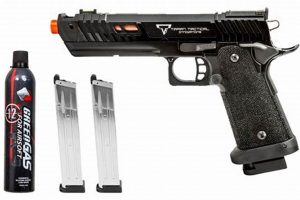
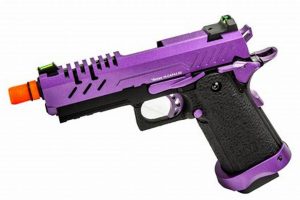
The act of transporting a replica firearm designed to fire non-metallic projectiles (specifically, an airsoft gun) within open or accessible areas raises significant legal and safety concerns. The classification of these devices varies considerably across jurisdictions, influencing the permissibility of their carriage in view of the general public. This assessment frequently hinges on whether the device is deemed a toy, an imitation firearm, or a regulated weapon.
Understanding the regulations surrounding replica firearm transportation is paramount for several reasons. Firstly, misinterpreting local ordinances could result in legal repercussions, ranging from fines to confiscation of the device. Secondly, the visible presence of what appears to be a real firearm can incite fear or alarm, potentially leading to police intervention or even dangerous confrontations. Historically, the lack of clear distinction between real and replica firearms has contributed to accidental shootings and escalated conflicts.
Therefore, a thorough investigation into the legal framework governing imitation firearms, coupled with practical guidance on safe transportation practices and awareness of potential public perception, becomes essential. This necessitates examining relevant statutes, case law, and best practices for responsible ownership and transport to mitigate risks and ensure compliance.
Guidelines for Airsoft Gun Transport in Public Spaces
Navigating the complexities of transporting an airsoft gun in public requires careful consideration and adherence to established best practices. The following guidelines aim to provide clarity and promote responsible conduct when carrying such devices.
Tip 1: Familiarize Yourself with Local Laws: Regulations regarding replica firearms vary significantly. Prior to transporting an airsoft gun, consult municipal ordinances, state statutes, and relevant federal laws to ascertain specific restrictions or requirements in the intended area of transport. Contacting local law enforcement or legal counsel can provide further clarification.
Tip 2: Utilize a Suitable Carrying Case: The airsoft gun should be transported in a closed, opaque container or bag. This serves to conceal the item from public view, mitigating the potential for alarm or misidentification as a real firearm. Select a case that is appropriately sized and designed to securely hold the device.
Tip 3: Transport Airsoft Guns Unloaded: Ensure the airsoft gun is completely unloaded, with the magazine removed and any power source (battery or gas canister) disconnected. This preventative measure minimizes the risk of accidental discharge and reinforces responsible handling procedures.
Tip 4: Store Ammunition Separately: BBs or other projectiles should be transported in a separate container, distinct from the airsoft gun itself. This further reduces the potential for misuse or the perception of immediate readiness to fire.
Tip 5: Avoid Brandishing or Displaying the Airsoft Gun: Under no circumstances should the airsoft gun be brandished, displayed, or handled in a manner that could be perceived as threatening or intimidating. This includes avoiding open carry or any action that might lead others to believe it is a real firearm.
Tip 6: Travel Directly to and from Designated Locations: Limit transportation to direct routes between home, designated airsoft fields, or repair facilities. Avoid unnecessary detours or public spaces where the presence of a replica firearm could cause undue concern.
Tip 7: Carry Documentation: When feasible, carry documentation proving ownership of the airsoft gun and membership in a recognized airsoft organization or club. This can assist in clarifying the purpose of transportation should the device be questioned by law enforcement or concerned citizens.
Adhering to these guidelines not only promotes legal compliance but also fosters a culture of responsibility and respect within the airsoft community. By prioritizing safety and demonstrating awareness of public perception, individuals can contribute to a more positive understanding of airsoft as a recreational activity.
These tips provide a foundation for responsible airsoft gun transportation. The subsequent section will delve into the potential legal ramifications of non-compliance.
1. Legality

The “Legality” surrounding the carriage of airsoft guns in public spaces forms the foundation for responsible ownership and activity participation. Understanding the relevant laws and regulations is paramount to avoiding legal repercussions and ensuring public safety. The permissibility of carrying such devices is not uniform and varies significantly depending on the jurisdiction.
- State and Municipal Laws
State laws often define airsoft guns as either toys, imitation firearms, or regulated weapons. Municipal ordinances may further restrict or regulate their possession, transportation, or use within city limits. For example, some states may allow the sale and possession of airsoft guns but prohibit their open carry in public. Failure to comply with these specific regulations can result in fines, confiscation of the device, or even criminal charges. The burden rests on the individual to ascertain and abide by the laws applicable to their location.
- Federal Regulations
While federal laws primarily address the markings and importation of imitation firearms, they also indirectly influence their status. The absence of an orange tip, as mandated by federal law for the importation and sale of airsoft guns, can lead law enforcement to misidentify them as real firearms. This misidentification may result in a more stringent legal response, regardless of state or municipal laws. Thus, maintaining the federally mandated markings is crucial.
- Case Law and Legal Precedents
Judicial decisions regarding imitation firearms, while not always specific to airsoft guns, provide valuable insight into how courts interpret and apply relevant statutes. Case law can clarify ambiguities in the law and establish precedents that influence future legal interpretations. For example, a court ruling that classifies an airsoft gun as a dangerous weapon under specific circumstances can significantly impact its legal status within that jurisdiction.
- Transportation Regulations
Many jurisdictions impose specific requirements for transporting airsoft guns. These regulations often mandate that the device be unloaded, stored in a closed container, and transported separately from ammunition. Failure to adhere to these transportation guidelines can result in legal penalties, even if possessing the airsoft gun is otherwise legal. The underlying rationale is to minimize the risk of accidental discharge and prevent the perception of a readily accessible weapon.
The intersection of these legal facets dictates the overarching framework governing the carriage of airsoft guns in public. Ignorance of these laws does not constitute a valid defense. Proactive research and adherence to all applicable regulations are essential for responsible ownership and lawful participation in airsoft activities. The variability in legal interpretations underscores the importance of seeking local legal counsel for clarification when ambiguities arise.
2. Concealment
The practice of concealing an airsoft gun during public transport is directly linked to its legality and perceived safety. Jurisdictions that permit the transport of airsoft guns often stipulate that the device must be concealed to minimize public alarm and prevent misidentification as a real firearm. The cause-and-effect relationship is clear: open carry of an airsoft gun, especially one closely resembling a real firearm, can cause fear, trigger police intervention, or even result in an escalated confrontation. Conversely, proper concealment mitigates these risks, allowing for legal and safe transport. For example, carrying an airsoft rifle in a dedicated, opaque rifle case significantly reduces the likelihood of causing public disturbance compared to carrying it openly. Concealment, therefore, is a critical component of legally and responsibly transporting airsoft guns.
Beyond legality, concealment addresses the practical concern of public perception. Many individuals cannot readily differentiate between an airsoft gun and a real firearm, particularly at a distance or under stressful circumstances. Consequently, the sight of what appears to be a weapon can induce panic and potentially lead to unnecessary calls to law enforcement. Proper concealment demonstrates a responsible approach, acknowledging the potential for misinterpretation and taking proactive steps to avoid causing alarm. This is exemplified by adhering to local regulations requiring airsoft guns to be transported in closed cases or bags, effectively removing the visual stimulus that could trigger a negative reaction. Failure to conceal increases the likelihood of misidentification, potentially subjecting the carrier to heightened scrutiny and legal complications.
In summary, the act of concealing an airsoft gun during public transport is not merely a matter of convenience but a legal and ethical imperative. It directly influences the legality of the activity, mitigates the risk of public alarm and misidentification, and reflects a commitment to responsible gun ownership. While regulations regarding concealment may vary, the underlying principle of minimizing public disturbance and preventing the perception of a threat remains constant. Understanding and adhering to these principles is paramount for those who transport airsoft guns in public spaces, ensuring both personal safety and the well-being of the community.
3. Transportation
The act of transporting an airsoft gun directly influences whether one is legally permitted to carry it in public. Transportation, in this context, transcends mere physical movement; it encompasses the manner in which the device is carried, the route taken, and the destination intended. Regulations frequently stipulate specific conditions for permissible transportation, such as requiring the airsoft gun to be unloaded, encased in a closed container, and kept out of plain sight. Compliance with these transportation guidelines is often a prerequisite for legally carrying the airsoft gun in a public space. Failure to adhere to these rules can transform lawful ownership into an illegal act, subjecting the individual to potential fines, confiscation, or even criminal charges. For example, openly displaying an airsoft rifle while walking down a public street, even if the individual legally owns the device, could constitute a violation of local ordinances regarding safe and responsible transportation.
Transportation also serves as a critical control point for mitigating potential risks associated with imitation firearms. By establishing clear protocols for how airsoft guns are transported, law enforcement and the public can be assured that these devices are handled responsibly and are not immediately accessible for unlawful purposes. This includes requirements to store magazines separately, disconnect batteries, and generally render the airsoft gun inoperable during transport. Consider the scenario of transporting an airsoft pistol to a designated field for a scheduled event. Encasing it in a locked container, storing the magazine in a separate compartment, and transporting the package directly from the individual’s residence to the field ensures compliance and minimizes potential for alarm or misuse along the way. Deviation from such best practices can easily erode the permissibility of carrying the device, even if the individual’s intent is purely recreational.
In summary, the safe and legal transportation of an airsoft gun is not merely an ancillary concern but a core component of whether one can permissibly carry it in public. Compliance with transportation regulations, including those pertaining to concealment, operational status, and intended destination, is essential for avoiding legal repercussions and fostering a responsible image of the airsoft community. Challenges persist in maintaining consistent awareness of varying local ordinances, necessitating proactive research and diligent adherence to established best practices for transportation. These practices directly contribute to public safety and preserve the legitimacy of airsoft as a recreational activity.
4. Perception
Public perception is a critical determinant in assessing the ramifications of openly carrying devices resembling firearms. The potential for misinterpretation and alarm necessitates a careful evaluation of how these devices are viewed by the general populace, influencing both legal considerations and societal responses.
- Misidentification and Fear
Airsoft guns, particularly those closely resembling real firearms, are often indistinguishable to the untrained eye. This similarity can readily lead to misidentification, causing fear, anxiety, and the perception of an imminent threat among onlookers. This emotional response can trigger calls to law enforcement, potentially resulting in escalated situations, even if the carrier is acting within the bounds of the law. The immediacy of the perceived threat often outweighs the reality of the device’s non-lethal nature.
- Influence on Legal Interpretation
Public perception significantly impacts the interpretation and enforcement of laws pertaining to imitation firearms. If a significant portion of the population perceives airsoft guns as dangerous or inherently threatening, lawmakers may be more inclined to enact stricter regulations governing their possession and transport. Furthermore, law enforcement officers, responding to perceived threats, may exercise a higher degree of caution and employ more restrictive measures when encountering individuals carrying these devices.
- Community Relations and Social Impact
The perception of airsoft enthusiasts and the broader airsoft community is directly affected by how responsibly airsoft guns are handled in public. Negative incidents involving the careless or inappropriate display of these devices can damage the reputation of the entire community, potentially leading to increased scrutiny and restrictions on airsoft activities. Conversely, demonstrating responsible ownership and a commitment to safety can foster positive relationships with the public and alleviate concerns about the potential misuse of airsoft guns.
- Media Portrayal and Public Discourse
Media coverage of incidents involving airsoft guns, whether positive or negative, significantly shapes public perception. Sensationalized reporting of events involving replica firearms can amplify fears and reinforce negative stereotypes, while balanced and informative reporting can promote understanding and dispel misconceptions. The ongoing public discourse surrounding airsoft guns, influenced by media portrayal and personal experiences, ultimately determines the level of acceptance and tolerance within society.
In conclusion, public perception forms a crucial lens through which the legality and social acceptability of openly carrying airsoft guns are evaluated. The potential for misidentification, the influence on legal interpretations, the impact on community relations, and the role of media portrayal all contribute to the complex interplay between perception and the responsible handling of imitation firearms in public spaces. A proactive effort to educate the public, promote safe practices, and address concerns is essential for fostering a more informed and tolerant understanding of airsoft as a legitimate recreational activity.
5. Responsibility

The permissibility of transporting airsoft guns in public fundamentally hinges upon a demonstration of responsible ownership and handling. This responsibility extends beyond mere legal compliance; it encompasses an ethical obligation to prioritize public safety and mitigate potential risks associated with devices resembling real firearms. The cause-and-effect relationship is clear: responsible actions minimize the likelihood of accidents, misinterpretations, and legal complications, thereby increasing the potential for continued permissibility. Conversely, irresponsible behavior can lead to restrictions, bans, and a negative perception of the airsoft community as a whole. The importance of responsible practices as a component of transporting airsoft guns cannot be overstated; it is the cornerstone upon which the privilege of owning and using these devices rests. A real-life example illustrating this point is the implementation of mandatory safety courses and certification programs by airsoft organizations in response to incidents involving negligent handling. Such initiatives aim to cultivate a culture of responsibility and accountability among airsoft enthusiasts, enhancing public safety and preserving the legitimacy of the sport.
Practical significance of this understanding lies in its direct impact on individual freedoms and the overall viability of airsoft as a recreational activity. Responsible practices, such as transporting airsoft guns unloaded and concealed, adhering to designated transportation routes, and refraining from brandishing the devices in public, demonstrably reduce the risk of accidents, misidentification by law enforcement, and public alarm. These actions, in turn, foster a more tolerant and accepting environment, allowing airsoft enthusiasts to pursue their hobby without undue restrictions or negative stereotypes. Furthermore, responsible behavior promotes positive interactions with law enforcement and the general public, building trust and reinforcing the perception of airsoft as a safe and responsible activity.
In conclusion, the privilege of transporting airsoft guns in public is inextricably linked to the demonstration of responsible ownership and handling. While legal compliance provides a framework for permissible conduct, the ethical obligation to prioritize public safety and mitigate potential risks is paramount. Challenges persist in ensuring consistent adherence to responsible practices across the airsoft community, necessitating ongoing education, awareness campaigns, and self-regulation. The ultimate success of airsoft as a recreational activity hinges upon the collective commitment to responsible behavior, fostering a safe and positive environment for enthusiasts and the public alike.
6. Local Ordinances

The permissibility of transporting airsoft guns in public is heavily influenced by local ordinances. These ordinances, enacted at the municipal or county level, often establish specific restrictions on the possession, transportation, and use of imitation firearms. A direct cause-and-effect relationship exists: the presence or absence of restrictive local ordinances directly determines whether an individual can legally carry an airsoft gun in a particular public area. These regulations can vary considerably, ranging from outright prohibitions to conditional allowances based on factors such as concealment, time of day, or specific location. Therefore, understanding the relevant local ordinances is a critical prerequisite for anyone considering transporting an airsoft gun in public. A prime example is the differing regulations across neighboring cities, where one municipality may allow concealed transport in a closed case, while an adjacent city prohibits any public display of what could be mistaken for a firearm, regardless of concealment. The practical effect is that the simple act of crossing a city line can transform a legal activity into a violation of local law.
The significance of local ordinances as a component of the broader issue cannot be overstated. While state and federal laws may provide a general framework, local regulations frequently provide the most specific and enforceable rules. They often address concerns unique to the local community, such as high population density, proximity to schools, or a history of incidents involving imitation firearms. Local ordinances frequently clarify ambiguities present in higher-level regulations, providing concrete guidance on what constitutes permissible conduct. A practical application of this understanding involves actively researching and consulting local government websites or contacting law enforcement agencies to ascertain the precise regulations in effect within a given jurisdiction. Furthermore, airsoft organizations often work with local authorities to develop responsible guidelines and promote compliance with local ordinances.
In summary, local ordinances wield considerable influence over whether the public carriage of airsoft guns is permissible. A lack of awareness of and adherence to these local regulations carries significant legal consequences. The challenge lies in the fact that these ordinances are subject to change and vary considerably across jurisdictions. Consequently, responsible airsoft enthusiasts must prioritize proactive research and remain vigilant in monitoring local government actions to ensure ongoing compliance. The ultimate goal is to promote public safety, maintain positive community relations, and preserve the legitimacy of airsoft as a recreational activity through informed and responsible conduct.
Frequently Asked Questions
This section addresses common inquiries regarding the legality and safe practices related to transporting airsoft guns in public spaces. The following information is intended to provide clarity and guidance, but should not be considered legal advice. Consultation with local legal counsel is recommended for specific situations.
Question 1: What factors determine the legality of carrying an airsoft gun in public?
The legality is contingent upon a combination of federal, state, and local laws. These laws often define airsoft guns as toys, imitation firearms, or weapons, each classification subject to different regulations. Local ordinances frequently specify restrictions on open or concealed carry, transportation methods, and permissible locations.
Question 2: Must an airsoft gun be concealed when transported in public?
Concealment requirements vary by jurisdiction. Many localities mandate that airsoft guns be transported in closed, opaque cases or bags to prevent misidentification and minimize public alarm. Failure to conceal the device may result in legal penalties, even if possession is otherwise lawful.
Question 3: What are the recommended safety precautions when transporting an airsoft gun?
Airsoft guns should be transported unloaded, with magazines removed, and batteries disconnected. Ammunition should be stored separately. Direct routes between home, designated airsoft fields, or repair facilities are advised, avoiding unnecessary detours through public areas.
Question 4: How does public perception influence regulations regarding airsoft guns?
Public perception plays a significant role in shaping legal interpretations and community acceptance. Negative incidents or a prevailing view that airsoft guns are dangerous can lead to stricter regulations. Responsible handling and a commitment to safety are essential for fostering a positive perception and preserving the legitimacy of the activity.
Question 5: Where can precise local ordinances regarding airsoft guns be found?
Local ordinances can typically be accessed through municipal websites, city hall, or by contacting local law enforcement agencies. Airsoft organizations may also provide information on local regulations and guidelines.
Question 6: What are the potential consequences of violating laws related to airsoft guns in public?
Violations can result in fines, confiscation of the airsoft gun, and in some cases, criminal charges. The severity of the consequences depends on the specific offense, the jurisdiction, and any prior history of violations.
In summary, the carriage of airsoft guns in public necessitates a thorough understanding of applicable laws, a commitment to safe practices, and an awareness of public perception. Responsible conduct is essential for ensuring compliance and preserving the ability to participate in airsoft activities.
The following section will provide a concluding overview of the key considerations discussed.
Conclusion
The examination of whether one can carry a airsoft gun in public reveals a complex interplay of legal, social, and ethical considerations. Permissibility is contingent upon adherence to federal, state, and, critically, local ordinances, which dictate the specific restrictions governing the possession, transportation, and use of imitation firearms. These regulations often mandate concealment, prescribe safe handling practices, and prohibit display in certain areas. Ignorance of these stipulations does not absolve individuals of responsibility, underscoring the importance of proactive research and diligent compliance.
Ultimately, the continued allowance of airsoft activities hinges on the responsible conduct of its participants. By prioritizing public safety, demonstrating respect for the law, and fostering a positive perception of the sport, airsoft enthusiasts can ensure its long-term viability. A commitment to education, self-regulation, and community engagement is essential for navigating the evolving legal landscape and mitigating potential risks. The future of airsoft rests on the collective responsibility of its adherents to uphold the highest standards of conduct, promoting a culture of safety and respect that benefits both participants and the wider community.