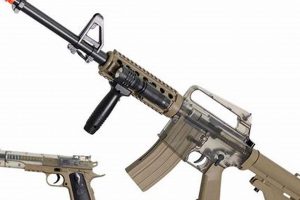
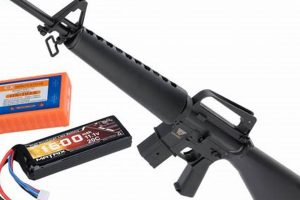
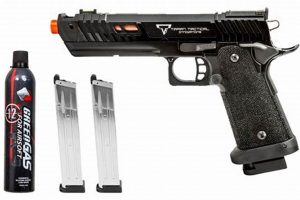
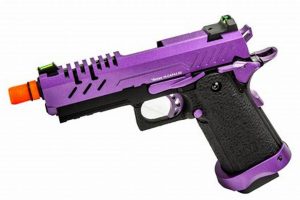
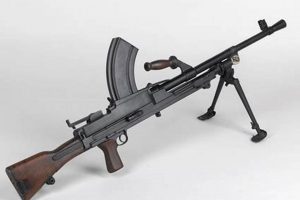
The feasibility of creating projectile-launching toy replicas using additive manufacturing is a topic of considerable interest. It encompasses the design, production, and functionality of these objects using 3D printing technologies. A crucial aspect involves understanding the materials, mechanisms, and potential risks associated with constructing such devices. The final product typically resembles commercially available toy firearms, utilizing compressed gas or springs to propel plastic projectiles.
The appeal of this practice lies in the potential for customization and the relative accessibility of 3D printing technology. Individuals can create replicas tailored to specific needs or preferences, potentially at a lower cost than purchasing commercially manufactured alternatives. The development also carries historical significance, reflecting the increasing sophistication and accessibility of digital fabrication techniques and its evolving impact on various industries, including the toy and hobby markets. However, it also raises concerns regarding safety, regulation, and the potential for misuse of these capabilities.
The subsequent discussion will delve into the materials suitable for creating these replicas, the technical challenges involved in their design and construction, the legal and ethical considerations surrounding their creation and distribution, and the practical limitations affecting their performance and reliability.
Considerations for Additive Manufacturing of Airsoft Replicas
The following provides key considerations for those exploring the construction of airsoft projectile devices using additive manufacturing techniques.
Tip 1: Material Selection: Polymer materials, such as ABS or PLA, are commonly used due to their relative ease of printing. However, consider the mechanical stress involved in firing. Reinforcements or alternative materials like nylon may be necessary for critical components like the firing mechanism and barrel to ensure durability and prevent premature failure.
Tip 2: Design Accuracy: Precise CAD models are crucial. Ensure all dimensions, tolerances, and clearances are accurately represented in the digital design. Inaccurate measurements can lead to malfunctioning components, reduced performance, and potential safety hazards.
Tip 3: Printing Orientation: The orientation of parts during the printing process significantly impacts their strength. Orient parts such that the layers are aligned to resist the forces exerted during operation. For example, print the barrel vertically to maximize its resistance to hoop stress.
Tip 4: Post-Processing: 3D-printed parts may require post-processing to achieve the desired finish and functionality. This includes sanding, filing, and potentially the application of coatings for improved durability and aesthetics. Carefully consider the impact of post-processing on dimensional accuracy.
Tip 5: Safety Mechanisms: Incorporate functional safety mechanisms, such as trigger locks or safety selectors, into the design. These mechanisms are critical for preventing accidental discharge and ensuring responsible use of the replica.
Tip 6: Regulatory Compliance: Research and adhere to all applicable local, state, and federal regulations regarding the manufacturing, possession, and use of airsoft replicas. Failure to comply with these regulations can result in legal consequences.
Tip 7: Internal Component Integration: When designing for compatibility with commercially available airsoft internals (gearboxes, hop-up units, etc.), ensure accurate dimensions and mounting points. Variations in 3D printing can affect the fit and function of these components.
By carefully considering these guidelines, individuals can increase the likelihood of successfully constructing functional and reasonably durable airsoft replicas using additive manufacturing techniques, while prioritizing safety and regulatory compliance.
These considerations form the foundation for a safer and more responsible approach to producing airsoft projectile devices through 3D printing technology.
1. Material properties

The selection of appropriate materials is paramount in determining the success and safety of any attempt to create projectile-launching toy replicas using additive manufacturing. The functionality of such a device fundamentally relies on its ability to withstand repeated mechanical stress. Inadequate material selection directly leads to premature failure, reduced performance, and potential hazards to the user and bystanders. For instance, utilizing a low-impact resistance plastic such as standard PLA for critical components, like the firing mechanism or barrel, will likely result in cracking or shattering under the pressure generated during operation. This, in turn, can cause the device to malfunction and potentially eject fragments with force.
Materials with higher tensile strength, impact resistance, and fatigue endurance, such as ABS, nylon, or reinforced composites, offer improved durability and longevity. Furthermore, material properties affect the air seal and overall efficiency of the toy replica. A porous or deformable material can lead to air leakage, reducing the projectile’s velocity and range. Therefore, understanding the specific requirements of each component and selecting materials accordingly is critical. For example, a polycarbonate hop-up unit, if successfully 3D printed with the appropriate material, could offer superior performance characteristics compared to one made from a less robust polymer.
Ultimately, material properties dictate the operational lifespan and safety profile of a 3D-printed projectile device. Careful consideration of these properties, coupled with appropriate design and manufacturing techniques, is essential for creating a functional and reasonably durable product. Disregarding material science principles not only compromises the replica’s performance but also introduces significant risks, highlighting the inseparable link between material selection and the feasibility of creating such devices.
2. Design Complexity

The intricacy of the design significantly influences the feasibility of creating projectile-launching toy replicas via 3D printing. The complexity dictates the level of precision required, the types of materials that can be used, and the overall structural integrity of the finished product. Overly complex designs may exceed the capabilities of certain 3D printers or result in components that are too fragile for practical use.
- Internal Mechanisms
The design of internal mechanisms, such as gearboxes, pistons, and air compression systems, presents considerable challenges. These components require tight tolerances and durable materials to function reliably. Complex designs with intricate geometries may be difficult to print accurately, leading to malfunctions or reduced performance. For example, replicating the precise angles and smooth surfaces required for efficient air compression in a piston assembly can be challenging, requiring specialized 3D printing techniques and high-resolution printers.
- External Aesthetics and Ergonomics
Replicating the external aesthetics and ergonomics of existing firearm designs adds another layer of complexity. Maintaining accurate proportions, incorporating realistic details, and ensuring comfortable handling require careful attention to detail. Complex curves, intricate textures, and ergonomic features can be difficult to reproduce accurately using 3D printing, potentially resulting in a final product that lacks the visual appeal and user-friendliness of commercially manufactured alternatives.
- Assembly and Integration
The design must account for the assembly and integration of multiple components. Complex designs with numerous interlocking parts require careful planning to ensure proper alignment, secure connections, and ease of assembly. Poorly designed interfaces between components can lead to structural weaknesses and functional problems. The integration of commercially available components, such as springs, screws, and electronic components, further complicates the design process, requiring precise measurements and secure mounting points.
- Structural Integrity and Durability
The overall design must prioritize structural integrity and durability to withstand the forces generated during operation. Complex designs with thin walls, sharp corners, or unsupported sections are prone to failure under stress. Reinforcements, strategically placed ribs, and optimized material distribution are necessary to enhance the strength and resilience of the printed components. The design should also account for the long-term effects of repeated use, such as wear and tear on critical parts.
The level of design complexity directly impacts the resources, expertise, and equipment required to successfully create a functional and durable projectile-launching toy replica using 3D printing. Simpler designs with fewer components and less intricate geometries are generally easier to manufacture and more likely to achieve satisfactory results. However, complex designs offer greater potential for customization, realism, and enhanced performance, provided that the necessary technical capabilities and design considerations are addressed.
3. Mechanical stress
The ability to withstand mechanical stress is a critical factor in determining the feasibility of 3D printing airsoft projectile devices. These devices are subjected to significant forces during operation, including tensile stress from compressed gas or spring mechanisms, impact stress from projectile acceleration, and shear stress within moving components. The extent to which a 3D-printed component can resist these stresses directly affects its durability, performance, and safety. Failure to adequately address mechanical stress considerations results in premature component failure and potential hazards.
Consider the gearbox of an airsoft replica, a complex assembly of gears, pistons, and springs. During operation, these components experience repeated and substantial mechanical stress. A gearbox housing 3D-printed from a material with insufficient tensile strength will likely crack or fracture under load, rendering the device inoperable. Similarly, a piston printed from a brittle material may shatter upon impact with the cylinder head. Real-world examples demonstrate that even seemingly minor design flaws, when coupled with inadequate material properties, can lead to catastrophic failures. The successful design and fabrication of these components necessitates a thorough understanding of stress analysis and material science.
In conclusion, the interplay between mechanical stress and material properties is fundamental to the viability of 3D-printed airsoft projectile devices. Ensuring that components can withstand the stresses inherent in their operation requires careful material selection, optimized design, and rigorous testing. Overlooking these factors not only compromises the functionality and lifespan of the device but also introduces significant safety risks. The practical significance of this understanding lies in the ability to create more durable, reliable, and safe 3D-printed airsoft replicas, while simultaneously mitigating the potential for component failure and user injury.
4. Regulatory framework

The regulatory landscape surrounding the manufacture, possession, and use of airsoft devices significantly impacts the feasibility and legality of creating such items using 3D printing technology. The regulations vary considerably across jurisdictions, and understanding these legal constraints is crucial for anyone considering engaging in this practice.
- Definition and Classification
Many jurisdictions have specific legal definitions for airsoft devices, often differentiating them from actual firearms based on projectile velocity, projectile type, and intended use. These definitions determine which regulations apply. For example, some regions may classify devices exceeding a certain velocity threshold as firearms, subjecting them to stricter controls, including licensing requirements and background checks. The ability to 3D print a device that falls within these definitions carries significant legal ramifications.
- Manufacturing Restrictions
Some jurisdictions restrict the unlicensed manufacture of firearms or items readily convertible into firearms. Although airsoft devices are not typically considered firearms, the ease with which 3D printing allows for the creation of realistic replicas raises concerns among regulators. Certain jurisdictions may impose restrictions on the manufacture of airsoft devices, particularly if they closely resemble real firearms, lack required markings (e.g., orange tips), or are intended for sale. The act of 3D printing such items may be subject to these manufacturing restrictions.
- Possession and Use Regulations
Regulations governing the possession and use of airsoft devices vary widely. Some jurisdictions require individuals to be a certain age to possess or use airsoft devices, while others restrict their use to designated areas, such as licensed airsoft fields. Transporting airsoft devices may also be subject to specific regulations, such as requiring them to be stored in locked containers. The legality of possessing or using a 3D-printed airsoft device is subject to these same regulations. For example, printing a replica that violates local restrictions on publicly displaying or brandishing what appears to be a real firearm could lead to legal consequences.
- Import and Export Controls
International trade in airsoft devices may be subject to import and export controls. These controls are often aimed at preventing the proliferation of illegal firearms and ensuring compliance with international trade agreements. 3D printing allows for the decentralized manufacture of airsoft devices, potentially circumventing these controls. However, individuals attempting to import or export 3D-printed airsoft devices or components may still be subject to these regulations. Customs officials may seize such items if they violate import/export laws or are deemed to pose a security risk.
In summary, the legal landscape surrounding the 3D printing of airsoft devices is complex and multifaceted. Understanding and adhering to applicable regulations is crucial for avoiding legal consequences and ensuring responsible use of this technology. Ignorance of the law is not a defense, and individuals engaging in this activity should proactively seek legal counsel to ensure compliance with all relevant regulations.
5. Manufacturing precision
Manufacturing precision is a paramount consideration when assessing the feasibility of creating airsoft projectile devices through additive manufacturing techniques. The inherent functionality of these devices relies on the accurate reproduction of intricate components with tight tolerances. Deviations from specified dimensions can lead to malfunctions, reduced performance, and potential safety hazards.
- Component Interoperability
Airsoft replicas often incorporate intricate internal mechanisms, such as gearboxes and pneumatic systems, comprised of numerous interconnected components. Manufacturing precision directly influences the interoperability of these components. Inaccurate dimensions can result in misalignment, binding, and increased friction, ultimately reducing the efficiency and reliability of the device. For example, imprecise gear teeth can lead to slippage and premature wear, while improperly sized piston seals can compromise air compression.
- Projectile Trajectory and Accuracy
The precision of the barrel and hop-up unit significantly impacts the projectile’s trajectory and accuracy. Variations in barrel diameter or bore alignment can cause erratic projectile flight, while imperfections in the hop-up bucking can affect backspin and range. Even minor deviations from specified dimensions can have a cumulative effect, resulting in significant inaccuracies at longer distances. Commercial airsoft barrels are often manufactured to very tight tolerances (e.g., 0.01mm) to ensure consistent performance.
- Material Properties and Structural Integrity
Manufacturing precision influences the material properties and structural integrity of 3D-printed components. Inconsistent layer adhesion, voids, or warping can weaken the material and reduce its ability to withstand mechanical stress. This is particularly critical for components subjected to high loads, such as gears, pistons, and firing pins. Precise control over printing parameters, such as temperature, layer height, and print speed, is necessary to ensure optimal material properties and minimize structural defects.
- Replication of Complex Geometries
Many airsoft replicas incorporate complex geometries and intricate details to mimic the appearance and ergonomics of real firearms. Achieving accurate replication of these features requires high-resolution 3D printing and precise control over the manufacturing process. Deviations from specified dimensions can result in a loss of realism and diminished user experience. Furthermore, the precise replication of complex geometries is essential for proper fit and function of external components, such as magazines, sights, and accessories.
These facets highlight the critical role of manufacturing precision in the successful 3D printing of airsoft replicas. While additive manufacturing offers the potential for customized designs and rapid prototyping, it is essential to recognize and address the limitations related to dimensional accuracy and material properties. Achieving the necessary level of precision requires careful selection of 3D printing technology, optimized printing parameters, and rigorous quality control measures. The feasibility of creating functional and reliable airsoft devices through 3D printing is directly dependent on the ability to maintain high standards of manufacturing precision throughout the entire process.
6. Ethical considerations

The proliferation of accessible additive manufacturing technologies brings forth salient ethical considerations, particularly regarding the creation of realistic projectile-launching toy replicas. The potential for misuse, misidentification, and the normalization of weapon-like objects demand careful examination.
- Realistic Appearance and Misidentification
Creating replicas that closely resemble actual firearms presents a significant ethical challenge. These items can be easily mistaken for genuine weapons, potentially leading to dangerous situations involving law enforcement or civilians. The psychological impact of encountering such realistic replicas, especially in public settings, must also be considered. The potential for these items to be used in crimes, either as intimidation tools or as substitutes for actual firearms, raises serious concerns about public safety.
- Normalization of Weaponry
The ease of 3D printing airsoft projectile devices may contribute to the normalization of weaponry, particularly among younger individuals. Increased exposure to weapon-like objects, even in a recreational context, can desensitize individuals to the potential dangers and consequences associated with firearms. This normalization could contribute to a culture of violence or a lack of respect for the seriousness of firearm ownership and use. The long-term societal implications of this normalization are difficult to predict but warrant careful consideration.
- Responsible Use and User Education
The ethical responsibility rests on creators and users to promote safe and responsible handling of 3D-printed airsoft projectile devices. This includes implementing safety features, such as orange tips and clear markings, to distinguish them from real firearms. It also involves educating users about the potential risks associated with these devices and promoting responsible behavior, such as avoiding public display and using appropriate protective gear. Manufacturers and distributors have a moral obligation to provide clear instructions and warnings to minimize the risk of accidents or misuse.
- Regulation and Oversight
The rapid advancement of 3D printing technology necessitates a thoughtful and proactive regulatory approach. The ethical considerations surrounding 3D-printed airsoft projectile devices highlight the need for clear guidelines and regulations to prevent their misuse and ensure public safety. Governments and regulatory bodies must balance the benefits of technological innovation with the need to protect society from potential harm. This requires ongoing dialogue between policymakers, manufacturers, and the public to develop effective and ethically sound regulations.
The creation of projectile-launching toy replicas through additive manufacturing carries ethical responsibilities beyond technical feasibility. Considerations of public safety, responsible use, and the potential for misuse must guide the development, distribution, and regulation of these devices. Ignoring these ethical dimensions could lead to unintended consequences and undermine public trust in this technology.
Frequently Asked Questions
The following addresses common inquiries regarding the viability, safety, and legal implications of constructing airsoft projectile devices using 3D printing technologies. These questions and answers aim to provide clear and concise information based on current understanding and best practices.
Question 1: What materials are suitable for constructing durable airsoft replicas using 3D printing?
High-impact polymers such as ABS, nylon, or reinforced composites are generally recommended. Standard PLA is often inadequate due to its lower tensile strength and impact resistance. Material selection should be based on the specific component and the stresses it will endure during operation.
Question 2: Is it possible to replicate the performance of commercially manufactured airsoft devices using 3D-printed components?
Achieving comparable performance presents significant challenges. Commercial airsoft devices are typically manufactured with tight tolerances and specialized materials that are difficult to replicate using consumer-grade 3D printers. While functional replicas can be created, they may not match the durability, accuracy, and consistency of professionally manufactured products.
Question 3: What are the legal considerations when creating airsoft replicas using 3D printing?
Individuals must adhere to all applicable local, state, and federal regulations regarding the manufacture, possession, and use of airsoft devices. These regulations vary significantly across jurisdictions and may include restrictions on projectile velocity, markings, and public display. Failure to comply with these regulations can result in legal consequences.
Question 4: How can the safety of 3D-printed airsoft replicas be ensured?
Safety can be enhanced by incorporating functional safety mechanisms, such as trigger locks and safety selectors. Additionally, using appropriate protective gear, such as eye protection, and adhering to safe handling practices are crucial. Users should also be aware of the potential risks associated with these devices and avoid pointing them at people or animals.
Question 5: What level of technical expertise is required to successfully create a functional airsoft replica using 3D printing?
A solid understanding of 3D printing technology, CAD modeling, material science, and mechanical engineering is recommended. Creating a reliable and safe device requires careful planning, precise execution, and a willingness to learn from mistakes. Beginner may face a steep learning curve.
Question 6: Is it ethical to create realistic replicas of firearms using 3D printing?
This is a complex issue with varying perspectives. Some argue that it is acceptable for recreational purposes, while others express concerns about the potential for misuse and the desensitization to violence. Ultimately, the ethical implications depend on the individual’s intentions and the responsible use of the technology.
The creation of airsoft replicas through 3D printing presents both opportunities and challenges. While the technology offers the potential for customization and innovation, it also requires careful consideration of safety, legal, and ethical factors.
The subsequent section will explore future trends and potential advancements in the field of 3D-printed airsoft projectile devices.
Conclusion
The preceding analysis demonstrates the feasibility, complexities, and implications associated with creating projectile-launching toy replicas using additive manufacturing. The exploration encompassed material properties, design intricacy, mechanical stress considerations, the relevant regulatory framework, manufacturing precision requirements, and ethical considerations. The ability to fabricate such devices is contingent upon a confluence of technical expertise, responsible design choices, and adherence to legal and ethical guidelines.
The confluence of readily available 3D printing technologies and the desire for customized replicas necessitates a heightened awareness of the potential risks and responsibilities involved. Continued advancements in materials science and manufacturing techniques will likely further refine the capabilities of this technology. Proactive engagement with legal frameworks, coupled with a commitment to responsible innovation, will be critical in shaping the future of this evolving domain. The ethical implications, particularly concerning public safety and the normalization of weapon-like objects, warrant ongoing scrutiny and informed public discourse.