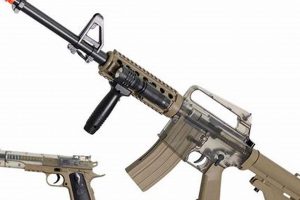
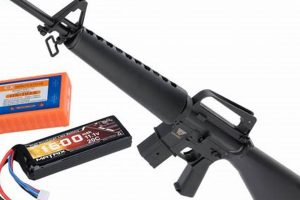
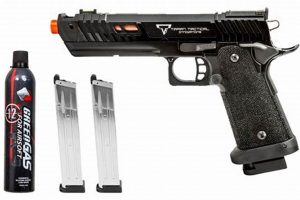
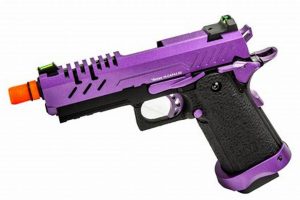
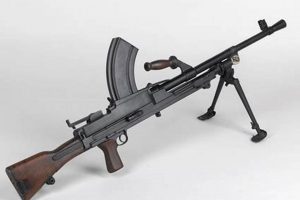
The central question concerns the potential of these replica firearms to inflict fatal injuries on fauna. An airsoft gun discharges projectiles, typically plastic BBs, propelled by compressed gas or a spring mechanism. The impact force and penetrating ability of these projectiles determine the severity of any injury.
Understanding the circumstances under which these devices can cause mortality is crucial for responsible usage and for informing safety regulations. Historically, the proliferation of airsoft has led to increasing concerns about their misuse, including incidents involving wildlife. Assessing the threat posed necessitates a consideration of projectile velocity, target animal size, and point of impact.
Consequently, a detailed examination must address the factors influencing lethality, identify vulnerable species, and explore the legal ramifications associated with using these items against animals. Furthermore, this analysis will consider preventative measures to minimize harm to wildlife.
Safety Measures and Responsible Airsoft Usage
Responsible handling of airsoft devices requires strict adherence to safety protocols, especially concerning wildlife interaction. These guidelines emphasize preventing potential harm and promoting ethical conduct.
Tip 1: Confine Usage to Designated Areas: Limit airsoft activities exclusively to enclosed spaces or authorized fields, preventing accidental projectile discharge into natural habitats.
Tip 2: Exercise Constant Vigilance: Remain acutely aware of surroundings. Regularly scan the area for the presence of animals before, during, and after airsoft activities.
Tip 3: Utilize Brightly Colored BBs: Employ easily visible projectiles. This facilitates easier location and cleanup, minimizing environmental impact and ingestion risk for wildlife.
Tip 4: Enforce Strict “No Shooting at Animals” Policy: Establish and unequivocally enforce a zero-tolerance policy against targeting any animal, irrespective of size or perceived pest status.
Tip 5: Educate Participants: Provide comprehensive pre-activity briefings emphasizing responsible airsoft usage, ethical considerations regarding wildlife, and potential legal ramifications.
Tip 6: Store Devices Securely: When not in use, airsoft devices must be stored securely, inaccessible to unauthorized individuals, preventing potential misuse.
Tip 7: Maintain Devices in Proper Working Order: Regularly inspect and maintain devices to ensure proper functionality and prevent accidental high-velocity discharge, which increases the risk of injury.
Implementing these measures effectively mitigates risks. Prioritizing safety and responsible practices protects wildlife and fosters a more ethical approach to the sport.
Adherence to these precautions not only preserves the welfare of animals, but also safeguards the reputation of the airsoft community as a whole.
1. Projectile Velocity

Projectile velocity stands as a primary determinant in assessing the potential harm inflicted by an airsoft device. Measured in feet per second (FPS), this metric directly reflects the kinetic energy delivered upon impact. A higher velocity translates to a greater force exerted on the target, thereby increasing the likelihood of penetration and subsequent injury. Instances have been documented where high-velocity airsoft projectiles have caused significant trauma, particularly to smaller animals or those with delicate tissue. For example, a small bird struck by a high-velocity BB may suffer broken bones or internal injuries that lead to death, whereas a larger animal might only experience a temporary sting from a lower-velocity impact.
The relationship between projectile velocity and injury severity is not linear; instead, it is contingent upon other factors such as the projectile’s mass, the target’s size, and the point of impact. Nevertheless, it is evident that an increase in velocity amplifies the potential for serious or lethal harm. Regulations governing airsoft devices often specify maximum velocity limits precisely to mitigate risks to both humans and animals. Ignoring these limits significantly elevates the likelihood of causing severe injury.
Understanding the role of projectile velocity is critical for promoting responsible airsoft usage and preventing unintended harm to wildlife. While an airsoft gun may not be designed as a lethal weapon, its potential for causing injury is directly tied to the speed at which its projectiles are launched. Therefore, adhering to velocity restrictions and exercising caution are paramount in ensuring the safety of both participants and the surrounding environment.
2. Animal Size

The size of an animal correlates directly with its vulnerability to injury from airsoft projectiles. Smaller animals, possessing less body mass and thinner skin, are inherently more susceptible to serious or fatal wounds. The impact force of a BB, which may cause only a minor contusion on a larger creature, can penetrate vital organs or fracture bones in a smaller one. For instance, a rodent struck by an airsoft pellet may suffer a lethal internal injury, while a deer might experience superficial discomfort.
Consequently, the potential for lethal outcomes increases significantly when smaller species are involved. Birds, reptiles, and small mammals are particularly at risk. The kinetic energy transferred upon impact is concentrated over a smaller surface area, amplifying the damaging effect. The location of the impact is also critical, as a strike to the head or vital organs, regardless of the animals overall size, can prove fatal. Legal and ethical considerations necessitate an awareness of this size-dependent vulnerability to prevent irresponsible usage.
Understanding the disproportionate impact of airsoft projectiles on smaller animals underscores the importance of stringent safety measures and responsible practices. Recognizing this vulnerability is not merely an academic exercise; it is essential for informing regulations, educating airsoft users, and ultimately mitigating potential harm to wildlife. The disparity in physical size contributes significantly to the equation determining whether discharge results in mere discomfort or mortality.
3. Impact Location

The specific area of the body struck by an airsoft projectile is a critical determinant of the severity of the resultant injury and, consequently, whether it can lead to mortality. Certain anatomical regions, due to their proximity to vital organs or their inherent vulnerability, significantly elevate the risk of death.
- Head and Cranial Region
Impacts to the head pose a substantial threat due to the proximity of the brain and sensory organs. Airsoft projectiles striking the skull can cause concussions, internal bleeding, or damage to the eyes. Blindness or neurological damage are potential outcomes. In smaller animals, even a low-velocity impact to the head can be lethal due to the fragility of the cranial bones.
- Thoracic Cavity
The thoracic cavity houses the heart and lungs, organs essential for respiration and circulation. Penetration of this region by an airsoft projectile can result in pneumothorax (collapsed lung), cardiac contusion, or damage to major blood vessels. The consequences of such injuries can be rapid and fatal, especially in smaller animals where the thoracic cavity offers less protection.
- Abdominal Region
The abdomen contains vital organs such as the liver, spleen, kidneys, and intestines. Injuries to these organs can lead to internal bleeding, infection (peritonitis), and organ failure. Penetrating injuries in the abdominal region often require immediate veterinary intervention to prevent death. Smaller animals are particularly vulnerable, as the relatively large size of their internal organs compared to their body mass increases the likelihood of a critical hit.
- Spinal Column
The spinal column houses the spinal cord, a vital pathway for nerve signals. Damage to the spinal cord can result in paralysis, loss of sensation, and impaired motor function. Severe spinal injuries are often irreversible and can lead to death due to secondary complications, such as respiratory failure or infection. Small animals are at higher risk of sustaining serious spinal injuries from airsoft projectiles due to their relatively small and vulnerable spinal columns.
The location of impact, therefore, profoundly influences the potential for mortality when airsoft devices are used against animals. Injuries to the head, thorax, abdomen, or spine carry a significantly higher risk of death than impacts to less vulnerable areas. Responsible airsoft usage necessitates a thorough understanding of these anatomical vulnerabilities and a commitment to preventing any accidental or intentional harm to wildlife. The consideration of impact location further emphasizes the potential of lethal harm from airsoft devices, even if not designed for violence, when misused.
4. Projectile Type

The material composition, weight, and shape of an airsoft projectile are critical factors influencing its potential to inflict lethal injuries on animals. Standard airsoft BBs are typically constructed from plastic, but variations exist, including heavier biodegradable options and, less commonly, metal or ceramic projectiles. The kinetic energy transferred upon impact, and consequently the penetration potential, varies significantly depending on these characteristics. A heavier projectile, propelled at the same velocity as a lighter one, will impart greater force, increasing the likelihood of causing severe trauma. The use of non-plastic projectiles amplifies this risk considerably, as materials like metal possess substantially greater density and hardness, enhancing their capacity to penetrate skin and damage internal organs.
Furthermore, the shape of the projectile can play a role. While most airsoft BBs are spherical, deviations from this shape, such as pointed or irregularly shaped projectiles (though rare), could exacerbate injuries. The aerodynamic properties of the projectile also affect its trajectory and velocity retention over distance. Heavier or less aerodynamic projectiles may lose velocity more rapidly, reducing their potential for harm at longer ranges, while lighter, streamlined projectiles may maintain a higher velocity over a greater distance. Instances of animals sustaining penetrating injuries from airsoft BBs, particularly those involving the eye or other vulnerable areas, underscore the role of projectile characteristics in determining the severity of the wound.
In summary, the projectile type is an indispensable consideration when evaluating the potential of airsoft devices to cause fatal harm to animals. Variations in material, weight, and shape can significantly alter the amount of kinetic energy transferred upon impact and the likelihood of penetration. Consequently, the selection of appropriate projectiles, coupled with adherence to velocity restrictions and responsible usage practices, is crucial for minimizing risks to wildlife. The irresponsible use of high-density or irregularly shaped projectiles greatly elevates the possibility of causing severe, and potentially lethal, injuries.
5. Distance to Target
The distance between the airsoft device and the animal is a critical factor influencing the potential for inflicting fatal injuries. The velocity and accuracy of a projectile degrade over distance, altering the impact force and the likelihood of striking a vital area.
- Velocity Degradation
As an airsoft projectile travels through the air, it encounters resistance, resulting in a gradual decrease in velocity. The rate of velocity loss depends on projectile weight, shape, and atmospheric conditions. At longer distances, the reduced velocity diminishes the projectile’s kinetic energy, potentially lowering the severity of injury. However, even at reduced velocity, a direct hit to a sensitive area, such as the eye of a small bird, can still prove fatal.
- Accuracy Reduction
Airsoft projectiles are inherently less accurate at longer distances due to factors such as wind resistance, variations in projectile manufacturing, and inconsistencies in device operation. The greater the distance, the larger the potential deviation from the intended point of aim. While reduced accuracy might decrease the chance of hitting a vital organ, it also increases the likelihood of unintentionally striking an animal that was not the intended target. This randomness introduces an element of unpredictability to the risk assessment.
- Trajectory and Angle of Impact
Distance affects the projectile’s trajectory, causing it to drop due to gravity. This drop necessitates aiming higher at longer distances, altering the angle of impact. A projectile that might strike the torso at close range could strike the head or legs at longer range due to the altered trajectory. The angle of impact can influence penetration depth and the likelihood of ricochet, potentially leading to indirect injuries.
- Perception and Intention
Increasing distance can lead to diminished perception. The animal might be harder to identify at a greater distance, and the user of the device might not realize that it is a protected species or that its small size makes it more vulnerable. Also the intent might be affected at the distance, the user might felt more safe to shoot and feel less remorse. This might lead to more attempts to harm the animal.
While increased distance generally reduces projectile velocity and accuracy, it does not eliminate the risk of causing fatal injuries to animals. Even at extended ranges, a fortunate (or unfortunate) strike to a vulnerable area can prove lethal, particularly for smaller species. Therefore, responsible airsoft usage demands strict adherence to safety protocols and a complete prohibition on targeting any animal, regardless of the distance involved. The inverse relationship between distance and kinetic energy does not negate the ethical and legal obligations to protect wildlife from potential harm.
6. Animal Species
The susceptibility of an animal species to injury from airsoft projectiles varies significantly based on its physiological characteristics, behavior, and habitat. These differences influence the likelihood of an airsoft impact causing severe harm or death.
- Size and Body Mass
Smaller species, possessing less body mass, are inherently more vulnerable to the kinetic energy imparted by an airsoft projectile. Even a low-velocity impact can cause significant internal trauma or bone fractures in animals such as songbirds, rodents, or reptiles. Larger species may sustain superficial injuries from similar impacts, but the risk of penetrating vital organs is substantially lower. For example, a sparrow struck by an airsoft BB is far more likely to suffer a fatal injury than a rabbit.
- Protective Coverings
The presence and type of protective coverings influence the potential for penetration. Species with thick fur, feathers, or scales are afforded a degree of protection against airsoft projectiles. However, even with these defenses, vulnerable areas such as the eyes, ears, or exposed skin remain susceptible to injury. Conversely, animals with thin skin or minimal covering are at greater risk of penetration and subsequent internal damage. For instance, amphibians generally lack substantial protective coverings and are highly susceptible to injury from even low-impact projectiles.
- Behavioral Patterns
An animal’s behavior influences its likelihood of encountering airsoft projectiles and its ability to avoid injury. Species that are highly active, diurnal, and occupy open habitats may be more exposed to airsoft activities. Conversely, nocturnal or reclusive species that inhabit dense vegetation may have a lower risk of exposure. Furthermore, an animal’s flight response or defensive capabilities can influence the outcome of an encounter. Agile species may be able to evade projectiles, while slower or less reactive species are more vulnerable.
- Habitat and Geographic Location
The habitat an animal occupies affects its proximity to human activities, including airsoft games. Species living in urban or suburban environments, or near designated airsoft fields, are at greater risk of encountering projectiles. Geographic location also plays a role, as certain regions may have a higher prevalence of airsoft activities or different regulations regarding their use. Migratory patterns can also increase risk; birds migrating through areas with active airsoft fields may be more vulnerable during their journey. Animals that are located in regions where humans practices with Airsoft more common are in risk more, than animals that lives in more remote territories.
Consequently, an assessment of the animal species involved is crucial when evaluating the potential for airsoft projectiles to cause lethal harm. The interplay of size, protective coverings, behavior, and habitat determines the degree of vulnerability. Awareness of these species-specific factors is essential for responsible airsoft usage and for mitigating risks to wildlife.
Frequently Asked Questions
The following section addresses common inquiries and clarifies misconceptions regarding the potential of airsoft devices to inflict harm on animals.
Question 1: Under what circumstances can an airsoft gun prove fatal to an animal?
Lethality depends on several factors, including projectile velocity, the size of the animal, the point of impact, and the type of projectile used. Smaller animals and those struck in vital areas are at greater risk.
Question 2: Are certain animal species more vulnerable than others?
Yes. Smaller species with less body mass and thinner skin, such as birds, reptiles, and small mammals, are more susceptible to serious injuries from airsoft projectiles.
Question 3: Does the distance between the airsoft gun and the animal affect the potential for harm?
While projectile velocity and accuracy decrease with distance, the risk of causing fatal injuries is not eliminated. A direct hit to a vulnerable area can still prove lethal, even at longer ranges.
Question 4: What types of airsoft projectiles pose the greatest risk to animals?
Heavier projectiles, and those made of non-plastic materials like metal or ceramic, have a greater capacity to penetrate skin and damage internal organs, thereby increasing the risk of severe injury.
Question 5: What are the legal ramifications of using an airsoft gun against an animal?
The use of any weapon, including an airsoft gun, to harm or kill an animal may violate animal cruelty laws, which can result in fines, imprisonment, or both. Specific laws vary by jurisdiction.
Question 6: What measures can be taken to prevent airsoft guns from harming animals?
Responsible handling practices, including confining usage to designated areas, maintaining constant vigilance, employing brightly colored projectiles, enforcing a strict “no shooting at animals” policy, and educating participants, are essential.
It is crucial to recognize that while airsoft devices are not designed as lethal weapons, their misuse can have fatal consequences for animals. Responsible usage and strict adherence to safety protocols are paramount.
The discussion will now transition to potential preventative measures to safeguard wildlife.
Can Airsoft Guns Kill Animals
The preceding analysis has illuminated the potential for airsoft guns to inflict lethal harm on animals. A confluence of factors projectile velocity, animal size, impact location, projectile type, distance to target, and species-specific vulnerabilities determines the severity of injury. While not designed as lethal weapons, airsoft devices can cause significant trauma, particularly to smaller animals or those struck in vital areas.
The ethical and legal implications of using airsoft guns against animals are substantial. Animal cruelty laws exist to protect wildlife from unnecessary suffering, and violations can result in severe penalties. Responsible airsoft usage necessitates strict adherence to safety protocols, a complete prohibition on targeting animals, and a commitment to preserving wildlife. Continued education, responsible practices, and adherence to regulatory guidelines are crucial to minimize the risk of unintended harm and ensure the safety and well-being of fauna.