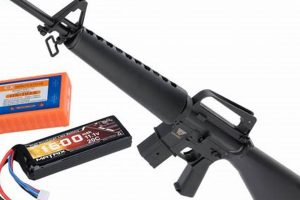
The central question addresses the potential for injury stemming from the use of airsoft weaponry. These devices propel small, spherical projectiles made of plastic via compressed gas or springs. The degree of potential harm depends on factors such as projectile velocity, proximity to the target, and the specific body part impacted.
Understanding the risks associated with these devices is paramount for ensuring safety during recreational activities and organized events. Historical incidents and anecdotal evidence illustrate a range of possible consequences, from minor skin abrasions to more serious ocular damage. Responsible use and adherence to safety protocols significantly mitigate these risks.
The following sections will explore specific injury types, protective measures, and legal considerations related to the operation of these devices. Discussion will include eye protection, appropriate attire, field regulations, and the importance of responsible handling to minimize the likelihood of adverse outcomes.
Mitigating Potential Harm
Responsible handling and adherence to safety guidelines are crucial to minimizing the risk of injury. The following tips outline essential practices for the safe operation of airsoft devices.
Tip 1: Mandatory Eye Protection: Full-seal goggles or a protective mask that meets ANSI Z87.1 standards are non-negotiable. The eyes are particularly vulnerable, and even low-velocity impacts can cause severe damage. Ensure the chosen eye protection fits securely and provides adequate coverage.
Tip 2: Appropriate Attire: Covering exposed skin reduces the likelihood of abrasions and welts. Long sleeves, pants, gloves, and a neck covering are recommended. Thicker fabrics offer increased protection against projectile impacts.
Tip 3: Know the Velocity Limits: Understand and adhere to the field’s velocity restrictions, typically measured in feet per second (FPS) using 0.20g BBs. Higher velocities increase the risk of injury. Chronograph devices are used to verify compliance.
Tip 4: Safe Zones and Barrel Covers: When not actively engaged in gameplay, airsoft devices must be unloaded, have their magazines removed, and be fitted with a barrel cover or plug. Safe zones are designated areas where eye protection may be removed, and devices must remain in a safe condition.
Tip 5: Responsible Handling and Muzzle Awareness: Treat every airsoft device as if it were loaded. Never point the muzzle at anything one is not willing to engage. Exercise caution when handling the device in crowded areas or around individuals not wearing eye protection.
Tip 6: Understand Field Rules and Regulations: Familiarize oneself with the specific rules and regulations of the airsoft field or event. These rules are designed to promote safety and fair play. Violation of these rules can result in expulsion from the field.
Tip 7: Maintain Airsoft Device: Perform regular maintenance to ensure proper function. Check for any damaged or worn parts that might cause malfunction or accidental firing.
Adhering to these guidelines significantly reduces the probability of injury. Prioritizing safety and practicing responsible gun handling is paramount in airsoft activities.
The subsequent section will focus on first aid, what to do if any airsoft-related injuries happened, and how to prevent from repeating same injuries in the future.
1. Velocity (FPS)

Projectile velocity, measured in Feet Per Second (FPS), is a primary determinant of the potential for airsoft devices to inflict injury. Higher velocities impart greater kinetic energy to the projectile, increasing the severity of impact upon contact.
- Kinetic Energy and Impact Force
FPS directly dictates the kinetic energy transferred upon impact. A higher FPS translates to greater kinetic energy, resulting in increased impact force. This force can exceed the tolerance threshold of soft tissues, leading to bruising, welts, or, in extreme cases, skin penetration. Consider a projectile traveling at 400 FPS versus one at 300 FPS; the former delivers a significantly more forceful blow.
- Range and Accuracy Influence
While higher FPS can extend the effective range of an airsoft device and improve accuracy, this comes at a safety trade-off. Projectiles retain more energy over distance, increasing the potential for injury at longer ranges. This underscores the need for responsible operation within designated fields and adherence to minimum engagement distances. A higher FPS enables a longer trajectory but mandates careful awareness of the projectile’s potential impact across that extended distance.
- Field Regulations and Velocity Limits
Airsoft fields commonly impose FPS limits to mitigate injury risks. These limits are established based on safety assessments and consideration of common injury types. Exceeding these limits represents a direct violation of safety protocols and significantly elevates the potential for harm. For example, indoor fields typically have lower FPS limits than outdoor fields due to the closer engagement distances.
- Projectile Weight and Velocity Relationship
Projectile weight interacts with velocity to determine the overall impact force. While FPS is the primary metric, heavier projectiles at the same FPS deliver more energy than lighter ones. This interplay influences the perceived “sting” or potential for marking. It is important to adhere to the manufacturer’s recommended projectile weight for optimal performance and safety.
The relationship between FPS and the ability to inflict injury highlights the crucial importance of velocity limits, responsible operation, and appropriate protective gear. A higher FPS, while offering performance benefits, necessitates increased caution and adherence to safety regulations to minimize the risk of harm.
2. Projectile Material

The material composition of airsoft projectiles, typically referred to as BBs, is a significant factor influencing the potential for these devices to inflict injury. While commonly made of plastic, variations in density, biodegradability, and manufacturing quality directly impact the severity of any impact.
- Plastic Density and Hardness
BBs with higher plastic density and hardness transfer force more effectively upon impact. This can lead to increased bruising, welts, or even skin abrasions, particularly at higher velocities. The selection of a lower-density BB within acceptable field regulations can reduce, but not eliminate, the risk of injury. For instance, a high-density BB is more likely to leave a lasting mark compared to a standard one, given equal FPS.
- Biodegradable vs. Non-Biodegradable Compositions
While biodegradable BBs offer environmental advantages, their structural integrity can differ from non-biodegradable options. Some biodegradable BBs may fracture more easily upon impact, potentially reducing the severity of the initial strike but increasing the risk of fragmentation. Conversely, non-biodegradable BBs retain their shape and mass more consistently, leading to a more concentrated impact force. Field requirements for biodegradability should not overshadow safety considerations.
- Manufacturing Quality and Consistency
BBs of poor manufacturing quality may exhibit inconsistencies in size, shape, and surface finish. These irregularities can affect trajectory and accuracy, increasing the chance of unintended impacts to vulnerable areas like the face or eyes. Furthermore, imperfections can cause BBs to shatter upon firing or impact, projecting small, sharp fragments. Using reputable brands with stringent quality control measures is paramount.
- Impact Location and Material Interaction
The effect of BB composition is significantly influenced by where on the body impact occurs. BB material interaction is crucial. While any impact to eye is dangerous, face and skin wound from airsoft can be influenced by BB material’s roughness.
The type of material used for airsoft BBs plays a critical role in determining the potential for injury. Choosing high-quality BBs of appropriate density, while adhering to field regulations regarding biodegradability, is essential for minimizing the risk of harm. Prioritizing safety through responsible BB selection complements the use of proper protective gear and adherence to field rules.
3. Proximity

Proximity, the distance between the airsoft device and the target, is a critical determinant of the severity of potential injury. The closer the range, the greater the impact force due to minimal loss of projectile velocity. This heightened force increases the likelihood of skin penetration, bruising, or more severe injuries, particularly to sensitive areas like the eyes. Instances of accidental discharge at point-blank range have demonstrated the potential for significant harm, even with standard velocity devices. Minimizing close-quarters engagements or enforcing minimum engagement distances are common strategies to mitigate this risk.
The significance of proximity extends beyond initial impact force. At close range, the projectile has less time to be deflected by clothing or other minor obstructions. This results in a more direct and concentrated transfer of energy to the target. Moreover, the psychological impact of being struck at close range can be more jarring, potentially leading to startled reactions and unintended consequences. For example, a sudden, unexpected hit at close range could cause a player to lose their balance, increasing the risk of falls and secondary injuries.
In conclusion, proximity is a crucial factor in assessing the potential for harm associated with airsoft devices. Understanding this connection informs safe gameplay practices, including the establishment and enforcement of minimum engagement distances, and emphasizes the need for heightened awareness and caution during close-quarters scenarios. Recognizing the amplified risk at shorter ranges promotes responsible handling and adherence to safety protocols to minimize the probability of injury.
4. Protective Gear

The implementation of appropriate protective gear is paramount in mitigating the risk of injury when engaging in airsoft activities. Its effectiveness directly influences the potential for harm resulting from projectile impacts. The absence or inadequacy of such gear substantially increases vulnerability to a range of injuries.
- Eye Protection Standards
Full-seal goggles or masks that meet or exceed ANSI Z87.1 standards are indispensable. These standards ensure that the eyewear can withstand high-velocity impacts without shattering or dislodging, thereby preventing severe ocular trauma. Examples of inadequate protection include open-lens glasses or mesh goggles, which offer insufficient impact resistance or allow projectile fragments to penetrate. The consequences of inadequate eye protection can range from corneal abrasions to permanent vision loss.
- Facial Coverage
Beyond eye protection, comprehensive facial coverage minimizes the risk of lacerations, contusions, and dental injuries. Lower-face masks or balaclavas constructed from durable materials provide essential protection against direct projectile impacts. The absence of such protection leaves vulnerable areas, such as the nose, mouth, and teeth, exposed to potential harm. Instances of broken teeth or fractured noses underscore the importance of full facial coverage.
- Body Armor and Padding
While not always mandatory, body armor or padded clothing can significantly reduce the severity of impacts to the torso and limbs. Tactical vests, padded jackets, and thick clothing provide a degree of cushioning against projectile strikes, minimizing the potential for bruising and welts. Individuals participating in close-quarters combat or engaging in physically demanding maneuvers may benefit from additional padding to protect against falls and collisions.
- Gloves and Hand Protection
The hands are frequently exposed during airsoft activities and are susceptible to injury from projectile impacts, particularly when manipulating equipment or navigating challenging terrain. Gloves constructed from durable materials, such as leather or reinforced synthetic fabrics, provide protection against abrasions, lacerations, and bruising. Full-fingered gloves are preferred to ensure complete coverage of the hands and fingers.
The proper selection and consistent use of protective gear dramatically reduce the potential for injury associated with airsoft activities. Prioritizing adherence to safety standards and selecting gear appropriate for the specific playing environment are essential components of responsible participation. The consistent use of appropriate protective gear, coupled with adherence to safety rules and responsible conduct, are crucial elements in minimizing the inherent risks associated with airsoft.
5. Impact Location

The specific area of the body struck by an airsoft projectile significantly influences the resultant injury. Certain anatomical regions are inherently more vulnerable due to factors such as thinner skin, proximity to vital organs, or lack of substantial muscle and fat tissue. Impacts to the eyes, face, throat, and groin pose a disproportionately higher risk of severe injury compared to impacts on areas like the arms or legs. For instance, ocular impacts can result in corneal abrasions, retinal detachment, or permanent vision impairment, even at relatively low projectile velocities. Similarly, impacts to the throat can cause damage to the larynx or trachea, potentially compromising breathing. The varying degrees of vulnerability across different body regions directly correlate with the potential for harm, underscoring the critical importance of protective gear and adherence to safety protocols.
Furthermore, the type of tissue impacted plays a crucial role in determining the extent of injury. Impacts to bony prominences, such as the elbows or knees, can result in contusions or fractures, while impacts to areas rich in nerve endings can cause intense pain and temporary incapacitation. Impacts near major blood vessels carry the risk of hemorrhage, requiring prompt medical attention. The angle of impact also influences the severity of injury; glancing blows may result in minor abrasions, while direct, perpendicular impacts transfer more energy and increase the likelihood of deeper tissue damage. Analyzing real-world incidents reveals a clear correlation between impact location and the severity of consequences, emphasizing the need for heightened awareness and targeted protection for vulnerable areas.
In summary, the location of impact is a pivotal factor in determining the potential for airsoft projectiles to cause injury. Understanding the relative vulnerability of different body regions and the interplay between impact location, projectile velocity, and tissue type informs responsible gameplay practices, emphasizing the necessity of protective gear, adherence to safety rules, and mindful engagement to minimize the risk of harm. The strategic placement of protective gear, coupled with awareness of vulnerable areas, constitutes a proactive approach to mitigating the inherent risks associated with airsoft activities.
6. Field Regulations

Field regulations serve as a critical framework to minimize the potential for injury during airsoft activities. These rules, established and enforced by field operators, directly address the controllable factors influencing the risk of harm. Consistent application of and adherence to these regulations are paramount for maintaining a safe environment.
- Velocity Limits and Chronographing
FPS restrictions, enforced through chronographing, are a cornerstone of field safety. Limiting projectile velocity reduces the kinetic energy delivered upon impact, minimizing the potential for serious injury. For example, indoor fields often impose lower FPS limits than outdoor fields due to closer engagement distances. Chronographing ensures compliance, preventing individuals from using modified or excessively powerful devices.
- Minimum Engagement Distances (MED)
MEDs dictate the closest permissible range for firing upon another player. These distances are designed to prevent point-blank shots, which carry a significantly higher risk of injury, particularly to the eyes and face. Violating MEDs often results in penalties, emphasizing the importance of responsible target engagement. Some fields enforce MEDs based on device FPS, creating tiered safety zones.
- Mandatory Eye Protection Policies
Requiring full-seal, ANSI-rated eye protection is a universal field regulation. This rule is non-negotiable, as the eyes are exceptionally vulnerable to projectile impact. Fields typically conduct spot checks to ensure compliance and may expel individuals who remove or tamper with their eye protection during gameplay. Clear communication about approved eye protection standards is essential for players’ safety.
- Prohibited Actions and Conduct
Field regulations commonly prohibit reckless behavior, such as blind firing, shooting over barriers without visual confirmation, or intentional physical contact. These rules aim to prevent accidental injuries and maintain a controlled environment. Disciplinary measures, including warnings and suspensions, are implemented to enforce these standards. Marshals actively monitor gameplay to address rule violations and ensure player safety.
These facets of field regulations directly address the question of potential injury. Through enforced velocity limits, minimum engagement distances, mandatory eye protection, and prohibited actions, airsoft fields actively mitigate the inherent risks associated with the activity. Consistent adherence to these regulations, combined with responsible player conduct, is essential for minimizing the potential for harm.
Frequently Asked Questions
The following section addresses common inquiries regarding the potential for injury associated with airsoft activities. Information provided aims to clarify misconceptions and promote responsible participation.
Question 1: What is the typical range of injuries sustained during airsoft activities?
Common injuries include welts, bruising, abrasions, and, in more severe cases, eye injuries. The severity depends on factors such as projectile velocity, impact location, and the use of protective gear. Eye injuries, though less frequent, represent the most significant potential for long-term harm.
Question 2: Can airsoft projectiles penetrate skin?
At close range and with higher projectile velocities, penetration of the skin is possible, particularly in more sensitive areas. The use of appropriate protective clothing reduces this risk. Consistent adherence to field regulations regarding velocity limits is crucial.
Question 3: Is eye protection truly necessary, even at lower projectile velocities?
Eye protection is absolutely essential, regardless of projectile velocity. The eyes are exceptionally vulnerable, and even low-velocity impacts can cause serious damage. Full-seal goggles or masks meeting ANSI Z87.1 standards are the minimum acceptable level of protection.
Question 4: What are the key factors contributing to airsoft-related injuries?
Primary contributing factors include failure to wear appropriate protective gear, exceeding velocity limits, violating minimum engagement distances, and engaging in reckless behavior. Lack of awareness regarding safe handling practices also contributes significantly.
Question 5: How can field regulations minimize the risk of injury?
Field regulations, such as velocity limits, minimum engagement distances, and mandatory eye protection policies, create a structured environment that minimizes the opportunity for accidents and reduces the severity of potential impacts. Consistent enforcement of these regulations is critical.
Question 6: What steps should be taken in the event of an airsoft-related injury?
Immediate first aid should be administered. Eye injuries warrant prompt medical attention. All incidents, regardless of severity, should be reported to field staff to facilitate investigation and prevent future occurrences.
Prioritizing safety through responsible conduct, adherence to field regulations, and consistent use of appropriate protective gear significantly reduces the potential for injury during airsoft activities. A proactive approach to safety promotes a positive and enjoyable experience for all participants.
The following section will provide information on first aid and how to prevent from repeating same injuries in the future, should any airsoft-related injuries occur.
Understanding the Risks
The preceding discussion comprehensively addresses the central question: can airsoft guns hurt you? The analysis highlights potential injuries ranging from minor abrasions to severe ocular damage. Key factors influencing the severity of harm include projectile velocity, proximity, impact location, the effectiveness of protective gear, and adherence to field regulations. Emphasis is placed on responsible conduct and consistent implementation of safety protocols to mitigate these risks.
Acknowledging the potential for injury necessitates a proactive approach to safety within the airsoft community. Prioritizing protective gear, upholding field regulations, and promoting responsible handling are essential components of minimizing harm. Continued vigilance and a commitment to safety will ensure that the risks associated with airsoft remain manageable, allowing participants to enjoy the activity responsibly.