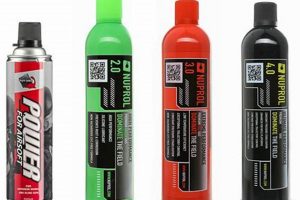
A common propellant used in airsoft guns, it’s a liquefied gas typically composed primarily of propane, often with silicone oil added. This gas provides the pressure necessary to propel projectiles from gas-powered airsoft replicas. The addition of silicone oil serves to lubricate internal components, contributing to the longevity and smooth operation of the gun’s mechanism.
This propellant’s significance lies in its ability to offer a balance between power, availability, and ease of use in airsoft applications. Its adoption stems from its relatively lower cost compared to other propellants, and its adequate performance in a wide range of airsoft guns. Historically, its emergence provided a readily accessible power source that contributed to the increasing popularity of gas-powered airsoft replicas.
Understanding its composition and properties is crucial for airsoft enthusiasts seeking optimal performance and responsible usage of their equipment. Subsequent sections will delve into the specific types available, safe handling procedures, and troubleshooting tips for gas-powered airsoft guns.
Tips for Using Green Gas in Airsoft
Effective utilization of the propellant in airsoft applications necessitates adherence to specific guidelines. These recommendations aim to maximize performance, ensure safety, and prolong the lifespan of airsoft equipment.
Tip 1: Choose the Appropriate Gas Pressure: Verify the pressure rating compatibility between the airsoft gun and the propellant being used. Employing excessively high-pressure gas can damage internal components, potentially leading to malfunction or injury.
Tip 2: Implement Proper Filling Techniques: When filling magazines, maintain a vertical orientation with the propellant canister directly above the magazine valve. This minimizes the risk of liquid propellant entering the gun, which can cause inconsistent performance.
Tip 3: Store Canisters Correctly: Keep canisters in a cool, dry environment away from direct sunlight or heat sources. Elevated temperatures can increase internal pressure, posing a safety hazard.
Tip 4: Lubricate Regularly: Ensure consistent lubrication of the gun’s internal seals and moving parts. Neglecting lubrication can lead to premature wear and reduced gas efficiency. Silicone oil is generally recommended.
Tip 5: Purge Magazines Before Storage: Before storing magazines for extended periods, briefly release any remaining gas. This helps prevent seal degradation and maintains optimal magazine function.
Tip 6: Monitor Temperature: Be cognizant of the ambient temperature, as it directly impacts gas pressure. Colder temperatures will reduce gas pressure, potentially affecting the gun’s performance.
Tip 7: Avoid Overfilling Magazines: Refrain from overfilling magazines, as this can cause pressure imbalances and potential damage to the magazine valve. Fill until the magazine is full, but not to the point where gas is actively escaping.
Adherence to these practices enhances performance, extends equipment longevity, and promotes safer airsoft activities. These guidelines represent fundamental elements of responsible airsoft gun maintenance.
The next section will provide troubleshooting advice for common issues encountered with gas-powered airsoft replicas.
1. Propellant Composition

The composition of propellant is a defining characteristic that directly influences the performance and operational parameters of gas-powered airsoft replicas. Its constituent elements determine the pressure generated, lubrication provided, and overall compatibility with various airsoft gun models.
- Primary Gas Component
The primary gas is typically propane, or a similar hydrocarbon. This element provides the bulk of the pressure required to propel the projectile. Variations in the purity and mixture ratios of this gas can affect the consistency and power output of the airsoft gun.
- Lubricant Additives
Silicone oil is commonly added to the gas mixture to lubricate internal components of the airsoft gun, such as the seals and valves. The presence and concentration of silicone oil directly influence the longevity and smooth operation of these components. Insufficient lubrication can lead to premature wear and reduced gas efficiency.
- Odorants and Additives
Some formulations incorporate odorants to aid in leak detection. Other additives may be included to improve cold weather performance or modify the pressure characteristics of the gas. The presence of these additives, and their specific properties, can affect the overall user experience and gun performance.
- Moisture Content
The presence of water vapor within the composition can lead to corrosion and damage to internal components. High moisture content can also cause erratic performance due to pressure fluctuations. Proper manufacturing and storage practices are essential to minimize moisture contamination.
Understanding the specific composition provides critical insights into its suitability for different airsoft gun models and environmental conditions. Variations in composition can result in significant differences in performance, reliability, and maintenance requirements.
2. Pressure Regulation

Pressure regulation is a critical aspect of utilizing propellant in airsoft devices. Proper pressure management ensures consistent performance, prevents damage to airsoft guns, and contributes significantly to user safety. The inherent properties of the propellant necessitate careful attention to its pressure characteristics.
- Internal Valve Mechanisms
Airsoft guns incorporate internal valve mechanisms designed to regulate the release of propellant. These mechanisms control the volume of gas released with each shot, influencing projectile velocity and overall power. Malfunctioning or improperly adjusted valves can lead to inconsistent performance or over-pressurization, potentially damaging the gun.
- Gas Reservoir Capacity
The capacity of the gas reservoir within the airsoft gun or magazine directly affects the shot consistency and the number of shots achievable per fill. A larger reservoir generally provides more consistent pressure over a longer duration, while smaller reservoirs may require more frequent refills. The design and material of the reservoir must withstand the pressure exerted by the propellant.
- Ambient Temperature Influence
Ambient temperature significantly impacts the pressure characteristics of the propellant. Higher temperatures increase pressure, potentially leading to over-pressurization and damage. Conversely, lower temperatures reduce pressure, resulting in decreased velocity and performance. Adaptations in propellant selection or gun adjustment may be necessary to compensate for temperature variations.
- External Regulators
In certain airsoft applications, external regulators are employed to precisely control the pressure delivered to the airsoft gun. These regulators allow for fine-tuning of the pressure output, enabling users to optimize performance based on specific requirements and playing conditions. External regulators offer a greater degree of control compared to relying solely on the internal mechanisms of the gun.
The interplay between these facets underscores the importance of diligent pressure management. A comprehensive understanding of valve mechanisms, reservoir capacity, temperature sensitivity, and the potential use of external regulators is essential for maximizing the performance, safety, and longevity of gas-powered airsoft equipment.
3. Silicone Lubrication
Silicone lubrication constitutes an integral element within the operational framework of propellant used in airsoft. The addition of silicone oil serves a critical function: the reduction of friction among moving components within the airsoft gun’s mechanism. This function is particularly pertinent to the seals, valves, and other internal parts that experience repeated motion during operation. Without adequate lubrication, these components are susceptible to accelerated wear and tear, leading to decreased performance, gas leaks, and eventual malfunction. For example, a common issue in gas-powered airsoft pistols is the degradation of the rubber O-rings within the magazine, directly attributed to insufficient silicone lubrication. This results in gas escaping from the magazine, rendering the pistol inoperable until the O-rings are replaced.
The incorporation of silicone oil directly into the propellant mixture facilitates consistent lubrication with each shot fired. As the propellant is released, a small amount of silicone oil is carried along, depositing a thin film on the internal components. This continuous lubrication process minimizes friction and wear, ensuring smooth and reliable operation. A practical application of this principle is evident in the maintenance routines for gas blowback rifles. Players often disassemble and clean their rifles, applying silicone grease to key areas like the nozzle and bolt carrier to ensure smooth cycling and prevent performance degradation during extended use.
In summary, silicone lubrication is not merely an accessory but a fundamental requirement for maintaining the functionality and longevity of gas-powered airsoft guns. Its presence in the propellant directly mitigates wear and tear on critical internal components. Addressing challenges like selecting the appropriate viscosity of silicone oil and ensuring even distribution highlights the practical significance of understanding this connection. Ultimately, appropriate silicone lubrication is crucial for the consistent and reliable operation of these devices.
4. Temperature Sensitivity

The performance of airsoft guns powered by green gas is significantly influenced by ambient temperature. This propellant, typically composed of propane and silicone oil, exhibits pressure variations directly correlated to temperature fluctuations. Higher temperatures result in increased internal pressure within the gas canister and the airsoft gun’s magazine, leading to greater projectile velocity and potentially increased stress on internal components. Conversely, lower temperatures reduce gas pressure, resulting in decreased velocity and potentially causing the gun to cycle inconsistently or fail to cycle completely. This temperature dependence represents a critical factor in airsoft gameplay and equipment maintenance.
The practical implications of temperature sensitivity are evident in various scenarios. During warmer weather conditions, players may experience increased power output from their airsoft guns, necessitating adjustments to hop-up settings to maintain accuracy and prevent exceeding field velocity limits. Conversely, in colder environments, players may need to switch to a higher-pressure gas or adjust their gun’s internal components to compensate for the reduced gas pressure. Failure to account for temperature variations can lead to inconsistent shot groupings, reduced effective range, and potential damage to the airsoft gun. An example includes diminished gas output and cycling in cold environment. It requires either use of red gas or other options available for gameplay.
Understanding and adapting to temperature sensitivity is crucial for optimizing the performance and reliability of airsoft guns using this propellant. Players should be aware of the potential impact of ambient temperature on gas pressure and projectile velocity and make necessary adjustments to their equipment and gameplay strategy. Consistent monitoring of temperature conditions and appropriate propellant selection are essential for maintaining a competitive edge and ensuring safe operation. The correlation between temperature and gas performance remains a constant consideration in airsoft, influencing decision-making across various aspects of the sport.
5. Magazine Compatibility

Magazine compatibility represents a critical factor in the effective and safe operation of gas-powered airsoft guns. The interaction between magazines and propellant influences performance, reliability, and the potential for damage. Proper magazine selection and maintenance are essential for optimal functionality.
- Gas Capacity and Reservoir Design
Magazine gas capacity directly affects the number of shots achievable per fill. Variations in reservoir design can influence gas pressure consistency and temperature sensitivity. For instance, a magazine with a larger reservoir may maintain more consistent pressure during rapid firing, while a poorly designed reservoir may exhibit significant pressure drops. The material composition of the reservoir must also be compatible with the propellant to prevent leaks or degradation over time. Examples of this included high pressure gas require high quality parts.
- Valve Compatibility and Gas Routing
The magazine valve must be compatible with the nozzle of the airsoft gun to ensure proper gas flow and sealing. Mismatched valves can lead to gas leaks, reduced power, or even damage to the nozzle or valve. Gas routing within the magazine should be designed to provide a consistent and efficient flow of gas to the valve, minimizing pressure fluctuations and maximizing shot consistency. The material must not degrade with usage of “airsoft what is green gas”.
- Seal Integrity and Leak Prevention
Magazine seals are crucial for preventing gas leaks and maintaining optimal pressure. Damaged or worn seals can result in significant gas loss, reducing the number of shots per fill and potentially causing inconsistent performance. Regular maintenance and replacement of seals are necessary to ensure leak-free operation. The quality of seals depends on “airsoft what is green gas” the seals degrade quicker with poor quality.
- Magazine Material and Pressure Rating
The magazine material must be capable of withstanding the pressure exerted by the propellant. Using a magazine with an insufficient pressure rating can lead to deformation, leaks, or even catastrophic failure. Magazines constructed from durable materials, such as reinforced polymers or metal alloys, are generally more reliable and resistant to damage. Different material reacts differently with “airsoft what is green gas” usage.
These facets underscore the intricate relationship between magazine compatibility and the overall performance of gas-powered airsoft guns. Selecting magazines specifically designed for the airsoft gun model and propellant type, maintaining proper seal integrity, and adhering to pressure ratings are essential practices for ensuring reliable and safe operation. Proper understanding of “airsoft what is green gas” and magazine is very essential for long lasting equipments.
6. Storage Requirements
Proper storage of propellant canisters is critical for maintaining their integrity, ensuring user safety, and preventing potential hazards. Neglecting appropriate storage protocols can lead to degradation of the propellant, increased risk of leaks, and potentially dangerous situations. The following facets delineate essential storage considerations.
- Temperature Control
Elevated temperatures can increase the internal pressure within propellant canisters, potentially leading to rupture or leakage. Conversely, extremely low temperatures can affect the propellant’s volatility and performance. Canisters should be stored in a cool, dry environment, away from direct sunlight, heat sources (such as radiators or open flames), and extreme cold. Maintaining a consistent temperature range mitigates the risk of pressure-related issues and ensures the propellant remains stable and effective.
- Ventilation Considerations
Adequate ventilation in the storage area is crucial for dispersing any potential gas leaks. Propane, the primary component of most propellant, is heavier than air and can accumulate in poorly ventilated spaces, creating a fire or explosion hazard. Storage areas should be well-ventilated to prevent the buildup of gas concentrations. Avoid storing canisters in confined or enclosed spaces without sufficient airflow.
- Physical Protection
Canisters should be protected from physical damage to prevent punctures, dents, or other forms of structural compromise. Damaged canisters are more susceptible to leaks and potential explosions. Store canisters in a secure location where they are unlikely to be knocked over or subjected to impacts from other objects. Avoid stacking heavy items on top of canisters.
- Regulatory Compliance
Local regulations and guidelines may dictate specific storage requirements for flammable gases. Adherence to these regulations is essential for ensuring legal compliance and minimizing potential risks. Consult local fire codes and safety regulations to determine specific requirements for the storage of propellant canisters. These regulations may specify maximum storage quantities, fire suppression equipment requirements, and signage requirements.
The proper storage of airsoft propellant is not merely a matter of convenience; it is a fundamental safety practice. By adhering to temperature control, ventilation considerations, physical protection measures, and regulatory compliance, the risks associated with propellant storage can be significantly mitigated, ensuring a safer environment for users and preventing potential damage to property. Neglecting these storage requirements can have serious consequences, underscoring the importance of diligent adherence to established safety protocols.
Frequently Asked Questions Regarding Airsoft Propellant
The following addresses prevalent inquiries concerning the utilization and handling of commonly used propellant in airsoft applications. The information is intended to provide clarity and promote responsible practices.
Question 1: What constitutes the primary difference between various grades or types of the propellant utilized in airsoft?
The fundamental distinction lies in the pressure output, measured in PSI (pounds per square inch). Higher pressure variations are typically intended for specific airsoft guns designed to withstand greater stress. Employing an inappropriate pressure propellant can lead to damage or malfunction.
Question 2: How does ambient temperature affect the performance of airsoft guns utilizing propellant?
Temperature directly influences the gas pressure. Lower temperatures reduce pressure, potentially leading to diminished velocity and inconsistent cycling. Higher temperatures increase pressure, potentially causing over-pressurization and increased wear on internal components.
Question 3: Is it permissible to use alternative propellants, such as propane or CO2, in airsoft guns designed for propellant?
Using alternative propellants is generally discouraged. Airsoft guns are engineered for specific pressure ranges and lubricant requirements. Propane, without added silicone, lacks the necessary lubrication. CO2 typically operates at significantly higher pressures, potentially causing catastrophic damage.
Question 4: What precautions should be observed when storing propellant canisters?
Canisters should be stored in a cool, dry, and well-ventilated area, away from direct sunlight and heat sources. The storage area should be protected from physical damage and comply with local regulations regarding the storage of flammable gases.
Question 5: How frequently should airsoft guns utilizing propellant be lubricated, and what type of lubricant is recommended?
Regular lubrication is essential. Silicone oil is the recommended lubricant for most airsoft guns, as it is compatible with the seals and internal components. The frequency of lubrication depends on usage, but generally, after each game or extended use, lubrication should occur.
Question 6: What are the indicators of a potential gas leak in an airsoft gun utilizing propellant?
Indicators of a gas leak include hissing sounds emanating from the magazine or gun, a noticeable decrease in gas pressure during operation, and a reduction in projectile velocity. Identifying and addressing gas leaks promptly is essential to prevent further damage and maintain performance.
Comprehending these fundamental aspects of airsoft propellant facilitates informed decision-making and promotes responsible equipment handling. Prioritizing safety and adherence to manufacturer guidelines are paramount.
The subsequent section will present a summary of key considerations for optimal airsoft gun performance and longevity.
Airsoft What Is Green Gas
The preceding analysis has elucidated key facets of “airsoft what is green gas” as a propellant, encompassing its composition, pressure regulation, lubrication requirements, temperature sensitivity, magazine compatibility, and storage imperatives. A comprehensive understanding of these factors is paramount for optimizing airsoft gun performance and ensuring user safety. Neglecting these considerations can lead to equipment malfunction, reduced operational lifespan, and potential safety hazards.
Therefore, diligent adherence to recommended practices for handling, maintenance, and storage constitutes a fundamental responsibility for all airsoft enthusiasts. Continued education and informed decision-making are essential for fostering a safe and enjoyable airsoft experience. Prioritizing responsible practices will contribute to the longevity and consistent performance of airsoft equipment while promoting a culture of safety within the airsoft community.