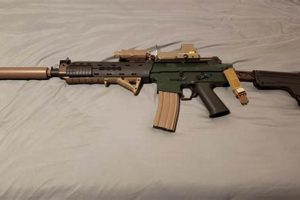
These devices, designed to mimic the appearance of firearm sound suppressors, are attachments for airsoft guns. They primarily serve an aesthetic purpose, enhancing the realism of the replica weapon. Constructed from materials like aluminum or plastic, these components do not significantly reduce the sound produced by the airsoft gun’s operation. Instead, they may subtly alter the sound signature, contributing to the overall tactical simulation experience.
The value of these accessories lies in their ability to personalize and customize airsoft weaponry. They contribute to a more immersive and engaging experience for players, aligning with the growing emphasis on realism within the airsoft community. While lacking functional sound reduction capabilities, these attachments have gained popularity due to their impact on the visual appeal of airsoft guns and the perception of authenticity they provide during simulated combat scenarios.
Understanding the limitations and design intentions of these items is crucial. Subsequent sections will delve into the diverse range of models available, their compatibility with different airsoft gun types, and the legal considerations surrounding their ownership and use in various jurisdictions. Further, we will explore proper installation techniques and maintenance tips to ensure optimal integration and longevity.
Airsoft Suppressor Integration
The following guidelines provide essential considerations for the effective integration and maintenance of airsoft suppressors, ensuring both optimal performance and adherence to safety regulations.
Tip 1: Compatibility Assessment: Prior to purchase, rigorously assess the compatibility of the airsoft suppressor with the intended airsoft gun model. Verify thread size and barrel length to prevent damage or misalignment. Consult manufacturer specifications for definitive compatibility information.
Tip 2: Secure Attachment Protocol: Ensure the airsoft suppressor is securely attached to the airsoft gun’s outer barrel using the appropriate threading mechanism. Avoid over-tightening, which can damage threads. Periodic checks for looseness are essential.
Tip 3: Internal Cleaning Regimen: Regularly clean the interior of the airsoft suppressor to prevent the buildup of debris, which can affect projectile trajectory and internal components. Use appropriate cleaning solvents and tools designed for airsoft equipment.
Tip 4: Velocity Impact Consideration: Be aware that the addition of an airsoft suppressor may, in some cases, subtly impact projectile velocity. Chronograph testing after installation is recommended to ensure compliance with field regulations.
Tip 5: Storage and Handling Practices: Store the airsoft suppressor in a protective case when not in use to prevent damage. Handle the accessory with care to avoid dents or structural compromise that could impact performance or safety.
Tip 6: Legal Compliance Verification: Adhere to all applicable local, regional, and national laws pertaining to airsoft suppressors. Understand regulations regarding permissible usage, transportation, and modification to ensure full compliance.
These guidelines ensure the responsible and effective utilization of airsoft suppressors. Adherence to these practices promotes safety, prolongs equipment lifespan, and ensures adherence to legal mandates.
The following section will provide a comprehensive overview of common issues associated with airsoft suppressors, offering troubleshooting strategies and preventative measures.
1. Aesthetics

Aesthetics constitutes a primary driver in the acquisition and utilization of airsoft suppressors. Despite their general ineffectiveness in reducing sound output, the visual appeal they lend to airsoft rifles and pistols contributes significantly to the overall simulation experience. The replication of real firearm suppressors allows airsoft enthusiasts to customize their equipment, achieving a more authentic and tactical appearance. The perceived realism translates to increased immersion during airsoft gameplay.
The importance of aesthetics is evident in the diverse range of suppressor designs available, mirroring real-world counterparts of various sizes, shapes, and finishes. Manufacturers cater to this demand by offering suppressors that emulate specific models used by military and law enforcement, further enhancing the visual accuracy of airsoft replicas. For example, a player replicating a Special Forces loadout might choose a suppressor modeled after the SureFire SOCOM series, even though its functional impact on an airsoft gun is negligible.
The demand for aesthetically pleasing airsoft suppressors highlights the importance of visual fidelity in airsoft. While practical considerations such as weight and compatibility remain factors, the aesthetic appeal often overrides purely functional advantages. This focus on appearance necessitates an understanding of the interplay between visual design, historical accuracy, and the psychological impact of realistic simulation. The successful incorporation of aesthetically appropriate suppressors elevates the airsoft experience beyond mere gameplay, fostering a deeper sense of immersion and tactical realism, though the importance of safety should never be sacrificed for purely aesthetic reasons.
2. Compatibility
The effective integration of an airsoft suppressor hinges critically on compatibility with the host airsoft gun. This encompasses multiple factors, including thread specifications, barrel length, and internal diameter. Mismatched thread patterns, for example, can lead to cross-threading and permanent damage to both the suppressor and the airsoft gun’s outer barrel. Similarly, a suppressor designed for a shorter inner barrel may negatively impact projectile trajectory if used on a gun with a longer barrel, potentially causing BBs to strike the inside of the suppressor and degrade accuracy. As an example, attempting to attach a 14mm counter-clockwise threaded suppressor to an airsoft gun with a 14mm clockwise threaded barrel will inevitably result in damage and an unusable connection.
The importance of compatibility extends beyond mere physical attachment. The internal diameter of the suppressor must be sufficient to allow free passage of the BBs without impacting their flight path. A suppressor with too narrow an internal diameter can lead to reduced range and accuracy, or even cause BBs to shatter inside the suppressor. Furthermore, the length and weight of the suppressor must be considered in relation to the airsoft gun’s design. An overly long or heavy suppressor can negatively affect the gun’s balance and handling characteristics, making it more difficult to aim and maneuver. For example, a lightweight pistol may become unwieldy with a large, heavy suppressor attached.
In summary, ensuring compatibility is paramount for the safe and effective use of airsoft suppressors. Careful consideration of thread specifications, barrel length, internal diameter, and overall weight is essential to prevent damage, maintain accuracy, and preserve the handling characteristics of the airsoft gun. Prior to purchase, consultation of manufacturer specifications and verification with compatibility charts are strongly recommended to mitigate the risks associated with mismatched components. Ignoring compatibility concerns can result in equipment damage and compromised performance, ultimately detracting from the overall airsoft experience.
3. Construction

Construction plays a critical role in the performance, durability, and safety of airsoft suppressors. The materials and manufacturing processes employed directly impact the suppressor’s weight, resistance to damage, and overall longevity. Understanding the construction details provides insight into the suppressor’s intended use and potential limitations.
- Material Selection
The primary materials used in airsoft suppressor construction are typically aluminum, steel, or high-impact plastic. Aluminum offers a balance of weight and durability, making it suitable for many applications. Steel provides superior strength and resistance to wear, ideal for high-stress environments. Plastic suppressors are generally the most affordable and lightweight, though they may be less durable. The choice of material influences the suppressor’s overall weight, resistance to impacts, and longevity. An example of this can be seen in more expensive airsoft rifles having a full metal suppressor to withstand extreme impacts, as opposed to a cheap plastic that will fall apart if used in the same manner.
- Internal Baffle Design
While primarily aesthetic, some airsoft suppressors feature internal baffles designed to mimic the appearance of real firearm suppressors. These baffles may consist of separate chambers or a spiral design intended to disrupt airflow. However, in airsoft applications, these baffles contribute little to sound reduction. Instead, they can affect the internal volume of the suppressor and potentially alter the sound signature slightly. In some instances, poorly designed baffles can negatively impact accuracy by creating turbulence or backpressure.
- Thread Design and Manufacturing
The threading on an airsoft suppressor is crucial for secure attachment to the airsoft gun’s outer barrel. Threads must be precisely manufactured to ensure proper alignment and prevent cross-threading. Common thread patterns include 14mm clockwise (CW) and 14mm counter-clockwise (CCW). The quality of the threading directly affects the suppressor’s stability and its ability to withstand the stresses of repeated use. Improperly manufactured threads can lead to loose connections and eventual thread damage and stripped barrels.
- Exterior Finish and Coating
The exterior finish of an airsoft suppressor serves both aesthetic and protective purposes. Common finishes include anodizing (for aluminum), bluing (for steel), or paint coatings (for plastic). Anodizing provides a durable and corrosion-resistant surface on aluminum suppressors. Bluing offers a similar level of protection for steel suppressors. Paint coatings can be applied to various materials but may be more susceptible to scratches and wear. The quality of the finish contributes to the suppressor’s overall appearance and its ability to withstand environmental conditions. This will often be the first visual cue that the user has of the item’s level of craftsmanship.
The interplay of these construction facets material selection, internal baffle design, thread manufacturing, and exterior finish collectively determines the quality, performance, and longevity of airsoft suppressors. By understanding these construction details, users can make informed purchasing decisions and ensure proper maintenance to maximize the lifespan of their equipment.
4. Installation

Proper installation is critical for the safe and effective use of airsoft suppressors. Incorrect installation procedures can lead to damage to the suppressor, the airsoft gun, or both, as well as potential performance degradation. A thorough understanding of the correct methods is therefore essential.
- Thread Alignment and Engagement
The first step in installation involves correctly aligning the suppressor’s threads with those on the airsoft gun’s outer barrel. Ensure the threads are clean and free from debris. Carefully begin threading the suppressor onto the barrel, applying gentle pressure. Avoid forcing the connection; if resistance is encountered, re-check the alignment. The suppressor should thread smoothly until it is fully seated against the barrel’s shoulder. A misaligned or forced connection risks cross-threading, permanently damaging the threads and rendering both components unusable. Example: A user forcing a 14mm CCW suppressor onto a 14mm CW threaded barrel.
- Tightening Torque and Securement
Once the suppressor is fully threaded, it must be securely tightened to prevent loosening during gameplay. However, over-tightening can also damage the threads. The appropriate torque is typically “hand-tight,” meaning tightened firmly by hand without the use of tools. Some suppressors may include a set screw or locking ring to further secure the connection. Ensure these mechanisms are properly engaged. For example, a user that doesn’t fully tighten a suppressor to hand-tight, then experiences wobble while shooting, potentially causing damage to the threads over time.
- Barrel Extension and Inner Barrel Clearance
Certain airsoft suppressors function as barrel extensions, increasing the overall length of the airsoft gun’s inner barrel. If installing such a suppressor, ensure that the inner barrel extends fully into the suppressor body without contacting any internal components. Contact can cause BBs to strike the suppressor’s interior, leading to accuracy issues and potential damage. For example, a player installing a suppressor designed to function as a barrel extension without verifying inner barrel clearance will experience diminished accuracy because of BB’s striking internal components.
- Compatibility Verification Post-Installation
Following installation, it is essential to verify that the suppressor is properly aligned with the airsoft gun’s bore. Visually inspect the alignment to ensure the BBs will pass freely through the suppressor’s center. Conduct test shots to confirm that the installation has not negatively affected accuracy or range. If issues are observed, remove the suppressor and re-inspect the installation procedure. For example, a player installing a suppressor, failing to properly check alignment, and then discovers significant accuracy deviation during gameplay, demonstrating a lack of follow-through on compatibility verification.
These installation facets underscore the importance of precision and care when attaching airsoft suppressors. Adherence to these guidelines minimizes the risk of damage and ensures optimal performance, contributing to a safer and more enjoyable airsoft experience.
5. Regulations
The regulatory landscape surrounding airsoft suppressors is complex and varies significantly depending on geographic location. Understanding and adhering to these regulations is paramount to ensure legal compliance and avoid potential penalties. The ambiguity often stems from the visual similarity between airsoft suppressors and those designed for real firearms, leading to potential misinterpretations by law enforcement and customs officials.
- Federal Laws and Interpretations
In some jurisdictions, federal laws may not explicitly address airsoft suppressors, but existing regulations concerning firearm accessories can be broadly interpreted to include them. For instance, regulations governing the import and export of firearm parts could be applied to airsoft suppressors due to their outward appearance. The onus is on the individual to demonstrate that the device is intended solely for airsoft use and lacks the functional capacity to suppress sound from a firearm. Failure to do so could result in seizure and prosecution.
- State and Local Ordinances
State and local laws often impose specific restrictions on airsoft guns and accessories, including suppressors. Some jurisdictions may prohibit the sale, possession, or use of airsoft guns altogether, rendering the legality of suppressors moot. Other localities may regulate the transportation and storage of airsoft guns and accessories, requiring them to be kept in locked containers or cases. A municipality might implement noise ordinances that, while not directly targeting airsoft suppressors, could influence their acceptable use in residential areas.
- International Customs and Import Restrictions
The import and export of airsoft suppressors are subject to international customs regulations, which vary widely from country to country. Some nations may outright ban the importation of items resembling firearm suppressors, regardless of their intended use. Others may require special permits or licenses for importation. Failure to comply with these regulations can result in confiscation of the items and potential legal repercussions. For example, certain European countries have strict regulations on importing imitation firearms and their accessories.
- Airsoft Field and Event Rules
Even in the absence of explicit legal restrictions, airsoft fields and organized events frequently establish their own rules regarding the use of suppressors. These rules may pertain to velocity limits, acceptable types of suppressors, or restrictions on their use in specific areas of the field. Players are responsible for familiarizing themselves with and adhering to these rules. Non-compliance can lead to ejection from the field or event. An airsoft event might restrict the use of suppressors designed to amplify sound as a means of tactical communication.
The multi-faceted regulatory environment surrounding airsoft suppressors necessitates diligent research and proactive compliance. Ignorance of applicable laws and regulations is not a valid defense. Individuals involved with airsoft activities must remain informed of the legal and policy landscape governing the use of these accessories in their respective jurisdictions to avoid potential legal and operational complications.
6. Maintenance
Regular maintenance is essential for preserving the operational integrity and extending the lifespan of airsoft suppressors. While these devices do not function in the same manner as firearm suppressors, their construction and integration with airsoft guns necessitate routine care to prevent performance degradation and ensure continued functionality.
- Internal Cleaning
Over time, residue from BBs, lubricants, and environmental contaminants can accumulate inside airsoft suppressors. This buildup can obstruct the BB’s trajectory, leading to reduced accuracy and inconsistent shot placement. Regular cleaning with appropriate solvents and tools is necessary to remove these deposits. For example, a suppressor used frequently in outdoor environments may require more frequent cleaning to remove dirt and debris compared to one used primarily indoors.
- Thread Inspection and Lubrication
The threads that connect the suppressor to the airsoft gun’s outer barrel are susceptible to wear and damage from repeated installation and removal. Regular inspection for thread damage and application of a small amount of appropriate lubricant can help prevent cross-threading and ensure a secure connection. Neglecting this maintenance can lead to stripped threads, rendering the suppressor unusable. For instance, a user who frequently swaps suppressors between different airsoft guns should pay particular attention to thread maintenance.
- External Cleaning and Protection
The exterior surface of the suppressor is exposed to environmental elements and physical contact, which can lead to scratches, dents, and corrosion. Regular cleaning with a mild detergent and protective coating can help maintain the suppressor’s appearance and prevent damage. This is particularly important for suppressors made from aluminum or steel, which are susceptible to corrosion in humid environments. Consider a scenario where a suppressor is left in a damp gear bag, leading to rust and finish degradation.
- Baffle Integrity (If Applicable)
Some airsoft suppressors feature internal baffles designed to mimic the appearance of real firearm suppressors. While these baffles do not typically contribute to sound reduction, they can become damaged or dislodged from impacts or improper handling. Regular inspection of the baffles and their securement within the suppressor body is important to prevent them from obstructing the BB’s trajectory. If a baffle becomes loose, it could negatively impact accuracy and may require repair or replacement.
The consistent application of these maintenance procedures is critical for preserving the functionality, appearance, and longevity of airsoft suppressors. Neglecting maintenance can lead to performance degradation, equipment damage, and ultimately, the need for replacement. Therefore, incorporating these practices into a regular airsoft gear maintenance routine is highly recommended.
7. Performance

Airsoft suppressor performance is often decoupled from the primary function associated with firearm suppressors: sound reduction. While they may slightly alter the sound signature of an airsoft gun, the perceived enhancement to performance is largely aesthetic. The presence of a suppressor can instill a psychological sense of improved concealment or tactical advantage in the player, even if objectively, the weapon’s sound is not significantly diminished. For example, a player equipped with a sniper rifle and a suppressor may feel more confident in engaging targets from a concealed position, irrespective of the actual noise level produced by the airsoft gun.
However, a tangible performance impact can arise from the suppressor’s interaction with the airsoft gun’s internal components. Suppressors designed as barrel extensions, where the inner barrel extends into the suppressor’s body, can potentially improve accuracy and range by providing a longer barrel length. Conversely, poorly designed or improperly installed suppressors can negatively affect performance. If the BBs collide with the internal baffles or walls of the suppressor, accuracy and range will decrease significantly. This is especially prevalent when using low-quality BBs or suppressors with tight internal clearances. In such cases, the suppressor becomes a hindrance rather than an asset.
In conclusion, the performance aspect of airsoft suppressors is multifaceted. While lacking significant sound suppression capabilities, these attachments can contribute to a player’s perceived performance and, in certain configurations, tangibly enhance accuracy and range. The key lies in understanding the design limitations, ensuring compatibility with the airsoft gun, and maintaining proper installation procedures. When these factors are carefully considered, airsoft suppressors can serve as a valuable addition to a player’s tactical gear, improving both the aesthetic appeal and, potentially, the operational effectiveness of their airsoft weaponry.
Frequently Asked Questions
This section addresses common inquiries and misconceptions regarding airsoft suppressors, providing concise and factual information for informed decision-making.
Question 1: Do airsoft suppressors actually reduce the sound produced by airsoft guns?
No, airsoft suppressors primarily serve an aesthetic purpose. While they may subtly alter the sound profile, they do not significantly reduce the overall noise level produced by an airsoft gun. Their construction materials and design are not intended for acoustic dampening.
Question 2: Are there legal restrictions on owning or using airsoft suppressors?
Yes, legal regulations vary significantly by jurisdiction. Some areas may restrict the sale, possession, or use of items resembling firearm suppressors, regardless of their functionality. It is imperative to research and comply with all applicable local, regional, and national laws.
Question 3: Will an airsoft suppressor improve the accuracy or range of an airsoft gun?
Potentially, if the suppressor functions as a barrel extension. Extending the inner barrel can, in some cases, improve accuracy and range. However, a poorly designed or installed suppressor can negatively impact performance by interfering with the BB’s trajectory.
Question 4: What materials are commonly used to manufacture airsoft suppressors?
Common materials include aluminum, steel, and high-impact plastic. Aluminum offers a balance of weight and durability. Steel provides superior strength. Plastic is generally the most affordable and lightweight, but less durable.
Question 5: How should an airsoft suppressor be properly installed?
Proper installation involves careful thread alignment, appropriate tightening torque (typically hand-tight), verification of inner barrel clearance (if applicable), and post-installation alignment checks. Incorrect installation can damage the suppressor and/or the airsoft gun.
Question 6: How often should airsoft suppressors be cleaned and maintained?
Regular cleaning is recommended to remove accumulated debris and ensure proper function. The frequency depends on usage and environmental conditions. Threads should be inspected and lubricated periodically. External surfaces should be cleaned to prevent corrosion and maintain appearance.
These frequently asked questions provide a baseline understanding of airsoft suppressors. Comprehensive knowledge of the legal landscape and equipment mechanics is vital for responsible airsoft participation.
The subsequent section will explore advanced customization techniques and accessories related to airsoft suppressors.
Conclusion
This exploration has provided a comprehensive overview of airsoft suppressors, detailing their aesthetic value, functional considerations, regulatory environment, and maintenance requirements. Despite their divergence from the sound-dampening capabilities associated with firearm suppressors, these accessories occupy a significant role in the airsoft community, influencing both the visual appeal and, in certain configurations, the performance of airsoft weaponry. A clear understanding of compatibility parameters, construction materials, and applicable legal frameworks is paramount for responsible ownership and utilization.
Continued advancements in airsoft technology and design suggest an evolving role for these accessories. While their fundamental purpose remains rooted in aesthetic enhancement, future iterations may incorporate innovative features that bridge the gap between visual realism and functional utility. Players must remain vigilant in adhering to all safety guidelines and legal mandates to ensure the continued responsible participation within the airsoft community.