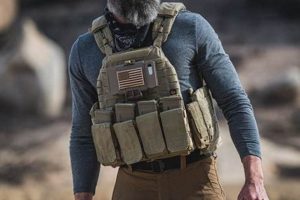
The selection of appropriate gear and equipment is paramount for optimal performance and safety in airsoft activities. A comprehensive assemblage typically includes protective eyewear, appropriate clothing, a primary weapon, and supporting accessories. These collections are tailored to suit various playing styles and field conditions, ensuring participants are adequately prepared for engagement.
The significance of thoughtfully curated equipment stems from its ability to enhance both the player’s tactical advantage and their personal protection. The evolution of such collections mirrors the advancements in airsoft technology, reflecting a growing emphasis on realism, versatility, and user comfort. Historical context reveals a shift from basic setups to highly specialized configurations designed for specific roles within a team.
The subsequent sections will delve into specific loadout configurations, offering guidance on assembling equipment that caters to diverse playstyles, field environments, and budgetary considerations. Detailed analyses of essential components and accessory options will be provided to facilitate informed decision-making in the selection process.
Airsoft Kit Assembly
Effective selection and assembly of airsoft gear are pivotal for maximizing performance and minimizing risk on the field. The following recommendations offer guidance on creating a functional and adaptable loadout.
Tip 1: Prioritize Eye Protection: Ballistic-rated eyewear is non-negotiable. Ensure that goggles or glasses meet ANSI Z87.1 standards or equivalent to safeguard against projectile impacts. Consider anti-fog coatings for improved visibility in varying environmental conditions.
Tip 2: Select Appropriate Clothing: Camouflage patterns should align with the typical terrain of the playing field. Durable, breathable fabrics are recommended to enhance comfort and protect against abrasions. Layering clothing allows for adaptation to changing weather patterns.
Tip 3: Weapon Choice Aligns with Role: Consider a player’s intended role on the field when selecting a primary weapon. Rifles offer versatility for general gameplay, while submachine guns excel in close-quarters engagements. Snipers require specialized platforms and appropriate supporting gear.
Tip 4: Invest in Quality Magazines: Reliable magazine functionality is critical for maintaining a consistent rate of fire. Mid-capacity magazines typically offer a balance between ammunition capacity and realistic gameplay, mitigating the need for frequent winding.
Tip 5: Communication is Paramount: A functional communication system, such as a two-way radio with a headset, enhances team coordination and tactical awareness. Prioritize systems with clear audio transmission and secure frequencies.
Tip 6: Consider Load-Bearing Equipment: Chest rigs, plate carriers, or battle belts provide a platform for carrying magazines, medical supplies, and other essential items. Ensure that the chosen system distributes weight evenly and does not impede movement.
Tip 7: Footwear is a Foundation: Sturdy, ankle-supporting boots are essential for navigating uneven terrain. Seek out boots with good traction and water resistance to maintain stability and comfort in diverse environments.
Adhering to these recommendations will facilitate the creation of an airsoft loadout that is both functional and tailored to individual needs, contributing to an improved and safer experience.
The subsequent sections will explore specific types of airsoft activities and the kit configurations best suited for each scenario.
1. Role Specialization

Role specialization in airsoft directly influences the selection and configuration of equipment. Different roles demand specific capabilities, and a well-defined loadout enhances effectiveness within that designated function. Equipment choices must therefore align with the strategic objectives and operational environment associated with each role.
- Assault Rifleman
The assault rifleman typically employs a versatile automatic weapon capable of engaging targets at medium range. Equipment focuses on mobility and sustained firepower, including multiple magazines, a lightweight chest rig, and potentially a red dot sight for rapid target acquisition. Camouflage should be adaptable to various environments.
- Sniper
The sniper role prioritizes accuracy and concealment. Equipment includes a high-powered sniper rifle, ghillie suit for camouflage, and a spotting scope for target observation. Lightweight gear is less critical compared to concealment and precision aiming tools.
- Support Gunner
The support gunner provides suppressive fire using a heavy machine gun. Loadouts emphasize ammunition capacity and weapon stability, including high-capacity magazines or drum magazines, bipods for sustained fire, and a load-bearing vest capable of distributing the weight of the ammunition.
- Designated Marksman
Bridging the gap between rifleman and sniper, the designated marksman requires a semi-automatic rifle with enhanced accuracy. Equipment includes a magnified optic, bipod for stability, and communication gear for relaying target information to the team. Camouflage should blend with the environment.
The selection of a role directly determines the composition of the airsoft kit. Each role dictates the type of weapon, support equipment, and tactical approach, resulting in distinct loadout configurations designed for optimal performance within the chosen specialization. Adaptations within each role, considering field environment and team tactics, further refine equipment choices.
2. Field Environment

The playing field significantly influences optimal airsoft kit configuration. The terrain, vegetation, and available cover dictate camouflage choices, weapon selection, and load-bearing requirements. Adaptation to the specific environmental characteristics is paramount for effective gameplay.
- Woodland Environments
Woodland environments necessitate camouflage patterns that blend with foliage, such as woodland or multicam. Mid-range rifles and lightweight loadouts are typically favored for maneuverability through dense vegetation. Hydration packs become essential for sustained engagements in potentially warm and humid conditions. Example: An airsoft kit designed for a heavily wooded area would prioritize camouflage effectiveness over maximum load capacity, focusing on blending into the forest environment to gain a tactical advantage.
- Urban Environments
Urban environments often feature close-quarters combat scenarios and require loadouts optimized for maneuverability within confined spaces. Submachine guns or short-barreled rifles are advantageous. Camouflage patterns suitable for concrete and asphalt are often preferred, such as gray or urban camouflage. Example: In an urban airsoft field, a kit with a CQB-oriented rifle and a lighter loadout emphasizing agility would be more effective than a heavy sniper setup designed for long-range engagements.
- Desert Environments
Desert environments demand camouflage patterns that blend with sand and sparse vegetation, such as desert tan or arid patterns. Heat management is critical, requiring hydration packs and breathable clothing. Rifle platforms with extended range and accuracy are often favored due to the open terrain. Example: A kit adapted for desert play would use light-colored, breathable clothing, offer substantial water-carrying capacity, and potentially incorporate a longer-range rifle optimized for engagements at greater distances due to the lack of cover.
- Indoor Environments
Indoor environments generally require close-quarters combat (CQB) optimized equipment. Submachine guns, pistols, or short-barreled rifles are highly effective. High maneuverability and minimal equipment are critical for navigating tight corridors and rooms. Eye protection is especially crucial. Example: An indoor CQB airsoft kit would prioritize a short, maneuverable weapon, a minimalist loadout to facilitate quick movement, and robust eye protection to withstand close-range impacts.
These environmental considerations are paramount in the selection of components for appropriate equipment. Adaptations of base equipment enhance the player’s ability to blend in, move effectively, and engage opponents successfully within the particular conditions presented. Careful consideration of the playing field leads to more effective gear configurations.
3. Budget Constraints

Budgetary limitations exert a significant influence on the selection and composition of airsoft equipment. Financial constraints often necessitate prioritizing essential gear over optional enhancements, shaping the overall functionality and effectiveness of the assembled loadout. The availability of resources directly affects the quality and quantity of equipment a participant can acquire, consequently impacting their performance on the field.
For example, a player with a limited budget might initially invest in a reliable, entry-level airsoft rifle and essential protective gear, such as eye protection and a basic vest. Conversely, a player with greater financial flexibility might opt for a higher-end rifle, enhanced optics, and more sophisticated load-bearing equipment. The difference in performance between these kits can be substantial. The prudent allocation of funds becomes critical, demanding careful consideration of each item’s necessity and long-term value. This often involves researching reliable, yet affordable, brands and considering used equipment markets.
Understanding the correlation between budget limitations and kit selection is essential for effective participation in airsoft. Strategic prioritization, diligent research, and a willingness to compromise on non-essential components enable individuals to assemble functional and competitive loadouts, even with limited financial resources. Ultimately, skill and tactical awareness can often compensate for equipment deficiencies, emphasizing that budgetary constraints need not be an insurmountable obstacle to successful gameplay.
4. Weapon Platform
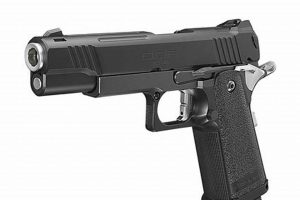
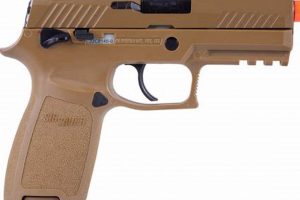
The selection of a primary weapon platform directly dictates the composition and functionality of an airsoft kit. The weapon’s design, capabilities, and specific requirements influence accessory compatibility, ammunition needs, and overall tactical role, shaping the entire loadout configuration.
- Magazine Compatibility
Different weapon platforms utilize varying magazine types and capacities. The choice of weapon determines the specific magazines required, impacting the load-bearing equipment necessary to carry sufficient ammunition. For example, an M4-style rifle necessitates M4 magazines, while an AK-platform requires AK magazines. The magazine type further influences pouch selection on vests or belts.
- Accessory Rail Systems
The presence and type of accessory rail systems (e.g., Picatinny, M-LOK) dictate the compatibility of optics, foregrips, lights, and other tactical accessories. A weapon with a Picatinny rail system allows for a wide range of readily available accessories, whereas a weapon without a rail system may require proprietary mounting solutions or limit accessory options.
- Internal Upgrade Potential
The potential for internal upgrades influences the long-term viability and performance of an airsoft weapon. Some platforms offer a greater variety of aftermarket parts for enhancing range, accuracy, and rate of fire. The availability of upgrade parts affects the potential to customize the weapon to specific gameplay styles or field conditions.
- Ammunition Type and Capacity
The weapon platform determines the type of ammunition (BB weight and material) suitable for optimal performance. Heavier BBs may be preferred for sniper rifles or DMRs, while lighter BBs may be used in automatic weapons. The weapon’s magazine capacity influences the rate of ammunition consumption and the number of magazines required for a sustained engagement.
These facets demonstrate the crucial link between the weapon platform and the overall design of an airsoft kit. The choice of weapon establishes fundamental parameters that dictate equipment selection, accessory compatibility, and tactical application, reinforcing the need for careful consideration when constructing a functional and effective loadout. The weapon platform thus serves as the cornerstone of any airsoft kit.
5. Protective Gear

Protective gear forms a non-negotiable component within any comprehensive equipment configuration. The inherent risks associated with airsoft activities, involving the propulsion of projectiles at considerable velocities, necessitate the prioritization of safeguarding vulnerable areas of the body. Eyewear compliant with ANSI Z87.1 standards, or equivalent international norms, is essential for mitigating the potential for ocular injuries. Similarly, face protection, encompassing mouth and ear coverings, prevents potential dental or auditory trauma. A complete consideration of protective elements dictates loadout assembly to minimize injury risk.
The integration of protective elements influences accessory selection and overall mobility. Bulkier protective masks might necessitate adjustments to aiming techniques, potentially requiring the use of riser mounts for optics. Body armor, while offering enhanced protection against projectile impacts, can restrict movement and increase fatigue. Practical application demonstrates that successful loadouts balance protection with agility. For example, lightweight plate carriers, coupled with flexible limb protection, provide a compromise between safety and operational effectiveness. Prioritization of essential protective items ensures participant well-being without compromising tactical capabilities.
In summary, protective gear is central to responsible participation in airsoft. Its presence mitigates the inherent hazards of the activity, minimizing the potential for injury and promoting participant safety. The integration of protective components into loadout design requires careful consideration of the balance between safety, mobility, and accessory compatibility. Prioritizing protection through high-quality, appropriately fitted gear should remain paramount in airsoft kit considerations.
6. Accessory Integration
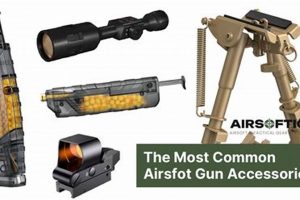
Effective integration of accessories constitutes a pivotal element in the configuration of comprehensive equipment. The seamless incorporation of ancillary devices and enhancements optimizes performance, augments tactical capabilities, and tailors the loadout to specific operational requirements. Accessory compatibility and ergonomic considerations are paramount for achieving optimal functionality and user experience.
- Optical Sight Systems
Optical sight systems, such as red dot sights, holographic sights, and magnified scopes, enhance target acquisition and improve aiming accuracy. These attachments necessitate proper mounting solutions and consideration of eye relief to ensure optimal sight alignment. For example, a red dot sight mounted on a rifle provides rapid target engagement in close-quarters combat, while a magnified scope enhances precision at longer ranges. The selection of an appropriate optic is dependent on the intended role and field environment.
- Illumination Devices
Illumination devices, including tactical flashlights and weapon-mounted lights, provide enhanced visibility in low-light conditions. The choice of illumination device should consider lumen output, beam pattern, and mounting compatibility. For instance, a high-lumen flashlight can disorient opponents and improve situational awareness in dimly lit environments. Weapon-mounted lights facilitate target identification and engagement in low-light scenarios, while headlamps provide hands-free illumination.
- Ergonomic Enhancements
Ergonomic enhancements, such as foregrips, vertical grips, and angled grips, improve weapon handling and reduce fatigue during extended engagements. These accessories provide a more comfortable and stable grip, enhancing recoil control and maneuverability. An angled foregrip can improve ergonomics and reduce wrist strain during sustained firing, while a vertical grip provides enhanced control for CQB scenarios. Selecting grips that are both comfortable and functional contributes to improved performance.
- Communication Systems
Communication systems, consisting of two-way radios and headsets, are crucial for team coordination and tactical awareness. These devices facilitate real-time communication between team members, enabling coordinated movements and effective strategy implementation. The range, clarity, and durability of the communication system are essential considerations. High-quality headsets with noise-canceling capabilities enhance communication in noisy environments. Effective communication contributes to improved team performance and overall success.
The integration of accessories requires a holistic approach, ensuring compatibility between individual components and the overall loadout design. Accessory selection should align with the intended role, field environment, and budgetary constraints. A well-integrated accessory suite enhances tactical capabilities and improves user experience, contributing to a more effective and enjoyable gaming experience. Properly executed accessory integration significantly refines comprehensive equipment and optimizes performance. Accessory selection ultimately enables personalized customization, maximizing user preparedness.
Frequently Asked Questions
The following addresses common inquiries regarding the composition and optimization of equipment for airsoft activities.
Question 1: What constitutes a fundamental equipment for initial participation?
The base necessitates ballistic-rated eyewear adhering to ANSI Z87.1 standards or equivalent, a functional airsoft replica, sufficient ammunition, and appropriate attire. Additional protective gear, such as face coverings, are highly recommended. The primary focus should be on safety and basic functionality.
Question 2: How significantly should budgetary constraints influence equipment selection?
Budgetary constraints invariably influence equipment selection. Prioritization of essential safety components and a reliable primary weapon is advisable. Lower-cost alternatives may suffice for ancillary items. Future upgrades may be considered as financial resources permit. Research and comparison are important.
Question 3: To what extent should equipment adapt to various field environments?
Environmental adaptation significantly enhances performance. Camouflage patterns should correspond to prevailing terrain. Load-bearing equipment ought to align with expected engagement distances and mobility requirements. Specialized footwear is critical for negotiating uneven terrain.
Question 4: Is there a distinct advantage in specializing equipment for specific roles?
Equipment specialization optimizes performance within designated roles. Snipers necessitate high-precision replicas and camouflage appropriate for concealment. Assault personnel require maneuverable weapon platforms and enhanced ammunition capacity. Specialization enhances effectiveness within prescribed tactical parameters.
Question 5: How crucial is accessory integration for equipment optimization?
Accessory integration significantly enhances equipment effectiveness. Optical sights improve target acquisition. Ergonomic enhancements improve weapon handling. Communication systems facilitate team coordination. Accessory selection should complement the primary weapon platform and align with tactical objectives.
Question 6: What are some prevailing misconceptions surrounding equipment?
A common misconception involves equating high-cost equipment with superior performance. Skill and tactical proficiency often compensate for equipment deficiencies. Another misconception is neglecting protective gear in favor of cosmetic enhancements. Safety remains paramount.
Careful consideration of these questions facilitates informed decision-making during equipment selection, resulting in optimized performance and enhanced safety.
The following article section will explore specific considerations regarding equipment maintenance and long-term care.
Concluding Summary
The preceding exploration of viable equipment centered on the pivotal elements that shape effective configurations. Considerations encompassing role specialization, field environment adaptability, budgetary constraints, weapon platform compatibility, protective gear integration, and accessory integration demonstrably influence the composition of airsoft loadouts. Proper attention to these factors directly contributes to enhanced operational capabilities and participant safety.
The selection of appropriate equipment necessitates diligent assessment and informed decision-making. Individuals are encouraged to critically evaluate their specific requirements, budgetary parameters, and tactical objectives. Consistent adherence to safety protocols, coupled with well-maintained equipment, will maximize the longevity and effectiveness of any chosen equipment. A strategically assembled kit, chosen with due diligence, will improve airsoft experiences.