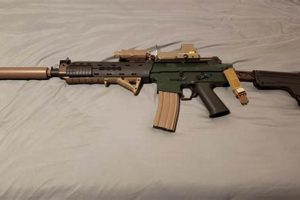
The development of this recreational activity, involving realistic toy guns that fire non-lethal projectiles, traces its origins back to Japan in the 1970s. Initially conceived as a means for law enforcement and firearms enthusiasts to practice simulated combat scenarios in a country with strict gun control laws, the concept soon gained traction among a wider audience seeking safe and engaging ways to replicate tactical training exercises. Early iterations focused on replicating the appearance and functionality of real firearms, emphasizing accuracy and realism in their design.
The significance of its evolution lies in providing a controlled environment for individuals to learn about firearm safety, teamwork, and strategic thinking. It offers a unique blend of physical activity, mental stimulation, and social interaction, fostering skills applicable in various real-world situations. From its humble beginnings, it has expanded globally, becoming a popular sport and hobby embraced by diverse communities worldwide, with participants engaging in organized matches, tactical simulations, and recreational target shooting.
The following sections will delve into specific aspects of the sport’s growth, examining the key technological advancements that shaped its trajectory, the evolution of gameplay styles and strategies, and the cultural impact it has had on various communities around the globe. The discussion will also consider the regulatory frameworks governing the sport in different regions and the ongoing debates surrounding its safety and responsible usage.
Considerations from an “Airsoft History” Perspective
Understanding the evolution of this pursuit allows for a more informed and strategic approach to participation. Examining past practices and technological developments provides valuable insights for current and future engagement.
Tip 1: Research Early Equipment. Familiarize yourself with the designs and limitations of early airsoft guns. This historical knowledge provides context for understanding current technological advancements and informs equipment choices.
Tip 2: Study Foundational Tactics. Analyze the tactical approaches employed in the early days. Often, simplicity and effective communication were key. Learning these fundamental strategies can enhance modern gameplay.
Tip 3: Understand Regional Variations. The activity developed differently in various regions. Researching these regional nuances, such as the Japanese origins versus European adoption, can broaden understanding of the sport’s diverse forms.
Tip 4: Trace Technological Developments. Follow the evolution of hop-up systems, battery technology, and projectile materials. This knowledge informs equipment maintenance and optimization.
Tip 5: Analyze Rule Set Evolution. Examine how safety regulations and gameplay rules have changed over time. This understanding promotes responsible participation and adherence to current standards.
Tip 6: Investigate Community Growth. Understanding how local and global communities developed informs the social dynamic of the sport and provides opportunities for networking and shared learning.
Tip 7: Acknowledge the Influence of Real-World Firearms. Early designs were often based on real-world firearms. Understanding these connections helps to appreciate the effort put into realism and the importance of responsible handling.
Appreciating the historical context leads to a more nuanced and informed experience. It allows for better equipment selection, improved tactical understanding, and a greater appreciation for the community and safety aspects of the activity.
With these historical considerations in mind, the article will now move on to discuss contemporary aspects of the sport.
1. Japanese Origins

The genesis of airsoft is intrinsically linked to Japans socio-political landscape of the 1970s. Strict firearm control laws, enacted following World War II, limited access to real firearms for recreational purposes. This restriction created a demand for alternative means of firearm simulation, leading to the development of realistic-looking, low-powered air guns as a substitute. These early replicas, manufactured by companies such as Tokyo Model Company (TMC) and later Tokyo Marui, prioritized aesthetic realism and offered a way for enthusiasts and law enforcement to practice firearm handling and tactical drills in a safe and legal manner. The cultural emphasis on meticulous craftsmanship and attention to detail, prevalent in Japanese manufacturing, significantly influenced the design and quality of these early airsoft devices. For example, TMC initially focused on creating accurate replicas of WWII firearms, using metal and wood to achieve a high degree of realism, a testament to the detail-oriented approach.
The impact of these Japanese origins extends beyond mere replication. The development of the “hop-up” system by Tokyo Marui in the 1980s represents a pivotal technological advancement. This system imparts backspin to the BB projectile, increasing its range and accuracy, fundamentally altering the gameplay dynamics. The innovation was crucial in transforming the hobby from simple target shooting to organized, competitive skirmishes involving complex strategies and teamwork. Without the Japanese impetus for realistic simulation under restrictive circumstances, airsoft might not have developed the core mechanics that underpin its modern form. The early Japanese market also established the safety standards that continue to influence airsoft regulations globally. Companies such as Tokyo Marui prioritized responsible manufacturing and promoted the use of protective gear, setting a precedent for safe gameplay.
In conclusion, Japanese origins constitute a foundational element of airsoft’s narrative. The confluence of strict gun control, a culture of meticulous craftsmanship, and groundbreaking technological innovations resulted in the creation of a unique activity that has since expanded globally. Understanding this historical context is vital for appreciating the design philosophies, safety protocols, and cultural nuances associated with the sport. The legacy of these early Japanese manufacturers continues to shape the industry, impacting everything from equipment design to gameplay styles, solidifying the pivotal role of Japanese origins in shaping the sport’s identity and overall trajectory.
2. Technological Advancement

Technological advancements have been integral to the evolution of airsoft, shaping its gameplay, realism, and overall popularity. From rudimentary spring-powered mechanisms to sophisticated electronic systems, innovation has consistently redefined the capabilities and user experience within the sport.
- Hop-Up Systems
The introduction of the hop-up system represented a watershed moment in airsoft history. This mechanism, which imparts backspin to the BB projectile, significantly extended range and improved accuracy. Early hop-up systems were rudimentary and often inconsistent, but subsequent refinements have led to adjustable and highly effective designs. The impact of hop-up cannot be overstated, as it transformed airsoft from a short-range skirmish activity to a more tactical and long-range engagement sport.
- Gearbox Evolution
The gearbox is the heart of most electric airsoft guns (AEGs), and its development has been a key area of technological advancement. Early gearboxes were prone to failure and offered limited performance. Over time, improvements in materials, design, and manufacturing processes have resulted in more durable, efficient, and powerful gearboxes. The evolution of the gearbox has enabled higher rates of fire, greater power outputs, and improved reliability, thereby enhancing the overall performance and longevity of AEGs.
- Battery Technology
Battery technology has played a crucial role in the development of AEGs. Early batteries were often unreliable and offered limited capacity. The transition from NiCd to NiMH and subsequently to LiPo batteries has resulted in significant improvements in battery life, discharge rates, and overall performance. Modern LiPo batteries provide AEGs with the power needed to achieve high rates of fire and sustained operation, making them essential components in competitive airsoft.
- Materials and Manufacturing
Advancements in materials and manufacturing processes have significantly influenced the durability, realism, and performance of airsoft guns. The shift from predominantly plastic construction to the use of metal alloys, polymers, and composite materials has resulted in more robust and realistic replicas. CNC machining, injection molding, and other advanced manufacturing techniques have enabled greater precision and consistency in production, improving the overall quality and reliability of airsoft guns.
The cumulative effect of these technological advancements has been to transform airsoft from a niche hobby into a globally recognized sport. Continuous innovation in hop-up systems, gearboxes, battery technology, materials, and manufacturing processes has driven improvements in realism, performance, and reliability. This ongoing evolution ensures airsoft remains dynamic and engaging, attracting new participants and retaining seasoned veterans alike. The relentless pursuit of technological advancement is a defining characteristic of airsoft history and continues to shape its future.
3. Safety Regulation

The evolution of airsoft is inextricably linked to the development and enforcement of safety regulations. These regulations, established and refined over time, have served to mitigate risks, promote responsible gameplay, and legitimize the sport. The history of airsoft cannot be accurately portrayed without acknowledging the crucial role that safety protocols have played in its sustained growth and acceptance.
- Eye Protection Standards
Mandatory eye protection is perhaps the most fundamental safety regulation in airsoft. The use of ANSI-rated goggles or full-face masks is universally required to prevent serious eye injuries from BB projectiles. The gradual adoption of stringent eye protection standards, influenced by medical data and industry best practices, directly corresponds to a decrease in reported eye injuries within the sport. Early airsoft participants often employed inadequate protection, resulting in preventable harm. Modern standards, continually updated and enforced by field operators and event organizers, underscore the importance of prioritizing player safety. This evolution reflects a shift from a more lax approach to a heightened awareness and commitment to minimizing risk.
- Velocity Limits
Establishing and enforcing velocity limits, typically measured in feet per second (FPS) with a standardized weight BB, is critical for managing the potential for injury. Different fields and game types often have varying FPS limits, reflecting considerations for engagement distances and player safety. The historical trend has been toward lowering FPS limits in specific scenarios, such as indoor or close-quarters battle (CQB) environments, to reduce the impact force of BBs. Chronograph testing, used to verify that airsoft guns comply with established velocity limits, is now a standard practice at organized events. This ensures fairness and adherence to safety guidelines. The implementation of velocity limits is an ongoing process, shaped by practical experience, technological advancements in airsoft gun performance, and a commitment to minimizing potential harm.
- Minimum Engagement Distances
Minimum engagement distances (MEDs) are another vital safety regulation designed to prevent injuries at close range. These rules stipulate a minimum distance at which players can engage each other with their airsoft guns. If players find themselves within the MED, they are typically required to use a sidearm with a lower FPS, verbally call a “bang kill” (informing the opponent they are considered eliminated), or disengage to a safer distance. The establishment of MEDs acknowledges the potential for increased discomfort or injury at point-blank range. This rule has evolved alongside the sport to adapt to different weapon types and gameplay styles. Its consistent enforcement contributes significantly to player safety and ensures a more enjoyable experience for all participants.
- Safe Zones and Weapon Handling Protocols
Designated safe zones, where airsoft guns must be unloaded and safety precautions are strictly observed, are essential for preventing accidental discharges and ensuring a safe environment for players to transition between gameplay and rest periods. Weapon handling protocols, including the use of barrel socks or plugs and the prohibition of firing within safe zones, are strictly enforced to minimize the risk of unintentional injuries. These protocols have become standardized across most airsoft fields and events, reflecting a collective commitment to responsible gun handling. The evolution of safe zone protocols has been influenced by lessons learned from past incidents, demonstrating the importance of continuous improvement and adherence to best practices. These measures, while seemingly simple, are crucial for maintaining a safe and controlled environment within the airsoft community.
In summation, safety regulations constitute a cornerstone of airsoft history. The establishment and continuous refinement of these regulations reflect a commitment to player well-being, responsible gameplay, and the sustained growth of the sport. By prioritizing safety, the airsoft community has fostered a culture of respect and responsible participation, ensuring that the sport remains both engaging and safe for all.
4. Gameplay Evolution
Gameplay evolution is a critical component of airsoft history, directly influencing its trajectory and enduring appeal. Initial gameplay was rudimentary, often involving unstructured target shooting or basic skirmishes. As equipment and technology improved, gameplay evolved to incorporate tactical elements, mirroring military simulations. The development of the hop-up system, enabling longer-range engagements, necessitates strategic positioning and coordinated teamwork. This technological advancement catalyzed the shift from disorganized skirmishes to structured, objective-based games. For instance, the introduction of Capture the Flag or Search and Destroy scenarios demanded coordinated strategies, transforming the sport into a more immersive and mentally engaging experience. These scenarios, initially adapted from video games or real-world military tactics, provided a framework for organized gameplay, fostering teamwork and strategic thinking among participants. The cause-and-effect relationship between technological innovation and gameplay sophistication is evident throughout airsoft history, highlighting the importance of adaptability and creativity within the community.
The diversification of gameplay styles further exemplifies its evolution. MilSim (Military Simulation) events, prioritizing realism and adherence to military protocols, emerged as a distinct subgenre. These events often involve extended durations, complex objectives, and specialized equipment, demanding significant commitment and tactical proficiency. Conversely, speedsoft, characterized by fast-paced, close-quarters engagements, emphasizes agility and rapid reaction times. The emergence of these distinct styles demonstrates the adaptability of airsoft, catering to diverse preferences and skill levels. Airsoft history reveals a constant cycle of innovation and adaptation, where new equipment or rulesets spark changes in gameplay. The practical significance of understanding this evolution lies in appreciating the diversity of experiences available within the sport and the factors that contribute to its ongoing development. Examining specific innovations and how they impacted gameplay is a key element for new and old players alike, fostering a deeper understanding of the roots of modern airsoft.
In conclusion, gameplay evolution serves as a dynamic thread woven throughout the tapestry of airsoft history. Its continuous transformation, driven by technological advancements, community innovation, and the desire for enhanced realism and engagement, has shaped the sport’s identity and sustained its growth. Challenges in adapting to new gameplay styles or rule sets highlight the importance of adaptability and a willingness to embrace change within the community. Understanding this evolution is crucial for appreciating the multifaceted nature of airsoft and its enduring capacity for reinvention, solidifying its position as a constantly evolving and engaging recreational activity.
5. Community Growth
Community growth is an inseparable element of airsoft history, profoundly influencing its development and propagation. Initial expansion, driven by word-of-mouth and nascent internet forums, fostered a shared enthusiasm and created a platform for exchanging information regarding equipment modifications, gameplay tactics, and organized events. This early connectivity facilitated the standardization of rules, established safety protocols, and encouraged the formation of localized airsoft teams. The influence of community-driven initiatives cannot be overstated. For example, the development of field-specific rules, tailored to the unique characteristics of individual playing environments, was largely a community-led effort. This localized customization enhanced player safety and increased engagement, fostering a sense of ownership and shared responsibility. The growth of airsoft, therefore, is not simply a matter of increased participation but rather a reflection of a collective effort to cultivate a sustainable and responsible recreational activity. Without this interconnectedness and shared purpose, airsoft history would likely be marked by fragmentation and inconsistency.
Furthermore, the emergence of online communities, including forums, social media groups, and video-sharing platforms, has significantly accelerated community growth. These digital spaces provide avenues for showcasing gameplay footage, reviewing equipment, sharing technical expertise, and coordinating large-scale events. The impact of these online platforms is particularly evident in the rise of airsoft YouTubers and social media influencers who have cultivated large audiences, promoting the sport to new demographics and shaping consumer trends. The practical application of this understanding lies in recognizing the power of community-driven marketing and the importance of fostering positive online interactions. Event organizers, equipment manufacturers, and individual players can leverage these platforms to expand their reach, promote responsible gameplay, and cultivate a thriving airsoft ecosystem. Examining the historical impact of online communities reveals a direct correlation between digital connectivity and the sport’s global expansion.
In conclusion, community growth is a fundamental component of airsoft history, inextricably linked to its development, dissemination, and sustained popularity. From initial localized teams to expansive online networks, the airsoft community has consistently shaped the sport’s trajectory. Challenges such as managing online toxicity or promoting responsible gameplay within digital spaces remain ongoing concerns. However, the overall influence of community growth is undeniably positive, fostering a sense of shared purpose, driving innovation, and ensuring the continued evolution of airsoft as a globally recognized recreational activity. This understanding underscores the importance of actively participating in and contributing to the airsoft community, ensuring its continued health and vitality.
Frequently Asked Questions About Airsoft History
This section addresses common inquiries concerning the evolution, key events, and significant figures shaping the sport’s trajectory.
Question 1: What are the primary factors that led to the creation of airsoft?
Stringent firearm regulations in Japan, enacted post-World War II, restricted access to real firearms for recreational purposes. This constraint spurred the development of realistic-looking, low-powered air guns as a substitute for training and simulated combat scenarios. The early manufacturers focused on replication of the real weapons and how they work.
Question 2: Who are considered the pioneering manufacturers in the airsoft industry?
Tokyo Model Company (TMC) and Tokyo Marui are recognized as early pioneers. They prioritized aesthetic realism and reliable mechanics. Tokyo Marui’s introduction of the hop-up system, enhancing projectile range and accuracy, was a pivotal innovation.
Question 3: How has the technology of airsoft guns evolved over time?
The earliest models were spring-powered. Technology advanced to electric-powered (AEGs), gas-powered (GBB) and high pressure air (HPA) systems, significantly improving performance. Battery technology (NiCd, NiMH, LiPo) and materials used in construction (metal alloys, polymers) have also contributed to enhanced durability and realism.
Question 4: What are the key elements of safety regulation in airsoft?
Mandatory eye protection (ANSI-rated goggles or full-face masks) is paramount. Velocity limits (FPS) are enforced via chronograph testing to manage impact force. Minimum engagement distances (MEDs) prevent injuries at close range. Safe zones and strict weapon handling protocols further minimize risk.
Question 5: How has airsoft gameplay changed since its inception?
Gameplay has evolved from unstructured skirmishes to tactical, objective-based scenarios, mirroring military simulations. This includes Capture the Flag and Search and Destroy modes, as well as MilSim (Military Simulation) events emphasizing realism and strategic coordination.
Question 6: What role has the online community played in the growth of airsoft?
Online forums, social media groups, and video-sharing platforms have accelerated community growth. These digital spaces facilitate information exchange, equipment reviews, and event coordination. This fosters positive online interactions, promoting the sport and responsible gameplay across global demographics.
Understanding these facets provides a comprehensive view of the sport’s development, technological advancements, and the evolving role of its community.
The article will now transition to explore current trends in the airsoft industry.
The Enduring Significance of Airsoft History
This exploration of airsoft history reveals a trajectory marked by technological innovation, evolving gameplay, and a vibrant community. The sport’s Japanese origins, born from firearm restrictions, established a foundation for realism and responsible recreation. Subsequent advancements in equipment, safety protocols, and tactical simulations have shaped airsoft into a dynamic activity enjoyed globally.
As the sport continues to evolve, a firm understanding of its past is crucial. Examining airsoft history equips participants with valuable insights into the principles that underpin its continued success and responsible practice. Consider the historical context when engaging with the sport and contributing to its future development.