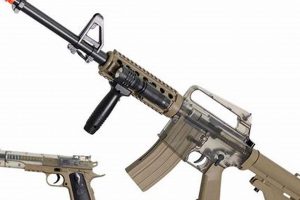
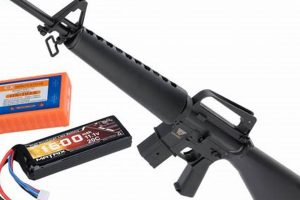
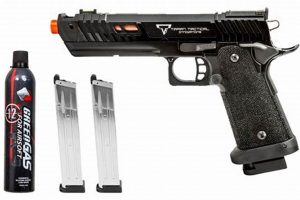
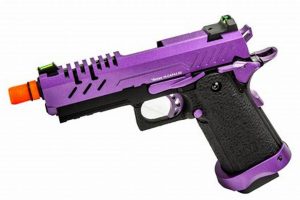
The selection of a suitable airsoft replica firearm involves careful consideration. These devices, designed to launch spherical projectiles typically made of plastic, are often employed in recreational and competitive simulated combat scenarios. The choice of a particular model depends on factors such as intended use, field regulations, and personal preferences regarding realism, ergonomics, and operational mechanisms.
Acquiring appropriate airsoft equipment offers several advantages, including opportunities for tactical skill development, physical exercise, and social interaction within organized groups. Furthermore, responsible participation can promote firearm safety awareness and responsible handling practices. The history of these devices traces back to post-World War II Japan, evolving from simple spring-powered mechanisms to sophisticated electric and gas-powered platforms.
Subsequent sections will delve into the various types of airsoft mechanisms, explore selection criteria based on gameplay styles, outline essential safety considerations, and provide a comprehensive overview of reputable manufacturers and retailers of relevant equipment.
Selection Guidance
This section provides guidance on considerations prior to acquiring a suitable airsoft replica firearm. Careful evaluation of these factors will contribute to a satisfactory and safe user experience.
Tip 1: Assess Intended Use: Define the primary context of use. Is it for close-quarters battle (CQB), outdoor field play, target practice, or historical reenactment? This determination will influence the optimal type and configuration of the device.
Tip 2: Understand Field Regulations: Familiarize yourself with the specific rules and restrictions of the airsoft fields where the device will be used. These regulations often dictate maximum projectile velocity (measured in feet per second, FPS), joule limits, and acceptable device types.
Tip 3: Consider Mechanism Type: Evaluate the different power sources and operating mechanisms, including spring-powered, electric-powered (AEG), gas-powered (GBB/NBB), and high-pressure air (HPA) systems. Each offers distinct advantages and disadvantages regarding cost, performance, and maintenance requirements.
Tip 4: Evaluate Ergonomics and Handling: Assess the device’s ergonomics, weight distribution, and overall handling characteristics. A comfortable and easily manipulated device will enhance performance and reduce fatigue during extended use.
Tip 5: Research Manufacturer Reputation: Investigate the reputation and reliability of various manufacturers. Established brands often offer superior build quality, performance, and after-sales support. Consult online reviews and user forums for unbiased feedback.
Tip 6: Prioritize Safety Features: Ensure the device incorporates essential safety features, such as a functional safety selector, a barrel-blocking device, and appropriate warning labels. Responsible handling practices and adherence to safety guidelines are paramount.
Tip 7: Budget Accordingly: Establish a realistic budget that encompasses the device itself, along with necessary accessories such as protective eyewear, magazines, batteries (if applicable), and appropriate ammunition. Avoid compromising on quality or safety to reduce costs.
Careful consideration of these tips ensures the acquisition of an appropriate and suitable airsoft device, contributing to a safe and enjoyable airsoft experience.
The subsequent section will explore specific models and market trends.
1. Mechanism types

The internal mechanism that propels a projectile from the device significantly influences the user’s experience and the device’s suitability for particular scenarios. Therefore, understanding the various operational mechanisms is crucial during the procurement process.
- Electric (AEG – Automatic Electric Gun)
AEGs utilize an electric motor to drive a gearbox, which in turn compresses a spring and releases it to propel the projectile. They offer a consistent rate of fire, are generally reliable, and are suitable for a wide range of gameplay styles. The selection of an AEG involves considering battery voltage, gear ratios, and motor type, all of which impact performance. Example: A high-torque motor in an AEG is beneficial for rapid trigger response in close-quarters combat. Conversely, a lower voltage battery may be insufficient for prolonged operation in a field environment.
- Gas Blowback (GBB)
GBB replicas use compressed gas, typically propane or CO2, to propel the projectile and cycle the slide or bolt, simulating the recoil of a real firearm. These devices prioritize realism and offer a more engaging experience. However, performance can be affected by temperature and gas pressure. Example: A GBB pistol’s performance might diminish in cold weather due to reduced gas pressure. Regular maintenance and lubrication are essential to ensure reliable operation and prevent leaks.
- Spring-Powered
Spring-powered devices require manual cocking before each shot, compressing a spring that then propels the projectile. They are generally inexpensive, reliable, and require minimal maintenance. However, their single-shot nature limits their use in many competitive scenarios. Example: Bolt-action sniper rifles often utilize a spring-powered mechanism for its simplicity and power. These devices require significant effort to cock between each shot, making them unsuitable for fast-paced engagements.
- High-Pressure Air (HPA)
HPA systems use a remote air tank connected to the device via a hose, providing a consistent and adjustable source of power. They offer high performance, consistent velocity, and customizable firing modes. However, they require a significant initial investment and necessitate carrying an external air tank. Example: An HPA-powered rifle can maintain a consistent velocity regardless of temperature fluctuations, making it advantageous in competitive environments. The external air tank adds weight and requires careful management during gameplay.
Choosing the appropriate mechanism type is a critical decision when undertaking an airsoft replica firearm acquisition. The selection process is contingent upon factors such as budget constraints, the desired degree of realism, and the specific gameplay environments. Consideration of these elements ensures optimal performance and user satisfaction.
2. Velocity Limits

The regulated kinetic energy output, expressed as velocity limits, is a fundamental constraint influencing the selection and permissible usage of devices that launch projectiles. Airsoft fields and organized events universally impose restrictions on the maximum projectile velocity to mitigate the risk of injury. These limits, typically measured in feet per second (FPS) with a standardized projectile weight, dictate the types of devices that are deemed safe for use within specific play environments. The correlation between a specific model and its compliance with established velocity limits is therefore a primary consideration during the acquisition process.
The implications of exceeding permissible velocity limits extend beyond potential physical harm. Non-compliance can result in disqualification from events, revocation of field privileges, and potential legal repercussions in jurisdictions with applicable regulations. Furthermore, modifications intended to increase projectile velocity often compromise the device’s reliability and longevity, negating any perceived performance gains. For example, a replica advertised with a high FPS value may prove unusable at fields with stricter regulations, rendering the acquisition pointless. Conversely, devices deliberately engineered to meet specific velocity constraints demonstrate a commitment to safety and responsible participation.
In summary, understanding and adhering to projectile velocity limitations constitutes an essential component of responsible ownership. The acquisition of a device necessitates a thorough evaluation of its velocity output relative to the regulations of intended usage environments. Failure to do so can lead to safety risks, legal liabilities, and ultimately, an unserviceable device. Responsible acquisition practices prioritize safety and regulatory compliance above purely performance-oriented metrics.
3. Field Regulations

The selection of an airsoft device is inextricably linked to the field regulations governing its usage. These regulations, established and enforced by airsoft field operators, constitute a critical determinant in device suitability and legality. Failure to align device specifications with field-specific rules results in immediate disqualification and potential safety hazards. Therefore, a comprehensive understanding of these regulations is essential prior to acquisition.
Field regulations encompass a range of parameters, including maximum projectile velocity (FPS), joule limits, permissible device types (e.g., full auto restrictions), and minimum engagement distances. Consider, for example, a device exceeding a field’s FPS limit; its use would be prohibited, rendering the acquisition imprudent. Furthermore, regulations may dictate the types of power sources allowed, restricting the use of certain gas-powered devices due to safety concerns. Strict adherence ensures fair gameplay and mitigates the risk of injury to participants. Real-world examples include fields that ban sniper rifles in close-quarters combat zones due to their high FPS and inherent safety concerns in confined spaces.
In conclusion, field regulations exert a primary influence on airsoft device procurement. The informed selection of a device necessitates a detailed review of the regulations of the intended playing fields. The challenge lies in balancing performance considerations with the imperative for safety and regulatory compliance. Ultimately, responsible acquisition practices prioritize adherence to field regulations, ensuring a safe and equitable playing environment for all participants.
4. Protective Gear

The acquisition of airsoft devices necessitates a concomitant investment in protective gear. This gear functions as a critical safeguard against potential injuries arising from projectile impact. The relationship between these devices and protective measures is fundamentally causal: the devices project projectiles, and protective gear mitigates the associated risks. Eye protection, in the form of ANSI-rated goggles or full-face masks, is paramount due to the vulnerability of the eyes. Failure to use appropriate eye protection invariably results in severe injury should a projectile strike the ocular region. Similarly, facial protection shields the face from potential lacerations, contusions, or dental damage. While less critical than eye protection, body armor and gloves offer protection against minor impacts and abrasions, enhancing overall safety. For example, purchasing a high-powered airsoft sniper rifle without simultaneously procuring adequate eye protection constitutes a reckless disregard for safety protocols.
The selection of protective gear should mirror the intensity and nature of the intended gameplay environment. Close-quarters battle (CQB) scenarios often necessitate full-face protection due to the increased likelihood of close-range impacts. Conversely, outdoor field play may allow for the use of goggles with lower face protection, provided minimum engagement distances are strictly observed. Furthermore, the quality and certification of the protective gear directly impact its efficacy. Compliance with ANSI Z87.1 standards for eye protection ensures a specific level of impact resistance. Inferior, non-certified gear may offer inadequate protection, rendering it functionally useless. Consider a scenario where a low-quality mesh goggle fails to withstand a direct projectile impact, resulting in eye injury. This emphasizes the imperative of investing in certified, high-quality protective equipment.
In summary, protective gear constitutes an indispensable component within the broader context of airsoft participation. The relationship is not merely advisory but a safety imperative, with demonstrable consequences arising from negligence. Prioritizing protective equipment alongside the purchase of airsoft devices exemplifies a responsible approach to the sport, promoting participant safety and minimizing the risk of injury. The challenge lies in consistently enforcing protective gear usage and educating participants on the importance of adhering to safety protocols. Ultimately, the synergy between airsoft devices and protective equipment fosters a safer and more enjoyable recreational experience.
5. Manufacturer Reputation

The credibility of the manufacturing entity directly impacts the acquisition and long-term usability of projectile-launching recreational devices. Established manufacturers typically adhere to stricter quality control measures and employ higher-grade materials, influencing the overall performance and longevity of their products.
- Material Quality and Durability
Reputable manufacturers are more likely to utilize robust polymers, reinforced metal alloys, and precision-machined internal components. This translates to increased resistance to wear and tear, diminished risk of mechanical failures, and extended product lifespan. A device constructed with substandard materials is prone to premature degradation, requiring frequent repairs or replacements, ultimately increasing the total cost of ownership. For instance, a manufacturer known for using high-grade aluminum in receiver construction will likely produce a more durable and reliable device than one using a lower-quality alloy or polymer.
- Performance Consistency and Accuracy
Manufacturers with a proven track record often invest in advanced manufacturing techniques and rigorous testing procedures to ensure consistent performance across their product lines. This manifests as predictable projectile velocity, accurate trajectory, and reliable firing mechanisms. Conversely, devices from less reputable manufacturers may exhibit erratic performance, compromised accuracy, and inconsistent firing rates. A lack of consistency undermines the user’s ability to effectively engage targets and detracts from the overall recreational experience.
- After-Sales Support and Parts Availability
Established manufacturers typically maintain comprehensive customer support networks and offer readily available replacement parts. This ensures timely resolution of technical issues and facilitates the repair or replacement of damaged components. Conversely, devices from lesser-known manufacturers may lack adequate support channels and suffer from limited parts availability. This can render the device unusable in the event of a malfunction or breakage, incurring additional expenses and frustration. A manufacturer with a dedicated service department and an extensive parts catalog demonstrates a commitment to customer satisfaction and product longevity.
- Innovation and Technological Advancement
Leading manufacturers often dedicate resources to research and development, resulting in innovative designs, enhanced features, and improved performance characteristics. This can include advancements in hop-up systems, trigger mechanisms, and electronic control units. A manufacturer that actively invests in technological innovation demonstrates a commitment to pushing the boundaries of performance and providing users with cutting-edge devices. Devices from manufacturers that prioritize innovation often offer enhanced accuracy, increased firing rates, and improved overall performance compared to older or less technologically advanced models.
In conclusion, considering manufacturer reputation is paramount when procuring projectile-launching recreational devices. Reputable manufacturers offer enhanced material quality, consistent performance, comprehensive support networks, and ongoing technological innovation. This translates to increased product lifespan, improved user experience, and a greater return on investment. Conversely, devices from less reputable manufacturers are prone to diminished performance, increased failure rates, and limited support, ultimately compromising user satisfaction and safety.
Frequently Asked Questions
This section addresses common inquiries regarding the selection, regulation, and responsible usage of airsoft replica firearms. The information provided aims to clarify misconceptions and provide guidance for prospective purchasers.
Question 1: Are these devices considered firearms?
Legal classifications vary by jurisdiction. In many regions, these devices are not classified as firearms under national or regional laws due to their lower projectile energy and non-lethal design. However, they are often subject to specific regulations regarding sale, possession, and usage. Consult local laws for definitive classification.
Question 2: What is the significance of FPS (Feet Per Second) ratings?
FPS represents the projectile’s velocity as it exits the barrel, a critical factor governing safety and field compliance. Higher FPS values indicate greater projectile energy, necessitating stricter safety protocols and potentially limiting usage on fields with velocity restrictions. Exceeding field velocity limits can result in expulsion from gameplay.
Question 3: What distinguishes gas-powered (GBB) from electric-powered (AEG) mechanisms?
Gas-powered devices utilize compressed gas to propel the projectile, often simulating recoil for enhanced realism. Electric-powered devices employ an electric motor to drive a piston and compress air. Gas-powered devices typically offer greater realism but can be sensitive to temperature fluctuations. Electric-powered devices provide consistent performance but require battery maintenance.
Question 4: Is eye protection optional during gameplay?
Eye protection is not optional; it is a mandatory safety requirement. Direct projectile impact to the ocular region can result in severe and permanent injury. ANSI-rated goggles or full-face masks are essential protective equipment and must be worn at all times during gameplay.
Question 5: What factors should influence the selection of a specific model?
Selection should be guided by intended usage (CQB vs. outdoor field play), field velocity limits, budget constraints, personal preference regarding realism, and manufacturer reputation. Researching product reviews and consulting with experienced players is recommended.
Question 6: Where can devices be legally acquired?
Acquisition should occur through reputable retailers or authorized distributors. Ensure the vendor complies with all applicable federal, state, and local regulations regarding the sale of these devices. Avoid purchasing from unregulated sources to minimize the risk of acquiring non-compliant or potentially unsafe products.
Adherence to safety regulations, responsible usage, and informed purchasing decisions are paramount to ensuring a safe and enjoyable airsoft experience.
The subsequent section will provide a market overview, examining current trends and prominent manufacturers.
Airsoft Guns to Buy
The preceding discourse has addressed the multifaceted considerations integral to the acquisition of airsoft replica firearms. These considerations span mechanism types, regulatory compliance, safety protocols, and manufacturer reputations, each contributing significantly to responsible ownership and user experience. The selection process requires a deliberate assessment of individual needs, field-specific rules, and budget constraints, ensuring the chosen device aligns with intended applications and regulatory frameworks.
The acquisition of such devices necessitates a commitment to safety, ethical conduct, and adherence to applicable regulations. Continued awareness of evolving technologies, market trends, and regulatory changes is crucial for informed decision-making. The responsible acquisition, usage, and maintenance of these devices foster a safe and engaging recreational environment, benefiting participants and upholding the integrity of the activity.