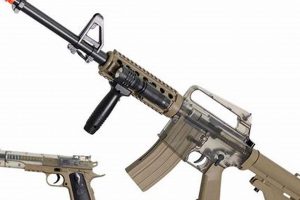
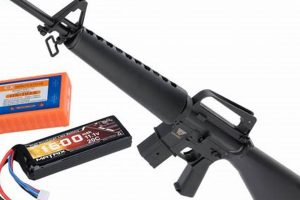
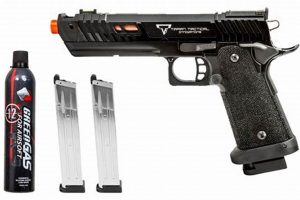
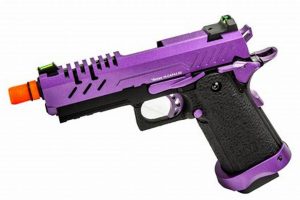
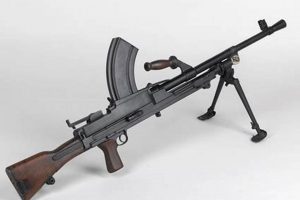
These are replica firearms designed to fire small, spherical plastic projectiles. Commonly employed in recreational simulations of tactical scenarios, these devices are scaled-down versions of real handguns, meticulously crafted to resemble their authentic counterparts. The propellants used are typically compressed gas or spring mechanisms. These are often used in simulated combat scenarios.
The significance of these devices lies in their ability to provide a safe and accessible platform for individuals to engage in tactical training and simulated combat. Their design promotes teamwork, strategic thinking, and responsible handling of replica firearms. Historically, their popularity has grown alongside the increasing interest in military simulation and realistic training exercises for entertainment and skill development.
The following sections will explore the various types available, the mechanics of operation, safety protocols, and the legal considerations associated with their use. Understanding these aspects is crucial for both novice and experienced participants in the sport and hobby.
Essential Considerations for Airsoft Handgun Utilization
The following guidelines are designed to enhance the safety, performance, and longevity of airsoft handguns, ensuring responsible and effective utilization in relevant scenarios.
Tip 1: Prioritize Protective Gear: Eye protection is paramount. A full-seal goggle system designed to withstand the impact of airsoft projectiles is mandatory. Consider additional face and body protection based on the intensity of use.
Tip 2: Understand Gas System Compatibility: When applicable, select the appropriate gas type (e.g., green gas, CO2) based on the handgun’s design and operating environment. Using an incompatible gas can damage internal components or reduce performance.
Tip 3: Regularly Maintain Internal Components: Periodically disassemble and clean internal parts, such as the barrel, hop-up unit, and gas valve. Apply silicone lubricant to moving parts to reduce friction and prevent wear.
Tip 4: Select Appropriate Projectile Weight: Use BBs of the correct weight for the handgun’s power output and hop-up system. Lighter BBs may be deflected by wind, while heavier BBs may not achieve optimal range.
Tip 5: Adhere to Local Regulations: Be aware of and strictly comply with all local laws and regulations regarding the possession, transportation, and use of airsoft handguns. This includes proper storage and transportation methods.
Tip 6: Practice Responsible Handling: Treat every airsoft handgun as if it were a real firearm. Keep the muzzle pointed in a safe direction, and never point it at anything one does not intend to simulate targeting.
Tip 7: Store Safely: Store unloaded, with the magazine removed and the gas cylinder removed, where applicable, and keep out of reach of children and those unfamiliar with the responsible operation of the device.
By adhering to these considerations, users can maximize the effectiveness, safety, and enjoyment of these devices while minimizing the risk of accidents or legal complications.
The next section will summarize the key points discussed and offer concluding thoughts on the responsible use and appreciation of airsoft handguns.
1. Realism

Realism constitutes a significant factor in the design, appeal, and utilization of airsoft handguns. The degree to which these devices replicate the appearance, weight, and handling characteristics of actual firearms directly impacts their utility for training simulations, historical reenactments, and recreational activities. The pursuit of realism often drives manufacturers to incorporate features such as realistic field stripping, functioning safety mechanisms, and accurate magazine capacities. The effect of this emphasis is to provide a more immersive and authentic experience for users.
The importance of realism extends beyond mere aesthetic appeal. For individuals engaged in law enforcement or military training, realistic airsoft handguns offer a cost-effective and safe means of practicing weapon handling, tactical maneuvers, and target acquisition in environments where the use of live firearms is impractical or hazardous. For example, airsoft versions of Glock pistols are widely used in scenario-based training for police officers to simulate real-world engagement situations. Similarly, historical reenactors rely on accurately replicated airsoft weapons to enhance the authenticity of their performances and events.
However, challenges remain in achieving complete realism while maintaining safety and affordability. The materials used in airsoft handguns, such as polymers and lightweight metals, may not perfectly replicate the heft and feel of their real steel counterparts. Legal restrictions and manufacturing costs also influence the design and functionality of these replicas. Despite these challenges, the continued emphasis on realism ensures that airsoft handguns remain a valuable tool for training, recreation, and historical preservation, while fostering a greater awareness of firearm safety and responsible gun handling practices.
2. Gas Systems
Gas systems are fundamental to the operation of many airsoft handguns, providing the propellant force necessary to discharge projectiles. The type of gas system employed directly influences the handgun’s power, consistency, and overall performance. Common gas types include green gas, propane (with an adapter), CO2, and high-pressure air (HPA). Each gas exhibits distinct pressure characteristics and requires specific internal components within the handgun to function safely and effectively. For instance, a handgun designed for green gas may sustain damage if used with the higher pressure of CO2 without modification or proper valve regulation.
The efficiency and reliability of a gas system significantly affect an airsoft handgun’s usability in the field. A well-maintained gas system ensures consistent shot velocity, which is critical for accuracy and range. Moreover, gas efficiency determines the number of shots that can be fired from a single gas fill, impacting tactical considerations during gameplay. Certain gas systems are more sensitive to temperature variations, potentially affecting performance in colder climates. For example, CO2 systems tend to be less affected by temperature fluctuations compared to green gas systems. The practical implication of this understanding is that users must select the appropriate gas type and maintain their handgun’s gas system to optimize performance under various environmental conditions.
In conclusion, gas systems are integral components determining the functionality and performance of many airsoft handguns. Proper selection and maintenance of these systems are crucial for ensuring consistent shot velocity, efficient gas consumption, and reliable operation. Users must carefully consider gas type compatibility, environmental factors, and regular maintenance protocols to maximize the lifespan and effectiveness of their airsoft handguns. Understanding gas systems is not only vital for performance but is equally important for safety, as misuse of incorrect gas types can potentially damage the airsoft gun. The practical significance of this knowledge allows for informed decision-making when choosing and maintaining airsoft handguns, contributing to both responsible gun ownership and enhanced gameplay experience.
3. BB Weight

BB weight is a critical factor directly influencing the performance and accuracy of airsoft handguns. Projectile mass affects flight trajectory, range, and the effective transfer of energy upon impact. Lighter BBs (e.g., 0.12g or 0.20g) exhibit higher velocities initially but are more susceptible to wind drift and lose momentum rapidly, limiting effective range. Heavier BBs (e.g., 0.25g, 0.28g, or heavier) offer increased stability in flight and better resist external factors like wind, resulting in improved accuracy and longer range, albeit with a slightly reduced initial velocity. The selection of appropriate BB weight must align with the handgun’s power output (measured in feet per second, or FPS) and the intended use scenario.
The interaction between BB weight and the handgun’s hop-up system is also crucial. The hop-up unit imparts backspin on the BB, creating lift that counteracts gravity and extends the projectile’s range. Incorrect BB weight can render the hop-up system ineffective, leading to either over-hopping (BB curving upward excessively) or under-hopping (BB dropping sharply). For example, a handgun designed to shoot at 300 FPS might perform optimally with 0.25g BBs, whereas a higher-powered handgun exceeding 350 FPS may require 0.28g or even heavier BBs to achieve a stable and accurate trajectory. Furthermore, considerations should be given to the playing field; outdoor, wider-ranged fields benefit from higher BB weights, whereas tighter indoor fields benefit from lighter BB weights with a low FPS.
In summary, BB weight represents a significant variable in optimizing the performance of airsoft handguns. Selection requires careful consideration of the handgun’s power output, the capabilities of its hop-up system, and the environmental conditions in which it will be used. An informed decision regarding BB weight contributes directly to enhanced accuracy, increased effective range, and a more consistent and enjoyable user experience. Proper BB weight can be described as the ammunition used for airsoft guns pistols.
4. Hop-Up Units

Hop-up units constitute a critical component in airsoft handguns, substantially influencing projectile trajectory and effective range. These devices impart backspin to BBs, creating a Magnus effect that counteracts gravity and extends flight distance. The following details the key facets of hop-up unit functionality in these replica firearms.
- Backspin Generation
The primary function of a hop-up unit is to impart backspin to the BB as it exits the barrel. This is typically achieved through a small, adjustable nub or bucking that protrudes slightly into the barrel, creating friction on the upper surface of the BB. The resulting backspin generates lift, allowing the BB to travel further than it would otherwise. Different hop-up designs, such as rotary or sliding mechanisms, offer varying degrees of adjustability and precision in backspin control. The practical significance lies in achieving optimal trajectory, which is key to accurate long-range targeting with airsoft handguns.
- Adjustability and Tuning
Most hop-up units feature adjustable settings that allow users to fine-tune the amount of backspin applied to the BB. This adjustability is essential for accommodating different BB weights and power levels. A correctly adjusted hop-up unit will produce a flat trajectory, maximizing range and accuracy. Conversely, an improperly adjusted hop-up can cause the BB to either curve upwards excessively (over-hopping) or drop prematurely (under-hopping). The ability to tune the hop-up is particularly important in airsoft handguns due to their relatively shorter barrel lengths and lower power outputs compared to airsoft rifles, requiring precise optimization to achieve effective performance.
- Materials and Durability
Hop-up units are constructed from various materials, including polymers, metals, and rubber compounds. The choice of materials impacts the unit’s durability, resistance to wear, and overall performance. High-quality rubber buckings, for example, provide consistent and reliable backspin generation. Metal hop-up chambers offer enhanced durability and resistance to warping, ensuring consistent performance over time. Material selection directly affects the longevity and reliability of these devices during simulated combat. Understanding material properties can result in improved longevity.
- Compatibility and Installation
Hop-up units are designed with specific dimensions and configurations to ensure compatibility with different airsoft handgun models. Proper installation is crucial for optimal performance and preventing malfunctions. Incorrectly installed hop-up units can cause air leaks, inconsistent shot velocity, and reduced accuracy. Compatibility issues may arise when attempting to install aftermarket hop-up units in certain handgun models. Verifying compatibility and following proper installation procedures is essential for ensuring the reliable operation of airsoft handguns and is, therefore, key when customizing airsoft guns pistols.
The facets detailed above highlight the central role of hop-up units in airsoft handguns. These units are integral to extending range and increasing accuracy. The careful tuning of a hop-up enables peak performance of airsoft guns pistols. Understanding the operating principles and best-practice methods are a means to enhance gameplay experiences and enjoyment.
5. Maintenance

Regular maintenance is paramount to ensuring the longevity, performance, and safety of airsoft handguns. These devices, while designed for recreational use, contain intricate mechanisms that are susceptible to wear and tear. The cause-and-effect relationship is straightforward: neglect in maintenance leads to diminished performance, increased risk of malfunctions, and potential damage to internal components. The proper care of these mechanisms ensures their continued operational ability for longer.
Maintenance routines for airsoft handguns typically involve several key steps. Disassembly and cleaning of the barrel are essential for removing accumulated debris and residue, which can affect projectile accuracy. Lubrication of moving parts, such as the slide, hammer, and trigger mechanisms, reduces friction and prevents premature wear. Inspection of O-rings and seals is necessary to identify and replace any worn or damaged components, ensuring proper gas seal and consistent pressure. Real-life examples of neglecting these steps include reduced range, inconsistent shot velocity, gas leaks, and complete operational failure. For example, residue can be caused from the type of gas used within gas-powered airsoft guns pistols and should be cleaned to improve life cycle.
In conclusion, maintenance is not merely an optional task, but an integral component of owning and operating airsoft handguns responsibly. Regular cleaning, lubrication, and inspection contribute directly to enhanced performance, extended lifespan, and improved safety. While some may perceive maintenance as time-consuming or complex, the benefits far outweigh the perceived inconvenience. Adherence to recommended maintenance protocols ensures that these replica firearms continue to provide safe and enjoyable recreational experiences. The challenge for users is to adopt a proactive approach to maintenance, incorporating it as a routine aspect of airsoft handgun ownership.
6. Regulations
Regulations governing airsoft handguns vary significantly across jurisdictions, influencing possession, transportation, and usage. The legal classification of these devices often hinges on factors such as projectile velocity, marking requirements, and resemblance to actual firearms. Strict regulations aim to mitigate potential misuse, ensure public safety, and prevent confusion with real weapons. A lack of awareness of these regulations can result in legal consequences, including fines, confiscation of equipment, or even criminal charges. Regulations often have the intended purpose of ensuring the correct utilization and safe handling of airsoft guns pistols. For instance, some regions mandate the use of orange tips or brightly colored markings to clearly distinguish airsoft handguns from real firearms, aiming to reduce the risk of misidentification by law enforcement.
The impact of regulations extends to the design and marketing of airsoft handguns. Manufacturers must comply with local laws concerning power output, labeling requirements, and permissible materials. Certain jurisdictions impose restrictions on the sale of airsoft handguns to minors, necessitating age verification and parental consent. Compliance with these regulations can increase production costs and limit the availability of certain models. However, adherence to these legal standards fosters responsible product stewardship and contributes to the overall safety of the airsoft community. For example, retailers in specific areas are required to maintain detailed records of airsoft handgun sales, aiding in tracking and preventing illegal firearm modifications.
In conclusion, regulations play a vital role in shaping the airsoft handgun landscape. These legal frameworks influence manufacturing, sales, and usage practices, reflecting the inherent need to balance recreational interests with public safety concerns. The diverse regulatory landscape necessitates diligent awareness and adherence among airsoft enthusiasts and industry stakeholders. Navigating this complex terrain is crucial for ensuring responsible participation in the sport and avoiding legal repercussions. The proper observation and application of regulations promotes both safe play and ethical behavior concerning airsoft guns pistols.
Frequently Asked Questions
The following addresses common inquiries regarding airsoft handguns, their operation, safety, and legal considerations. This information is intended to provide clarity and promote responsible use.
Question 1: What distinguishes airsoft handguns from actual firearms?
Airsoft handguns are designed to fire plastic projectiles utilizing compressed gas or spring mechanisms. They are visually similar to real firearms, but possess significantly lower power levels and lack the capability to discharge lethal ammunition. The materials used in their construction, as well as the presence of distinct markings (e.g., orange tips), further differentiate them from actual firearms.
Question 2: Is eye protection necessary when operating airsoft handguns?
Eye protection is absolutely mandatory when operating or present near airsoft handguns. The impact of even low-velocity plastic projectiles can cause serious eye injury. Full-seal goggles designed to withstand airsoft BB impacts are the recommended standard.
Question 3: What type of gas is suitable for airsoft handguns?
The appropriate gas depends on the specific handgun model. Common options include green gas, CO2, and propane (with adapter). It is essential to consult the manufacturer’s specifications to ensure compatibility and prevent damage to the device. Using unapproved propellants will cause irreparable damage.
Question 4: What is the effective range of a typical airsoft handgun?
The effective range varies depending on factors such as power output, BB weight, and hop-up settings. Generally, airsoft handguns have a shorter effective range compared to airsoft rifles, typically around 50-100 feet (15-30 meters). Heavier BBs can lead to a better effective range.
Question 5: How often should airsoft handguns be cleaned and maintained?
Regular cleaning and maintenance are crucial for optimal performance. Cleaning should occur after each use, including barrel cleaning. Lubrication should be performed periodically, ideally after every few uses, or based on manufacturer recommendations. The specific environment plays an important role in the regularity of maintenance.
Question 6: Where are airsoft handguns typically used?
Airsoft handguns are primarily used at designated airsoft fields, indoor arenas, or private properties where safe and responsible operation can be ensured. Public spaces should be avoided, to mitigate the risk of misinterpretation and potential alarm. Some countries may not allow airsoft guns pistols.
This FAQ provides fundamental insights into airsoft handguns. It is essential to augment this understanding with comprehensive research and adherence to local regulations.
The subsequent section transitions to actionable best-practices for both beginner and expert users.
Airsoft Guns Pistols
This discourse has explored the various aspects of airsoft guns pistols, encompassing their functionality, operational considerations, safety protocols, and legal ramifications. A comprehensive grasp of these factors is indispensable for responsible utilization. The realism, power systems, BB weight selection, and hop-up unit adjustments collectively contribute to the performance envelope of these devices. Regular maintenance ensures longevity, while adherence to regional regulations is not merely a suggestion but a legal obligation.
The responsible and informed handling of airsoft guns pistols is paramount. Continuous emphasis on safety, coupled with a commitment to understanding and respecting legal boundaries, is essential for both individual participants and the broader airsoft community. The future of the sport hinges upon upholding these principles, thereby fostering a safe and sustainable environment for enthusiasts and practitioners alike. This approach will promote the longevity of simulated combat scenarios utilizing these replicas of real-world weapons.