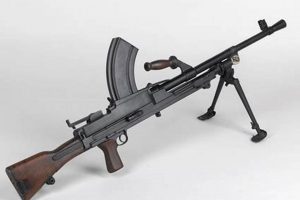
The component powering an airsoft electric gun (AEG) is an electrical device responsible for driving the gearbox. This crucial part converts electrical energy from the battery into mechanical energy, which in turn cycles the AEG’s internal mechanism to propel projectiles. Without it, the replica weapon remains inoperable.
Its function is pivotal to the AEG’s performance. A robust and efficient unit allows for higher rates of fire, increased trigger response, and improved overall reliability. Historically, these devices have evolved from basic brushed motors to more advanced brushless designs, offering enhanced efficiency and longevity. The development directly impacts the playability and realism of the airsoft experience.
Understanding the different types, performance characteristics, and maintenance requirements of these power units is essential for airsoft enthusiasts looking to optimize or upgrade their equipment. Factors such as torque, speed, and compatibility play a vital role in achieving the desired performance from the airsoft replica.
Airsoft Electric Gun Power Unit Optimization
Maximizing the performance and lifespan of the airsoft electric gun’s central drive unit requires adherence to best practices in selection, maintenance, and usage.
Tip 1: Selection Criteria: Choose a unit compatible with the AEG’s gearbox and intended use. High-torque types are suited for heavier springs, while high-speed types are appropriate for achieving a faster rate of fire. Confirm voltage compatibility with the battery system.
Tip 2: Motor Break-In: Implement a proper break-in procedure for new brushed units. This involves running the power unit at a lower voltage for a short duration to allow the brushes to seat properly against the commutator, extending its operational life.
Tip 3: Gear Mesh Adjustment: Ensure the gear mesh between the pinion gear and bevel gear is correctly adjusted. Incorrect adjustment can lead to excessive wear, increased energy consumption, and potential failure.
Tip 4: Regular Cleaning: Periodically clean the armature and commutator of brushed units to remove debris and carbon buildup. This maintains optimal electrical conductivity and prevents premature wear.
Tip 5: Thermal Management: Monitor the operating temperature, especially during prolonged use. Overheating can damage the windings and reduce efficiency. Consider using a unit with improved heat dissipation or reducing the rate of fire during extended engagements.
Tip 6: Battery Compatibility: Utilize batteries with appropriate voltage and discharge rates. Under-volting results in reduced performance, while over-volting can cause irreversible damage.
Tip 7: Upgrade Considerations: When upgrading internal components, ensure the new power unit can handle the increased load. Failure to do so can result in premature failure and damage to other components.
Adherence to these guidelines ensures efficient operation, prolonged service life, and optimal performance within the airsoft electric gun. Understanding these factors is crucial for maintaining peak performance.
The subsequent sections will delve into troubleshooting common problems and advanced modification techniques.
1. Voltage compatibility

Voltage compatibility constitutes a critical parameter in the proper functioning and longevity of an airsoft electric guns power unit. The operational voltage rating of the power unit must align with the voltage output of the battery being utilized. Imbalance in this regard can lead to suboptimal performance, accelerated wear, or outright failure. For example, operating a power unit designed for 7.4V with a 11.1V battery will likely result in overheating, winding damage, and a significantly shortened lifespan. Conversely, under-volting the system results in diminished torque and rate of fire, preventing the system from achieving designed capabilities.
The internal windings of the airsoft electric gun power unit are designed to operate within a specific voltage range. Applying voltage beyond this range causes excessive current flow, leading to heat generation and subsequent degradation of the insulation surrounding the windings. Furthermore, the commutator and brushes, essential components in brushed power units, are particularly susceptible to damage from over-voltage, resulting in arcing and accelerated wear. Manufacturers provide voltage specifications, and adherence to these values is paramount. Failure to match the battery voltage to the specifications can negate warranties and result in costly repairs.
Therefore, selecting the appropriate battery voltage is indispensable for maintaining the functionality and extending the lifespan of an airsoft electric gun’s integral power unit. Disregard for voltage compatibility compromises the entire system and leads to predictable component failure. Understanding and heeding these specifications represent a fundamental aspect of airsoft electric gun maintenance and responsible ownership. This understanding ensures that the replica operates within safe parameters, preserving both performance and component integrity.
2. Torque rating

The torque rating of an airsoft electric gun motor denotes its rotational force output, directly influencing its ability to compress the AEG’s spring and cycle the gearbox. A higher torque rating enables the unit to overcome greater resistance, facilitating the use of stronger springs, which, in turn, increase projectile velocity. Conversely, a low torque rating will struggle to compress a stiff spring, resulting in a reduced rate of fire and potential mechanical stress on the unit and gearbox components. An example is seen in scenarios requiring heavier BBs for long-range accuracy; these require a stronger spring to achieve the necessary muzzle velocity, necessitating a motor with sufficient torque.
The interplay between the torque rating and the AEG’s overall performance is significant. Insufficient torque results in sluggish trigger response and reduced rate of fire, impacting the AEG’s effectiveness in dynamic gameplay scenarios. However, excessively high torque, without proper gearbox reinforcement, can lead to premature wear or breakage of internal components. Balancing the torque rating with the gearbox’s capacity and the intended operating parameters is critical. For instance, a reinforced gearbox with high-quality gears can withstand the increased stress imposed by a high-torque unit designed for high-performance applications.
Understanding the torque rating is paramount for optimizing an AEG’s performance and ensuring its longevity. Matching the torque rating to the spring strength and gearbox capabilities ensures reliable operation and prevents unnecessary stress on the system. Ignoring this critical specification can lead to performance degradation, component failure, and a compromised airsoft experience. Proper selection, considering the torque needs of the AEG’s configuration, translates directly into enhanced reliability, sustained performance, and a more competitive airsoft platform.
3. RPM (Rotations Per Minute)

Rotations Per Minute (RPM) serves as a fundamental metric for characterizing the performance of an airsoft gun motor. It directly quantifies the rotational speed of the motor’s shaft under load, directly influencing the rate at which the AEG cycles, thereby dictating its firing speed. Understanding RPM is crucial for optimizing AEG performance and selecting appropriate components.
- Influence on Rate of Fire
The RPM of the motor directly translates to the AEG’s rate of fire. A higher RPM results in a faster cycling speed, allowing for more rounds to be fired per minute. However, this increased rate of fire must be balanced with the AEG’s other components, such as the gearbox, piston, and hop-up unit, to ensure reliable feeding and consistent performance. For instance, attempting to achieve an extremely high rate of fire with a motor without considering the gearbox’s construction may result in premature wear or failure.
- Impact on Trigger Response
The RPM also affects the responsiveness of the trigger. A higher RPM motor will typically cycle faster, reducing the delay between pulling the trigger and the AEG firing. This is particularly important in close-quarters combat situations where quick reactions are essential. Low RPM motor has slow trigger response. The efficiency of motor should be consider to increase trigger response
- Relationship with Torque
RPM is inversely related to torque. A motor designed for high RPM typically sacrifices torque, meaning it may struggle to pull heavier springs or overcome resistance. Conversely, a high-torque motor will generally have a lower RPM. Choosing the right balance between RPM and torque is critical for achieving the desired performance. For example, an airsoft sniper rifle will require a lot of torque.
- Effect on Battery Consumption
Higher RPM motors often draw more current from the battery, leading to increased battery consumption. This can be a significant factor in longer games where battery life is a concern. It is important to choose a battery with sufficient capacity to support the motor’s power draw. For example, an 11.1v battery can be used to help high rpm motor work effectively in the airsoft gun.
In summary, RPM is a vital specification for airsoft gun motors, impacting rate of fire, trigger response, torque, and battery consumption. Careful consideration of RPM, in conjunction with other motor characteristics and AEG components, is essential for optimizing performance and achieving the desired gameplay experience. Selecting the correct RPM for intended scenario makes player dominate the game with using airsoft gun.
4. Brushless or Brushed

The distinction between brushed and brushless designs constitutes a fundamental consideration in airsoft gun motor technology. This characteristic fundamentally influences performance, efficiency, and longevity. Brushed motors, the traditional configuration, employ carbon brushes to conduct electricity to the rotating commutator, which in turn energizes the motor’s windings. This physical contact creates friction, leading to energy loss in the form of heat and eventual wear of the brushes. A direct consequence of this wear is a gradual reduction in motor performance and the need for periodic maintenance or replacement. The implementation of a brushed design is a common configuration to the motor.
Brushless motors, in contrast, eliminate the need for physical contact through the use of electronic controllers and sensors. These components regulate the current flow to the windings based on the rotor’s position, resulting in significantly reduced friction and heat generation. The absence of brushes translates to higher efficiency, increased torque, and extended lifespan. Furthermore, brushless designs typically offer improved responsiveness and controllability, contributing to enhanced trigger response and overall AEG performance. The controller of brushless motor makes the AEG more consistent.
The choice between brushed and brushless airsoft gun motors depends on the specific requirements and priorities of the user. While brushed motors offer a more cost-effective initial investment, their lower efficiency and shorter lifespan can lead to higher long-term costs associated with maintenance and replacement. Brushless motors, despite their higher initial price, provide superior performance, increased reliability, and reduced maintenance requirements. The performance enhance of brushless motors also give player a better experience during game.
5. Gearbox compatibility

Gearbox compatibility represents a critical consideration when selecting an airsoft gun motor. The gearbox houses the internal mechanisms responsible for converting the motor’s rotational energy into projectile propulsion. Therefore, the motor and gearbox must be mechanically and electrically compatible to ensure reliable and efficient operation.
- Motor Cage Interface
The motor cage, an integral part of the gearbox, provides the physical mounting point for the airsoft gun motor. Different gearbox versions (e.g., Version 2, Version 3) feature distinct motor cage designs. A motor designed for a Version 2 gearbox will not fit properly, if at all, in a Version 3 gearbox and vice versa. Attempting to force an incompatible motor can damage both the motor cage and the gearbox shell. For example, utilizing a long type motor in a short type motor cage would cause irreversible damage to the gun.
- Pinion Gear Compatibility
The pinion gear, located on the motor shaft, meshes with the bevel gear inside the gearbox to initiate the gear train. Different pinion gear designs exist, characterized by varying tooth counts and helix angles. Incompatible pinion gears can result in poor gear mesh, leading to excessive wear, noise, and reduced efficiency. A mismatched pinion gear can also strip the bevel gear over time. For example, some gears are made of steel, so it is extremely durable.
- Motor Height Adjustment
Proper motor height adjustment is crucial for achieving optimal gear mesh. The motor cage often incorporates an adjustment mechanism (e.g., screws or shims) that allows for fine-tuning the motor’s vertical position relative to the bevel gear. Incorrect motor height can lead to excessive stress on the gears, resulting in premature wear and potential gearbox failure. Incorrect positioning can lead to the gears grinding and eventually stop the motor from functioning.
- Electrical Compatibility
The motor’s electrical specifications (e.g., voltage, current draw) must be compatible with the AEG’s wiring harness and battery system. An undersized wiring harness or an inadequate battery can restrict the motor’s performance and lead to overheating. Conversely, a motor with an excessive current draw can overload the wiring and potentially damage the battery or other electronic components. For example, MOSFET can ensure proper voltage is used, and prevents shorting.
These elements underscore the significance of ensuring gearbox compatibility when selecting an airsoft gun motor. Matching the motor’s physical dimensions, pinion gear design, height adjustment capabilities, and electrical specifications to the gearbox ensures reliable operation, prevents premature wear, and optimizes overall AEG performance. Disregarding compatibility considerations can lead to performance degradation, component damage, and a diminished airsoft experience.
6. Heat dissipation

In airsoft gun motors, heat dissipation is a crucial performance factor directly linked to the motor’s efficiency, longevity, and operational reliability. The electrical energy that powers the motor is not converted entirely into mechanical energy; a portion is inevitably lost as heat due to electrical resistance within the motor’s windings and friction from the brushes in brushed variants. Insufficient heat dissipation causes a temperature increase within the motor, leading to reduced efficiency, degradation of insulation, and ultimately, motor failure. For example, prolonged firing of an AEG in rapid succession without adequate cooling can result in a noticeable decrease in rate of fire and trigger response, indicating overheating of the motor.
Effective heat dissipation mechanisms involve design considerations and supplementary components. The motor casing often incorporates fins or is constructed from thermally conductive materials like aluminum to facilitate heat transfer to the surrounding air. Some high-performance motors include integrated cooling fans or are designed with ventilation slots to enhance airflow. Furthermore, aftermarket modifications, such as heat sinks and external cooling solutions, are available to further improve heat dissipation, particularly in high-stress applications involving high-torque or high-speed configurations. Proper implementation of these measures maintains the motor’s operating temperature within acceptable limits, preserving its performance characteristics and extending its operational life. In practice, an AEG equipped with a motor featuring enhanced heat dissipation will exhibit more consistent performance over extended periods of use compared to a similar AEG with a standard motor lacking such features.
Understanding and addressing heat dissipation in airsoft gun motors is paramount for achieving optimal performance and reliability. Neglecting this aspect leads to premature motor failure, inconsistent performance, and a reduced overall lifespan of the AEG. By implementing appropriate design features and supplementary cooling solutions, airsoft enthusiasts can ensure that their equipment operates within safe temperature limits, maximizing both performance and longevity. Furthermore, monitoring motor temperature during gameplay and allowing for cool-down periods can mitigate the risk of overheating and extend the motor’s lifespan.
7. Efficiency rating
The efficiency rating of an airsoft gun motor is a critical parameter indicating the percentage of electrical power converted into mechanical power, with the remainder dissipated as heat. A higher efficiency rating signifies less energy waste and improved performance. This translates directly into increased battery life, allowing for more shots per charge. For example, a motor with an 80% efficiency rating will utilize 80% of the battery’s energy to drive the gearbox, while only 20% is lost as heat. Comparatively, a 60% efficient motor wastes 40% of the energy, resulting in faster battery depletion and potentially higher operating temperatures. The motor’s efficiency directly impacts cost over time and user satisfaction.
Motor efficiency is significantly influenced by its design and materials. Brushless motors generally exhibit higher efficiency ratings than brushed motors due to the absence of friction-inducing brushes. The quality of the windings, the precision of the motor’s construction, and the type of magnets used all contribute to the overall efficiency. Upgrading to a higher efficiency motor can demonstrably improve an AEG’s performance. For instance, an airsoft player switching from a standard brushed motor to a high-efficiency brushless motor may experience a noticeable increase in battery lifespan and improved trigger response, allowing more shots per game.
Understanding the efficiency rating of an airsoft gun motor is essential for making informed purchasing decisions and optimizing AEG performance. Choosing a motor with a higher efficiency rating can lead to significant long-term cost savings due to reduced battery consumption. Moreover, the reduced heat generation contributes to greater reliability and a prolonged lifespan for the motor and other AEG components. This knowledge empowers airsoft enthusiasts to tailor their equipment for optimal performance and maintain a competitive edge.
Airsoft Gun Motor
This section addresses common inquiries regarding airsoft electric gun (AEG) power units, aiming to clarify critical aspects of their function, selection, and maintenance.
Question 1: What is the lifespan of an airsoft gun motor, and what factors influence it?
The operational lifespan varies considerably based on usage patterns, build quality, and environmental conditions. High-stress scenarios, poor maintenance, and extreme temperatures can significantly reduce longevity. Proper lubrication, avoiding over-volting, and adhering to recommended usage guidelines extend the operational life.
Question 2: Are brushless motors universally superior to brushed motors in airsoft guns?
Brushless motors typically offer higher efficiency, increased torque, and extended lifespan compared to brushed counterparts. However, the higher initial cost is a consideration. Brushed options remain viable for budget-conscious users, provided that appropriate maintenance is performed.
Question 3: How does the torque rating of a airsoft gun motor affect AEG performance?
The torque rating dictates the motor’s ability to compress stronger springs, influencing projectile velocity and trigger response. Higher torque facilitates the use of heavier springs, leading to increased power output. However, pairing high-torque units with weak gearbox components can result in damage.
Question 4: What is the significance of RPM (Rotations Per Minute) in motor selection?
RPM dictates the rate of fire. A higher RPM typically results in a faster cycling speed, increasing the number of rounds fired per minute. However, excessively high RPM can strain the gearbox and require modifications to ensure reliable feeding.
Question 5: How does voltage compatibility impact motor functionality?
Voltage compatibility is paramount. Operating a motor outside its rated voltage range can lead to reduced performance, overheating, and potential component failure. Selecting a battery with an appropriate voltage is crucial for safe and efficient operation.
Question 6: What maintenance procedures are recommended for ensuring optimal motor performance?
Regular cleaning of the commutator and brushes (for brushed variants), proper lubrication, and periodic inspection for wear are recommended. Avoiding excessive stress and ensuring adequate cooling further prolong the motor’s operational life.
In summary, understanding the various parameters and operational characteristics of these power units is essential for maximizing performance and ensuring the long-term reliability of airsoft electric guns.
The subsequent section will focus on advanced troubleshooting techniques and performance optimization strategies.
Airsoft Gun Motor
The preceding analysis has underscored the multifaceted role of the airsoft gun motor within the performance envelope of airsoft electric guns. Key attributes such as voltage compatibility, torque rating, RPM, construction type, gearbox compatibility, heat dissipation, and efficiency rating collectively determine an AEG’s functional capabilities. Understanding and addressing these elements are paramount for optimizing operational effectiveness.
Continued advancements in materials science and motor design will undoubtedly yield further improvements in airsoft gun motor technology. Informed selection, coupled with diligent maintenance practices, remains essential for maximizing the lifespan and realizing the full potential of this critical component. Responsible utilization and adherence to established performance parameters will ensure both the longevity of the equipment and the continued advancement of the airsoft platform.