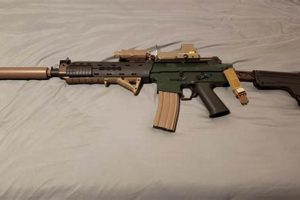
A muzzle device designed for airsoft guns, it replicates the appearance of a firearm component intended to reduce muzzle flash. These accessories typically serve an aesthetic purpose, adding realism to the replica weapon. For instance, an operator might install one onto their airsoft rifle to achieve a specific visual style or mimic a particular real-world firearm.
These components enhance the overall realism and visual appeal of airsoft guns, contributing to a more immersive experience for players. Their design often mirrors that of functional firearm parts, adding to the authenticity of the airsoft replica. Historically, players have sought to modify their equipment to more closely resemble actual military or law enforcement firearms, driving the demand for realistic accessories.
The subsequent sections will delve into the various types available, their construction materials, attachment methods, and legal considerations within the context of airsoft gameplay and ownership.
Selection and Maintenance Recommendations
The following are recommendations regarding the selection, installation, and upkeep of replica muzzle devices for airsoft platforms. Adherence to these guidelines can ensure longevity and optimal aesthetic integration.
Tip 1: Material Compatibility: Prior to installation, verify the construction material of the accessory is compatible with the airsoft gun’s barrel threading. Incompatible materials can lead to thread damage and potential malfunction.
Tip 2: Thread Direction: Airsoft guns typically employ either clockwise (positive) or counter-clockwise (negative) threading. Confirm the thread direction of both the airsoft gun and the chosen device to prevent stripping or cross-threading.
Tip 3: Secure Installation: When attaching, ensure a firm and properly aligned fit. Over-tightening can damage the threads on either the airsoft gun’s barrel or the accessory itself.
Tip 4: Periodic Inspection: Regularly inspect the device for signs of wear, cracking, or loosening. Promptly address any identified issues to maintain structural integrity.
Tip 5: Cleaning and Maintenance: Periodically clean the accessory to remove accumulated debris and ensure unobstructed airflow. Use appropriate cleaning agents that are safe for the device’s material.
Tip 6: Legal Compliance: Familiarize yourself with local regulations regarding the modification and appearance of airsoft guns. Ensure modifications remain within legal boundaries and do not violate any applicable laws or ordinances.
Following these recommendations will help maintain the aesthetic appeal and functional integrity of replica muzzle devices on airsoft platforms, ensuring a prolonged lifespan and compliant usage.
The subsequent section will address legal and safety considerations, offering comprehensive guidance for responsible airsoft participation.
1. Aesthetic Realism

In the realm of airsoft, aesthetic realism significantly influences the overall player experience and the perceived authenticity of replica firearms. The presence and design of muzzle devices are central to achieving this realism. Their visual accuracy contributes substantially to the verisimilitude of the airsoft gun.
- Replication of Real-World Counterparts
A primary function is to mirror the appearance of actual firearm components. This involves replicating the dimensions, shape, and finish of various models. For example, a replica of a Surefire muzzle brake will attempt to match the dimensions, porting design, and surface treatment of the original.
- Material Fidelity
The materials used in their construction contribute to realism. While not functional in the same manner as on a firearm, materials like metal alloys or high-density polymers can mimic the visual texture and heft of their real-world counterparts. A device constructed from a matte-finished metal alloy will present a more convincing appearance than one made of brightly colored plastic.
- Surface Detailing
Engravings, markings, and other surface details play a crucial role in achieving visual fidelity. Accurate replication of these markings, including manufacturer logos and model designations, can significantly enhance the perceived authenticity. These small details contribute to a more immersive experience.
- Proportional Accuracy
Maintaining correct proportions relative to the overall airsoft gun is essential. A muzzle device that is either too large or too small for the barrel will detract from the overall realism, regardless of the accuracy of its individual features. Careful attention to scale is necessary for a convincing appearance.
These various components collectively contribute to the overall aesthetic realism. The accurate replication of these devices is a key aspect of airsoft gun customization, allowing players to achieve a high degree of visual accuracy in their equipment.
2. Thread Compatibility

Thread compatibility is a critical element in the successful integration of a muzzle device onto an airsoft gun. The specifications of the threads, including diameter, pitch, and direction, must align precisely between the airsoft gun’s barrel and the accessory to ensure a secure and functional connection.
- Thread Standards and Specifications
Airsoft guns utilize varying thread standards, typically M14x1.0 (14mm) with either clockwise (positive) or counter-clockwise (negative) orientation. The muzzle device must correspond exactly to the host gun’s threading; a mismatch will prevent installation or, if forced, may damage the threads on either component. For example, a device with M14x1.0 positive threading cannot be installed on a barrel with M14x1.0 negative threading without an adapter or modification.
- Impact on Performance and Functionality
Incompatible threading prevents proper seating of the accessory. This can lead to misalignment, instability, and potential damage to the threads upon attempted use. A loose or misaligned installation can affect the trajectory of the BBs, and the increased vibration could damage the barrel. If the device is not threaded correctly, a gap could form between the inner barrel and the device, potentially creating inconsistencies in the air pressure affecting accuracy.
- Thread Adapters and Conversion Solutions
In instances where thread standards differ, adapters may be used to bridge the incompatibility. These adapters effectively change the thread type, enabling the installation of a desired muzzle device. However, the use of adapters may introduce additional points of failure and can slightly increase the overall length of the barrel assembly. For example, an adapter can convert a M16 positive threaded barrel to accept a M14 negative threaded accessory.
- Material Considerations
The materials used in both the airsoft gun’s barrel and the muzzle device contribute to the overall integrity of the threaded connection. Mismatched material strengths, such as a metal accessory on a plastic barrel, can increase the risk of thread stripping or damage. A harder metal alloy accessory could easily damage the softer threads on a polymer outer barrel if excessive force is used during installation.
Therefore, careful attention to thread specifications, and material considerations, is critical when selecting and installing a muzzle device on an airsoft gun. Failure to do so can compromise performance, damage equipment, or lead to safety hazards.
3. Material Durability

Material durability directly impacts the longevity and performance of replica muzzle devices employed in airsoft. These accessories, often subjected to impacts, abrasions, and varying environmental conditions during gameplay, require robust construction to withstand operational stresses. The selection of materials with adequate strength, resistance to wear, and dimensional stability is paramount to prevent premature failure and maintain aesthetic integrity. For instance, a replica constructed from low-grade plastic is susceptible to cracking or shattering upon impact with hard surfaces, whereas a device manufactured from a reinforced polymer or metal alloy will exhibit greater resistance to damage. The choice of material also affects the component’s resistance to environmental factors such as moisture and UV exposure, both of which can degrade less durable materials over time.
The practical implications of inadequate material durability manifest in various ways. A cracked or broken muzzle device not only detracts from the aesthetic realism of the airsoft gun but can also present a safety hazard, especially if fragments detach during gameplay. Furthermore, a damaged device can alter the airsoft gun’s balance or obstruct the inner barrel, potentially affecting accuracy and range. Players often upgrade to more durable materials, such as aluminum or steel alloys, to mitigate these risks. These materials offer enhanced impact resistance and dimensional stability, extending the lifespan of the accessory and ensuring consistent performance under demanding conditions. However, material selection must also consider weight, as heavier components can affect the overall handling and maneuverability of the airsoft gun.
In summary, material durability is a critical design parameter. The choice of materials directly influences the component’s ability to withstand operational stresses, maintain aesthetic appeal, and ensure safe and consistent performance. The selection of appropriate materials requires a balance between strength, weight, cost, and aesthetic considerations to meet the demands of airsoft gameplay while minimizing the risk of failure or injury. Understanding the properties of various materials and their suitability for this application is essential for both manufacturers and players seeking to enhance the performance and longevity of their airsoft equipment.
4. Secure Attachment

The reliability of an airsoft flash hider’s installation is directly proportional to its secure attachment. An improperly affixed device compromises its aesthetic value and can detrimentally affect the airsoft gun’s performance and safety.
- Thread Engagement and Tolerances
Adequate thread engagement is paramount. Insufficient thread contact between the flash hider and the airsoft gun’s barrel results in instability and potential detachment during use. Furthermore, manufacturing tolerances must be closely controlled to ensure a snug fit without excessive force, which can damage the threads. For example, if a flash hider’s threads are undersized or the barrel’s threads are oversized, the connection will be weak and prone to loosening.
- Locking Mechanisms and Retention Methods
Many flash hiders incorporate locking mechanisms, such as set screws or friction rings, to enhance retention. These mechanisms provide additional security against loosening due to vibration or impact. Set screws, for instance, exert pressure against the barrel threads to prevent rotation, while friction rings create a tighter fit. The effectiveness of these mechanisms depends on their design, material, and proper installation.
- Material Compatibility and Expansion Rates
The materials used in both the flash hider and the barrel must be compatible to ensure a stable connection across varying temperature conditions. Differing expansion rates can lead to loosening or excessive stress on the threads. For example, if a metal flash hider is installed on a plastic barrel, temperature fluctuations could cause the metal to expand or contract at a different rate than the plastic, potentially weakening the connection.
- Proper Installation Torque and Procedures
Adhering to recommended installation torque specifications is essential to prevent over-tightening or under-tightening. Over-tightening can strip the threads or damage the flash hider, while under-tightening can result in a loose connection. Proper installation procedures, including the use of appropriate tools and techniques, contribute to a secure and reliable attachment.
In conclusion, the facets of thread engagement, locking mechanisms, material compatibility, and installation procedures are essential. Neglecting any of these factors can undermine the attachment of a flash hider, compromising both its aesthetic and functional purposes.
5. Legal Compliance

Adherence to legal standards is paramount in the context of airsoft equipment. The appearance of realism afforded by accessories such as muzzle devices can, if improperly managed, lead to legal ramifications. Regulatory frameworks governing imitation firearms are jurisdiction-dependent, necessitating vigilance on the part of both manufacturers and end-users.
- Federal and State Regulations on Imitation Firearms
Various jurisdictions have specific regulations pertaining to imitation firearms, including airsoft guns. These regulations may stipulate marking requirements, colorations, or restrictions on public display. Violations can result in fines, confiscation of equipment, or criminal charges. For example, some states mandate that airsoft guns be equipped with blaze orange markings to distinguish them from actual firearms, particularly during transportation or public carry.
- Restrictions on Modifications and Appearance
Modifying an airsoft gun to more closely resemble a real firearm may be restricted or prohibited. Altering the coloration, removing required markings, or adding components designed to enhance realism can contravene legal statutes. A muzzle device that makes an airsoft gun indistinguishable from a real firearm may trigger legal scrutiny, potentially leading to seizure of the item and legal penalties.
- Transportation and Public Display Laws
Laws governing the transportation and public display of airsoft guns vary considerably. Many jurisdictions require that airsoft guns be transported in closed cases or containers, separate from ammunition and magazines. Openly displaying an airsoft gun, especially one with a realistic muzzle device, may be interpreted as brandishing, which is illegal in many locations. For example, walking in public with an airsoft rifle, even if unloaded and inoperable, could result in police intervention and legal consequences.
- Import and Export Restrictions
Importing or exporting airsoft guns and related accessories, including muzzle devices, may be subject to customs regulations and international trade laws. Failing to comply with these regulations can result in seizure of goods, fines, or criminal prosecution. Importing an airsoft gun with a muzzle device that violates local laws regarding imitation firearms, such as lacking required markings, could lead to confiscation by customs officials.
Understanding and adhering to these legal facets is crucial. Ignorance of applicable laws does not constitute a defense against legal action. Participants in airsoft activities bear the responsibility of ensuring their equipment and actions remain within the bounds of relevant regulatory frameworks, mitigating potential risks and promoting responsible participation in the sport.
6. Internal Volume

The internal volume of an airsoft flash hider significantly influences the sound produced when the airsoft gun is fired. A larger internal volume generally results in a deeper, more resonant sound, while a smaller volume tends to produce a sharper, higher-pitched report. This is due to the way air pressure waves propagate and resonate within the chamber. For example, a flash hider with a large, open chamber can amplify the sound of the compressed air escaping from the barrel, creating a more pronounced auditory effect. Conversely, a flash hider with minimal internal space may attenuate the sound or alter its frequency distribution. The specific design of the internal volume, including its shape and any internal baffles or structures, further modifies the sound characteristics.
The manipulation of internal volume is a common technique employed by airsoft players to customize the sound signature of their airsoft guns. Some players seek to replicate the sound of real firearms for enhanced realism, while others aim to create a unique or intimidating auditory profile. This customization can be achieved by selecting flash hiders with specific internal volumes or by modifying existing flash hiders to alter their acoustic properties. For instance, some players may add foam or other sound-dampening materials inside the flash hider to reduce the overall noise level or to dampen certain frequencies. The strategic alteration of internal volume allows for a fine-tuning of the auditory experience during gameplay.
In summary, the internal volume of an airsoft flash hider directly contributes to the overall sound signature of the airsoft gun. Players can leverage this connection to customize the auditory output of their equipment. Understanding the relationship between internal volume and sound characteristics allows for informed selection and modification of flash hiders to achieve desired acoustic effects. The challenge lies in balancing the aesthetic and acoustic goals with practical considerations such as weight, durability, and legal compliance.
7. Outer Dimension
The outer dimension of an airsoft flash hider directly influences its visual impact and integration with the overall aesthetic of the airsoft gun. The size and shape contribute to the perceived realism and can affect the balance and handling characteristics of the replica firearm. For example, a flash hider that is disproportionately large may appear ungainly and could interfere with the user’s field of view or movement. Conversely, one that is too small may appear insignificant and fail to provide the desired visual effect. Therefore, the outer dimension is a critical design parameter that must be carefully considered to achieve the desired balance between aesthetics and functionality.
Furthermore, the outer dimension dictates its compatibility with other accessories and attachments. A flash hider with an excessively large diameter may obstruct the mounting of rail-mounted accessories or prevent the use of certain barrel-mounted devices. Similarly, its length can influence the overall length of the airsoft gun, which may be a consideration for players operating in confined spaces. Understanding the correlation between outer dimension and accessory compatibility allows players to make informed decisions when selecting and installing such attachments. An airsoft operator might choose a shorter flash hider to maintain maneuverability in close-quarters combat scenarios, accepting a trade-off in visual realism.
In summary, the outer dimension is an integral component of the overall design and functionality. It is a major contributor to aesthetics, balance, and compatibility. Its implications impact the selection process, balancing visual appeal with functional considerations and broader contextual relevance within the sport of airsoft.
Frequently Asked Questions Regarding Airsoft Flash Hiders
The following section addresses common inquiries concerning the design, function, and legal aspects of aftermarket muzzle devices for airsoft platforms. These answers provide concise information to clarify misconceptions and enhance understanding.
Question 1: What is the primary purpose of an airsoft flash hider, given that airsoft guns do not produce real muzzle flash?
The primary purpose is aesthetic. It replicates the appearance of a real firearm component, enhancing the realism of the airsoft gun. It does not function to reduce muzzle flash, as airsoft guns do not generate one.
Question 2: Are there performance benefits associated with installing an aftermarket airsoft flash hider?
Performance benefits are generally negligible. While some designs may slightly alter the sound signature or direct escaping air, the primary impact is visual. Substantial performance gains typically require modifications to internal components.
Question 3: Are there specific legal restrictions on the types of airsoft flash hiders that can be used?
Legal restrictions vary by jurisdiction. Regulations often prohibit modifications that make an airsoft gun indistinguishable from a real firearm. Muzzle devices that closely resemble those on restricted firearms may be subject to scrutiny. Consult local laws for compliance.
Question 4: What materials are commonly used in the construction of airsoft flash hiders, and how do these materials affect durability?
Common materials include ABS plastic, aluminum, and steel. Metal alloys, such as aluminum and steel, generally offer greater durability and resistance to impact than ABS plastic. However, the choice of material also affects weight and cost.
Question 5: How does thread compatibility affect the selection and installation of an airsoft flash hider?
Thread compatibility is crucial for a secure and functional attachment. Airsoft guns typically use either 14mm clockwise or counter-clockwise threading. Mismatched threads prevent installation and can damage the barrel or the accessory. Verify the thread type before purchase.
Question 6: Can the internal volume of an airsoft flash hider affect the sound produced by the airsoft gun?
The internal volume can influence the sound signature. Larger internal volumes often result in a deeper, more resonant sound, while smaller volumes tend to produce a sharper report. Modifying the internal volume can be used to customize the auditory effect.
In conclusion, informed selection and installation of muzzle devices require consideration of aesthetics, legal compliance, material properties, and compatibility factors. These elements collectively contribute to the overall experience and safety of airsoft activities.
The following section will address scenarios, offering comprehensive guidance for responsible airsoft participation.
Conclusion
The preceding analysis of “airsoft flash hider” components reveals a multifaceted topic extending beyond mere aesthetics. Critical considerations encompass legal compliance, material properties, installation integrity, and functional implications for airsoft platforms. Comprehension of these facets is paramount for both manufacturers and end-users.
Continued adherence to safety protocols, diligent awareness of evolving regulations, and responsible modification practices are essential to maintaining the integrity of the airsoft sport. This necessitates a proactive approach to education and a commitment to ethical conduct within the airsoft community.