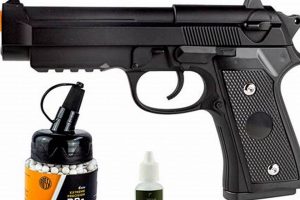
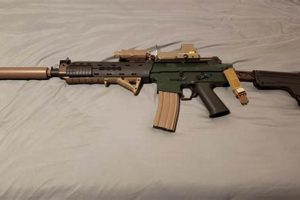
This type of airsoft mechanism combines the simulated recoil of a gas-powered system with the consistent performance and convenience of battery power. These devices utilize an electric motor and gearbox to propel projectiles, while also employing a separate mechanism, often pneumatic, to simulate the rearward movement of the slide or bolt after each shot. This feature aims to replicate the feel of firing a real firearm, enhancing the realism for users. An example would be a pistol or rifle that operates on battery power yet mimics the recoil of a traditional firearm during operation.
The popularity of this design stems from its balance of realism and practicality. The simulated recoil provides a more immersive experience compared to standard electric-powered models, which lack this feature. Unlike gas-powered replicas, these electrically driven versions offer more consistent performance across varying temperatures and require less maintenance related to gas refills and seal upkeep. Historically, this design emerged as a response to the limitations of both purely electric and purely gas-powered airsoft guns, seeking to merge their respective advantages.
Understanding the nuances of this system requires an examination of several key components, including the specific type of battery used, the design of the blowback mechanism, and the overall construction materials of the replica. Furthermore, considerations regarding performance characteristics such as firing rate, accuracy, and effective range are important aspects to analyze in detail. The following sections will delve into these specific areas to provide a thorough understanding of this technology.
Optimizing Performance and Longevity
These models can provide a compelling balance of realism and ease of use, but maximizing their potential requires careful attention to several key factors. By focusing on maintenance, component selection, and proper usage, operators can ensure optimal performance and extend the lifespan of their equipment.
Tip 1: Battery Selection: Utilize high-quality batteries with the appropriate voltage and capacity. Consult the manufacturer’s specifications to ensure compatibility and avoid damaging the electrical system. Using a battery with excessive voltage can lead to premature motor failure.
Tip 2: Regular Cleaning: Clean the barrel and internal components regularly to remove debris and ensure consistent projectile trajectory. Use a cleaning rod and appropriate cleaning solution, following the manufacturer’s instructions.
Tip 3: Lubrication: Apply silicone oil or grease to moving parts, such as the slide and gearbox, to reduce friction and prevent wear. Avoid using petroleum-based lubricants, as they can damage the plastic or rubber components.
Tip 4: Storage: Store in a cool, dry place to prevent corrosion and degradation of the internal components. Remove the battery before storing for extended periods to prevent battery drain or leakage.
Tip 5: Hop-Up Adjustment: Fine-tune the hop-up system to achieve optimal projectile range and accuracy. Experiment with small adjustments to find the ideal setting for different projectile weights and ranges.
Tip 6: Gearbox Maintenance: Inspect the gearbox periodically for signs of wear or damage. If necessary, replace worn gears or other components to maintain optimal performance.
Tip 7: Motor Care: Periodically inspect the motor brushes for wear. Replace the brushes when they are worn to maintain motor efficiency and prevent damage to the commutator.
By adhering to these maintenance and usage guidelines, operators can maximize the performance and longevity of their systems. Consistent maintenance and proper care are essential for ensuring reliable operation and a satisfying user experience. This attention to detail can translate into improved accuracy, greater reliability, and a longer lifespan for the device, ultimately enhancing the overall value proposition.
The following sections will explore advanced customization options and troubleshooting techniques to further refine the user experience and address potential issues.
1. Realistic Recoil Simulation

Realistic recoil simulation serves as a primary selling point for the airsoft blowback electric system. The mechanism aims to replicate the sensation of firing a real firearm by creating a rearward movement of the slide or bolt assembly with each shot. This feature distinguishes these replicas from standard electric airsoft guns, which lack this simulated recoil effect. The effect is achieved using a supplementary pneumatic or mechanical system synchronized with the electric motor’s firing cycle. The success of this simulation directly influences the user’s perception of realism and immersion during use.
The integration of realistic recoil simulation involves a tradeoff between realism, battery consumption, and mechanical complexity. Achieving a convincingly realistic recoil necessitates a more robust mechanism and a higher energy expenditure compared to non-blowback systems. Manufacturers must carefully balance these factors to provide a satisfactory recoil effect without significantly compromising battery life or increasing the replica’s weight and cost. For instance, some designs use a lightweight slide assembly to reduce the energy required for recoil, while others employ advanced pneumatic systems to maximize the impact of the rearward movement. The design of the blowback directly affects the performance and overall user experience.
Understanding the connection between realistic recoil simulation and the broader category is essential for both consumers and manufacturers. For consumers, it informs purchasing decisions by clarifying the performance characteristics and maintenance requirements. For manufacturers, it guides design improvements and informs marketing strategies by highlighting the features that appeal to customers seeking a more authentic airsoft experience. The development of more efficient and reliable recoil simulation mechanisms remains a key area of innovation within the airsoft industry, with the potential to further blur the line between simulation and reality.
2. Electric Motor Power

The electric motor serves as the primary source of propulsion in the airsoft blowback electric system. Its function extends beyond simply driving the piston to propel projectiles; it also powers the mechanism responsible for simulating the firearm’s recoil. The motor’s power output, measured in terms of voltage and torque, directly impacts the replica’s firing rate, the strength of the blowback effect, and overall reliability. A motor with insufficient power may result in a sluggish firing rate and a weak, unconvincing recoil. Conversely, an overpowered motor can lead to excessive wear on internal components and a shortened lifespan for the system. For example, a high-torque motor paired with a low-quality gearbox is likely to cause premature gearbox failure due to the increased stress placed upon it.
Motor selection is crucial for optimizing the performance of the airsoft blowback electric replica. Brushless motors, known for their efficiency and durability, are increasingly favored over traditional brushed motors. Brushless designs offer improved battery life, higher torque output, and reduced maintenance requirements. Furthermore, the gear ratio employed in conjunction with the motor plays a significant role. A lower gear ratio provides a higher rate of fire, while a higher gear ratio prioritizes torque, which is particularly important for achieving a strong and realistic blowback effect. The compatibility between the motor, gear ratio, and battery voltage must be carefully considered to ensure optimal performance and prevent damage to the system. This balance is vital for models replicating heavier recoiling firearms.
Ultimately, understanding the relationship between electric motor power and the airsoft blowback electric system is essential for informed decision-making. This knowledge enables users to select replicas that meet their specific performance requirements and to perform appropriate maintenance to prolong the system’s lifespan. The electric motor is more than just a component; it is the heart of the operation, dictating the potential and limitations of the entire system. The selection of motor has practical significance on user operating and maintaining the item.
3. Battery Type Compatibility

Battery type compatibility is a critical factor directly influencing the performance and longevity of an airsoft blowback electric mechanism. These devices are designed to operate within a specific voltage and current range, dictated by the electric motor and associated electronic components. Mismatched batteries can lead to significant consequences, ranging from diminished performance to catastrophic failure. For instance, using a battery with insufficient voltage may result in a weak or non-existent blowback effect and a sluggish firing rate. Conversely, exceeding the recommended voltage can overload and damage the motor, potentially causing permanent damage to the system. The careful selection of appropriate batteries is therefore paramount for reliable and safe operation.
Different battery chemistries, such as Nickel-Metal Hydride (NiMH), Lithium Polymer (LiPo), and Lithium-Ion (Li-Ion), offer varying discharge rates, energy densities, and voltage characteristics. LiPo batteries, for example, are favored for their high discharge rates, enabling rapid firing and strong blowback effects, but require specialized chargers and careful handling due to their sensitivity to overcharging and discharging. NiMH batteries are generally more robust and easier to manage but offer lower performance characteristics. The selected battery type must align with the specific requirements of the airsoft mechanism, taking into account factors such as voltage, capacity, and discharge rate. Disregarding these specifications can have adverse effects.
In conclusion, battery type compatibility is not merely a technical detail but a fundamental aspect of operating an airsoft blowback electric system. The selection of an appropriate battery ensures optimal performance, prevents damage to the system, and promotes safe operation. Understanding the voltage, capacity, and discharge rate requirements, as well as the characteristics of different battery chemistries, is crucial for users seeking to maximize the reliability and lifespan of their equipment. Deviation from recommended battery specifications presents a significant risk to the device and its operator.
4. Gearbox Efficiency
Gearbox efficiency plays a pivotal role in the overall performance of an airsoft blowback electric mechanism. The gearbox, containing a series of gears, transmits power from the electric motor to the piston assembly, which, in turn, propels the projectile. Inefficient power transmission within the gearbox leads to energy loss in the form of heat and friction, resulting in reduced firing rate, diminished battery life, and potentially, premature wear of internal components. For example, a gearbox with poorly shimmed gears experiences increased friction, requiring the motor to work harder and consuming more energy to achieve the same level of performance compared to a properly shimmed gearbox. This relationship is causal: inefficient gearboxes cause reduced performance metrics.
The significance of gearbox efficiency extends beyond performance metrics; it directly impacts the reliability and longevity of the entire system. Excessive friction generates heat, which accelerates the degradation of plastic and metal components within the gearbox. Over time, this can lead to gear stripping, piston breakage, and other mechanical failures. To illustrate, consider two identical airsoft replicas, one with a stock gearbox and the other with an upgraded, high-efficiency gearbox. After the same period of use, the replica with the upgraded gearbox is likely to exhibit superior performance, reduced wear, and fewer instances of mechanical failure. This highlights the practical application of optimized gearbox design.
In summary, gearbox efficiency is not merely a desirable feature but a critical determinant of the airsoft blowback electric mechanism’s performance, reliability, and longevity. Addressing challenges related to friction, heat generation, and component wear through improved gearbox design, proper shimming, and the use of high-quality materials are essential for maximizing the potential of these systems. The broader theme revolves around the need for continuous improvement in component design to enhance the overall performance and user experience of airsoft devices.
5. Blowback Mechanism Design

The design of the blowback mechanism is integral to the function and user experience of an airsoft blowback electric replica. It governs the realism of the simulated recoil, the efficiency of energy consumption, and the overall reliability of the device. Varying designs offer different advantages and disadvantages, influencing the feel and longevity of the product.
- Pneumatic Blowback Systems
Pneumatic systems employ compressed air to drive the blowback action. A small amount of air is diverted from the main air compression system used to propel the projectile, forcing a piston rearward to simulate recoil. These systems can offer a strong recoil impulse but may also reduce the overall power and efficiency of the airsoft gun due to the diverted air. An example is found in certain high-end pistol replicas where a dedicated pneumatic cylinder creates a pronounced kick, enhancing realism but potentially reducing the number of shots per battery charge.
- Mechanical Blowback Systems
Mechanical systems rely on the physical interaction of components within the gearbox to generate the blowback motion. These systems often involve a lever or cam that is engaged during the firing cycle, causing the slide or bolt to move rearward. While typically less power-intensive than pneumatic systems, mechanical blowback mechanisms may produce a less pronounced and less realistic recoil. Certain rifle replicas utilize a mechanical linkage to simulate bolt movement, adding a visual element of realism without significantly impacting battery life.
- Short Stroke vs. Full Stroke Designs
Short stroke designs involve a limited rearward movement of the slide or bolt, prioritizing faster cycling and reduced energy consumption. Full stroke designs, conversely, mimic the complete range of motion of a real firearm, offering a more realistic feel but potentially sacrificing rate of fire and battery efficiency. Pistol replicas often employ short-stroke systems for faster follow-up shots, while some high-end rifle replicas prioritize full-stroke designs for heightened realism.
- Durability and Material Selection
The materials used in the blowback mechanism significantly impact its durability and reliability. Metal components, such as steel or aluminum, offer greater resistance to wear and tear than plastic parts, particularly in high-stress areas. However, metal components also add weight and cost to the replica. The selection of materials must strike a balance between durability, weight, and cost to ensure a reliable and user-friendly product. High-stress components may use reinforced polymers to achieve a compromise between weight and durability.
The blowback mechanism is not merely an aesthetic feature; it is a critical element of the airsoft blowback electric system that affects its performance, realism, and durability. The selection of a particular design and materials requires careful consideration of the trade-offs between these factors to deliver an optimal user experience.
6. Material Durability

Material durability is a paramount consideration in the design and manufacturing of airsoft blowback electric replicas. The operational demands placed on these devices, including repetitive cycling, mechanical stress, and exposure to environmental factors, necessitate the use of robust materials capable of withstanding these conditions. The choice of materials directly influences the replica’s longevity, reliability, and overall performance.
- Gearbox Casing Materials
The gearbox casing, responsible for housing the gears and piston assembly, is subjected to significant stress during operation. Materials such as reinforced polymers or metals like aluminum are commonly used. Metal casings provide superior durability and heat dissipation, reducing the risk of gearbox failure under sustained use. Reinforced polymers offer a lighter weight alternative while still providing adequate strength for most applications. An example is the use of die-cast aluminum in high-performance gearboxes designed for high-stress scenarios.
- Internal Gear Composition
The internal gears, responsible for transmitting power from the motor to the piston, are subjected to repetitive stress and friction. Steel gears offer superior durability compared to polymer gears, particularly in high-torque or high-speed configurations. However, steel gears also add weight and cost. A balance between durability and weight is often achieved through the use of hardened steel for critical gears and lighter materials for less stressed components. High-stress sectors often utilize steel gears to prevent stripping under load, for instance.
- Piston Material and Construction
The piston, responsible for compressing air to propel the projectile, is subjected to high impact forces and friction. Polycarbonate pistons with metal teeth offer a balance of durability and weight, while full metal pistons provide maximum durability but can increase stress on the gearbox. The piston head, responsible for sealing against the cylinder, is often made of rubber or polymer to ensure a tight seal. The choice of materials directly impacts the replica’s air seal and overall power output.
- External Body Materials
The external body materials, such as the receiver, handguard, and stock, influence the replica’s aesthetic appeal, weight, and resistance to external damage. Polymers offer a lightweight and cost-effective option, while metal bodies provide increased realism and durability. The selection of external body materials often depends on the intended use and desired level of realism. For example, a competition replica might prioritize lightweight polymer construction, while a replica intended for MilSim events might opt for a more durable metal body.
The durability of materials used directly impacts the performance and longevity of an airsoft blowback electric replica. The selection of materials depends upon careful consideration of the trade-offs between weight, cost, and durability. The appropriate material choices extend the lifespan and improve the functionality of airsoft products.
7. Hop-Up System Precision
The precision of the hop-up system is a critical determinant of range and accuracy in airsoft blowback electric replicas. This system imparts backspin to the projectile as it exits the barrel, counteracting the effects of gravity and extending its effective range. The effectiveness of the hop-up system hinges on the consistency and adjustability of its components, making precision a key performance factor.
- Hop-Up Bucking Consistency
The hop-up bucking, a rubber component within the hop-up unit, makes direct contact with the projectile. Inconsistencies in its material, shape, or installation can lead to variations in the backspin imparted to the projectile, resulting in inconsistent shot trajectories. High-quality buckings, manufactured with precise tolerances and consistent materials, minimize these variations. For instance, a bucking with uneven wear will impart inconsistent backspin, causing shots to deviate from the intended target.
- Hop-Up Unit Adjustability
The hop-up unit allows users to fine-tune the amount of backspin applied to the projectile. A precise and easily adjustable hop-up unit enables users to optimize performance for different projectile weights and distances. Units with imprecise adjustment mechanisms can make it difficult to achieve the desired level of backspin, resulting in over-hopping or under-hopping. For example, a hop-up unit with a coarse adjustment dial may make it challenging to dial in the precise amount of backspin needed for optimal range.
- Barrel Quality and Consistency
The internal bore of the barrel must be consistent and free of imperfections to ensure that the projectile receives a uniform application of backspin from the hop-up unit. Variations in the barrel’s inner diameter or surface finish can disrupt airflow and cause inconsistencies in shot trajectory. High-quality barrels, manufactured with tight tolerances and smooth inner surfaces, promote consistent performance. A barrel with internal imperfections will impede airflow and cause inaccurate shots.
- Hop-Up Nub Design and Implementation
The nub, a small component that presses down on the hop-up bucking, influences the amount of backspin imparted to the projectile. The design and implementation of the nub impact the consistency and evenness of pressure applied to the bucking. Nubs with inconsistent shapes or improper installation can cause uneven pressure, leading to variations in backspin and shot trajectory. Aftermarket nubs, designed for enhanced performance, often feature wider and more uniform contact surfaces to improve consistency.
The hop-up system precision is a multifaceted concept, encompassing the quality and consistency of its constituent components, most notably the hop-up bucking, the nub design, and the internal barrel. Optimizing the hop-up system requires attention to detail and a thorough understanding of the interplay between these components, and directly effects the range and accuracy. By ensuring the consistency and adjustability of the hop-up system, the effective performance of the airsoft blowback electric is amplified, in the user’s experience.
Frequently Asked Questions
The following questions address common inquiries regarding airsoft mechanisms that combine electric power with simulated recoil. This section aims to clarify aspects of operation, maintenance, and performance.
Question 1: What distinguishes an airsoft blowback electric from a standard electric airsoft gun?
The primary distinction lies in the presence of a simulated recoil mechanism. Standard electric airsoft guns propel projectiles without mimicking the rearward movement of the slide or bolt found in real firearms. Electrically powered models with blowback incorporate a system to replicate this recoil, enhancing realism.
Question 2: What are the advantages of an airsoft blowback electric compared to a gas-powered blowback airsoft gun?
These electric models typically offer more consistent performance across varying temperatures and require less frequent maintenance compared to gas-powered counterparts. The reliance on battery power eliminates the need for gas refills and reduces the risk of gas leaks.
Question 3: How does battery selection impact the performance of an airsoft blowback electric?
Battery voltage and discharge rate directly influence the firing rate, recoil strength, and overall operational efficiency. Using an incompatible battery can result in diminished performance or damage to the electric motor and other internal components. Adherence to manufacturer specifications is crucial.
Question 4: What maintenance procedures are recommended for maximizing the lifespan of an airsoft blowback electric?
Regular cleaning of the barrel and internal components, lubrication of moving parts with appropriate silicone-based products, and proper battery storage are essential. Periodic inspection of the gearbox for wear is also recommended.
Question 5: How does the hop-up system affect the accuracy and range of an airsoft blowback electric?
The hop-up system imparts backspin to the projectile, extending its range by counteracting gravity. Precise adjustment of the hop-up system is necessary to optimize performance for different projectile weights and engagement distances. A poorly adjusted hop-up can significantly reduce accuracy and range.
Question 6: What are the common causes of malfunction in an airsoft blowback electric mechanism?
Common causes include gearbox failure due to wear or stress, motor burnout from excessive use or incompatible batteries, and issues with the blowback mechanism itself, such as broken or worn pneumatic components. Regular maintenance and proper usage can mitigate these risks.
These FAQs provide a foundational understanding of the topic. The performance can be optimized through proper operation, battery maintenance, and internal components.
The following section will address troubleshooting techniques.
Conclusion
The preceding analysis has explored the operational mechanics, performance considerations, and maintenance requirements inherent in airsoft blowback electric systems. Key points include the integration of simulated recoil with electric propulsion, the importance of battery compatibility, the role of gearbox efficiency, and the impact of material durability on overall system longevity. The precision of the hop-up system and the design of the blowback mechanism itself are also critical factors in determining the user experience.
Continued advancements in battery technology, motor design, and material science hold the potential to further refine the performance and reliability of airsoft blowback electric mechanisms. A thorough understanding of these systems remains essential for both manufacturers seeking to innovate and end-users striving to optimize their equipment. The future of this technology depends on the careful consideration of both realism and practicality.