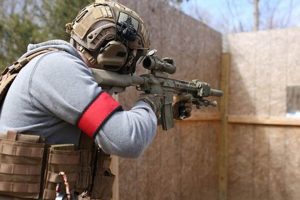
A simulated combat environment designed for training with airsoft weaponry, these structures replicate building interiors, often incorporating rooms, hallways, and obstacles. These spaces provide a controlled area to practice tactical maneuvers and close-quarters battle (CQB) techniques using airsoft replicas, fostering a realistic and safe environment compared to outdoor fields. Scenarios can be pre-planned or dynamic, challenging participants to adapt and react under pressure.
The strategic utilization of these facilities enhances teamwork, communication, and decision-making skills. Historically, law enforcement and military organizations have employed similar training environments using live ammunition; these adapted for airsoft provide a safer and more accessible means of honing tactical proficiency for both professionals and recreational players. The controlled setting allows for repeatable exercises and detailed after-action reviews, fostering improvement and minimizing the risk of injury inherent in live-fire training or uncontrolled outdoor environments.
The subsequent sections will delve into the design considerations of these simulated combat areas, the specific training drills employed within them, and the safety protocols crucial for their operation. This exploration will provide a comprehensive understanding of their function and value in tactical training.
Effective utilization of simulated combat environments requires careful consideration of both preparation and execution. These facilities present unique challenges and opportunities for skill development. Understanding key strategies enhances the training experience.
Tip 1: Prioritize Communication. Clear and concise communication is paramount within confined spaces. Establish standardized signals and verbal cues to relay information quickly and accurately. Miscommunication can lead to tactical errors and potential safety risks.
Tip 2: Master Room Clearing Techniques. Efficient room clearing involves methodical entry, pieing corners, and maintaining situational awareness. Practice different clearing patterns and adapt them based on the room’s layout and potential threats.
Tip 3: Understand Angles and Cover. Utilize available cover strategically to minimize exposure and maximize firing opportunities. Exploit angles to gain a tactical advantage and limit the enemy’s ability to engage effectively. Knowing how to “slice the pie” when approaching a corner is crucial.
Tip 4: Adapt to Dynamic Scenarios. Pre-planned scenarios are valuable, but unexpected circumstances often arise. Practice adapting to changes in the environment, such as altered room layouts or unexpected enemy positions. Flexibility is key to success.
Tip 5: Emphasize Target Identification. Before engaging, positively identify targets to avoid friendly fire incidents. Train to quickly assess visual cues and differentiate between friend and foe, especially in low-light conditions or during fast-paced engagements.
Tip 6: Control Your Rate of Fire. Conserving ammunition allows for sustained engagement and tactical flexibility. Practice controlled bursts and prioritize accuracy over volume of fire. Wasteful shooting reveals your position and depletes valuable resources.
Tip 7: Maintain Situational Awareness. Constantly scan the environment and be aware of your surroundings. Track enemy movements, monitor teammate positions, and anticipate potential threats. A loss of situational awareness can quickly lead to disorientation and tactical disadvantage.
Implementing these strategies within simulated combat environments maximizes the effectiveness of training exercises. By emphasizing communication, tactical proficiency, and adaptability, participants can significantly enhance their combat readiness and overall performance.
The concluding section will address the importance of regular maintenance and safety protocols in such facilities.
1. Tactical Planning
Tactical planning is the foundational element for effective and safe utilization of simulated combat environments. Within these structures, every action must stem from a pre-defined plan, designed to achieve specific objectives, such as hostage rescue, building clearance, or threat neutralization. Without thorough tactical planning, the exercise devolves into aimless activity, negating the potential for meaningful skill development and increasing the risk of accidents. A detailed plan outlines routes, entry points, communication protocols, and contingency measures, providing participants with a structured framework for their actions. For example, a law enforcement team preparing for a warrant execution might use a kill house to rehearse their plan, identifying potential choke points, assessing lines of fire, and practicing coordinated movements. The importance of this preparation is underscored by real-world incidents where insufficient planning led to mission failure and casualties.
The plan should incorporate intelligence regarding the simulated environment, including the layout of rooms, the placement of obstacles, and the potential positions of opposing forces. Each participant must understand their role within the overall strategy, and communication protocols must be clearly defined to ensure coordinated action. Furthermore, contingency plans must be developed to address unforeseen circumstances, such as unexpected enemy movements or equipment malfunctions. The tactical planning phase should also account for safety considerations, establishing clear rules of engagement and ensuring that all participants are aware of the potential hazards within the environment. It is only through such rigorous planning that the simulated combat environment can truly serve its intended purpose.
In summary, tactical planning is not merely a preliminary step but rather the critical determinant of success or failure. It provides the structure, coordination, and safety measures necessary to transform a simulated combat environment from a chaotic free-for-all into a valuable training tool. Proper planning minimizes risks, maximizes learning opportunities, and prepares participants for real-world scenarios. The effectiveness of any exercise within a kill house is directly proportional to the quality and comprehensiveness of the tactical planning that precedes it.
2. Environmental Control

Within an airsoft kill house, environmental control is paramount to ensuring both safety and realism during training exercises. The ability to manipulate and standardize aspects such as lighting, sound, and even temperature contributes directly to the creation of repeatable and measurable training scenarios. For example, varying the lighting conditions allows trainees to practice low-light tactics, while controlled sound effects can simulate the chaos of a firefight, enhancing the stress and cognitive load. Without such controls, the exercise’s fidelity to real-world scenarios diminishes, limiting its value as a preparatory tool for law enforcement or military personnel.
The physical layout of the facility also falls under environmental control. The ability to reconfigure the internal structure – walls, doorways, and obstacles – allows for a wide array of tactical problems to be presented. A building layout that remains static becomes predictable, diminishing the training value. By altering the internal arrangement, instructors can introduce new challenges, forcing participants to adapt their strategies and enhance their decision-making skills under pressure. Furthermore, the control extends to the implementation of safety measures, such as designating safe zones, ensuring proper ventilation, and regularly inspecting the equipment. Lack of this control can lead to dangerous conditions and negate the benefits of training.
In summary, environmental control within a airsoft kill house is not merely a convenience but a necessity. It allows for the creation of standardized and repeatable scenarios, promotes safety, and maximizes the training value of the environment. The capacity to manipulate the various aspects of the environment enables instructors to create realistic simulations that prepare participants for the complexities and challenges of real-world tactical situations. Neglecting environmental control diminishes the efficacy of the training exercise, transforming a potentially valuable learning experience into a potentially dangerous game.
3. Scenario Diversity
Scenario diversity within an airsoft kill house environment is crucial for maximizing the training value and ensuring participants are adequately prepared for a wide range of potential real-world situations. A singular, repetitive scenario offers limited opportunities for skill development and can lead to complacency. The following facets highlight the importance of varying scenario design.
- Varied Threat Presentation
Threat presentation should not be limited to static targets or predictable enemy movements. Scenarios must incorporate dynamic elements, such as aggressors using cover, flanking maneuvers, and unpredictable engagement patterns. This forces participants to adapt their tactics on the fly and reinforces the importance of situational awareness. For example, a scenario involving a barricaded suspect should not always feature the same entry point or the same level of resistance. By altering these variables, participants are challenged to analyze the situation and respond appropriately, rather than relying on rote memorization.
- Diverse Environmental Conditions
Environmental factors significantly impact tactical operations. Scenario diversity should incorporate variations in lighting, visibility, and physical obstacles. Training in low-light conditions, simulating smoke or fog, and navigating cluttered environments forces participants to adapt their techniques and equipment. A scenario could involve clearing a building during a power outage or maneuvering through a room filled with obstacles, requiring participants to utilize flashlights, thermal vision, and specialized breaching tools.
- Complex Objective Structures
Scenarios should extend beyond simple target elimination exercises. Incorporating complex objectives, such as hostage rescue, evidence retrieval, or bomb disarmament, adds layers of decision-making and strategic planning. Participants must coordinate their actions, prioritize objectives, and manage limited resources. A hostage rescue scenario, for instance, might require participants to identify the hostage’s location, neutralize threats, and safely extract the hostage while adhering to strict rules of engagement.
- Adjustable Difficulty Levels
Scenarios should be scalable to accommodate varying skill levels and training objectives. Starting with simpler scenarios and gradually increasing the complexity allows participants to build confidence and master fundamental skills before tackling more challenging situations. A basic building-clearing scenario can be modified to include additional threats, booby traps, or time constraints, progressively increasing the difficulty level and demanding greater tactical proficiency.
In conclusion, scenario diversity is not merely about creating variety for the sake of it; it is about preparing participants for the unpredictable nature of real-world tactical situations. By incorporating varied threat presentations, diverse environmental conditions, complex objective structures, and adjustable difficulty levels, the airsoft kill house becomes a dynamic and effective training environment, equipping participants with the skills and adaptability necessary to succeed in a wide range of operational contexts.
4. Protective Gear
The utilization of appropriate protective gear within an airsoft kill house is not merely a recommendation, but a fundamental prerequisite for safe and effective training. The confined spaces and close-quarters engagements inherent to these environments elevate the risk of injury from impacts, ricochets, and accidental discharges. Proper protective equipment mitigates these risks, allowing participants to engage in realistic training scenarios without undue danger. For instance, eye protection, such as full-seal goggles meeting ANSI Z87.1 standards, prevents projectile penetration that could result in serious ocular damage. Similarly, face masks, often incorporating lower-face protection, shield against dental and facial injuries common in close-quarters airsoft engagements. The cause-and-effect relationship is direct: inadequate protection increases the likelihood and severity of injuries.
The selection of protective gear must align with the specific demands of the kill house environment. While standard airsoft fields may permit minimal protection, the enclosed nature and potential for concentrated fire necessitate more comprehensive coverage. This often includes tactical vests or plate carriers to safeguard the torso, gloves to protect the hands, and potentially padded clothing to minimize bruising from impacts. The importance of this gear extends beyond mere physical protection; it also fosters a sense of confidence, allowing participants to focus on tactical maneuvers and decision-making without constant fear of injury. Real-world examples of serious injuries sustained in airsoft activities underscore the necessity of rigorous adherence to safety protocols and the use of appropriate protective measures. The absence of such precautions can have severe consequences, impacting not only the injured individual but also the overall training environment.
In summary, protective gear serves as a critical component of airsoft kill house operations, enabling safe and realistic training simulations. The consistent and proper use of appropriate equipment minimizes the risk of injury, fostering a secure and productive learning environment. Challenges associated with protective gear implementation include ensuring proper fit, maintaining equipment integrity, and enforcing consistent usage among participants. Ultimately, a commitment to safety through comprehensive protective measures is essential for maximizing the value of the airsoft kill house as a tactical training tool.
5. Rules Enforcement
Strict rules enforcement is a cornerstone of safe and effective operation within an airsoft kill house. These enclosed environments amplify the potential for accidents, making adherence to established regulations critical. A direct cause-and-effect relationship exists: lax enforcement leads to increased risk of injury and compromised training value. The rules typically address weapon handling, minimum engagement distances, permissible projectile velocities, and the use of protective gear. The consistent application of these rules mitigates the inherent dangers of close-quarters combat simulations. For example, a minimum engagement distance rule prevents participants from firing at point-blank range, thereby reducing the risk of welts or eye injuries. Without this rule, the intensity of training may result in unnecessary physical harm.
Effective rules enforcement requires a multi-faceted approach. Clear communication of the rules prior to any exercise is paramount. This includes briefings, written guidelines, and visual aids posted prominently throughout the facility. Furthermore, designated personnel must actively monitor the exercises, intervening immediately to correct unsafe behavior or rule violations. Real-world examples of airsoft-related injuries, often stemming from negligence or disregard for safety protocols, underscore the necessity of vigilant oversight. A well-defined disciplinary process for rule infractions further reinforces the importance of compliance. This may involve temporary suspension from the exercise or, in cases of repeated or egregious violations, permanent expulsion from the facility. Active rules implementation improves the quality of the training experience.
In summary, rules enforcement is not an optional component of an airsoft kill house, but rather an indispensable element of its operation. It ensures participant safety, maintains the integrity of the training scenarios, and fosters a culture of responsible behavior. Challenges associated with rules enforcement include overcoming complacency, addressing resistance to authority, and maintaining consistency across all participants. By prioritizing safety and adhering to established regulations, the airsoft kill house can effectively serve as a valuable tool for tactical training.
6. Communication Protocols
Communication protocols form the neural network of operations within a simulated combat environment. Their effectiveness dictates the speed and accuracy with which information is disseminated, coordinated, and acted upon. The high-stakes, close-quarters nature of these environments demands a level of clarity and precision often exceeding that required in less demanding scenarios. These protocols transform individual actions into a cohesive, strategic operation.
- Standardized Terminology
Adopting a standardized lexicon eliminates ambiguity and ensures that all participants interpret information identically. This encompasses pre-defined terms for locations, enemy positions, actions, and equipment. For example, instead of vague descriptions like “the room to your left,” a designated grid system or room numbering convention ensures precise communication. Real-world military and law enforcement organizations rely heavily on standardized terminology to avoid misinterpretations during critical operations. The application within simulated environments allows for the rehearsal and reinforcement of these vital communication habits.
- Pre-arranged Signals
In situations where verbal communication is impractical or impossible due to noise, distance, or tactical considerations, pre-arranged signals provide a silent means of conveying information. These can include hand signals, light signals, or even pre-determined movement patterns. A simple hand gesture indicating “enemy sighted” or a flashlight flash sequence signifying “move forward” can circumvent the need for verbal commands, preserving stealth and minimizing the risk of detection. The development and mastery of these non-verbal communication methods enhance team coordination and responsiveness.
- Designated Channels of Communication
Establishing clear channels of communication prevents information overload and ensures that critical data reaches the intended recipients without delay. This often involves assigning specific roles and responsibilities within the team, with each member designated as the primary recipient or sender of certain types of information. For instance, a point person might be responsible for relaying enemy sightings, while a team leader coordinates overall strategy. Designating channels prevents critical communications from being lost in the noise and ensures that decisions are based on the most accurate and up-to-date information available.
- Contingency Communication Plans
No communication system is immune to failure. Equipment malfunctions, environmental interference, or unforeseen circumstances can disrupt established communication channels. Therefore, contingency communication plans are essential to ensure that operations can continue effectively even in the event of a breakdown. These plans might involve alternative communication methods, such as runners or backup radio frequencies, or pre-defined protocols for operating in the absence of communication. The ability to adapt and maintain effective communication in the face of adversity is a critical skill for any tactical team.
The implementation and rigorous practice of these communication protocols transform the environment from a chaotic free-for-all into a coordinated exercise in tactical proficiency. The emphasis on clear, concise, and reliable communication not only enhances operational effectiveness but also fosters a culture of teamwork and mutual understanding among participants, mirroring the demands of real-world tactical scenarios.
7. After-Action Reviews
After-Action Reviews (AARs) represent a critical component in maximizing the training effectiveness of an airsoft kill house. These structured debriefing sessions, conducted immediately following an exercise, serve as a systematic analysis of performance, identifying both successes and areas for improvement. The controlled environment of the kill house provides a unique opportunity for AARs, allowing participants to dissect tactical decisions, communication breakdowns, and individual actions in a safe and constructive setting. The process facilitates a cause-and-effect understanding of events, linking specific actions to their resulting outcomes. Without AARs, the lessons learned within the kill house may remain superficial, hindering the development of deeper tactical proficiency. Consider, for example, a scenario where a team fails to clear a room effectively, resulting in simulated casualties. An AAR would dissect the entry procedure, communication between team members, and utilization of cover, revealing potential flaws in the team’s execution. This analysis enables the team to refine their approach, improving their performance in subsequent exercises.
The practical application of AARs extends beyond mere identification of errors. The process encourages self-reflection and peer feedback, fostering a culture of continuous improvement. Participants are prompted to evaluate their own performance and provide constructive criticism to their teammates. This collaborative analysis promotes shared learning and ensures that lessons are disseminated throughout the group. The review process typically involves a facilitator who guides the discussion, ensuring that it remains focused and objective. Video recordings of the exercise, if available, can provide valuable visual aids, allowing participants to review their actions in detail. For example, reviewing footage of a room entry might reveal subtle cues that were missed during the heat of the moment, leading to a better understanding of threat assessment and situational awareness. The insights gained from AARs can then be directly applied to future training scenarios, reinforcing positive behaviors and correcting negative ones. This immediate feedback loop accelerates learning and improves overall tactical competence.
In summary, After-Action Reviews are indispensable for translating the experiences within an airsoft kill house into tangible improvements in tactical proficiency. The structured analysis of performance, combined with peer feedback and self-reflection, promotes a deeper understanding of cause-and-effect relationships and fosters a culture of continuous improvement. While challenges may arise in ensuring objectivity and encouraging open communication, the benefits of AARs far outweigh the difficulties. By integrating AARs into the training regimen, organizations can maximize the value of the kill house as a tool for preparing individuals and teams for real-world tactical situations. The practice ensures an experience to enhance awareness of the surroundings.
Frequently Asked Questions
This section addresses common inquiries regarding the nature, purpose, and operation of facilities designed for airsoft-based tactical training. The aim is to provide clear and concise information to promote understanding and responsible utilization.
Question 1: What constitutes an airsoft kill house?
An airsoft kill house is a constructed environment designed to simulate interior spaces for tactical training purposes. It typically incorporates a network of rooms, hallways, and obstacles to replicate building interiors, allowing participants to practice close-quarters battle (CQB) techniques using airsoft weaponry.
Question 2: What is the primary purpose of an airsoft kill house?
The primary purpose is to provide a controlled and safe environment for practicing tactical maneuvers, improving communication, and enhancing decision-making skills in close-quarters combat scenarios. It allows participants to hone their skills without the inherent risks associated with live-fire training.
Question 3: What safety precautions are necessary within an airsoft kill house?
Stringent safety protocols are essential. These include mandatory eye and face protection, adherence to minimum engagement distances, limitations on projectile velocity, and clear rules of engagement. Regular inspections of the facility and equipment are also crucial to ensure participant safety.
Question 4: Who typically utilizes airsoft kill houses for training?
Airsoft kill houses are utilized by a diverse range of individuals and organizations, including law enforcement agencies, military units, security firms, and recreational airsoft enthusiasts seeking to improve their tactical proficiency.
Question 5: How does an airsoft kill house differ from a standard airsoft field?
While both involve airsoft weaponry, the kill house is specifically designed to replicate indoor combat scenarios, emphasizing close-quarters tactics and room-clearing techniques. Standard airsoft fields often encompass larger outdoor areas and may focus on longer-range engagements.
Question 6: What are the key considerations when designing or constructing an airsoft kill house?
Key considerations include safety, adaptability, and realism. The design should prioritize participant safety, allow for reconfiguration to create diverse training scenarios, and accurately simulate the challenges of real-world indoor environments.
In conclusion, the airsoft kill house serves as a valuable tool for honing tactical skills and promoting responsible engagement in simulated combat scenarios. Adherence to established safety protocols and a commitment to continuous improvement are essential for maximizing the benefits of this training environment.
The subsequent discussion will address the future of airsoft kill house technology and its evolving role in tactical training.
Airsoft Kill House
This exploration has illuminated the critical role of the airsoft kill house as a dedicated training ground for honing close-quarters combat skills. The multifaceted benefitsranging from enhanced tactical planning and environmental control to the reinforcement of communication protocols and the value of after-action reviewsunderscore its significance in preparing individuals and teams for real-world operational scenarios. The discussion emphasizes the importance of rigorous safety measures, scenario diversity, and the utilization of appropriate protective gear to maximize the effectiveness of training while minimizing risk.
The ongoing evolution of tactical training necessitates continuous refinement of airsoft kill house methodologies. Law enforcement agencies, military units, and security firms must prioritize the integration of these facilities into their training programs to cultivate a culture of preparedness and proficiency. As technology advances and training methodologies evolve, the airsoft kill house will remain a vital asset in ensuring the readiness and effectiveness of those tasked with protecting and serving. Its continued development will be crucial for adapting to the ever-changing challenges of modern tactical operations, emphasizing the need for vigilance and proficiency.