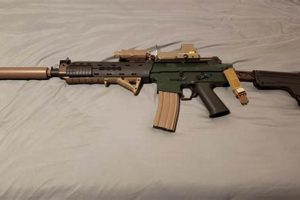
These devices replicate the appearance and handling of a standard M4A1 carbine, utilizing battery power to propel small plastic projectiles. The operational mechanism involves an electric motor that drives a piston, compressing air to discharge the BB. This type of replica firearm is commonly used in simulated combat scenarios.
Their widespread adoption is due to a combination of factors, including relative affordability, ease of use, and readily available power source. Historically, spring-powered and gas-powered models were prevalent, but electrically powered variants offer a more consistent rate of fire and require less manual effort, leading to increased popularity within the airsoft community.
The following sections will delve into specific aspects such as internal mechanisms, performance metrics, maintenance procedures, and considerations for selecting a suitable model based on individual player requirements and intended field of use.
Enhancing Performance and Longevity
The following guidelines are presented to optimize operational effectiveness and prolong the lifespan of this type of airsoft replica. Adherence to these recommendations will contribute to a more satisfactory user experience and reduce the likelihood of malfunctions.
Tip 1: Battery Selection. Employ batteries with appropriate voltage and capacity ratings. Over-volting can damage the internal motor and gearbox, while under-volting may result in reduced performance. Utilize a smart charger to prevent overcharging and maintain battery health.
Tip 2: Lubrication. Regularly lubricate internal components, such as gears and piston O-rings, with silicone grease specifically designed for airsoft replicas. This reduces friction, improves efficiency, and minimizes wear.
Tip 3: Barrel Cleaning. Periodically clean the inner barrel using a cleaning rod and silicone oil. This removes accumulated debris that can affect accuracy and range.
Tip 4: Gearbox Shimming. Ensure proper shimming of the gears within the gearbox. Incorrect shimming can lead to excessive wear and premature failure. Professional gunsmithing is recommended for this procedure.
Tip 5: Hop-Up Adjustment. Properly adjust the hop-up unit to optimize BB trajectory and range. Experiment with different settings to find the ideal balance for the weight and type of BBs being used.
Tip 6: Fuse Protection. Verify the integrity of the fuse and replace it with the correct amperage rating if necessary. A blown fuse indicates a potential electrical issue that should be addressed.
Tip 7: Storage. Store the replica in a cool, dry place with the battery disconnected. This prevents battery drain and potential damage from humidity or extreme temperatures.
Implementing these strategies will lead to improved consistency, enhanced power, and a longer operational life. Proper maintenance is crucial to the ongoing reliability of this replica firearm.
In conclusion, a proactive approach to maintenance and optimal operational practices are key to maximizing the investment in this type of equipment. The succeeding sections will address potential upgrade paths and customization options.
1. Power Source

The power source is a fundamental aspect of operation for electric airsoft M4A1 replicas, directly influencing performance characteristics and user experience. It dictates the replica’s rate of fire, operational lifespan between charges, and overall reliability in gameplay scenarios.
- Battery Voltage and Compatibility
Voltage determines the motor speed and, consequently, the rate of fire and trigger response. Most electric airsoft M4A1s operate on 7.4V, 9.6V, or 11.1V batteries. Using an incompatible voltage can damage the internal components, particularly the motor and electronic trigger unit (ETU) if present. Incorrect voltage selection can lead to diminished performance or catastrophic failure.
- Battery Chemistry (NiMH vs. LiPo)
Nickel-Metal Hydride (NiMH) and Lithium Polymer (LiPo) batteries are the most common types used. NiMH batteries are generally more durable and less prone to damage but offer lower energy density and discharge rates compared to LiPo batteries. LiPo batteries provide higher performance (increased rate of fire and trigger response) but require more careful handling and charging to avoid damage or fire hazards.
- Battery Capacity (mAh) and Runtime
Battery capacity, measured in milliampere-hours (mAh), determines the operational runtime of the replica. A higher mAh rating equates to a longer period of sustained use before requiring a recharge. However, a larger capacity battery might also increase the weight of the replica. The balance between runtime and weight is a crucial consideration.
- Battery Charging and Maintenance
Proper charging and maintenance are essential for maximizing battery lifespan and preventing damage. Overcharging or deep discharging can significantly reduce battery performance and longevity. Using a smart charger designed for the specific battery chemistry is crucial. Regularly monitoring battery condition and storing batteries properly when not in use are also important maintenance practices.
The choice of power source for an electric airsoft M4A1 is a critical decision that impacts various aspects of performance, reliability, and user experience. Careful consideration of voltage, chemistry, capacity, and maintenance requirements is essential for optimal operation and longevity of the replica.
2. Rate of Fire

Rate of fire (ROF) is a critical performance metric for electric airsoft M4A1 replicas, directly impacting their effectiveness in simulated combat scenarios. ROF refers to the number of projectiles discharged per unit of time, typically measured in rounds per minute (RPM). An electric airsoft M4A1’s ROF is primarily determined by the capabilities of its internal components, specifically the motor, gearbox, and battery. Higher-performance components generally facilitate a faster ROF, granting the user a tactical advantage in engagements. For example, a replica with an ROF of 20 rounds per second can deliver a greater volume of fire than one with an ROF of 15 rounds per second, potentially suppressing opponents more effectively.
The significance of ROF extends to various aspects of gameplay. In close-quarters combat (CQB) environments, a higher ROF can provide a decisive edge, allowing for rapid target acquisition and suppression. Conversely, in open-field engagements, ROF becomes less critical, as accuracy and range often take precedence. Users may strategically choose to utilize a lower ROF to conserve ammunition or to maintain a more controlled rate of fire, particularly in semi-automatic firing modes. Certain airsoft fields or events may impose ROF limits to ensure fair play and maintain a safe playing environment. Understanding these regulations and adapting equipment accordingly is vital for responsible participation.
In summary, the rate of fire is an essential performance parameter that significantly influences an electric airsoft M4A1’s utility in airsoft skirmishes. While a high ROF can offer tactical advantages, practical application necessitates careful consideration of gameplay style, field conditions, and any imposed regulations. Striking a balance between ROF and other factors such as accuracy, range, and ammunition management is key to optimizing overall performance.
3. Internal Components
The functionality of an electric airsoft M4A1 hinges on the interplay of its internal components. These parts, working in concert, translate electrical energy into the propulsion of projectiles. Component quality and design directly affect performance metrics such as rate of fire, muzzle velocity, and operational lifespan. Failure or degradation of even a single component can compromise the entire system, rendering the replica inoperable or significantly reducing its effectiveness. For instance, a worn piston seal will lead to diminished air compression, subsequently reducing projectile velocity and range.
Several key internal components warrant specific attention. The gearbox houses the gears, piston, and spring responsible for compressing air and launching the BB. Gear material and ratio influence rate of fire and torque. The motor drives the gearbox, with different motor types offering varying levels of performance and efficiency. The hop-up unit imparts backspin to the BB, extending its range and improving accuracy. The inner barrel guides the BB during its exit from the replica, with barrel length and bore influencing precision. Consider the example of upgrading a stock motor with a high-torque variant. This typically results in a faster trigger response and the ability to pull stronger springs, ultimately increasing muzzle velocity.
In summary, understanding the relationship between internal components and their impact on overall performance is crucial for maintaining and upgrading electric airsoft M4A1 replicas. Diagnosing malfunctions, selecting appropriate upgrade parts, and performing routine maintenance require a solid grasp of these fundamental principles. Addressing component-specific issues proactively extends the service life of the replica, maximizing its value and ensuring consistent performance in simulated combat scenarios.
4. Construction Materials

The selection of construction materials for electric airsoft M4A1 replicas significantly influences their durability, weight, performance, and aesthetic realism. Material choices impact the replica’s ability to withstand the rigors of gameplay, its handling characteristics, and its susceptibility to wear and tear. These considerations are crucial for both recreational users and serious airsoft enthusiasts.
- Metal Components (Aluminum, Steel, Zinc)
Metal alloys, such as aluminum, steel, and zinc, are commonly used for critical components like the receiver, barrel, gears, and internal mechanisms. Aluminum provides a balance of strength and lightweight properties, often used in upper and lower receivers. Steel enhances durability and is typically employed in gears and other high-stress parts. Zinc alloys, while more affordable, offer lower strength and are frequently used in less critical components. The presence of metal components contributes to the overall robustness and realistic feel of the replica.
- Polymer Components (ABS, Nylon, Reinforced Plastics)
Polymer materials, including Acrylonitrile Butadiene Styrene (ABS), nylon, and reinforced plastics, are utilized for components like the handguard, stock, pistol grip, and external housings. These materials offer impact resistance and reduced weight compared to metals, enhancing maneuverability and user comfort. Reinforced plastics, containing fibers like fiberglass, offer increased strength and rigidity compared to standard polymers. The use of polymer components helps balance durability with affordability and weight considerations.
- Internal Component Materials (Gear Sets, Pistons)
Materials used in internal components, such as gear sets and pistons, directly impact performance and longevity. Gear sets are often made of steel or hardened alloys to withstand high stress and friction. Pistons may be constructed from polymers or aluminum, with features like metal teeth for improved durability. The selection of materials for these components is crucial for ensuring reliable operation and preventing premature wear or failure. For example, a steel gear set will generally outlast a zinc alloy gear set under heavy usage.
- Finishing and Coating (Anodizing, Painting)
Surface finishing and coating techniques, such as anodizing for aluminum parts and painting for polymer parts, enhance the aesthetic appeal and provide protection against corrosion and wear. Anodizing creates a durable, corrosion-resistant layer on aluminum surfaces, while painting provides a protective coating and allows for customization of the replica’s appearance. The quality of the finishing and coating contributes to the overall perceived value and longevity of the replica. A well-anodized aluminum receiver, for example, is more resistant to scratches and fading compared to an un-anodized counterpart.
The combination of these material choices significantly influences the performance, reliability, and cost of electric airsoft M4A1 replicas. Understanding the properties and trade-offs associated with different materials is essential for making informed purchasing decisions and maintaining these replicas effectively. The trend towards using more durable and lightweight materials reflects a continued focus on enhancing the user experience and extending the lifespan of these simulated firearms.
5. Accuracy Potential
Accuracy potential in electric airsoft M4A1 replicas represents the theoretical maximum precision achievable under ideal conditions. This metric is intrinsically linked to the design and quality of several key components, including the inner barrel, hop-up unit, and projectile consistency. A high-quality inner barrel, characterized by tight bore tolerances and a smooth internal surface, provides a stable trajectory for the BB, reducing deviations caused by friction or inconsistencies. The hop-up unit imparts backspin to the BB, counteracting the effects of gravity and extending its effective range. Projectile consistency, in terms of weight and shape, minimizes variations in flight path. The combined effect of these factors determines the inherent accuracy potential of the replica. For instance, a replica equipped with a precision inner barrel, a well-calibrated hop-up unit, and high-quality BBs will exhibit significantly greater accuracy than a replica with substandard components.
The attainment of accuracy potential in practical scenarios is influenced by external factors, such as wind, distance to target, and shooter skill. Wind can deflect the BB from its intended trajectory, requiring the shooter to compensate for its effects. Longer distances increase the likelihood of deviations due to minor imperfections in the BB or the airsoft M4A1’s mechanics. Shooter skill, encompassing aiming precision, trigger control, and understanding of ballistic principles, is paramount in maximizing accuracy. Consider an experienced airsoft player utilizing a well-maintained electric M4A1 replica with upgraded internal components on a calm day. They are more likely to achieve consistent hits on distant targets compared to a novice player using a stock replica in windy conditions.
In summary, accuracy potential is a crucial aspect of electric airsoft M4A1 performance, driven by component quality and influenced by environmental conditions and user proficiency. Understanding the relationship between these factors allows users to optimize their equipment and improve their shooting skills, resulting in enhanced effectiveness in airsoft skirmishes. The challenge lies in consistently achieving the replica’s inherent accuracy potential under varying field conditions. Further advancements in hop-up design and projectile technology may further refine this aspect of the sport.
6. Upgrade Options

The inherent modularity of electric airsoft M4A1 replicas facilitates extensive customization and performance enhancement through upgrade options. These modifications target various aspects of functionality, from increasing rate of fire and muzzle velocity to improving accuracy and durability. The availability and implementation of upgrade options represent a significant factor in the long-term value and user satisfaction associated with this type of airsoft platform. The capacity to tailor performance to specific gameplay scenarios or individual preferences differentiates these replicas from fixed-configuration alternatives.
Common upgrade paths include replacing the motor with a higher-torque or high-speed variant, upgrading the gearbox components (gears, piston, spring) to increase durability and power, installing a precision inner barrel to enhance accuracy, and modifying the hop-up unit for improved BB flight characteristics. As an example, replacing a stock piston with a reinforced piston featuring metal teeth can significantly extend the gearbox’s lifespan, especially when using higher-power springs. Similarly, swapping a standard inner barrel for a tight-bore barrel often results in tighter groupings at longer distances. Electronic trigger units (ETUs) can be installed to enhance trigger response and provide programmable firing modes. The strategic selection and installation of these upgrades allow users to optimize their replicas for specific roles, such as close-quarters combat or long-range engagements.
In conclusion, upgrade options are an integral part of the electric airsoft M4A1 ecosystem, enabling users to fine-tune performance and extend the operational lifespan of their equipment. The successful implementation of these upgrades requires a thorough understanding of the replica’s internal mechanics and the potential consequences of modifying its components. While upgrades offer significant benefits, improper installation or the selection of incompatible parts can lead to diminished performance or even damage the replica. Therefore, informed decision-making and, in some cases, professional assistance are crucial for maximizing the benefits of upgrade options and ensuring the continued functionality of the electric airsoft M4A1.
Frequently Asked Questions
The following addresses common inquiries concerning electric airsoft M4A1 replicas, providing concise and authoritative answers to enhance user understanding.
Question 1: What is the typical effective range?
The effective range depends on factors such as hop-up adjustment, BB weight, and the replica’s internal components. Typically, a well-maintained electric airsoft M4A1 can achieve accurate shots within a 150-200 foot range.
Question 2: What battery voltage is recommended?
The recommended battery voltage varies by model. Consult the manufacturer’s specifications. Over-volting can damage the motor and gearbox. 7.4V or 9.6V batteries are commonly used, though some models may support 11.1V LiPo batteries.
Question 3: How often should internal components be lubricated?
Lubrication frequency depends on usage. For regular play, lubricate internal components every 3-6 months. If the replica experiences heavy use, increase the frequency to monthly or after each major event. Use only silicone-based lubricants designed for airsoft replicas.
Question 4: What type of maintenance is required?
Regular maintenance includes cleaning the inner barrel, lubricating gears and piston O-rings, checking wiring connections, and ensuring proper hop-up adjustment. After each use, inspect the replica for any signs of damage or wear.
Question 5: Can the rate of fire be adjusted?
The rate of fire can be adjusted through various means, including installing a different motor, using a battery with a different voltage, or installing an electronic trigger unit (ETU) with programmable firing modes. However, modifications may void the warranty or reduce the replica’s lifespan.
Question 6: What is the difference between a V2 and V3 gearbox?
The V2 and V3 gearboxes are distinct designs with different component layouts and compatibility. The V2 gearbox is typically found in M4-style replicas, while the V3 is often used in AK-style replicas. Parts are generally not interchangeable between the two gearbox types.
These responses provide a basic understanding of electric airsoft M4A1 maintenance, performance, and operation. Consult a qualified technician for more complex issues or modifications.
The next section discusses common malfunctions and troubleshooting techniques.
Conclusion
The preceding analysis provides a comprehensive overview of electric airsoft M4A1 replicas, encompassing their operational principles, performance characteristics, maintenance requirements, and upgrade potential. Key aspects examined include the influence of battery voltage, the significance of rate of fire, the interplay of internal components, the impact of construction materials, the determination of accuracy potential, and the availability of customization options. A thorough understanding of these elements is essential for informed decision-making, effective utilization, and responsible ownership of these devices.
Continued adherence to recommended maintenance practices and a commitment to responsible usage will ensure the sustained performance and longevity of the electric airsoft M4A1. The ongoing evolution of airsoft technology promises further advancements in design and functionality, warranting continued observation and adaptation within the airsoft community. The responsible and informed use of these devices remains paramount.