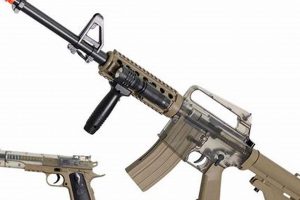
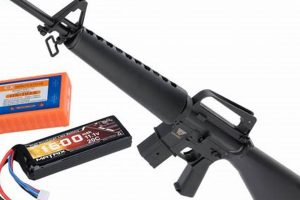
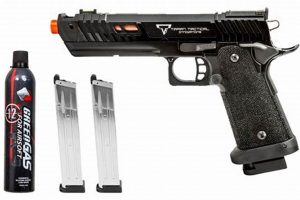
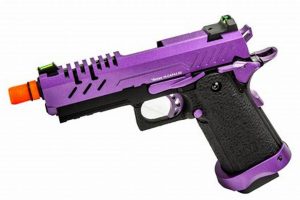
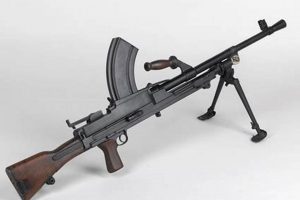
The most suitable airsoft arm varies significantly based on intended usage, playing style, and individual preferences. Defining the optimal choice necessitates consideration of factors like gameplay environment, budget constraints, and desired level of realism. For instance, a player prioritizing close-quarters combat might favor a compact, easily maneuverable submachine gun, while someone engaging in long-range engagements might opt for a rifle offering greater accuracy.
Selecting an appropriate airsoft arm enhances the overall experience, providing a competitive advantage and fostering a more immersive simulation. The development of various categories reflects the evolving needs of the sport, mirroring real-world firearm classifications and offering players specialized tools for different roles and scenarios. This diversity contributes to the strategic depth of airsoft, demanding informed decisions regarding equipment selection.
Therefore, a deeper examination of the various categories, including electric-powered (AEG), gas-powered (GBB/NBB), and spring-powered options, is crucial. Understanding their respective advantages, disadvantages, and common applications facilitates informed purchasing decisions and optimizes performance on the field. Subsequent sections will explore these categories in detail, providing a framework for determining the most suitable choice for individual requirements.
Considerations for Airsoft Arm Selection
Selecting an appropriate airsoft arm involves careful evaluation. Maximizing performance and enjoyment requires considering several key factors prior to purchase.
Tip 1: Identify Gameplay Style: Determine intended role within gameplay scenarios. Aggressive, close-quarters combat necessitates compact, high-rate-of-fire options, while support roles benefit from increased range and accuracy provided by rifle platforms.
Tip 2: Assess Field Environment: Evaluate typical engagement distances and terrain characteristics of preferred playing fields. Open fields favor longer-range platforms, while dense, urban environments demand maneuverability and close-range effectiveness.
Tip 3: Establish Budgetary Constraints: Define a realistic budget encompassing initial purchase price, upgrades, and maintenance costs. Higher-end options often offer improved performance and durability, but viable alternatives exist within lower price ranges.
Tip 4: Evaluate Power Source Preferences: Consider the advantages and disadvantages of electric (AEG), gas (GBB/NBB), and spring-powered systems. AEGs offer consistent performance and ease of use, while gas-powered options provide increased realism and recoil.
Tip 5: Research Manufacturer Reputation: Investigate the track record of various manufacturers regarding reliability, performance, and aftermarket support. Reputable brands generally offer higher-quality products and readily available replacement parts.
Tip 6: Prioritize Ergonomics and Handling: Ensure the chosen option feels comfortable and balanced in hand. Consider factors like weight, grip texture, and adjustable stock options to optimize handling and reduce fatigue during extended gameplay.
Tip 7: Investigate Upgrade Potential: Assess the availability of aftermarket upgrades to enhance performance and customize functionality. Upgrading internal components can improve accuracy, range, and rate of fire, extending the lifespan and utility of the platform.
Careful consideration of these factors ensures informed decision-making, resulting in optimized performance and enhanced enjoyment of the airsoft experience. A well-chosen airsoft arm enhances both individual and team effectiveness on the field.
Subsequent sections will delve into specific categories and models, offering detailed comparisons to further refine the selection process.
1. Power Source Reliability

Power source reliability directly influences the consistency and predictability of an airsoft arms performance, fundamentally affecting its suitability for diverse operational environments and impacting the overall effectiveness of a given platform. The dependability of the power source is paramount when considering the overall ranking of an airsoft arm, affecting factors such as firing rate, projectile velocity, and operational consistency.
- Electric (AEG) Consistency
Electric airsoft guns (AEGs) leverage rechargeable batteries to power an internal motor and gearbox system. This design provides consistent firing rates and projectile velocities, making AEGs reliable in various temperature conditions. However, reliance on battery charge necessitates carrying spares for extended gameplay, and performance may degrade as the battery discharges. Despite this, their inherent consistency makes them a reliable choice.
- Gas (GBB/NBB) Temperature Sensitivity
Gas blowback (GBB) and non-blowback (NBB) systems depend on compressed gas, such as CO2 or green gas, to propel projectiles. GBBs offer enhanced realism through simulated recoil but can exhibit performance variations due to temperature fluctuations affecting gas pressure. NBBs are less susceptible to temperature variations but lack the realistic recoil of GBBs. The choice between these gas systems involves weighing realism against consistency.
- Spring-Powered Mechanical Dependability
Spring-powered airsoft arms operate through manual cocking, compressing a spring that propels the projectile. This system is mechanically simple, requiring no batteries or gas. However, it necessitates manual action before each shot, limiting the firing rate. Spring-powered models offer inherent dependability in various environmental conditions but are typically less suited for rapid-fire scenarios.
- Maintenance and Longevity Factors
Power source reliability is intrinsically linked to maintenance requirements and overall longevity. AEGs necessitate periodic gearbox maintenance and potential motor replacements, while gas systems require seal maintenance to prevent leaks. Spring-powered systems, due to their mechanical simplicity, generally require less frequent maintenance. The lifecycle cost and maintenance demands factor into assessing the long-term reliability of any airsoft arm.
Ultimately, the power source reliability is a pivotal element when evaluating the most suitable airsoft arm. While AEGs provide stable performance and ease of use, gas systems prioritize realism at the cost of temperature sensitivity, and spring-powered systems offer mechanical dependability with limitations in firing rate. The desired balance between these factors dictates the optimal choice.
2. Range and accuracy

Range and accuracy are fundamental determinants in evaluating the efficacy of any airsoft arm, directly influencing its battlefield utility and, consequently, its classification as a superlative choice. Effective range dictates the distance at which a player can engage opponents, while accuracy determines the probability of a successful hit within that range. An airsoft arm lacking in either attribute is severely limited in its tactical application. For example, a high-powered spring rifle may possess considerable range, but poor accuracy renders it ineffective beyond short distances. Conversely, a compact submachine gun might exhibit high accuracy at close quarters but is severely hampered by its limited range in open environments. Therefore, the interplay between range and accuracy is critical for assessing the suitability of a particular airsoft arm for specific roles.
The impact of range and accuracy is further accentuated by considering the diverse gameplay scenarios encountered in airsoft. In woodland environments characterized by long sightlines, rifles with extended ranges and precision-engineered components offer a distinct advantage. Conversely, within close-quarters battle (CQB) arenas, maneuverability and rapid target acquisition often outweigh the need for extreme range, but accuracy remains paramount to ensure decisive engagements. Advanced hop-up systems, precision inner barrels, and consistent power output are factors contributing to enhanced range and accuracy across various airsoft arm types. The ability to consistently hit a target at a designated range not only improves individual performance but also contributes significantly to team effectiveness by enabling suppression fire, target elimination, and strategic positioning.
Ultimately, the selection of an airsoft arm represents a compromise between desired range, accuracy, and other factors such as rate of fire, maneuverability, and cost. No single airsoft arm excels in all aspects, and the optimal choice is contingent upon the individual’s playing style and the specific demands of the game environment. However, a comprehensive understanding of the relationship between range and accuracy allows for informed decision-making, ensuring that the selected airsoft arm provides the necessary capabilities to maximize effectiveness and enjoyment within the context of simulated combat. Failing to prioritize both range and accuracy will likely result in suboptimal performance and diminished tactical capabilities on the airsoft field.
3. Durability & maintenance

Durability and maintenance are key considerations when evaluating airsoft weaponry, significantly impacting long-term operational costs and user satisfaction. A platform exhibiting robust construction and ease of maintenance will inherently provide a greater return on investment and reduce downtime during gameplay. These factors contribute substantially to determining the suitability of an airsoft arm.
- Material Composition and Structural Integrity
The materials used in construction directly influence an airsoft arm’s ability to withstand stress and environmental factors. Polymer bodies offer lightweight durability, while metal alloys provide increased rigidity and impact resistance. Structural integrity, including reinforcement of critical stress points, minimizes the likelihood of breakage during intense use. The composition is a determinant of its long-term reliability.
- Internal Component Quality and Reliability
Internal components, such as gears, pistons, and motors (in AEGs), are subjected to significant stress during operation. Higher-quality components, manufactured from durable materials and employing precision engineering, extend the operational lifespan of the system. Regular maintenance, including lubrication and inspection, is crucial for preserving internal component integrity.
- Ease of Disassembly and Part Availability
The ability to easily disassemble an airsoft arm for cleaning, repair, and upgrades streamlines maintenance procedures. Modular designs and readily available replacement parts contribute to minimizing downtime. A platform with complex disassembly requirements or limited parts availability may incur higher maintenance costs and prolonged periods of inoperability.
- Resistance to Environmental Factors
Exposure to moisture, dust, and extreme temperatures can degrade the performance and longevity of an airsoft arm. Weather-resistant coatings and sealed components protect against corrosion and contamination. Selection of materials resistant to UV degradation also contributes to long-term durability, especially in outdoor playing environments.
The intersection of durability and maintenance requirements directly informs the cost of ownership and the operational readiness of an airsoft platform. Platforms built with robust materials, utilizing high-quality internal components, and designed for easy maintenance inherently offer a greater value proposition. These characteristics contribute significantly to determining which airsoft weapons qualify as the “optimal” choice for serious enthusiasts and professional players alike. A durable, easily maintained platform maximizes play time and minimizes expenses.
4. Field versatility
Field versatility, the capacity of an airsoft arm to perform effectively across diverse operational environments and roles, is a critical attribute when assessing the superlative platform. A truly capable airsoft arm should exhibit adaptability beyond specialized scenarios, demonstrating proficiency in both close-quarters combat (CQB) and open-field engagements. The absence of field versatility restricts an airsoft arm’s utility and necessitates the acquisition of multiple specialized platforms, increasing cost and logistical complexity. Examples of lacking field versatility include specialized sniper rifles, optimal for long-range engagements but ineffective in confined spaces, and lightweight pistols, suitable for backup roles but incapable of sustained engagements in open terrain. Therefore, achieving a balance that enables effectiveness in a variety of scenarios is paramount. The underlying cause is the design and features incorporated into the airsoft arm, such as adjustable hop-up systems, variable rate of fire, and modularity allowing for customization to specific requirements. These features extend the usable range of the arm and allow for modifications tailored to the immediate circumstances.
Considering practical application, field versatility translates directly into a player’s adaptability during dynamic gameplay. An airsoft arm possessing this characteristic enables a player to transition seamlessly between offensive and defensive roles, adapting to evolving tactical situations without being restricted by equipment limitations. For instance, an adjustable AEG with a programmable electronic trigger unit (ETU) can be configured for burst fire in close quarters and single-shot mode for extended-range engagements. Modularity plays a crucial role in achieving field versatility. The capacity to rapidly change accessories such as optics, foregrips, and suppressors allows a player to tailor their airsoft arm to the specific demands of the environment. Universal rail systems, such as the Picatinny rail, facilitate the attachment of various accessories, further enhancing adaptability. The importance of understanding this is clear: players optimize their effectiveness and minimize reliance on specialized equipment.
In conclusion, field versatility directly influences the overall ranking of an airsoft arm. This capability maximizes its utility and minimizes the need for multiple specialized platforms. Achieving field versatility demands a design that incorporates adjustable features, modularity, and a balance of range and accuracy. Prioritizing this element ensures that the selected airsoft arm offers sustained performance across varied gameplay scenarios, ultimately contributing to enhanced tactical flexibility and operational effectiveness. The challenge remains in engineering platforms that successfully balance the often-competing requirements of different play styles. Addressing this challenge necessitates continued innovation in design and technology, resulting in more versatile and capable airsoft arms in the future.
5. Cost-effectiveness
Cost-effectiveness is a pivotal consideration when evaluating potential contenders for the designation of “most suitable airsoft arm.” It represents the balance between initial investment, long-term operational expenses, and performance capabilities, rather than solely focusing on the lowest price point. A truly cost-effective option delivers optimal performance relative to its overall expenditure.
- Initial Purchase Price vs. Performance Ratio
The initial price tag is a primary factor. However, a low initial cost does not guarantee cost-effectiveness. An inexpensive option may offer substandard performance or lack essential features, necessitating costly upgrades or ultimately proving inadequate for intended use. Conversely, a higher-priced option may provide superior performance, durability, and features, justifying the investment over time. Evaluating the performance-to-price ratio is crucial to assess true value.
- Long-Term Operational Costs
Beyond the initial purchase, operational costs significantly impact overall cost-effectiveness. These include expenses related to batteries, gas, replacement parts, and maintenance. Electric airsoft guns (AEGs) require battery replacements and occasional gearbox maintenance, while gas-powered systems incur costs associated with gas refills and seal maintenance. A platform with low initial cost but high operational expenses may prove less cost-effective than a more expensive, yet more efficient alternative.
- Durability and Longevity Considerations
An airsoft arm’s durability directly affects its lifespan and, consequently, its cost-effectiveness. Platforms constructed from robust materials and employing high-quality internal components are less prone to breakage and require fewer repairs, reducing long-term expenses. Investing in a durable option minimizes the need for frequent replacements, offsetting the initial higher cost.
- Upgrade Potential and Customization Costs
The availability of aftermarket upgrades can enhance performance and extend the lifespan of an airsoft arm. However, the cost of these upgrades must be factored into the overall cost-effectiveness assessment. A platform with readily available and reasonably priced upgrades offers greater potential for performance enhancement without incurring excessive costs. Conversely, a platform with limited upgrade options or prohibitively expensive aftermarket parts may prove less cost-effective in the long run.
Ultimately, determining the “most suitable airsoft arm” from a cost-effectiveness standpoint necessitates a comprehensive evaluation encompassing initial price, operational expenses, durability, and upgrade potential. Prioritizing the lowest purchase price without considering these other factors can lead to suboptimal performance and increased long-term costs. A truly cost-effective option delivers the best possible performance and longevity for the total investment, representing a wise and sustainable choice.
6. Realism and aesthetics
The degree of realism and aesthetic fidelity significantly influences the perceived value and overall satisfaction associated with an airsoft arm. While performance metrics such as range, accuracy, and rate of fire remain paramount, the extent to which an airsoft arm replicates the appearance, feel, and operation of its real-world counterpart contributes substantially to its desirability and the immersive nature of the airsoft experience.
- External Replication and Detailing
The accuracy of external replication, encompassing dimensions, markings, and surface finishes, directly impacts the visual realism of an airsoft arm. High-quality replicas often feature faithfully reproduced trademarks, functional controls, and meticulous attention to detail, enhancing the authenticity of the platform. Examples include accurate reproductions of firearm receivers, magazines, and accessory mounting systems. The level of external detailing serves as a key differentiator among various airsoft arms, contributing to their perceived value and collectibility.
- Material Authenticity and Tactile Feedback
The selection of materials mirroring those used in real firearms further enhances realism. Airsoft arms constructed from aluminum alloys, steel, and reinforced polymers offer a more authentic tactile experience compared to those made from less realistic materials. The weight distribution and balance of the platform also contribute to its realism, replicating the feel of handling a real firearm. Examples include the use of steel for critical components such as barrels and receivers, providing both durability and enhanced realism.
- Operational Realism and Functional Features
The extent to which an airsoft arm replicates the operational characteristics of its real-world counterpart significantly impacts its realism. Gas blowback (GBB) systems, for example, simulate recoil and feature realistic cycling of the bolt carrier, enhancing the immersive experience. Functional features such as last-round bolt hold-open, realistic magazine capacities, and authentic disassembly procedures contribute to the overall realism of the platform. Replicating these operational aspects provides a more engaging and realistic training or simulation experience.
- Aesthetic Customization and Personalization
The ability to customize the aesthetics of an airsoft arm allows players to tailor its appearance to their personal preferences or replicate specific real-world configurations. Aftermarket accessories such as sights, grips, stocks, and rail systems offer extensive customization options. The availability of authentic camouflage patterns and weathering techniques further enhances the realism and personalization of the platform. Aesthetic customization allows players to create unique and visually appealing airsoft arms that reflect their individual style and preferences.
In conclusion, realism and aesthetics, while often considered secondary to performance, play a critical role in shaping the overall perception and enjoyment of an airsoft arm. The degree to which an airsoft arm replicates the appearance, feel, and operation of its real-world counterpart contributes significantly to its desirability and the immersive nature of the airsoft experience. As such, realism and aesthetics represent important factors when evaluating the “best type of airsoft gun” for individual needs and preferences.
Frequently Asked Questions
This section addresses common inquiries pertaining to the selection of an optimal airsoft arm, providing concise and informative responses to guide decision-making.
Question 1: What constitutes “best” in the context of airsoft arms?
The designation “best” is subjective and contingent upon individual requirements and gameplay preferences. No single airsoft arm universally excels in all aspects. The optimal choice necessitates balancing factors such as range, accuracy, rate of fire, durability, realism, and cost-effectiveness.
Question 2: Are higher-priced airsoft arms inherently superior?
Higher price does not guarantee superior performance. While premium airsoft arms often incorporate enhanced materials, components, and features, performance gains may not always justify the increased cost. Assessing the performance-to-price ratio is crucial for determining true value.
Question 3: Is electric (AEG), gas (GBB/NBB), or spring-powered the superior power source?
Each power source possesses distinct advantages and disadvantages. AEGs offer consistent performance and ease of use, while gas systems provide increased realism and simulated recoil. Spring-powered arms are mechanically simple and require no external power source. The optimal choice depends on individual priorities and gameplay style.
Question 4: How critical is realism in airsoft arm selection?
The importance of realism is subjective. Some players prioritize accurate replication of real-world firearms, while others prioritize performance and functionality. Airsoft arms offering high levels of realism often command a premium price. Evaluate the trade-offs between realism and other factors to determine the appropriate balance.
Question 5: What role does maintenance play in long-term airsoft arm performance?
Regular maintenance is crucial for preserving performance and extending the lifespan of any airsoft arm. Neglecting maintenance can lead to decreased performance, component failures, and increased repair costs. Understanding the maintenance requirements of a specific platform is essential for long-term ownership.
Question 6: Can a single airsoft arm effectively serve multiple roles?
Field versatility is a desirable attribute. Airsoft arms with adjustable features and modular designs offer greater adaptability to diverse gameplay scenarios. However, specialized platforms may excel in specific roles. Consider the intended range of applications when evaluating potential choices.
Ultimately, the most suitable airsoft arm is the one that best aligns with individual needs, preferences, and budgetary constraints. Informed decision-making necessitates careful consideration of the factors outlined above.
The following section will delve into specific airsoft arm categories, offering detailed comparisons and recommendations.
Conclusion
The preceding analysis has thoroughly examined the multifaceted considerations pertinent to determining the most suitable airsoft arm. Factors such as power source reliability, range and accuracy, durability, field versatility, cost-effectiveness, and realism exert significant influence on overall performance and user satisfaction. A comprehensive understanding of these elements is essential for informed decision-making.
The selection process is inherently subjective, driven by individual priorities and gameplay requirements. While no universally superior option exists, a judicious evaluation of the discussed criteria enables players to identify the configuration that best aligns with their specific needs. Continued advancements in airsoft technology promise further refinements and innovations, offering enhanced performance and realism in the future.