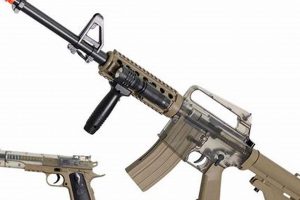
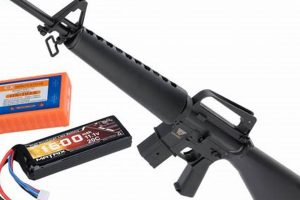
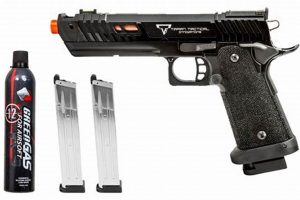
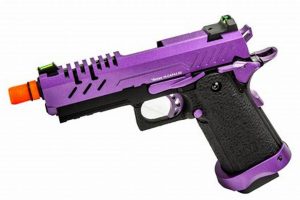
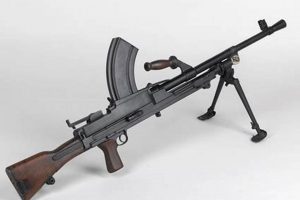
The severity of discomfort experienced from being struck by a projectile propelled from an airsoft replica firearm is directly related to several factors. These influencing elements encompass the projectile’s velocity upon impact, the projectile’s weight, the distance from which the projectile was fired, and the area of the body that receives the impact. The sensation can range from a minor sting to a more pronounced welt, depending on these variables.
Understanding the variables that contribute to the experience upon impact provides a foundation for safety protocols within airsoft activities. Responsible utilization of protective gear, such as face masks, eye protection, and appropriate clothing, is paramount in mitigating potential injuries. Awareness of field rules and adherence to established safety guidelines further contribute to a safer environment for all participants.
The ensuing sections will delve into the specific factors that influence the intensity of impact, explore the types of protective gear recommended for minimizing potential discomfort, and examine the established safety protocols essential for responsible airsoft participation.
Mitigating Discomfort and Injury in Airsoft Activities
This section provides guidelines for minimizing potential discomfort and injury associated with airsoft projectiles.
Tip 1: Utilize Appropriate Protective Gear: Full-seal eye protection meeting ANSI Z87.1 standards is mandatory. Face masks, preferably full-face, are highly recommended to protect against dental and facial injuries.
Tip 2: Wear Adequate Clothing: Multiple layers of clothing, including long sleeves and pants, provide a buffer against impacts. Thicker fabrics, such as tactical pants or jackets, offer increased protection.
Tip 3: Adhere to Minimum Engagement Distances: Designated minimum engagement distances based on replica firearm velocity (FPS) are crucial. Engaging targets outside these limits reduces impact intensity.
Tip 4: Respect Field Rules: Familiarization with and adherence to all field-specific rules, including limitations on replica firearm modifications and gameplay restrictions, is essential.
Tip 5: Communicate with Other Players: Verbally acknowledge when a player is too close or when a shot may have been unsafe. Open communication promotes a safer environment.
Tip 6: Understand Replica Firearm Velocity: Knowledge of the replica firearm’s FPS output is critical. Adherence to field velocity limits prevents the use of excessively powerful devices.
Tip 7: Prioritize Safety Briefings: Attend and actively participate in all pre-game safety briefings. These briefings often cover site-specific hazards and emergency procedures.
Consistent application of these guidelines contributes to a safer and more enjoyable airsoft experience, reducing the likelihood of significant discomfort or injury.
The following section provides a summary of key considerations for responsible airsoft participation.
1. Velocity (FPS)

Velocity, measured in feet per second (FPS), is a critical determinant of impact force exerted by an airsoft projectile, directly influencing the degree of discomfort or potential injury experienced upon contact. It is a primary factor considered in establishing safety regulations within the sport.
- Kinetic Energy Transfer
Higher FPS values translate to greater kinetic energy possessed by the projectile. Upon impact, this energy is transferred to the target. The amount of energy transferred is directly proportional to the square of the velocity. Therefore, even a slight increase in FPS can lead to a disproportionately larger increase in the impact force felt, increasing the potential for a more significant sting or welt.
- Field Regulations and Limitations
Airsoft fields typically implement FPS limits to control the intensity of impacts. These limits are generally categorized by replica firearm type (e.g., pistols, rifles, sniper rifles) and intended engagement range. Exceeding these limits is a safety violation that can result in penalties, including expulsion from the field, due to the increased risk of injury.
- Distance and Velocity Degradation
While a higher initial FPS results in greater impact force at close range, the velocity of the projectile gradually decreases over distance due to air resistance. This velocity degradation means that the same replica firearm will impart less energy at longer ranges. Minimum engagement distances are often stipulated to account for this effect, ensuring that impacts are within acceptable limits at closer ranges.
- Protective Gear Efficacy
The effectiveness of protective gear, such as face masks and body armor, is directly related to the FPS of the replica firearm being used. Protective gear is designed to absorb a certain amount of kinetic energy. If the FPS exceeds the gear’s rated capacity, the protection may be compromised, resulting in a greater chance of discomfort or injury. Compliance to specific FPS limits is crucial in ensuring protective gear provides the intended level of safety.
Therefore, a thorough understanding of velocity, adherence to field FPS limits, and the utilization of appropriate protective gear are essential for mitigating the potential discomfort and risk associated with airsoft projectiles. Velocity is a crucial factor when considering “how bad does an airsoft gun hurt.”
2. Projectile weight

Projectile weight, typically measured in grams, is another determinant factor in the potential discomfort experienced from an airsoft projectile. It directly influences the kinetic energy delivered upon impact, contributing significantly to the overall sensation and potential for injury. A heavier projectile, propelled at the same velocity as a lighter one, imparts a greater force due to its increased mass, leading to a more pronounced effect. This relationship necessitates careful consideration of projectile weight in conjunction with velocity regulations to ensure player safety. For instance, some airsoft fields impose restrictions on the use of heavier projectiles, particularly in close-quarters combat scenarios, to mitigate the risk of more severe impacts.
The interplay between projectile weight and velocity becomes apparent when considering the formula for kinetic energy: KE = 1/2 m v^2, where KE is kinetic energy, m is mass (projectile weight), and v is velocity. A seemingly small increase in projectile weight, coupled with a standard velocity, can disproportionately raise the kinetic energy delivered upon impact. This principle explains why using heavier-than-recommended projectiles can lead to discomfort or even minor injuries, especially on sensitive areas of the body. It highlights the importance of adhering to manufacturer recommendations and field regulations regarding projectile weight. Airsoft replica firearms designed for heavier projectiles often have specific internal components to handle the increased stress, and using such projectiles in standard devices can lead to malfunction or damage.
Conclusively, projectile weight is an indispensable variable that affects “how bad does an airsoft gun hurt.” A comprehensive understanding of its influence, along with adherence to stipulated regulations, is paramount for the prioritization of safety protocols and informed participation in airsoft activities. Overlooking projectile weight can negate the effectiveness of other safety measures and potentially increase the risk of injury. Therefore, maintaining a balanced approach, incorporating regulated projectile weight alongside protective gear and responsible gameplay, constitutes a critical element of a safe and enjoyable airsoft experience.
3. Impact distance

Impact distance, the space separating the point of origin of an airsoft projectile and the point of contact with a target, exerts a significant influence on the severity of the sensation experienced upon impact. Its relevance stems from the physical principles governing projectile motion and energy dissipation over distance, shaping the outcome of any given airsoft engagement.
- Velocity Degradation
As an airsoft projectile traverses space, air resistance acts upon it, causing a gradual reduction in velocity. The extent of this velocity reduction is directly proportional to the distance traveled. Consequently, a projectile impacting a target at close range will possess significantly greater kinetic energy than the same projectile striking a target at a more distant location. This translates directly into a more intense sensation at closer ranges, potentially escalating from a mild sting to a more pronounced welt.
- Kinetic Energy Transfer Variance
The kinetic energy transferred upon impact is a function of both the projectile’s mass and its velocity at the moment of contact. Given that velocity diminishes with increasing distance, the kinetic energy delivered to the target also decreases. This relationship signifies that the severity of the impact, in terms of potential for discomfort or injury, is inversely related to the distance between the shooter and the target. At extended ranges, the kinetic energy may be sufficiently reduced to render the impact relatively benign.
- Minimum Engagement Distances
Recognizing the potential for increased impact severity at close range, many airsoft fields institute minimum engagement distances. These distances mandate that players maintain a certain separation before discharging a replica firearm, particularly those with higher FPS ratings. Adhering to these stipulations mitigates the risk of excessively forceful impacts, particularly to sensitive areas of the body. Failure to respect these distances can result in penalties or even exclusion from gameplay, underscoring the importance of distance management for player safety.
- Protective Gear Effectiveness
The effectiveness of protective gear is intrinsically linked to impact distance. While protective equipment can effectively mitigate the effects of a projectile impacting at a reduced velocity, its capacity to absorb energy is finite. At point-blank range, even the most robust protective gear may be overwhelmed by the force of impact, leading to discomfort or even injury. Therefore, maintaining a safe distance is paramount in ensuring that protective gear can perform its intended function effectively.
In summation, impact distance emerges as a pivotal determinant in assessing “how bad does an airsoft gun hurt.” The interplay between velocity degradation, kinetic energy transfer, minimum engagement distances, and protective gear effectiveness underscores the necessity of responsible distance management in airsoft activities. Failing to account for the ramifications of impact distance can compromise player safety and detract from the overall enjoyment of the sport.
4. Area impacted
The anatomical location of impact from an airsoft projectile significantly influences the perception of discomfort and potential for injury. Sensitivity varies considerably across different body regions, resulting in a spectrum of experiences. An understanding of these variations is crucial for implementing appropriate protective measures.
- Facial Region
The face, characterized by its concentration of sensory nerves and proximity to vital organs such as the eyes and teeth, represents a highly sensitive impact zone. Projectiles striking this area can induce considerable pain, bruising, or, in severe cases, dental or ocular trauma. Protective eyewear and full-face masks are therefore mandatory safety equipment to mitigate these risks.
- Exposed Skin
Areas of exposed skin, such as the hands, neck, and forearms, lack the protective cushioning afforded by clothing or underlying muscle mass. Impacts on these regions can result in immediate stinging sensations, welts, or abrasions. The degree of discomfort is further influenced by individual pain tolerance and the projectile’s velocity.
- Torso and Limbs
The torso and limbs, generally protected by clothing, exhibit a comparatively lower sensitivity to impact. Multiple layers of fabric can absorb a significant portion of the projectile’s kinetic energy, reducing the sensation of pain. However, even with protective clothing, high-velocity impacts can still induce bruising or discomfort, particularly in areas with limited muscle coverage.
- Joints
Joints, such as the knees, elbows, and ankles, represent vulnerable impact locations due to their limited soft tissue coverage and intricate skeletal structures. Impacts on these areas can cause acute pain and potential joint sprains or dislocations. Targeted protection, such as knee or elbow pads, can minimize the risk of such injuries.
In conclusion, the specific body region struck by an airsoft projectile plays a pivotal role in determining “how bad does an airsoft gun hurt.” Awareness of these anatomical variations and the adoption of appropriate protective measures are essential for ensuring a safe and enjoyable airsoft experience. Consideration of the area impacted should inform decisions regarding protective gear and gameplay strategies.
5. Protective Gear

Protective gear serves as a critical intermediary between the potential energy of an airsoft projectile and the extent of discomfort or injury experienced by a participant. Its primary function is to absorb and dissipate the kinetic energy transferred upon impact, thereby mitigating the force that reaches the body. The efficacy of protective equipment directly influences the perception of impact, ranging from a negligible sensation to a pronounced stinging effect or, in unprotected scenarios, more severe trauma. The absence of appropriate protective measures significantly elevates the risk of injury, underscoring its indispensable role in airsoft activities. For instance, the mandatory use of ANSI-rated goggles demonstrably reduces the incidence of eye injuries, which can have long-term consequences. Similarly, full-face masks protect the sensitive facial region from potential dental or skeletal damage.
The selection of appropriate protective gear necessitates a comprehensive understanding of the potential hazards inherent in airsoft engagements. Factors such as projectile velocity, typical engagement distances, and the playing environment should inform the choice of equipment. For example, thicker, padded clothing may be advisable for close-quarters combat scenarios, while lighter, more breathable gear may be suitable for outdoor engagements at longer ranges. Furthermore, proper fit and maintenance are paramount to ensure optimal performance. Ill-fitting gear may shift during gameplay, exposing vulnerable areas, while damaged or degraded equipment may fail to provide adequate protection. Regular inspection and replacement of worn components are essential to maintaining the integrity of the protective system. A real-world example includes a player sustaining a facial injury due to a cracked facemask that failed to absorb the impact energy adequately, emphasizing the importance of vigilant equipment maintenance.
Ultimately, protective gear represents a tangible means of controlling the potential ramifications associated with airsoft projectiles. The level of protection afforded by the equipment directly impacts the severity of the sensation and the likelihood of injury. Understanding the principles behind protective gear operation, combined with responsible equipment selection and maintenance, is fundamental to ensuring a safe and enjoyable airsoft experience. Disregard for these principles can negate the benefits of other safety precautions and increase the potential for undesirable outcomes, reiterating the crucial link between protective measures and “how bad does an airsoft gun hurt”.
6. Adherence Rules

Strict adherence to established rules within airsoft activities functions as a primary mechanism for minimizing potential discomfort and injury resulting from projectile impacts. These regulations, often encompassing velocity limits, minimum engagement distances, and prohibited actions, are designed to create a controlled environment where the risk of harm is significantly reduced. The direct correlation between rule compliance and impact severity underscores the critical importance of responsible gameplay. For instance, a field rule mandating a minimum engagement distance of ten feet for replica firearms exceeding 350 FPS directly mitigates the potential for close-range impacts that could cause welts or abrasions. Conversely, disregard for such rules elevates the likelihood of experiencing a more painful or injurious event.
Practical application of these rules extends beyond simple compliance; it necessitates a thorough understanding of their underlying rationale. Players who comprehend the relationship between velocity, distance, and impact force are better equipped to make informed decisions that prioritize safety. For example, if a player recognizes that closing within the minimum engagement distance will increase the impact force significantly, they can adjust their strategy accordingly, either by maintaining a safer distance or by communicating with the opposing player to reposition. Furthermore, adherence to rules regarding prohibited actions, such as blind firing or intentionally targeting vulnerable areas, contributes to a culture of respect and safety within the airsoft community. A real-world instance involves a player being penalized for repeatedly violating the minimum engagement distance rule, thereby demonstrating the tangible consequences of non-compliance and reinforcing the importance of rule adherence.
Conclusively, adherence to established rules forms a cornerstone of responsible airsoft participation and directly influences the potential for discomfort or injury. The implementation and enforcement of these regulations create a safer environment for all players, reducing the likelihood of excessive impact forces and promoting a culture of respect and fair play. The effectiveness of these rules relies on the collective commitment of players to prioritize safety over competitive advantage, thereby ensuring a more enjoyable and less painful airsoft experience. Therefore, it’s critical to consider how strict “adherence rules” can influence “how bad does an airsoft gun hurt.”
Frequently Asked Questions
The following addresses common inquiries regarding the level of discomfort experienced from airsoft projectile impacts. This aims to provide clear and objective information.
Question 1: What factors primarily determine the intensity of impact sensation?
The velocity of the projectile upon impact, its weight, the distance from which it was fired, and the specific area of the body impacted are the main factors.
Question 2: How does projectile velocity (FPS) relate to the impact force?
Higher FPS values directly correlate with greater kinetic energy possessed by the projectile, resulting in a more forceful impact upon contact. Conversely, lower FPS values result in less impact force.
Question 3: Does projectile weight have a significant effect on the impact?
Yes, a heavier projectile, propelled at the same velocity as a lighter one, will deliver a more substantial impact due to its increased mass and, therefore, increased kinetic energy.
Question 4: Why is adherence to minimum engagement distances crucial?
Minimum engagement distances are implemented to allow for velocity degradation over distance, thus reducing the kinetic energy of the projectile upon impact, particularly at close ranges where the impact could be more forceful.
Question 5: How does the area of the body impacted influence the experience?
Certain areas of the body, such as the face, neck, and hands, are more sensitive to impact than others due to a higher concentration of nerve endings and less protective tissue or clothing.
Question 6: Is protective gear truly effective in reducing discomfort and injury?
Yes, appropriately rated protective gear, such as full-seal eye protection and face masks, is specifically designed to absorb and dissipate the kinetic energy of airsoft projectiles, significantly reducing the risk of injury and the intensity of the impact sensation.
In summary, numerous factors influence the level of impact sensation experienced from airsoft projectiles. Understanding these variables is essential for safe and responsible participation.
The following section presents key considerations for responsible airsoft play.
How Bad Does An Airsoft Gun Hurt
This exploration clarifies that the sensation experienced from an airsoft projectile is not a simple binary, but rather a complex interplay of factors. Projectile velocity, weight, impact distance, and the specific area of the body impacted each contribute to the overall experience. Crucially, appropriate protective gear and stringent adherence to established safety rules serve as essential mitigations against potential discomfort and injury. Understanding these elements provides a foundation for responsible participation. The aim is minimizing harm and ensuring a safe environment.
Responsible engagement in airsoft activities hinges on a commitment to safety protocols. Continued vigilance, informed decision-making regarding protective equipment, and strict compliance with field regulations are paramount. These practices reduce potential harm. This promotes a culture of respect and responsibility within the airsoft community. Prioritizing safety enables a more enjoyable experience for all participants.