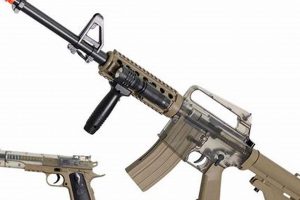
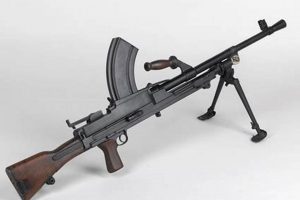
These are replica firearms designed to resemble the weaponry used during the American Civil War. They are typically utilized in simulated historical battles, where participants engage in tactical scenarios employing period-specific equipment and strategies. These devices project plastic pellets, offering a safe and controlled method for historical reenactment and competitive target shooting. The realism of the replicas, combined with the engaging nature of the activities, allows participants to experience a tangible connection to the past.
Reenactments involving these replicas provide educational and recreational opportunities. Participants gain a deeper understanding of historical tactics, weapon handling, and the challenges faced by soldiers during the conflict. The use of realistic equipment enhances the immersive quality of the experience, fostering appreciation for the historical context. Furthermore, participation can promote teamwork, strategic thinking, and physical activity.
The following sections will delve into the specific types available, considerations for safety and responsible use, and the evolving landscape of historical reenactment incorporating such simulated weaponry.
Tips for Civil War Era Replica Airsoft Devices
Responsible and informed engagement with these replica firearms requires diligent attention to safety protocols and a thorough understanding of their operational characteristics. Adherence to the following guidelines promotes a secure and authentic reenactment experience.
Tip 1: Research Historical Accuracy: Before acquiring a replica, conduct thorough research into the specific firearms employed by both Union and Confederate forces. This ensures the selected device aligns with the intended historical portrayal and contributes to an authentic reenactment.
Tip 2: Prioritize Eye Protection: The mandatory use of full-seal, ANSI-rated Z87.1 eye protection is paramount. The risk of projectile impact necessitates the consistent and uncompromising enforcement of this safety measure during any activity involving replica firearms.
Tip 3: Implement Safe Handling Procedures: Treat every replica as if it were a live firearm. Maintain muzzle awareness, keep the device pointed in a safe direction, and avoid placing a finger on the trigger until ready to engage a designated target.
Tip 4: Understand Velocity Limits: Familiarize yourself with the established velocity limits mandated by reenactment organizations and governing bodies. Chronograph testing of each device prior to participation ensures compliance with these regulations and minimizes the risk of injury.
Tip 5: Transport Responsibly: When transporting replica firearms to and from reenactment events, ensure they are unloaded, securely encased in a protective container, and concealed from public view. Adherence to local and state regulations regarding firearm transportation is essential.
Tip 6: Practice Safe Engagement Distances: Establish and enforce minimum engagement distances based on the velocity of the projectiles. Close-quarters engagements significantly increase the risk of injury and should be strictly prohibited.
These tips are crucial for maintaining safety and enhancing the realism of the reenactment experience. By consistently implementing these guidelines, participants contribute to a safe and respectful portrayal of history.
The subsequent sections will address the maintenance and repair considerations, as well as the long-term implications of responsible ownership.
1. Authenticity

The pursuit of authenticity constitutes a core tenet in the utilization of these replica firearms in historical reenactments. The degree to which the devices mirror the appearance, weight, and operation of their historical counterparts directly impacts the immersive quality of the experience. For example, a meticulously crafted replica of a Confederate Richmond rifle, complete with accurate markings and functioning mechanisms, provides a significantly more compelling portrayal than a generic, non-specific model. This commitment to detail extends beyond mere aesthetics, influencing the tactical considerations and operational procedures employed during simulations. The fidelity of the replica to the original firearm influences the authenticity of the reenactment, shaping the participants connection to the historical context.
The practical significance of authentic replicas lies in their ability to educate and inform. Participants engaging with accurately replicated firearms gain a more nuanced understanding of the challenges faced by soldiers during the Civil War. Factors such as reloading times, effective ranges, and the limitations of specific weapon types become tangible realities, fostering a deeper appreciation for the historical context. The selection of appropriate accouterments, such as bayonets and cartridge boxes, further enhances the authenticity of the portrayal and contributes to the educational value of the reenactment. Neglecting authenticity can undermine the historical narrative and diminish the educational impact of the activity.
In summary, the emphasis on authenticity in replica firearms transcends mere cosmetic concerns. It is integral to creating an immersive, educational, and historically accurate experience. While challenges exist in sourcing and maintaining truly authentic replicas, the benefits derived from a commitment to historical accuracy justify the effort. The careful selection and responsible use of these devices contribute significantly to a meaningful and respectful portrayal of the past.
2. Safety protocols
The integration of rigorous safety protocols is not merely advisable, but fundamentally necessary when employing replica firearms in historical reenactments. The potential for injury, though less than with live firearms, remains a constant variable. The inherent danger of projectiles necessitates unwavering adherence to preventative measures. Eye protection, specifically full-seal goggles meeting ANSI Z87.1 standards, provides a crucial barrier against pellet impact. Furthermore, the establishment and enforcement of minimum engagement distances directly correlate with minimizing the risk of close-range injuries. These distances are calculated based on the muzzle velocity of the projectiles, ensuring a buffer zone that mitigates the force of impact. Examples include the mandatory chrono-graphing of each device before a reenactment event to ensure velocity compliance, or the strict prohibition of blind firing, which eliminates the potential for accidental strikes on unprotected individuals. The practical significance of these safety protocols lies in their direct impact on participant well-being and the long-term viability of historical reenactment activities.
Neglecting to enforce comprehensive safety protocols creates a cascade of potential consequences. Injuries, ranging from minor welts and contusions to severe eye damage, can arise from projectile impact. These incidents not only inflict physical harm but also erode trust in the reenactment community and undermine the perception of these activities. Moreover, inadequate safety measures can lead to legal ramifications, including liability lawsuits and potential restrictions on future events. Consider the scenario where a participant removes their eye protection during a break, only to be struck by an errant pellet; such incidents highlight the need for constant vigilance and a culture of safety that permeates every aspect of the reenactment process. The implementation of clear rules, thorough briefings, and consistent enforcement mechanisms is essential for mitigating these risks.
In conclusion, safety protocols are an indispensable component of activities involving Civil War era replica firearms. Their implementation minimizes the risk of injury, fosters a positive and responsible reenactment environment, and ensures the long-term sustainability of historical reenactment activities. Challenges in enforcing these protocols stem from factors such as complacency, inadequate training, and insufficient oversight. Addressing these challenges requires a proactive approach, including continuous education, rigorous inspections, and a commitment to upholding the highest standards of safety. This commitment ensures a respectful and safe depiction of the past.
3. Velocity Limits

Muzzle velocity limitations constitute a critical safety and regulatory aspect governing the use of Civil War replica airsoft devices in historical reenactments and related activities. Adherence to these limitations mitigates the risk of injury and ensures a standardized level of safety across various events and organizations. These restrictions are typically measured in feet per second (FPS) using a chronograph, and are often dictated by event organizers, insurance providers, and governing bodies.
- Injury Reduction
The primary role of velocity limits is to minimize the potential for injury resulting from projectile impact. Higher velocities translate to greater kinetic energy, increasing the severity of potential wounds, especially at close range. Setting a maximum allowable velocity, typically in the range of 350-400 FPS with 0.20g BBs for airsoft rifles, reduces the likelihood of serious injury, such as welts, contusions, or eye damage, should a participant be struck by a projectile.
- Fair Play and Balance
Velocity limitations also contribute to fair play during simulated combat scenarios. Disparities in muzzle velocity can create an unequal playing field, granting an unfair advantage to participants wielding more powerful devices. By imposing velocity restrictions, participants are compelled to rely more on tactical skill, teamwork, and strategic positioning, rather than simply overwhelming opponents with superior firepower.
- Regulatory Compliance
Compliance with established velocity limits is often a prerequisite for participation in organized historical reenactment events. Event organizers implement these regulations to ensure participant safety, minimize liability exposure, and maintain a standardized set of rules across all attendees. Non-compliance can result in disqualification from the event, and in some cases, potential legal repercussions.
- Device Longevity
While not the primary intention, velocity limits can indirectly contribute to the longevity of replica airsoft devices. Devices operating at excessive velocities often experience increased wear and tear on internal components, potentially leading to premature failure. Maintaining velocity within prescribed limits can reduce stress on the device’s mechanics, extending its lifespan and ensuring continued reliable performance.
In conclusion, velocity limitations are essential for ensuring the safety, fairness, and regulatory compliance within the context of Civil War replica airsoft usage. These limits directly impact the potential for injury, promote a balanced playing field, facilitate adherence to event regulations, and indirectly contribute to the longevity of airsoft devices. The consistent enforcement of velocity limits is paramount for responsible and sustainable historical reenactment activities.
4. Maintenance
Sustained functionality and historical accuracy in the utilization of simulated weaponry demand rigorous attention to maintenance protocols. Neglecting these devices undermines their performance and potentially compromises the integrity of historical reenactments.
- Component Inspection and Cleaning
Regular inspection and cleaning of internal and external components are paramount. Black powder replicas, for instance, necessitate meticulous cleaning to remove corrosive residue. This process involves disassembling the device, cleaning the barrel and firing mechanism with appropriate solvents, and applying protective lubricants to prevent rust and degradation. Neglect accelerates wear and diminishes functionality.
- Seal Integrity and Air Compression
For pneumatic devices, maintaining seal integrity is critical for consistent performance. Leaks in the air compression system reduce power and accuracy. Regular inspection of seals and O-rings, followed by replacement as needed, ensures optimal pressure and projectile velocity. Silicone-based lubricants can prolong seal lifespan and prevent deterioration.
- Spring Tension and Replacement
Spring-powered devices experience gradual loss of tension over time. Reduced spring tension diminishes projectile velocity and accuracy. Periodic evaluation of spring tension and replacement with appropriately rated springs restores performance to original specifications. Selecting springs of appropriate material and construction prolongs their operational lifespan.
- External Preservation and Weather Protection
The external components, often constructed of wood and metal, require protection from environmental factors. Humidity, temperature fluctuations, and exposure to sunlight can degrade these materials. Application of appropriate wood preservatives, metal protectants, and storage in controlled environments minimizes environmental damage. This includes safeguarding against moisture that leads to rust and warping, therefore, preserving the authentic aesthetic.
These maintenance facets directly impact the long-term viability and historical fidelity of simulated weaponry. Diligent adherence to these procedures ensures reliable functionality, accurate portrayal, and the preservation of these devices for continued use in educational and recreational historical reenactments. Conversely, neglect contributes to performance degradation, potential damage, and the erosion of historical accuracy. Therefore, comprehensive maintenance is inextricably linked to responsible ownership and effective utilization.
5. Historical context

Understanding the historical context is paramount to the appropriate and educational use of Civil War replica airsoft devices. A superficial application of these devices without grasping the nuances of the era diminishes their value and potentially trivializes a complex period in history. This understanding encompasses military tactics, social dynamics, and technological limitations of the time.
- Tactical Doctrine and Weapon Employment
Civil War tactics relied heavily on linear formations and volley fire, reflecting the limitations of smoothbore muskets and early rifled weaponry. The airsoft replicas should, therefore, be employed in a manner consistent with these historical doctrines. Reenactors must understand the relatively short effective range of these weapons and the emphasis on coordinated, massed fire. Utilizing modern “run and gun” airsoft tactics with Civil War-era replicas misrepresents historical combat realities.
- Weapon Limitations and Technological Constraints
The weapons of the Civil War era were characterized by slow reload times, susceptibility to weather conditions, and varying degrees of accuracy. Reenactors must be cognizant of these limitations and incorporate them into their simulations. For example, the challenges of reloading a muzzle-loading rifle in the midst of combat should be simulated to reflect the difficulties faced by soldiers of the time. A thorough understanding of these technological constraints enhances the authenticity and educational value of the reenactment.
- Social and Cultural Considerations
The Civil War was a conflict deeply rooted in social and cultural divisions, particularly surrounding the issue of slavery. When portraying soldiers or civilians from this era, reenactors must be sensitive to these issues and avoid perpetuating harmful stereotypes or insensitive portrayals. Engaging with primary source materials, such as diaries and letters from Civil War participants, provides valuable insights into the social and cultural context of the time.
- Uniformity and Equipment Accuracy
Authentic representations extend beyond weaponry to include accurate uniforms and accouterments. Union and Confederate soldiers possessed distinct uniforms and equipment, reflecting logistical constraints and supply chain disparities. Reenactors should strive for accuracy in their attire and equipment, consulting historical sources and expert advisors to ensure authenticity. The pursuit of uniformity and accurate equipment contributes to the visual and historical integrity of the reenactment.
The integration of historical context enhances activities involving Civil War replica airsoft devices, transforming them from mere games into immersive educational experiences. Neglecting this context undermines the historical narrative and potentially misrepresents the sacrifices and experiences of those who lived through this tumultuous period. Therefore, a commitment to historical accuracy and sensitivity is essential for the responsible and meaningful use of these devices.
Frequently Asked Questions Regarding Civil War Airsoft Guns
The following elucidates common inquiries concerning replica firearms designed to simulate weaponry utilized during the American Civil War period. This section addresses both practical considerations and ethical responsibilities associated with their use.
Question 1: What are the primary safety considerations when employing replica Civil War firearms in historical reenactments?
The most critical safety consideration is eye protection. Full-seal goggles meeting ANSI Z87.1 standards are mandatory. Additionally, adherence to established velocity limits and minimum engagement distances mitigates the risk of projectile-related injuries. Responsible handling practices, including muzzle awareness and trigger discipline, are also essential.
Question 2: How does one ensure historical accuracy in the selection and utilization of Civil War airsoft guns?
Thorough research into the specific firearms employed by both Union and Confederate forces is imperative. The selected replica should accurately reflect the appearance, weight, and operation of its historical counterpart. Appropriate accouterments, such as bayonets and cartridge boxes, further enhance the authenticity of the portrayal.
Question 3: What are the typical velocity limits imposed on replica Civil War firearms in organized reenactment events?
Velocity limits vary depending on the event organizer and governing body. However, a common range is 350-400 FPS (feet per second) when measured with 0.20g BBs. Chronograph testing is often conducted prior to participation to ensure compliance with these regulations.
Question 4: What maintenance procedures are necessary to ensure the proper functioning and longevity of replica Civil War airsoft guns?
Regular inspection and cleaning of internal and external components are essential. Black powder replicas require meticulous cleaning to remove corrosive residue. For pneumatic devices, maintaining seal integrity is critical. External components should be protected from environmental factors to prevent degradation.
Question 5: How does understanding the historical context enhance the experience of using replica Civil War airsoft guns?
Grasping the military tactics, technological limitations, and social dynamics of the Civil War era transforms the activity from a mere game into an immersive educational experience. Understanding the relatively short effective range of the weapons, the challenges of reloading, and the social sensitivities of the period contributes to a more authentic and respectful portrayal.
Question 6: What are the ethical considerations involved in using replica firearms that simulate weaponry from a conflict with significant social and cultural implications?
Sensitivity to the social and cultural divisions that fueled the Civil War is paramount. Reenactors must avoid perpetuating harmful stereotypes or insensitive portrayals. Engaging with primary source materials and consulting with historical advisors can promote a more nuanced and respectful understanding of the period.
In summary, the responsible and effective use of Civil War airsoft devices demands careful attention to safety protocols, historical accuracy, ethical considerations, and ongoing maintenance. Adherence to these principles ensures a safe, educational, and respectful portrayal of the past.
The following section will provide a comprehensive guide to resources for finding historical information.
Conclusion
This exploration has illuminated the various facets of Civil War airsoft guns, emphasizing the importance of historical accuracy, stringent safety measures, ongoing maintenance, and a thorough understanding of the relevant historical context. The responsible utilization of these devices in reenactments and simulations can provide educational and engaging experiences.
Continued adherence to ethical considerations and a commitment to historical fidelity will be crucial to ensuring that the use of Civil War airsoft guns remains a respectful and informative endeavor. Further research and community collaboration are essential for fostering a deeper appreciation of history and responsible engagement with its simulated elements.