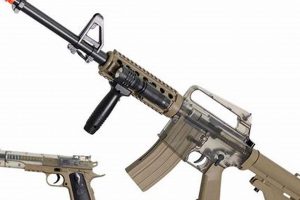
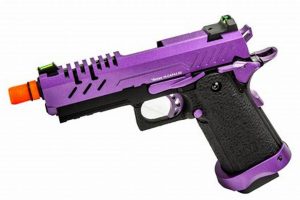
The central question concerns the potential lethality of projectiles launched from airsoft devices on avian species. Airsoft guns, designed to fire small, spherical plastic pellets, are typically used in recreational simulations of combat. The impact force of these pellets, combined with their size and material, determines the degree of harm they can inflict.
The significance lies in the ethical and legal considerations surrounding wildlife safety. While airsoft activities are generally intended for harmless competition, unintended consequences, such as injury to animals, can occur. Understanding the factors that influence the potential harm and the regulatory frameworks that address these concerns is essential for responsible airsoft participation. Historically, the awareness of the broader environmental impact of recreational activities has increased, leading to a greater emphasis on minimizing harm to wildlife.
The following will examine the variables influencing the risk to birds, encompassing pellet velocity and material composition, the size and vulnerability of different bird species, and the legal ramifications associated with harming protected wildlife. It will further explore methods to mitigate the risk of accidental injury to birds during airsoft activities.
Mitigating Risks
Responsible airsoft participation necessitates a conscious effort to minimize potential harm to wildlife. Implementing preventative measures significantly reduces the likelihood of accidental avian injury or mortality.
Tip 1: Conduct Activity in Designated Areas: Confine airsoft activities to designated areas far from known bird habitats, nesting sites, or migratory routes. Prioritize indoor facilities or areas with minimal avian presence.
Tip 2: Reduce Projectile Velocity: Lowering the velocity of airsoft projectiles diminishes their impact force, thereby reducing the potential for serious injury. Adhere to velocity limits established by regulatory bodies and adjust equipment accordingly.
Tip 3: Utilize Biodegradable Pellets: Opt for biodegradable airsoft pellets composed of materials that decompose naturally in the environment. This minimizes long-term environmental impact should pellets be dispersed outside the activity area.
Tip 4: Increase Awareness and Observation: Prior to and during airsoft activities, maintain heightened awareness of surrounding wildlife. Actively scan the environment for birds and cease activity if birds are observed within the immediate vicinity.
Tip 5: Brief Participants on Wildlife Safety: Provide clear and concise instructions to all participants regarding the importance of wildlife safety and the potential consequences of harming birds. Emphasize responsible gun handling and target awareness.
Tip 6: Implement Barrier Systems: Where feasible, utilize physical barriers such as netting or screens to contain projectiles within the designated activity area and prevent them from reaching surrounding habitats.
Tip 7: Support Conservation Efforts: Contribute to local or national bird conservation organizations. This demonstrates a commitment to protecting avian species and their habitats.
Adhering to these preventative measures significantly reduces the risk of injury to birds from airsoft activities. Prioritizing responsible practices demonstrates respect for wildlife and promotes the long-term sustainability of airsoft as a recreational activity.
The subsequent section will address the legal ramifications associated with harming birds and reinforces the importance of ethical conduct.
1. Pellet Velocity

Pellet velocity, measured in feet per second (FPS), is a primary determinant of the kinetic energy imparted upon impact. In the context of assessing whether an airsoft gun can kill a bird, understanding the correlation between pellet velocity and potential harm is paramount.
- Kinetic Energy Transfer
Higher pellet velocities translate to greater kinetic energy. Upon impact with a bird, this energy is transferred, potentially causing blunt force trauma, internal injuries, or penetration of the bird’s delicate skeletal structure. The relationship is not linear; even small increases in velocity can significantly amplify the energy transferred.
- Penetration Potential
Pellet velocity directly influences the pellet’s ability to penetrate a bird’s feathers and skin. Lower velocities might result in superficial injuries, while higher velocities can lead to deeper wounds, increasing the risk of organ damage or infection. The thickness and density of a bird’s plumage also factor into penetration resistance.
- Range and Accuracy Degradation
While higher velocity might seem desirable for extending range, it often comes at the expense of accuracy. Overly high velocities can lead to pellet instability in flight, making precise targeting difficult. This increased dispersion elevates the risk of accidental strikes to non-target birds, even at longer distances.
- Regulatory Limits and Safety Standards
Airsoft regulations often impose velocity limits to minimize the potential for injury. These limits are typically based on human safety considerations, but they also indirectly affect the risk to birds. Adhering to these regulations is crucial for responsible airsoft activity and helps mitigate the potential for lethal impacts.
These interconnected facets demonstrate how pellet velocity acts as a key factor in determining the potential lethality of airsoft guns to birds. Control over pellet velocity, coupled with awareness of its effects, is essential for promoting safer practices within airsoft and minimizing unintended harm to avian wildlife.
2. Bird Size
The physical dimensions of a bird constitute a critical factor in determining its vulnerability to projectiles. Size influences both the probability of being struck and the severity of resulting injuries, thereby playing a pivotal role in assessing whether an airsoft gun can cause mortality.
- Surface Area and Hit Probability
Smaller birds present a smaller target, theoretically reducing the likelihood of being hit by an airsoft pellet. However, their agility and flight patterns can make them unpredictable, potentially offsetting this advantage. Conversely, larger birds offer a greater surface area, increasing the statistical probability of impact, particularly in environments with dense vegetation or restricted visibility.
- Mass and Energy Absorption
A bird’s mass directly affects its ability to absorb the kinetic energy of an airsoft pellet. Larger birds possess greater mass and thus have a higher capacity to withstand the impact without sustaining critical injury. Smaller birds, with their lower mass, are far more susceptible to blunt force trauma and internal damage from even relatively low-velocity projectiles. The ratio of pellet energy to bird mass is a key determinant of injury severity.
- Skeletal Vulnerability
The skeletal structure of birds is lightweight and, in many species, relatively fragile. Smaller birds typically have thinner and more delicate bones, making them highly vulnerable to fractures or dislocations upon impact. Larger birds may have stronger bones, but even they can suffer significant injury if struck in a vulnerable area, such as the wing or head.
- Physiological Reserves and Healing Capacity
Larger birds generally possess greater physiological reserves and a higher capacity for healing compared to smaller species. This means that even if a larger bird sustains an injury from an airsoft pellet, it may be more likely to recover fully. Smaller birds, with their limited energy reserves and slower healing rates, are more vulnerable to succumbing to injuries that might be survivable for a larger bird.
In conclusion, bird size is an integral variable when evaluating the potential for airsoft guns to inflict fatal injuries. Smaller birds, due to their lower mass, fragile skeletons, and limited physiological reserves, face a significantly elevated risk of mortality compared to their larger counterparts when struck by airsoft projectiles. This underscores the necessity for responsible practices and careful consideration of avian vulnerability in areas where airsoft activities occur.
3. Impact Location

The precise point of impact on a bird’s body significantly influences the severity of injury and the likelihood of mortality when considering if an airsoft gun can prove fatal. Specific areas of the avian anatomy are inherently more vulnerable to trauma, and the consequences of a strike to these locations can be disproportionately severe.
- Cranial Impacts
Direct strikes to the head pose a substantial risk of causing fatal brain trauma. Avian skulls are relatively thin and offer limited protection to the brain. Concussions, hemorrhages, or direct damage to neural tissue can result from even low-velocity impacts. Additionally, impacts to the head can damage sensory organs, impairing a bird’s ability to navigate, forage, and evade predators, ultimately reducing its chances of survival.
- Thoracic Impacts
The thorax, housing the heart and lungs, represents another critical area of vulnerability. Blunt force trauma to the chest can cause contusions, lacerations, or rupture of these vital organs. Pneumothorax (collapsed lung) or cardiac arrest can rapidly ensue, leading to death. Furthermore, damage to the ribs can compromise respiratory function and increase susceptibility to secondary infections.
- Ocular Impacts
The eyes are particularly susceptible to injury from projectiles. Even glancing blows can cause corneal abrasions, cataracts, or retinal detachment, resulting in impaired vision or blindness. Such injuries compromise a bird’s ability to find food, avoid predators, and navigate its environment, significantly reducing its survival prospects. Direct impacts can lead to rupture of the eyeball and irreversible vision loss.
- Limb Impacts
While not always immediately fatal, impacts to the wings or legs can severely compromise a bird’s mobility and ability to perform essential functions. Fractures or dislocations can hinder flight, foraging, and predator avoidance. Inability to fly renders a bird highly vulnerable to predation and starvation. Leg injuries can impede perching, walking, and swimming, depending on the species, further reducing its chances of survival.
The foregoing details highlight that the location of impact is a key determinant when assessing if an airsoft gun could kill a bird. While a hit to a less vital area may result in a minor injury, strikes to the head, chest, eyes, or wings can inflict severe, debilitating, or even fatal damage, depending on the force of impact and the species of bird involved. The inherent vulnerability of specific anatomical regions reinforces the necessity for responsible and cautious airsoft practices to minimize the risk of causing harm to avian wildlife.
4. Pellet Material
The composition of airsoft pellets significantly influences their potential to cause harm, directly affecting the likelihood of avian mortality. Material properties such as density, hardness, and biodegradability determine the energy transfer upon impact and the long-term environmental consequences. The use of harder, non-biodegradable materials elevates the risk of severe injury and persistent environmental contamination, contributing to the determination of whether an airsoft gun can kill a bird. For example, plastic pellets retain their form and can inflict penetrating wounds, while some biodegradable alternatives may deform upon impact, reducing the severity of injury.
The density of the pellet material determines its momentum for a given velocity; denser materials carry more kinetic energy and are therefore more likely to cause significant blunt force trauma. Hardness influences penetration potential; harder materials are more likely to penetrate feathers and skin, potentially reaching vital organs. The increasing availability of biodegradable pellets presents a positive development, but their effectiveness in reducing injury depends on the specific composition and degradation rate. Real-world examples of injured birds found with embedded plastic pellets underscore the significance of material choice. Selecting less harmful pellet materials requires careful consideration of these factors.
In summary, the material composition of airsoft pellets is not merely a technical specification but a crucial element in assessing the potential for avian harm. The availability of biodegradable alternatives provides a pathway to mitigate risks, but comprehensive assessment and responsible selection are essential. Further research into the optimal balance between biodegradability and reduced impact force remains a challenge, requiring collaborative efforts between manufacturers, regulators, and conservation organizations to ensure responsible airsoft practices and minimize environmental impact.
5. Range of Fire
The range of fire of an airsoft gun is intrinsically linked to the question of whether such a device can cause avian mortality. While maximum range indicates potential reach, several factors related to range influence the likelihood and severity of impacts on birds.
- Energy Dissipation Over Distance
Airsoft pellets lose velocity and kinetic energy as they travel. At longer ranges, the remaining energy may be insufficient to cause serious injury, particularly to larger birds. However, even at extended ranges, a strike to a vulnerable area, such as the eye, could prove fatal to a smaller bird. The rate of energy dissipation is influenced by pellet weight, shape, and air resistance.
- Accuracy Degradation with Increased Range
Accuracy diminishes significantly as range increases. The further a pellet travels, the greater the influence of environmental factors such as wind and air density. This reduced accuracy increases the probability of unintentional strikes on non-target birds, even if the intended target is missed by a wide margin. Statistical likelihood of hitting any bird within the area increases with a decrease in projectile control.
- Trajectory and Angle of Impact
At longer ranges, the pellet’s trajectory becomes more parabolic, leading to steeper angles of impact. This can alter the nature of the injury. A direct, perpendicular strike is more likely to cause penetration, while a glancing blow might result in less severe trauma. The angle of impact, therefore, interacts with pellet velocity and material to determine the outcome.
- Visual Acquisition and Target Identification
Increased range complicates the process of visually identifying and accurately targeting designated targets. This difficulty can lead to accidental strikes on birds that are mistaken for targets or are simply unnoticed due to distance and camouflage. The ability to clearly distinguish birds from other objects is crucial for preventing unintended harm.
The interplay of these factors underscores that range of fire is not simply a measure of how far an airsoft pellet can travel. Rather, it is a complex consideration involving energy, accuracy, trajectory, and visual perception, all of which contribute to the determination of whether an airsoft gun can kill a bird. Understanding these relationships is crucial for responsible airsoft practices and minimizing the potential for harm to avian wildlife.
6. Legal Ramifications

The query “will an airsoft gun kill a bird” necessitates careful consideration of legal ramifications. Actions that result in harm to avian species, even unintentionally, can trigger significant legal consequences. Many jurisdictions have laws protecting native birds, rendering their injury or death a punishable offense. The specific statutes vary by region, but they generally prohibit the killing, harming, or possessing of protected species. Airsoft activities that lead to the death of a protected bird can result in fines, confiscation of equipment, and, in some cases, criminal charges. Ignorance of these regulations does not constitute a valid defense.
The Migratory Bird Treaty Act in the United States, for example, protects a vast array of bird species. While the Acts interpretation has evolved, activities resulting in the direct take of migratory birds, including through indirect means, can lead to prosecution. Similarly, many countries adhere to international treaties aimed at conserving bird populations, translating into domestic legislation with enforcement mechanisms. Successful prosecution often hinges on demonstrating a direct causal link between the airsoft activity and the birds injury or death, requiring evidence such as forensic analysis of the pellet or witness testimony. Real-world examples include instances where individuals have faced legal action after harming protected birds with air rifles or similar devices, highlighting the practical significance of understanding and complying with these laws.
In summary, the potential for legal repercussions is a critical component of any assessment regarding the lethality of airsoft guns to birds. National and international laws protect many avian species, and actions that contravene these regulations can lead to substantial penalties. Responsible airsoft participants must familiarize themselves with applicable laws and implement preventative measures to avoid causing harm, thereby mitigating the risk of legal action. Awareness of these legal ramifications is essential for ensuring both compliance and ethical conduct.
Frequently Asked Questions
The following addresses common inquiries regarding the potential for airsoft guns to cause harm to birds, providing factual and objective information.
Question 1: Are all airsoft guns equally dangerous to birds?
No. The potential for harm varies significantly based on projectile velocity, pellet material, and the size of the bird. Higher velocity airsoft guns firing dense, non-biodegradable pellets pose a greater risk.
Question 2: Can small airsoft pellets cause fatal injuries to birds?
Yes, particularly to smaller bird species. Even low-velocity pellets can cause significant blunt force trauma, internal injuries, or penetrate the skin of vulnerable birds, potentially leading to mortality.
Question 3: Are biodegradable airsoft pellets safe for birds?
While biodegradable pellets reduce environmental persistence, they can still cause injury upon impact. The composition and impact force determine the degree of harm, even with biodegradable materials.
Question 4: What are the legal consequences of harming a bird with an airsoft gun?
Penalties vary by jurisdiction but can include fines, confiscation of equipment, and potential criminal charges, particularly if the bird is a protected species under national or international law.
Question 5: How can the risk of harming birds with airsoft guns be minimized?
Mitigation strategies include using designated areas away from bird habitats, reducing projectile velocity, utilizing biodegradable pellets, increasing awareness, and implementing barrier systems.
Question 6: Is it possible to completely eliminate the risk of harming birds during airsoft activities?
While complete elimination is challenging, diligent adherence to preventative measures can significantly reduce the risk and promote responsible engagement in the activity.
The responses provided underscore the importance of responsible airsoft practices and the need for continued awareness regarding the potential impact on avian wildlife. Ethical considerations are of paramount importance.
Further exploration of specific case studies involving airsoft-related avian injuries may offer additional insight.
Conclusion
The analysis presented confirms that an airsoft gun can kill a bird. Multiple factors converge to determine the level of risk, encompassing pellet velocity and composition, bird size and vulnerability, impact location, and the range of fire. Legal ramifications further underscore the gravity of the situation. While the intent of airsoft is recreational, the potential for unintended harm to avian wildlife is undeniable and demands careful consideration.
Ultimately, responsible airsoft participation necessitates a proactive approach toward minimizing the risk of avian injury or mortality. Mitigation strategies, combined with a thorough understanding of applicable laws and ethical considerations, are crucial for ensuring the safety and well-being of bird populations. Continued education and diligence are essential for preserving the integrity of the environment and promoting co-existence between recreational activities and wildlife.