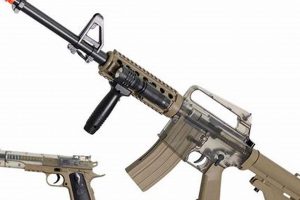
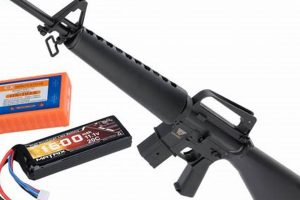
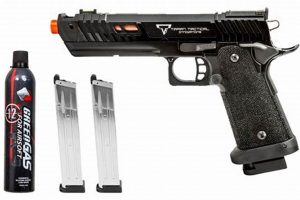
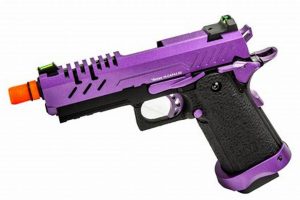
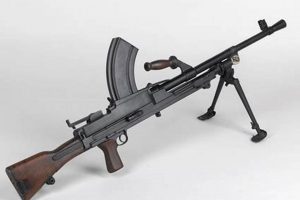
Replica firearms modeled after weapons featured in the PlayerUnknown’s Battlegrounds (PUBG) video game, utilized in the airsoft sport, are the central subject. These devices discharge plastic projectiles using compressed gas or spring mechanisms. Such imitation weaponry allows enthusiasts to simulate the tactical gameplay of the virtual environment in a physical, recreational setting.
The appeal of realistic simulation bolsters engagement in airsoft activities, providing an immersive experience for participants. The replicated aesthetic familiar from the popular digital game enhances the feeling of authenticity, thus increasing player enjoyment. This emulation has a demonstrable link to the broadened accessibility of the sport, particularly among individuals initially drawn to the digital counterpart.
The following sections will delve into the specific models available, the safety considerations imperative to responsible use, and the legal landscape surrounding these recreational items. Further discussion will explore the modification options popular among hobbyists and the associated competitive scene within the airsoft community.
Essential Guidelines for Utilizing Replica Firearms Inspired by a Popular Battle Royale Game
The following directives emphasize the safe and effective employment of airsoft devices replicating weaponry from the digital realm.
Tip 1: Prioritize Protective Gear. Eye protection, specifically ANSI-rated goggles or a full face mask, is non-negotiable. BB projectiles can cause serious ocular injury.
Tip 2: Adhere to Velocity Limits. Understand and comply with field-specific and event-specific velocity restrictions (measured in feet per second, or FPS). Exceeding limits increases the risk of injury.
Tip 3: Practice Safe Handling. Treat the device as a real firearm. Keep the muzzle pointed in a safe direction, and avoid pointing it at anything one is not prepared to simulate shooting.
Tip 4: Engage Responsibly. Avoid using this imitation weaponry in public spaces where it might be mistaken for a genuine firearm. Doing so can provoke dangerous and unpredictable reactions.
Tip 5: Maintain Regular Maintenance. Periodic cleaning and lubrication prevent malfunctions and extend the lifespan of the device. Refer to the manufacturer’s instructions.
Tip 6: Transport Securely. When transporting this sort of equipment, utilize a case or bag to conceal it and prevent misinterpretation by law enforcement or the public.
Tip 7: Know Local Regulations. Research and understand all applicable federal, state, and local laws pertaining to ownership, modification, and usage. Laws vary significantly by location.
Adherence to these guidelines ensures both personal safety and the preservation of responsible recreation, while simultaneously preventing potential legal issues.
Subsequent sections will cover advanced techniques and modifications relevant to experienced airsoft participants.
1. Authenticity

The degree to which replica firearms mirror their in-game counterparts significantly influences the user experience. The closer the physical device’s appearance, weight, and operational mechanics are to the digital weapon, the greater the sense of immersion and realism for the airsoft participant. For example, a replica assault rifle, accurately depicting the textures, markings, and magazine release of its virtual counterpart, contributes to a more convincing simulation of the battle royale environment.
This emphasis on visual fidelity directly impacts user engagement and purchasing decisions. Collectors and players often prioritize models that demonstrate a high level of detail and realism, even if that entails a higher price point. Moreover, the accurate representation of iconic weapons from the game can enhance the strategic and tactical dimensions of airsoft scenarios, as players adapt their strategies based on their familiarity with the digital weapon’s characteristics.
However, the pursuit of authenticity also presents challenges. Manufacturers must balance accuracy with safety requirements and legal restrictions. Components cannot precisely replicate functional firearms, and bright markings or alterations may be necessary to differentiate the replica from a real weapon. Despite these constraints, the drive for genuine representation remains a key factor in shaping the design and marketing of these airsoft devices, connecting the virtual and physical realms.
2. Performance Metrics

Performance metrics are crucial in assessing the suitability of replica firearms derived from the PUBG video game for airsoft applications. Factors such as projectile velocity, measured in feet per second (FPS), affect both the effective range and the potential for injury. Higher FPS values correlate with increased range but also necessitate stricter safety protocols, including enhanced protective gear. The firing rate, expressed in rounds per minute (RPM), influences the device’s effectiveness in simulated combat scenarios. Replicas with higher RPM values can provide a tactical advantage in suppressive fire situations, but may also consume propellant (gas or battery power) more rapidly. The accuracy of a replica, typically evaluated by grouping shots at a designated distance, determines its potential for precise targeting. This metric is dependent on the quality of the internal components, such as the barrel and hop-up unit. For example, a replica modeled after the M416 assault rifle with an FPS of 350, an RPM of 700, and capable of consistently grouping shots within a 6-inch diameter at 50 feet would be considered a high-performing option for competitive airsoft.
The interplay between these performance metrics and gameplay dynamics is significant. Airsoft fields often impose FPS limits to ensure participant safety, requiring players to select replicas and upgrade components strategically. A player might opt for a replica with a lower FPS to comply with field regulations, but compensate by improving the accuracy and firing rate. Furthermore, the type of propellant used (e.g., green gas, CO2, or electric battery) directly influences the consistency and stability of these metrics. Green gas offers moderate performance but is temperature-sensitive, while CO2 provides higher power but can be less consistent. Electric-powered replicas, or AEGs, generally offer more stable performance and are less affected by environmental conditions. These choices impact the overall effectiveness and usability of the replica in various airsoft environments.
Ultimately, understanding and optimizing these metrics is essential for responsible and competitive use. Challenges arise in balancing performance enhancements with safety regulations and the limitations of the replica’s design. Continued advancements in airsoft technology are aimed at improving both the realism and performance of these devices, further bridging the gap between the virtual and physical realms. Such advancements also necessitate ongoing evaluation and refinement of safety standards and gameplay rules to maintain a safe and enjoyable experience for all participants.
3. Safety Regulations
The integration of airsoft devices replicating armaments from PlayerUnknown’s Battlegrounds necessitates strict adherence to safety regulations. The causal relationship between irresponsible usage and potential harm underscores the significance of preventative measures. Eye protection, for example, represents a primary safeguard against projectile-related injuries, acting as a physical barrier crucial for player wellbeing. Velocity limits, typically measured in feet per second (FPS), are also paramount. Exceeding prescribed FPS values raises the kinetic energy of the projectile, thus amplifying the risk of penetration or blunt force trauma. Real-world instances of airsoft-related injuries highlight the imperative of mandatory safety protocols. Reports document cases of corneal abrasions and contusions stemming from inadequate eye protection, reinforcing the direct link between safety equipment and physical harm mitigation.
Furthermore, responsible handling of replica weaponry contributes to a safer environment. Safe handling encompasses practices such as maintaining muzzle awareness, abstaining from brandishing these imitation firearms in public spaces, and consistently treating the devices as if they were real firearms. The failure to uphold these standards can precipitate incidents of accidental discharge or misinterpretation by law enforcement or civilians. For example, an individual who carelessly points a replica weapon at another person, even unintentionally, risks triggering a fear response and escalating a situation unnecessarily. Proper storage practices, involving secure containment and segregation from access by unauthorized individuals, are equally vital in reducing the prospect of accidental or deliberate misuse.
The overarching objective of safety regulations is to minimize the inherent risks associated with airsoft activities involving realistic replica weapons. While the simulated combat environment provides recreational value, the potential for injury necessitates a proactive and diligent approach to safety compliance. Consistent reinforcement of safety protocols, comprehensive training programs, and strict enforcement mechanisms are all essential components of a robust safety framework. Continual assessment and adaptation of these regulations, based on incident reports and technological advancements, ensures the ongoing efficacy of safety measures and fosters a culture of responsibility within the airsoft community.
4. Legal Compliance

The legal landscape governing replica firearms modeled after weapons from the PUBG video game is complex and varies significantly across jurisdictions. Understanding and adhering to these regulations is paramount for responsible ownership and usage. The following outlines key facets of legal compliance related to these devices.
- Federal Regulations on Imitation Firearms
Federal law dictates certain markings and characteristics for imitation firearms to differentiate them from real weapons. These regulations, often enforced by agencies such as the Bureau of Alcohol, Tobacco, Firearms and Explosives (ATF), mandate the inclusion of orange tips or brightly colored markings to clearly identify them as non-lethal. Non-compliance can result in confiscation and potential criminal charges. For example, an airsoft replica lacking the required markings could be mistaken for a genuine firearm by law enforcement, leading to serious legal consequences.
- State and Local Laws Regarding Airsoft Guns
State and local ordinances frequently impose further restrictions on the sale, possession, and use of airsoft devices. Some jurisdictions classify these replicas as “air guns” or “BB guns,” subjecting them to specific storage requirements, age restrictions, and usage limitations. For instance, certain municipalities prohibit the open carry of airsoft guns in public spaces, while others require parental consent for minors to possess them. Ignorance of these laws is not a defense against prosecution, as demonstrated by cases where individuals have been arrested for brandishing airsoft guns in violation of local ordinances.
- Import and Export Restrictions
International regulations governing the import and export of replica firearms also apply to airsoft models. These restrictions, often related to national security concerns or international arms treaties, can significantly impact the availability and legality of certain replica models. For example, importing an airsoft gun that closely resembles a prohibited firearm could result in seizure by customs officials and potential penalties for the importer. Exporters must also comply with relevant licensing requirements and documentation protocols to ensure lawful international trade.
- Modifications and Alterations
Altering or modifying an airsoft gun in a manner that makes it resemble a real firearm or increases its potential for causing harm is often illegal. This includes removing required markings, increasing projectile velocity beyond legal limits, or converting the replica into a functional firearm. Such modifications can lead to severe criminal charges, as they blur the line between imitation and genuine weaponry. Cases involving individuals who have modified airsoft guns to fire projectiles at dangerously high velocities have resulted in felony convictions and significant prison sentences.
These facets of legal compliance underscore the importance of thorough research and adherence to applicable laws. The implications of non-compliance range from fines and confiscation to criminal charges and imprisonment. The responsibility rests with individuals to ensure their actions align with the legal framework governing these devices, thereby promoting safe and lawful participation in the airsoft hobby and preventing potential legal ramifications.
5. Modifications

Modifications represent a significant facet of the airsoft experience, particularly for enthusiasts replicating weaponry featured in PlayerUnknown’s Battlegrounds. The act of modifying these airsoft devices stems from a desire to enhance performance, improve aesthetics, or more closely emulate the characteristics of their virtual counterparts. This can involve alterations to internal components, such as the hop-up unit or motor, to increase range, accuracy, or rate of fire. External modifications include adding tactical accessories like scopes, grips, or rail systems, mirroring the customization options within the game itself. The cause-and-effect relationship is straightforward: a well-executed modification can demonstrably improve a replica’s performance on the airsoft field or enhance its visual appeal. The practical significance lies in the ability to tailor a replica to individual preferences and playing styles. For instance, a player favoring long-range engagements might invest in modifications to increase the replica’s effective range and accuracy, while another focused on close-quarters combat might prioritize improvements to maneuverability and rate of fire.
Real-world examples of modifications are abundant within the airsoft community. The installation of a tighter-bore inner barrel is a common modification aimed at improving accuracy and consistency. Similarly, upgrading the motor in an electric-powered replica can increase its rate of fire and trigger response. External modifications can include the addition of a red dot sight for faster target acquisition or a foregrip for enhanced stability. The choice of modifications often depends on the specific model of the replica and the player’s budget and technical expertise. Some players opt for professional installation services, while others prefer to undertake the modifications themselves, treating it as a part of the overall airsoft hobby. Reputable airsoft retailers and online forums provide extensive resources and guidance for those interested in modifying their replica weaponry. However, an important consideration is the balance between enhancing the replica’s functionality and maintaining its reliability. Over-modifying a device without careful planning can lead to malfunctions or decreased performance.
In summary, modifications are an integral part of the airsoft experience, enabling players to customize their replica firearms to meet their individual needs and preferences. The connection between modifications and these airsoft devices lies in the desire for improved performance, enhanced aesthetics, and a more personalized playing experience. While modifications offer numerous benefits, it is crucial to approach them with careful planning, a thorough understanding of the replica’s mechanics, and adherence to all applicable safety regulations and legal requirements. The ongoing advancements in airsoft technology continue to fuel the development of new and innovative modification options, ensuring that this aspect of the hobby remains dynamic and engaging for enthusiasts.
Frequently Asked Questions Regarding Replica Firearms Inspired by a Popular Battle Royale Game
The following addresses common inquiries concerning the possession, usage, and legal aspects of airsoft devices designed to resemble weaponry from the PlayerUnknown’s Battlegrounds (PUBG) video game.
Question 1: What are the primary differences between “pubg airsoft guns” and real firearms?
Replica firearms utilized in airsoft are designed to discharge non-lethal plastic projectiles. Real firearms are designed to discharge lethal projectiles. The materials, construction, and operating mechanisms differ significantly to ensure safe recreational use. Legally required markings, such as orange tips, further differentiate them from genuine weapons.
Question 2: Is a license or permit required to own a “pubg airsoft gun?”
Regulations vary by jurisdiction. While some areas do not mandate a license or permit for ownership, others may require registration or licensing, particularly for individuals below a certain age. Local laws should be consulted to ensure compliance.
Question 3: What safety precautions should be observed when using a “pubg airsoft gun?”
Eye protection, specifically ANSI-rated goggles or a full face mask, is mandatory. Velocity limits, as determined by the airsoft field or event, must be adhered to. Responsible handling practices, including muzzle awareness and avoidance of public display, are essential.
Question 4: Can “pubg airsoft guns” be modified, and what are the legal implications of doing so?
Modifications are possible but must comply with all applicable laws. Altering a replica to resemble a real firearm or increasing its projectile velocity beyond legal limits is generally prohibited and can result in criminal charges.
Question 5: How should “pubg airsoft guns” be transported to and from airsoft events?
Replica firearms should be transported in a case or bag to conceal them from public view and prevent misidentification by law enforcement. Transporting them openly may be illegal and can cause unnecessary alarm.
Question 6: Where are “pubg airsoft guns” permitted to be used?
Usage is generally restricted to designated airsoft fields, private property with permission, or other areas specifically authorized for airsoft activities. Using them in public parks, schools, or residential neighborhoods may violate local ordinances and could lead to legal repercussions.
Adherence to these guidelines ensures responsible participation in the airsoft hobby and minimizes the risk of accidents or legal issues. Continuous education and awareness of applicable regulations are vital for all airsoft enthusiasts.
The subsequent section will explore the competitive aspects of airsoft and the organized events associated with the hobby.
Concluding Remarks on the Subject of Replicated Weaponry
This exploration has addressed various facets of replica firearms modeled after weapons featured in the PlayerUnknown’s Battlegrounds video game. Key areas covered include authenticity, performance metrics, safety regulations, legal compliance, and modification practices. These elements collectively shape the landscape of responsible ownership and engagement within the airsoft community.
The complexities surrounding such imitation armaments necessitate a commitment to education, adherence to legal standards, and the prioritization of safe practices. Continued vigilance and the promotion of responsible behavior are essential to ensure the sustained viability and positive perception of this recreational activity.