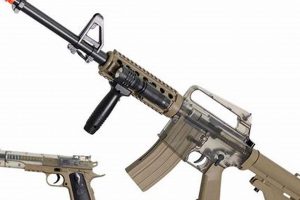
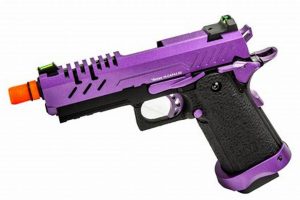
The process of detaching the brightly colored muzzle device from an airsoft replica, when it is secured with a retaining pin, involves a series of careful steps. This procedure typically begins with locating the pin, often situated on the side or bottom of the orange tip. The pin’s removal generally requires a small tool, such as a punch or a similarly sized implement, to gently push it free from its housing. Once the pin is dislodged, the orange tip can usually be unscrewed or pulled off, depending on the specific model of airsoft gun. Careful attention to detail is essential to avoid damaging the threads or internal components.
Modifying an airsoft replica by removing the orange tip is sometimes undertaken for aesthetic reasons or to facilitate the attachment of aftermarket accessories, such as suppressors or tracer units. Historically, the orange tip served as a visual identifier, distinguishing airsoft replicas from actual firearms, primarily for safety and legal considerations. Removing this identifier can have legal ramifications in certain jurisdictions and should only be considered after a thorough understanding of applicable laws and regulations. Furthermore, responsible handling and storage of the modified airsoft gun are crucial to prevent confusion and potential misuse.
The following sections will detail specific techniques for pin removal, explore potential challenges encountered during the process, and outline crucial safety precautions to observe. Proper execution of these steps is vital to ensure the modification is performed safely and without causing damage to the airsoft replica.
Tips for Orange Tip Removal with Pin
Successful removal of an orange tip secured with a pin demands careful execution and attention to detail. These tips are designed to minimize risk and ensure a smooth process.
Tip 1: Identify the Pin Type: Prior to attempting removal, closely examine the pin. It may be a simple straight pin, a roll pin, or a set screw. Different pin types require distinct removal techniques and tools.
Tip 2: Use Appropriate Tools: Employ a punch set or a small Allen wrench that matches the pin’s dimensions. Using an ill-fitting tool can damage the pin or the surrounding material.
Tip 3: Apply Controlled Pressure: When driving out the pin, use steady, controlled pressure. Avoid hammering forcefully, which could deform the pin or damage the airsoft gun’s barrel.
Tip 4: Stabilize the Airsoft Gun: Securely hold the airsoft gun in a vise or clamp, using protective padding to prevent scratches. This allows for focused application of force on the pin without slippage.
Tip 5: Consider Heat (with Caution): If the pin is stuck, applying a small amount of heat from a heat gun (on low setting) to the orange tip may help loosen it. Exercise extreme caution to avoid melting plastic components.
Tip 6: Document the Process: Take photographs or videos of each step as you disassemble the orange tip. This documentation can be helpful if reassembly is required later.
Tip 7: Check Thread Direction: Be aware that some orange tips may have reverse threading. Attempting to unscrew a reverse-threaded tip in the wrong direction can strip the threads.
By following these tips, the risks associated with orange tip removal are significantly reduced, and the likelihood of a successful outcome is greatly increased. The result is a clean removal with no damage.
The subsequent section will explore potential challenges encountered during the removal procedure, along with preventative measures.
1. Pin identification

The initial and perhaps most critical stage in the process of detaching an orange tip secured with a pin from an airsoft gun hinges upon precise pin identification. Determining the type of pin utilized whether a simple straight pin, a roll pin (also known as a spring pin), a cotter pin, or even a set screw functioning as a pin directly dictates the appropriate removal technique and the necessary tools. For instance, attempting to drive out a roll pin with a standard punch risks collapsing the pin’s internal structure and potentially lodging it more firmly within its housing. Conversely, using pliers on a straight pin could mar its surface, making subsequent removal attempts more difficult. Correct pin identification is, therefore, not merely a preliminary step, but a foundational element ensuring the success and safety of the entire disassembly procedure.
Consider a scenario where an individual, unfamiliar with the nuances of pin types, attempts to remove a roll pin using a standard nail. The force applied may cause the roll pin to compress unevenly, increasing its diameter and effectively welding it within the bore. This would necessitate more aggressive and potentially damaging extraction methods, such as drilling, which carry the risk of harming the barrel or the orange tip itself. Another example includes misidentifying a set screw as a pin, resulting in attempts to drive it out rather than unscrewing it, invariably leading to damage. Proper identification allows for the selection of correct tools like pin punches or Allen wrenches of the matching size to prevent irreversible damage.
In summary, accurate pin identification forms the bedrock upon which the entire orange tip removal process is built. This critical step directly influences tool selection, extraction methodology, and ultimately, the preservation of the airsoft gun’s functionality and aesthetic integrity. Failure to correctly identify the pin type inevitably leads to increased risk of damage, potentially rendering the airsoft gun unusable or requiring costly repairs. A thorough visual inspection and, if necessary, the use of reference materials to determine pin type, is therefore paramount.
2. Tool selection
Tool selection is paramount when disassembling an orange tip secured with a pin on an airsoft gun. Employing the appropriate tools minimizes the risk of damage to the replica and ensures the procedure is executed safely and efficiently.
- Pin Punch Application
Pin punches, specifically sized to match the diameter of the retaining pin, are fundamental. Using an undersized punch can lead to slippage and potential marring of the surrounding material. Conversely, an oversized punch may damage the pin itself or the housing within which it resides. Employing a set of various sized pin punches offers versatility across different airsoft models and pin dimensions, ensuring the correct tool is available for each application. The pin punch delivers a controlled force directly to the pin, facilitating its removal without collateral damage.
- Hammer Considerations
The hammer used in conjunction with the pin punch should be appropriately sized and weighted. A lightweight hammer provides greater control, reducing the risk of overdriving the pin. A brass or nylon-faced hammer is preferable to steel, as it minimizes the potential for deformation or surface damage to the airsoft replica’s components. Controlled, deliberate taps with the hammer, rather than forceful blows, are the recommended approach for effective and safe pin removal.
- Alternative Extraction Methods
In situations where the pin is corroded or tightly secured, alternative extraction methods may be necessary. A pin removal tool, designed specifically for this purpose, provides a more controlled and precise extraction force. Penetrating oil, applied sparingly, can help loosen corrosion and facilitate pin removal. However, caution is advised to prevent the oil from damaging internal components or plastic parts of the airsoft gun.
- Safety Gear Imperative
Safety glasses are non-negotiable when disassembling any mechanical device, including airsoft replicas. Small metal fragments or debris can become projectiles during pin removal, posing a risk to eyesight. Work gloves provide additional protection and improve grip, enhancing control and preventing slippage. These simple precautions mitigate potential injury during the disassembly process.
In summation, prudent tool selection is integral to successfully removing an orange tip secured with a pin. The appropriate pin punch, coupled with a suitable hammer and supplemented by safety precautions, drastically reduces the likelihood of damage or injury, enabling a smooth and efficient modification of the airsoft replica.
3. Controlled Pressure
The application of controlled pressure is a critical element in the safe and effective removal of an orange tip secured with a pin from an airsoft gun. The degree of force applied directly influences the outcome of the procedure, mitigating the risk of damage to the airsoft gun itself, the retaining pin, and the individual performing the modification.
- Preventing Material Deformation
Applying excessive force when attempting to dislodge a retaining pin can result in deformation of the surrounding material. This is particularly relevant when dealing with polymer or weaker metal components commonly found in airsoft guns. Controlled pressure, applied incrementally, minimizes the risk of bending, cracking, or otherwise damaging these components. For example, forcefully hammering a pin from its housing could cause the surrounding plastic to fracture, rendering the barrel unusable.
- Minimizing Pin Damage
The retaining pin itself is susceptible to damage if excessive force is applied during the removal process. Overly aggressive hammering can bend or shear the pin, making subsequent removal attempts even more difficult and potentially damaging the internal threads or surfaces it secures. Controlled pressure, applied through a properly sized punch or similar tool, allows for gradual displacement of the pin without subjecting it to undue stress. This preserves the pin’s integrity and facilitates its clean removal.
- Maintaining Alignment and Stability
Controlled pressure allows for greater precision and control during the removal process. It ensures the punch or tool remains aligned with the pin, preventing slippage and minimizing the risk of collateral damage. Stabilizing the airsoft gun, coupled with the application of controlled pressure, ensures the force is directed precisely where it is needed, maximizing the efficiency of the removal process. For instance, steady pressure with a vise prevents unnecessary movement.
- Ensuring User Safety
Applying excessive, uncontrolled force can lead to sudden tool slippage, potentially resulting in injury. A slip of a punch and hammer can lead to serious bodily harm. Controlled pressure, on the other hand, allows the user to maintain a firm grip and anticipate potential issues. This minimizes the risk of accidents and ensures the removal process is conducted safely. Wearing safety glasses further mitigates the potential harm from projectiles.
In essence, the principle of controlled pressure serves as a cornerstone for successfully removing an orange tip secured with a pin. It underpins all other considerations, including tool selection and technique. By prioritizing controlled pressure, the user ensures a safe, efficient, and damage-free modification of the airsoft replica.
4. Heat application
Heat application, while a potentially effective technique in removing an orange tip secured with a pin from an airsoft gun, demands a high degree of caution and a thorough understanding of material properties. The connection lies in its capacity to loosen adhesives or soften plastic components that may be contributing to the secure fit of the orange tip. However, indiscriminate or excessive heat application can lead to irreversible damage, particularly to the airsoft gun’s barrel, hop-up unit, or other heat-sensitive parts. The process is a delicate balance, where a small amount of heat can facilitate removal, whereas too much can cause deformation, melting, or structural weakening.
The efficacy of heat application stems from its ability to reduce the friction or adhesion between the orange tip and the barrel of the airsoft gun. For example, if the orange tip is secured with thread-locking compounds such as Loctite, moderate heat can weaken the bond, making it easier to unscrew the tip after the retaining pin has been removed. Similarly, if the plastic of the orange tip has become slightly fused to the barrel over time, gentle heating can soften the plastic enough to allow for separation without forcing the connection. A heat gun set to a low temperature or even a hairdryer can be employed, but direct flame is strictly prohibited. The heat must be applied evenly and for a short duration, with frequent checks to ensure the material is not overheating.
In summary, heat application can be a useful adjunct to mechanical methods for removing an orange tip, but it is not without risk. Success hinges on a judicious approach, prioritizing the prevention of damage over speed. Awareness of the materials involved, controlled heat application, and patience are essential. It’s generally advisable to explore other non-destructive methods first, reserving heat as a last resort for particularly stubborn orange tips. The potential benefits must be carefully weighed against the inherent risks to ensure the integrity of the airsoft gun is preserved.
5. Thread direction

Understanding thread direction is crucial when removing an orange tip from an airsoft gun, particularly after any retaining pin has been disengaged. Incorrectly attempting to unscrew the tip can lead to damaged threads, rendering the barrel unusable for future attachments.
- Standard (Clockwise) Threads
Many airsoft guns employ standard, clockwise threads. To remove an orange tip with standard threading, one must turn it counter-clockwise, as if unscrewing a typical bolt. Applying force in the clockwise direction will only tighten the tip further, potentially causing damage. The majority of airsoft replicas adhere to this convention, though exceptions exist.
- Reverse (Counter-Clockwise) Threads
Some airsoft guns, notably those manufactured outside of the United States, utilize reverse, or counter-clockwise, threads. These threads require turning the orange tip clockwise to remove it. Attempting to unscrew a reverse-threaded tip counter-clockwise will strip the threads. Reverse threading is often implemented to prevent accidental loosening of attachments during operation.
- Identifying Thread Direction
Identifying the thread direction before attempting removal is essential. Visual inspection is often insufficient, as the difference between thread types can be subtle. Consulting the airsoft gun’s manual or searching online forums specific to the model can provide definitive information. If uncertainty persists, applying gentle pressure in both directions may reveal the correct direction without causing damage.
- Implications of Damaged Threads
Damaged threads compromise the airsoft gun’s ability to accept future attachments, such as suppressors, tracer units, or alternative muzzle devices. Repairing damaged threads can be costly and may require specialized tools or professional gunsmithing services. In severe cases, the entire barrel may need replacement. Therefore, correctly identifying and respecting the thread direction during orange tip removal is vital for preserving the airsoft gun’s functionality and versatility.
In summary, thread direction is a critical, though often overlooked, factor in safely removing an orange tip secured with a pin. Recognizing the difference between standard and reverse threads, coupled with careful application of force in the correct direction, minimizes the risk of damaging the airsoft gun and ensures its continued usability.
Frequently Asked Questions
This section addresses common inquiries regarding the removal of orange tips secured with pins from airsoft guns, emphasizing safe practices and potential ramifications.
Question 1: Is orange tip removal legal?
The legality of removing an orange tip varies by jurisdiction. Certain regions mandate the presence of an orange tip on airsoft guns sold or possessed publicly to distinguish them from real firearms. Modifying an airsoft gun by removing this identifier may violate local or federal laws, resulting in fines or confiscation of the replica. Individuals should research and adhere to all applicable regulations.
Question 2: What tools are necessary to remove an orange tip secured with a pin?
The required tools typically include a pin punch set with appropriately sized punches, a hammer (preferably brass or nylon-faced), safety glasses, and potentially penetrating oil. Specific models may also require small Allen wrenches or screwdrivers. The exact tool selection depends on the pin type and the construction of the orange tip.
Question 3: What are the risks associated with removing the orange tip?
Potential risks include damaging the threads on the airsoft gun’s barrel, marring the finish, bending or breaking the retaining pin, and, in some cases, compromising the replica’s structural integrity. Furthermore, removing the orange tip increases the risk of misidentification of the airsoft gun as a real firearm, which may lead to dangerous situations.
Question 4: How does one identify the type of pin securing the orange tip?
Common pin types include straight pins, roll pins (also known as spring pins), and set screws. Straight pins are solid and cylindrical. Roll pins are hollow and slotted along their length. Set screws are threaded and typically require an Allen wrench for removal. Visual inspection and, if necessary, consulting the airsoft gun’s manual will assist in identification.
Question 5: What should one do if the pin is stuck or corroded?
Applying penetrating oil and allowing it to soak for a period of time can help loosen a stuck or corroded pin. Gentle heat application (using a heat gun on a low setting) may also be beneficial, but caution is advised to avoid damaging plastic components. If these methods fail, seeking professional assistance from an experienced airsoft technician is recommended.
Question 6: How can damage to the threads on the airsoft gun’s barrel be prevented during orange tip removal?
Prior to attempting to unscrew the orange tip, confirm the thread direction (clockwise or counter-clockwise). Applying excessive force in the wrong direction will strip the threads. Stabilizing the airsoft gun in a vise with protective padding and using appropriate tools will also minimize the risk of damage.
Proper execution of the aforementioned procedures is important to ensure safety and preserve the airsoft replica’s functionality.
The next section will summarize these points and provide a concise guide for orange tip removal.
Conclusion
This exploration of how to remove orange tip with pin from airsoft gun has elucidated several critical factors. Pin identification dictates tool selection, and controlled pressure during removal minimizes the risk of damage. Understanding thread direction is paramount to prevent thread stripping, and heat application, when appropriate, requires caution. Adherence to legal regulations regarding orange tip modification remains essential.
The successful removal of an orange tip secured with a pin necessitates a meticulous approach, prioritizing safety and precision. Responsible modification practices not only preserve the integrity of the airsoft replica but also contribute to the safe and ethical enjoyment of the sport. Further research into specific airsoft gun models is recommended before undertaking any modifications.