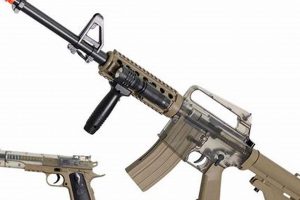
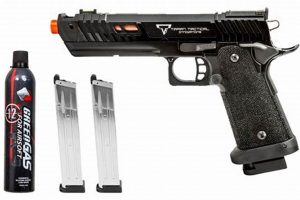
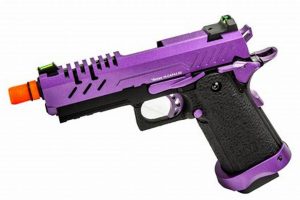
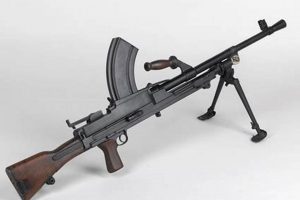
The legality of simulated firearms, specifically those projecting plastic projectiles, within New York City is a complex issue governed by municipal law. These devices, often resembling actual firearms, are subject to specific regulations regarding their sale, possession, and transportation. These rules are intended to minimize potential misuse and maintain public safety within the city’s dense urban environment. For example, possessing an airsoft gun that is colored or marked to resemble a real firearm can have serious legal consequences.
The importance of understanding these regulations stems from the potential for misidentification and the subsequent risk of alarming the public and law enforcement. The benefits of adherence include avoiding legal penalties such as fines, confiscation of the item, or even arrest. Historically, New York City has taken a strict stance on items that could be perceived as dangerous weapons, leading to a comprehensive legal framework addressing simulated firearms. This strict enforcement aims to mitigate the risk of real firearm-related incidents and maintaining order.
The following article will delve into the specific legal provisions concerning these devices, the penalties for non-compliance, and practical guidance for individuals who own or are considering purchasing an airsoft gun within the five boroughs. It will also examine relevant case law and recent legislative changes that impact the interpretation and enforcement of these laws.
Possessing and transporting simulated firearms in New York City necessitates a thorough understanding of local regulations. Strict adherence to these guidelines is crucial to avoid legal repercussions.
Tip 1: Distinguish Appearance: Ensure any airsoft gun does not closely resemble a real firearm. Prominent coloring, such as bright orange or blue, can help differentiate it and avoid potential misidentification by law enforcement.
Tip 2: Secure Transportation: When transporting an airsoft gun, it must be unloaded and contained within a closed case or container. Openly displaying the device can lead to immediate legal intervention.
Tip 3: Avoid Public Display: Refrain from brandishing or using an airsoft gun in public spaces. Even if unloaded, such actions can be interpreted as threatening and result in arrest.
Tip 4: Understand Local Laws: Familiarize yourself with New York City Administrative Code Section 10-131, which specifically addresses imitation weapons. This section outlines prohibited actions and penalties.
Tip 5: Purchase Restrictions: Be aware that the sale of airsoft guns to individuals under the age of 18 is generally prohibited. Verification of age is often required at the point of purchase.
Tip 6: Legal Counsel: If facing legal issues related to an airsoft gun, seek advice from an attorney experienced in New York City firearms laws. Professional guidance can be invaluable in navigating complex legal proceedings.
Tip 7: Stay Updated: Laws are subject to change. Regularly consult official sources, such as the New York City Council website or legal databases, for updates on relevant regulations.
Following these guidelines is essential for responsible ownership and legal compliance, promoting safety and minimizing the risk of legal entanglements.
The subsequent section will explore potential legal defenses and mitigating factors in cases involving airsoft guns, as well as resources for further information and support.
1. Appearance

The visual aspect of an airsoft gun is a primary determinant in its legality within New York City. The extent to which it resembles a real firearm dictates the scrutiny it will face under existing municipal regulations.
- Coloration and Markings
Airsoft guns are often manufactured with bright colors, such as orange, or distinct markings to differentiate them from genuine firearms. The absence of such features, or attempts to remove them, can lead to the device being classified as an imitation weapon, subject to stricter regulations and potential seizure. For example, an airsoft gun painted black with the orange tip removed is far more likely to be considered illegal than one retaining its original, easily identifiable appearance.
- Size and Proportions
The dimensions and overall design of the airsoft gun contribute to its perceived realism. If an airsoft gun is scaled to match the exact dimensions of a specific real firearm model, it increases the likelihood of misidentification. Discrepancies in size or proportion can mitigate this risk. An airsoft pistol significantly smaller than its real firearm counterpart might be considered less problematic under the law.
- Material Composition
The materials used in the construction of an airsoft gun can influence its perceived threat level. While plastic is common, the use of metallic components to mimic the weight and feel of a real firearm can raise concerns. If an airsoft gun is constructed primarily of metal and replicates the weight and handling characteristics of a real firearm, it is more likely to attract scrutiny from law enforcement.
- Modifications and Alterations
Any alterations made to an airsoft gun to enhance its realism can have significant legal implications. This includes modifications to the finish, the addition of functional components designed to replicate real firearm features, or any attempt to obscure its identity as a non-lethal device. For instance, adding a mock suppressor or replacing plastic parts with metal ones could elevate the risk of legal repercussions.
The aforementioned aspects of an airsoft gun’s appearance collectively influence its legality in New York City. A device designed and maintained to clearly distinguish itself from a real firearm is less likely to encounter legal challenges. Conversely, one that closely mimics a real firearm in its appearance is more likely to be deemed an illegal imitation weapon, subjecting its owner to potential fines, confiscation, or even criminal charges. Therefore, carefully considering and maintaining the distinctiveness of an airsoft gun’s appearance is paramount for legal compliance.
2. Transportation
The manner in which airsoft guns are transported within New York City significantly impacts their legality. Improper transportation can elevate the risk of legal consequences, even if the device itself is otherwise compliant with applicable laws.
- Enclosed Carry Requirements
New York City law mandates that airsoft guns be transported in a closed and opaque container. This requirement aims to prevent the public from mistaking the device for a real firearm, thereby reducing potential alarm and the risk of triggering an emergency response. Failure to transport an airsoft gun in a case or bag can result in fines or confiscation, regardless of whether the device is unloaded or otherwise rendered inoperable. For instance, openly carrying an airsoft rifle, even with an orange tip, can lead to immediate police intervention.
- Unloaded Status
While transporting an airsoft gun, it must be unloaded. Projectiles should be stored separately from the device itself. This provision minimizes the potential for accidental discharge or intentional misuse during transit. A violation occurs if an airsoft gun is transported with a magazine or other feeding device containing BBs, even if the gun is not actively firing.
- Permitted Routes and Locations
Certain locations may be off-limits for airsoft gun transportation, even when adhering to enclosed carry requirements. Proximity to schools, government buildings, or other sensitive areas may subject individuals to heightened scrutiny. Transporting an airsoft gun through a school zone, even in a locked case, could raise concerns and potentially result in contact with law enforcement, depending on the specific circumstances and local regulations.
- Documentation and Proof of Ownership
While not always legally required, possessing documentation demonstrating ownership and lawful intent can be beneficial when transporting an airsoft gun. A receipt, invoice, or other proof of purchase can help clarify the device’s purpose and ownership, especially if questioned by law enforcement. Presenting such documentation proactively can mitigate misunderstandings and demonstrate compliance with regulations.
The connection between transportation and the legality of airsoft guns in New York City underscores the importance of responsible handling and adherence to specific guidelines. Even a legally owned airsoft gun can become the subject of legal action if transported improperly. Understanding and complying with these transportation requirements is crucial for avoiding potential legal issues and ensuring the safe and responsible handling of these devices within the city.
3. Public Display
The public display of what are airsoft guns illegal in NYC bears a direct and significant correlation to their legality. Openly exhibiting these devices in public spaces can readily lead to misinterpretation and potential panic, especially given their resemblance to actual firearms. This creates a disturbance of the peace and a perceived threat to public safety, which contravenes existing city ordinances concerning imitation weapons. The core issue stems from the inability of the average observer to differentiate between a genuine firearm and a realistic-looking airsoft gun. An instance of brandishing an airsoft pistol on a crowded street, even if unloaded, can trigger a swift law enforcement response, potentially resulting in arrest and subsequent legal charges related to the unlawful display of what resembles a dangerous weapon.
Further analysis reveals that the subjective perception of threat is paramount. Even if the individual displaying the airsoft gun intends no harm, the act itself can be construed as menacing, particularly in a post 9/11 environment where vigilance regarding potential threats is heightened. The practical application of this understanding necessitates strict adherence to regulations that prohibit such displays. For example, transporting an airsoft rifle from a retail store to one’s residence requires it to be concealed within a case, thereby avoiding any public exhibition. Ignorance of these rules does not constitute a legal defense. Enforcement is often proactive, relying on witness reports or direct observation by law enforcement officers patrolling public areas.
In summary, public display is a critical determinant regarding the legality of airsoft guns in New York City. The primary challenge lies in the inherent difficulty distinguishing these devices from real firearms and the resulting potential for public alarm. Strict adherence to regulations prohibiting their open exhibition is crucial for lawful ownership and responsible handling. This understanding links directly to the broader theme of maintaining public safety and minimizing the risk of firearm-related incidents within the city’s dense urban environment.
4. Age Restrictions

Age restrictions form a crucial component in determining the legality of airsoft guns within New York City. These restrictions directly influence who can legally purchase, possess, and utilize such devices. The underlying principle is to prevent minors from accessing items that, while not lethal firearms, bear a sufficient resemblance to them and could be misused or result in accidental injury. This preventative measure seeks to minimize the risk of incidents involving airsoft guns falling into the wrong hands. The sale of airsoft guns to individuals below a specific age threshold is generally prohibited, and retailers are mandated to verify the purchaser’s age. Failing to comply with these regulations can result in fines and potential legal action against the seller.
The enforcement of age restrictions extends beyond the point of sale. Minors found in possession of airsoft guns may face consequences, even if the device was legally acquired by an adult. The penalties can range from confiscation of the item to involvement of juvenile authorities. This rigorous approach underscores the city’s commitment to regulating simulated firearms and ensuring their responsible use. A common scenario involves teenagers possessing airsoft guns in public parks or schools, which often leads to intervention by law enforcement or school officials. Such incidents highlight the practical application of age restriction laws in preventing potential harm and maintaining order.
In summary, age restrictions are an integral part of the legal framework governing airsoft guns in New York City. They address the potential risks associated with these devices and aim to prevent their misuse by underage individuals. The challenges in enforcing these restrictions lie in ensuring consistent application across all retail outlets and monitoring public spaces for violations. The overarching goal is to balance the recreational use of airsoft guns with the need to safeguard public safety, particularly among the youth population. The connection between age restrictions and the legality of airsoft guns in New York City reinforces the city’s proactive approach to managing potential hazards.
5. Federal Law
Federal law plays a limited, yet crucial, role in determining the legal status of airsoft guns in New York City. While federal statutes do not explicitly prohibit the sale or possession of airsoft guns in the same manner as actual firearms, they do establish certain standards and regulations that indirectly affect their legality within the city. For instance, federal law mandates that airsoft guns be equipped with a blaze orange barrel tip to distinguish them from real firearms. Failure to comply with this federal requirement can lead to the device being considered an imitation firearm, thereby subjecting it to stricter local regulations and potential confiscation by New York City authorities. The presence of this blaze orange tip, therefore, becomes a key factor in differentiating a legally compliant airsoft gun from one that violates federal standards and is subject to stricter scrutiny under local ordinances.
Furthermore, federal law addresses the interstate transportation of firearms, which can indirectly impact the movement of airsoft guns. Although airsoft guns are not typically classified as firearms under federal law, inconsistencies or ambiguities in state and local regulations can create challenges during interstate transport. For example, an individual transporting airsoft guns through New York City while en route to another state must still adhere to local laws regarding enclosed carry and permissible locations, even if the destination state has more lenient regulations. Federal law does not preempt these local restrictions, creating a potential for legal complications if transporters are unaware of New York City’s specific requirements.
In summary, while federal law does not directly determine whether airsoft guns are illegal in New York City, it establishes important standards that influence their legal status. The requirement for a blaze orange barrel tip and regulations surrounding interstate transportation serve as critical considerations for airsoft gun owners and retailers operating within the city. Understanding the interplay between federal regulations and local ordinances is essential for ensuring compliance and avoiding potential legal penalties. The ultimate determination of legality rests with New York City’s specific laws, but federal standards provide a baseline for responsible ownership and use.
6. Local Law
The legal status of airsoft guns within New York City is primarily governed by local laws, which impose stringent regulations beyond any applicable federal guidelines. These municipal ordinances directly address the sale, possession, transportation, and use of airsoft guns, reflecting the city’s efforts to manage potential risks associated with these devices.
- Administrative Code Section 10-131
This section of the New York City Administrative Code specifically addresses imitation weapons. It prohibits the sale, possession, or use of any device that resembles a firearm to the extent that it could reasonably be mistaken for one. This includes airsoft guns that lack clearly distinguishing features, such as bright coloration or non-standard dimensions. A consequence of violating this section could be the confiscation of the airsoft gun and the imposition of fines. For instance, modifying an airsoft gun to remove its orange tip would violate this section.
- Transportation Restrictions
Local law mandates that airsoft guns be transported within a closed and opaque container. This requirement aims to prevent public alarm and minimize the risk of misidentification. Openly carrying an airsoft gun, even if unloaded, can lead to intervention by law enforcement and potential legal charges. An individual transporting an airsoft rifle from a store to their residence must ensure it is concealed within a case or bag to comply with this restriction.
- Age Restrictions on Purchase and Possession
New York City restricts the sale and possession of airsoft guns to individuals over a certain age, typically 18. Retailers are required to verify the purchaser’s age before completing a sale. Minors found in possession of airsoft guns may face penalties, even if the device was legally acquired by an adult. This restriction aims to prevent misuse of airsoft guns by underage individuals and reduce the risk of accidents.
- Prohibition of Public Display and Use
Local ordinances prohibit the display or use of airsoft guns in public spaces. Brandishing or firing an airsoft gun in a park, street, or other public area can result in arrest and legal charges, even if the device is unloaded. This restriction is designed to prevent public alarm and maintain order. Even engaging in what might be considered harmless target practice in a backyard that is visible to the public could be interpreted as a violation of this provision.
These facets of local law collectively establish a strict regulatory framework for airsoft guns in New York City. Compliance with these provisions is essential for avoiding legal penalties and ensuring responsible ownership. Ignorance of these local regulations is not a valid defense, and individuals are expected to familiarize themselves with the specific requirements outlined in the New York City Administrative Code. The strict enforcement of these laws reflects the city’s commitment to managing the potential risks associated with airsoft guns and maintaining public safety.
7. Penalties
The ramifications of violating airsoft gun regulations in New York City can range from minor infractions to significant legal consequences. Understanding these penalties is crucial for ensuring compliance and avoiding potential legal entanglements, given the city’s strict approach to simulated firearms.
- Fines and Monetary Penalties
A primary consequence of violating airsoft gun laws in New York City involves financial penalties. These fines can vary depending on the nature and severity of the infraction. For example, possessing an airsoft gun that lacks the required blaze orange tip or transporting it improperly can result in a monetary fine. The amount of the fine is typically determined by the specific provision of the New York City Administrative Code that has been violated. Such fines are not merely symbolic; they represent a direct financial burden on the individual found in violation.
- Confiscation of the Device
Beyond monetary fines, law enforcement officials have the authority to confiscate airsoft guns that are found to be in violation of local regulations. This can occur if the device is deemed an imitation weapon due to its appearance, if it is being transported improperly, or if it is being used in a prohibited manner, such as in a public space. Confiscation represents a permanent loss of the item, as it is unlikely to be returned even if the individual is not subject to further legal action. Confiscation serves as a tangible deterrent against non-compliance with airsoft gun laws.
- Criminal Charges and Arrest
In more severe cases, violations of airsoft gun regulations can lead to criminal charges and arrest. This is particularly true if the individual’s actions are perceived as threatening or if the airsoft gun is used in the commission of another crime. For instance, brandishing an airsoft gun in a manner that causes alarm or fear can result in charges of menacing or reckless endangerment. A criminal record resulting from such charges can have long-lasting consequences, affecting employment opportunities and other aspects of life.
- Impact on Other Legal Rights
A violation of airsoft gun laws, particularly if it results in a criminal conviction, can have broader implications for an individual’s legal rights. For example, it could affect their ability to possess actual firearms in the future, even if otherwise legally entitled to do so. Furthermore, a criminal record can impact immigration status, eligibility for certain licenses, and access to housing. Therefore, the consequences of violating airsoft gun regulations extend far beyond the immediate penalties and can have a significant and lasting impact on an individual’s life.
In summary, the penalties for violating airsoft gun regulations in New York City are multifaceted and can have severe consequences. From financial fines and confiscation of the device to criminal charges and long-term impacts on legal rights, the ramifications of non-compliance are significant. This underscores the importance of understanding and adhering to all applicable laws and regulations regarding airsoft guns within the city.
Frequently Asked Questions
This section addresses common inquiries regarding the legality of airsoft guns in New York City, providing concise and informative answers based on existing laws and regulations.
Question 1: Are airsoft guns considered firearms under New York City law?
Airsoft guns are not classified as firearms under New York City law. However, they are subject to specific regulations as imitation weapons, particularly if they closely resemble real firearms in appearance.
Question 2: Is it legal to purchase an airsoft gun in New York City?
Purchasing an airsoft gun is permissible, provided the buyer is over the age of 18 and the device complies with all applicable regulations regarding appearance and markings. Retailers are required to verify the purchaser’s age.
Question 3: What are the rules for transporting an airsoft gun within New York City?
Airsoft guns must be transported unloaded and contained within a closed, opaque case or container. Openly displaying the device during transport is prohibited.
Question 4: Can an airsoft gun be used in a public park in New York City?
The use or display of airsoft guns in public parks or other public spaces is generally prohibited. Such actions can result in legal charges and confiscation of the device.
Question 5: What happens if an airsoft gun is confiscated by law enforcement?
If an airsoft gun is confiscated due to a violation of local regulations, it is unlikely to be returned, even if the individual is not subject to further legal action. Confiscation is a standard penalty for non-compliance.
Question 6: What should be done if facing legal charges related to an airsoft gun in New York City?
Seeking legal counsel from an attorney experienced in New York City firearms laws is advisable. Professional guidance can assist in navigating complex legal proceedings and understanding available defenses.
These FAQs provide a general overview of the legal landscape concerning airsoft guns in New York City. Consulting official sources and legal professionals is recommended for specific situations or complex legal inquiries.
The following section provides a conclusion summarizing the key points discussed and offering final thoughts on airsoft gun legality in the city.
Conclusion
The exploration of whether “are airsoft guns illegal in NYC” reveals a nuanced legal landscape. While not classified as firearms, these devices are subject to stringent regulations under local law. Appearance, transportation, age restrictions, and public display are critical factors determining legality. Penalties for non-compliance range from fines and confiscation to criminal charges, underscoring the seriousness with which the city addresses these matters. Understanding these rules is crucial for responsible ownership within the five boroughs.
Given the potential for misinterpretation and the city’s commitment to public safety, adherence to these regulations is paramount. Continued vigilance and awareness of evolving legal standards are necessary for navigating the complexities surrounding simulated firearms in New York City. Responsible behavior and informed decision-making remain the cornerstones of compliance and community well-being. Individuals should regularly consult official sources to stay informed.