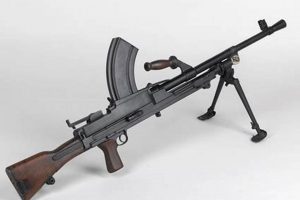
The central question revolves around the legal requirements for owning and operating airsoft replicas, often perceived as toys but functioning as projectile-launching devices. These devices, while designed to fire non-lethal plastic pellets, are subject to varying degrees of regulation depending on jurisdiction. The need for specific authorization, registration, or permits constitutes the core of the inquiry.
Understanding the requirements stems from a confluence of factors: public safety concerns, classification of airsoft devices as firearms or weapons (or neither), and the potential for misuse. Historically, regulations evolved due to incidents involving misuse or misidentification of airsoft replicas as real firearms. Compliance ensures legal ownership and use, contributing to responsible airsoft activities and mitigating risks.
This article will therefore delve into the specific regulations across different regions, exploring the distinctions between federal, state/provincial, and local ordinances. Furthermore, it will examine age restrictions, transportation guidelines, and the permissible use environments for airsoft devices, providing a comprehensive overview of compliance requirements.
Guidance on Airsoft Device Regulations
Navigating the regulatory landscape of airsoft devices necessitates diligent research and adherence to local laws. The following guidelines offer valuable insights for ensuring compliant ownership and operation.
Tip 1: Conduct Thorough Research: Before acquiring an airsoft device, investigate the specific regulations in the relevant jurisdiction. Consult official government websites, legal databases, and law enforcement agencies for accurate information.
Tip 2: Understand Classification: Differentiate between how airsoft devices are legally classified, whether as toys, sporting goods, or regulated items akin to firearms. This classification dictates the applicable rules.
Tip 3: Confirm Age Restrictions: Verify and comply with age-related restrictions for purchasing, possessing, and using airsoft devices. These restrictions are designed to prevent misuse by minors.
Tip 4: Adhere to Transportation Guidelines: Observe guidelines for transporting airsoft devices. Securely store them in cases or bags, unloaded and out of plain sight. Some jurisdictions may require specific permits for transportation.
Tip 5: Use Approved Environments: Only operate airsoft devices in designated and authorized areas, such as dedicated airsoft fields or private property with explicit permission. Avoid public areas where confusion or safety concerns may arise.
Tip 6: Document Purchase and Ownership: Retain records of purchase, including receipts and any registration documents (if applicable). These documents may be required to demonstrate legal ownership.
Tip 7: Prioritize Safety Measures: Always employ appropriate safety gear, including eye protection, when operating or in proximity to airsoft devices. Emphasize safe handling practices to prevent injuries.
Compliance with these guidelines facilitates responsible airsoft activities and avoids potential legal repercussions. Proactive engagement with local regulations and safety protocols is crucial.
Moving forward, a deeper understanding of specific regional variances will be provided, offering a more detailed perspective on the complexities of airsoft device regulation.
1. Local Ordinances

The relevance of local ordinances to determining whether authorization is required for an airsoft device stems from the principle of jurisdictional authority. Municipalities and counties often possess the power to enact laws that are more restrictive than those at the state or federal level. Therefore, even if a state does not mandate a specific permit or registration, a local ordinance may impose such a requirement. This can manifest as mandatory registration with the local police department, a requirement to obtain a permit for possession, or restrictions on usage within city limits. Understanding these localized rules is paramount, as non-compliance results in legal penalties despite adherence to broader state laws.
Consider, for example, a hypothetical city ordinance prohibiting the discharge of any projectile-launching device, including airsoft replicas, within city parks. This ordinance effectively necessitates possessing a designated permit for transportation through the park, even if the individual is merely transiting to an approved airsoft field outside city boundaries. Conversely, another municipality could mandate that all airsoft devices be registered with the local law enforcement agency, requiring proof of residency and successful completion of a safety course. These examples illustrate the significant impact that local laws have on the need for specific authorization.
In summary, assessing authorization needs for airsoft devices demands a thorough examination of applicable local ordinances. These regulations can vary significantly, introducing permit requirements, usage restrictions, and registration mandates that supersede or supplement state and federal laws. Neglecting local ordinances carries the risk of legal repercussions, underscoring the importance of proactive investigation and adherence to all governing regulations.
2. Device Classification

The classification of an airsoft device profoundly influences whether authorization is required for its possession or use. The categorization determines the applicable regulations, as varying jurisdictions treat airsoft replicas differently, ranging from toys to regulated projectile-launching devices.
- Toy vs. Replica Firearm
If classified as a toy, airsoft devices are generally subject to fewer restrictions. These devices often fall under consumer product safety regulations and are subject to guidelines concerning materials and markings. Conversely, classification as a replica firearm triggers stricter rules, potentially including background checks, permits, and storage requirements mirroring those applied to actual firearms. Jurisdictions may base this distinction on factors such as muzzle velocity, appearance, and intended use. In some regions, airsoft devices with realistic appearances or high muzzle velocities are invariably treated as replica firearms, necessitating licenses similar to those for conventional firearms.
- Impact of Muzzle Velocity
Muzzle velocity, measured in feet per second (FPS), is a critical factor in device classification. Many jurisdictions establish threshold FPS values that determine whether an airsoft device falls into a more heavily regulated category. Devices exceeding the specified FPS threshold are often classified as more dangerous and, therefore, subject to stricter regulations, potentially including mandatory licensing. This classification is based on the potential for injury and the perception of increased risk associated with higher projectile speeds. Muzzle velocity is often verified using a chronograph.
- Coloration and Markings
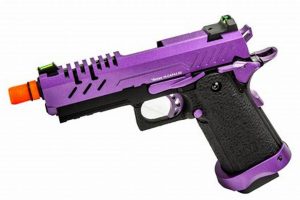
The presence of specific colorations or markings, such as an orange tip on the barrel, can influence how an airsoft device is classified. Some jurisdictions mandate these markings to visually differentiate airsoft replicas from real firearms, thereby mitigating the risk of confusion and misuse. Absence of these markings may lead to misclassification as a real firearm, resulting in legal repercussions and the potential need for authorization that would otherwise not be required. Conversely, conspicuous markings might classify the device as a toy, reducing regulatory burdens.
- Federal vs. State/Local Classifications
Airsoft devices may be subject to different classifications at the federal, state, and local levels. Federal regulations often pertain to importation and interstate commerce, while state and local laws address possession, use, and sale. In the United States, for example, federal law requires an orange tip on imported airsoft guns. State laws may impose additional restrictions or requirements beyond the federal standard. The jurisdiction where the airsoft device is possessed or used dictates the applicable classification, potentially leading to a situation where a device legal under federal law requires a license under local ordinance.
In conclusion, the specific classification of an airsoft device whether as a toy, replica firearm, or other regulated item is a primary determinant of whether authorization is mandated. Factors such as muzzle velocity, coloration, markings, and jurisdictional variations contribute to this classification, influencing the nature and extent of applicable regulations. Awareness of these factors and compliance with governing laws is essential for responsible airsoft device ownership and operation.
3. Age Restrictions

Age restrictions are a critical component in determining whether authorization is required for airsoft device possession and usage. These regulations are implemented to mitigate the potential risks associated with misuse by minors and to ensure responsible handling of these devices. The stringency of age-related rules often correlates with other regulatory requirements, influencing the overall legal framework.
- Minimum Purchase Age
Many jurisdictions establish a minimum age for purchasing airsoft devices. This age typically aligns with the legal age for possessing firearms or participating in related activities. Retailers are required to verify the purchaser’s age, often through identification checks, to prevent sales to underage individuals. Violating this regulation can result in significant penalties for both the seller and the purchaser. The minimum purchase age frequently dictates whether an individual can independently acquire an airsoft device or requires parental consent or supervision. For example, a 16-year-old may be allowed to purchase an airsoft gun with parental consent, while an 18-year-old can do so independently.
- Age-Based Usage Restrictions
Even if an individual meets the minimum purchase age, usage may be restricted based on age. Some jurisdictions mandate adult supervision for minors using airsoft devices, particularly in public areas or designated airsoft fields. The presence of a responsible adult aims to ensure compliance with safety rules and to prevent accidental injuries or property damage. Restrictions may also apply to the types of airsoft devices that minors are permitted to use, with higher-powered models often restricted to adults. For instance, individuals under 18 might be limited to using airsoft devices with lower muzzle velocities and required to participate in safety training programs.
- Parental Consent and Liability
In many cases, parental consent is required for minors to possess or use airsoft devices. This consent often entails assuming responsibility for the minor’s actions and ensuring adherence to all applicable regulations. Parents may also be held liable for any damages or injuries caused by their child’s misuse of an airsoft device. The requirement for parental consent often serves as a substitute for direct licensing or permitting of the minor, placing the onus of responsibility on the adult. Some jurisdictions require parents to sign a waiver acknowledging the risks associated with airsoft activities and agreeing to enforce safety protocols.
- Age and Permit Eligibility
In jurisdictions where permits or licenses are required for airsoft devices, age is a significant factor in determining eligibility. Minors may be ineligible for certain permits, necessitating adult sponsorship or guardianship. The eligibility age for permits often aligns with the age at which individuals are granted other privileges, such as driving or voting. The permit application process typically includes age verification, background checks, and safety training. For example, a state might require individuals to be at least 21 years old to obtain a permit for possessing a high-powered airsoft rifle, even if they are legally allowed to purchase it at age 18 with parental consent.
In summary, age restrictions significantly influence the need for authorization related to airsoft devices. Minimum purchase ages, usage limitations, parental consent requirements, and permit eligibility criteria all contribute to a complex regulatory framework. Understanding these age-related factors is crucial for ensuring compliance and promoting safe and responsible airsoft activities. Jurisdictions often employ age-based regulations to strike a balance between recreational opportunities and public safety concerns, adapting their laws to address the specific risks associated with airsoft device use by individuals of different ages.
4. Transportation Rules

The rules governing the transportation of airsoft devices significantly impact the necessity for authorization, such as a license or permit. These rules, often enacted at state or local levels, dictate the legal means by which an airsoft device can be moved from one location to another. Compliance with these regulations is essential, as failure to adhere can result in legal penalties, regardless of whether a license is generally required for possession.
- Case and Container Requirements
Many jurisdictions require airsoft devices to be transported in a closed case or container. This requirement aims to prevent the airsoft device from being visible or readily accessible, reducing the potential for misidentification or misuse. The specific type of case or container may be mandated, such as a hard-sided case, and it may need to be locked. An individual transporting an airsoft device in violation of these container requirements may be subject to fines or even confiscation of the device, irrespective of whether a license is required for ownership. For example, transporting an uncased airsoft rifle in the backseat of a vehicle, even if unloaded, could violate local transportation ordinances.
- Unloaded and Secured Mandates
Transportation rules often stipulate that airsoft devices must be unloaded during transit. This typically means removing the magazine and ensuring that no BBs are present in the firing chamber. In some jurisdictions, the battery must also be disconnected for electric-powered airsoft guns. Additionally, the device may need to be secured in a manner that prevents it from being easily deployed, such as placing it in the trunk of a vehicle or using a trigger lock. Non-compliance with these unloaded and secured mandates can result in legal penalties and may trigger the need for a permit, even if one is not otherwise required. For example, an individual transporting a loaded airsoft pistol in a glove compartment may face charges related to improper handling, even if they possess a concealed carry permit for real firearms.
- Permissible Routes and Destinations
Transportation rules may restrict the permissible routes and destinations for airsoft devices. Some jurisdictions prohibit transportation through school zones or other sensitive areas, such as government buildings. Individuals may be required to transport airsoft devices only to and from authorized locations, such as designated airsoft fields or repair shops. Deviations from these permissible routes and destinations can result in legal consequences, potentially triggering the need for a specialized transportation permit. For instance, driving an airsoft rifle through a school zone, even if cased and unloaded, might violate local ordinances and lead to fines or confiscation.
- Documentation Requirements
Certain jurisdictions mandate that individuals transporting airsoft devices carry specific documentation, such as proof of purchase, membership at an airsoft field, or a copy of relevant regulations. This documentation serves to demonstrate legal ownership and compliance with transportation rules. Failure to provide the required documentation upon request by law enforcement can result in temporary detention, investigation, and potential legal penalties. In some cases, the documentation may act as a substitute for a formal license or permit, provided that all other transportation rules are strictly observed. For example, possessing a receipt for the airsoft device and a membership card from a recognized airsoft field might satisfy documentation requirements during transportation, even if a general license for ownership is not mandatory.
In conclusion, transportation rules play a crucial role in determining whether a license or permit is required for airsoft devices. While a license may not be necessary for mere possession, specific transportation regulations often impose additional requirements that indirectly necessitate authorization or documentation. Understanding and adhering to these rules is essential for responsible ownership and avoiding legal repercussions. Failure to comply with transportation requirements can result in fines, confiscation of the airsoft device, or even criminal charges, underscoring the importance of due diligence in researching and following local laws.
5. Permitted Use
Permitted use directly influences whether authorization is needed for an airsoft device. The location and manner in which an airsoft device is employed often dictate the regulatory requirements, potentially necessitating a license or permit that would not otherwise be required for mere possession. Legal use is confined to specific areas and activities, the deviation from which triggers legal scrutiny. For example, use on private property with explicit owner permission may not require authorization, while use in a public park is likely prohibited without a permit.
Designated airsoft fields provide controlled environments where compliance is managed through established safety protocols and operational rules. These fields often mandate participant registration and adherence to specific gear requirements, acting as a form of indirect authorization. Conversely, using an airsoft device in a residential neighborhood, even without malicious intent, could violate local ordinances and lead to legal action. The practical significance lies in understanding that legal ownership does not automatically equate to unrestricted usage. Ignorance of permitted use regulations can lead to unintentional legal violations, even when the owner believes they are acting lawfully.
The correlation between permitted use and the necessity for a license hinges on risk mitigation and public safety. Restrictions are implemented to prevent misuse, minimize potential harm, and maintain order. While some jurisdictions may have lenient ownership laws, stringent enforcement of permitted use regulations ensures responsible operation. Therefore, understanding and adhering to the permitted use stipulations is crucial for airsoft device owners, as it directly impacts their legal standing and operational freedom.
6. Storage Practices

The manner in which airsoft devices are stored often influences the need for specific authorization, such as a license or permit. Secure storage practices can mitigate risks associated with unauthorized access or misuse, thereby impacting regulatory requirements.
- Secure Containment Requirements
Jurisdictions may mandate that airsoft devices be stored in locked containers, safes, or other secure locations when not in use. This requirement aims to prevent unauthorized access by minors, individuals prohibited from possessing firearms, or those with malicious intent. Compliance with secure containment requirements can reduce the likelihood of accidental injuries, theft, or misuse, and may influence whether a license is required. For example, satisfying storage requirements may allow an individual to possess an airsoft device without a license, provided all other regulations are met.
- Trigger Locks and Safety Devices
Many regulations emphasize the use of trigger locks or other safety devices to prevent accidental discharge during storage. These devices render the airsoft device inoperable, minimizing the risk of unintentional harm. Jurisdictions may incentivize the use of such devices by easing licensing requirements or reducing penalties for violations. In some cases, the presence of a trigger lock or similar safety device may serve as a mitigating factor in determining the need for a license. Conversely, failure to utilize these devices may increase scrutiny and trigger more stringent licensing requirements.
- Ammunition Storage Regulations
Regulations often extend to the storage of ammunition (BBs) for airsoft devices. Proper storage of ammunition, separate from the airsoft device itself, further reduces the risk of accidental use or misuse. Some jurisdictions mandate that ammunition be stored in locked containers or secured locations to prevent access by unauthorized individuals. Compliance with ammunition storage regulations can contribute to a safer environment and may influence the licensing requirements for airsoft devices. Conversely, negligent storage of ammunition may heighten concerns and increase the likelihood that a license will be required.
- Home Inspection Provisions
In some jurisdictions, compliance with storage regulations may be subject to home inspections by law enforcement or regulatory agencies. These inspections aim to verify that airsoft devices and ammunition are stored securely and in accordance with applicable laws. While not widespread, home inspection provisions can significantly impact the need for a license, as they create a mechanism for ongoing monitoring and enforcement. Successful completion of a home inspection may serve as a condition for obtaining or maintaining a license, while failure to comply with storage regulations could result in license revocation or denial.
The interplay between storage practices and the need for authorization for airsoft devices underscores the importance of responsible ownership. Secure storage mitigates risks, enhances safety, and can directly influence regulatory requirements. Jurisdictions often balance the right to possess airsoft devices with the need to ensure public safety, using storage regulations as a tool to achieve this balance. Compliance with these regulations not only promotes responsible ownership but may also reduce the need for more stringent licensing requirements.
7. Federal Laws

Federal laws play a limited but crucial role in determining whether authorization, such as a license, is required for airsoft devices. Unlike state and local regulations, which often govern possession and use, federal laws primarily pertain to importation, interstate commerce, and specific aspects of device design. While a federal license is generally not mandated for owning an airsoft gun, federal statutes influence classification and interstate sales, which in turn can indirectly affect state and local licensing requirements.
- Importation Regulations
Federal law mandates that all imported airsoft guns have a blaze orange tip affixed to the barrel. This requirement, enforced by U.S. Customs and Border Protection, serves to visually distinguish airsoft devices from real firearms, thereby reducing the risk of confusion and misuse. Failure to comply with this regulation can result in seizure of the airsoft gun at the port of entry. Although not directly requiring a license, the orange tip requirement affects classification, which, as previously explained, may impact licensing requirements at the state or local level.
- Interstate Commerce and Sales
Federal laws regulate the sale and distribution of airsoft guns across state lines. Licensed firearms dealers are subject to federal regulations concerning the sale of items that closely resemble real firearms. While most airsoft guns are not categorized as firearms under federal law, some states may interpret the realistic appearance as grounds for regulation, indirectly subjecting dealers to certain federal requirements related to documentation and record-keeping. This can influence how state laws are applied regarding permits for dealers selling these items.
- Federal Trademark and Copyright Laws
Federal trademark and copyright laws can indirectly affect the airsoft gun market and, consequently, regulatory considerations. Unauthorized reproduction of firearm designs protected by trademarks or copyrights can lead to legal action. Airsoft manufacturers must ensure compliance with these intellectual property laws, potentially influencing the availability and legality of certain models. The legality of the devices themselves may become intertwined with compliance to these Federal protections. The devices’ permissibility in sales is thus impacted.
- National Firearms Act (NFA) Considerations
While most airsoft guns are exempt from the provisions of the National Firearms Act (NFA), certain modifications or designs could potentially bring an airsoft device under its purview. For example, converting an airsoft gun to fire live ammunition or creating an airsoft gun that closely mimics a prohibited weapon under the NFA could trigger federal regulation and require registration with the Bureau of Alcohol, Tobacco, Firearms and Explosives (ATF). Such modifications are illegal and would subject the individual to severe federal penalties, including mandatory licensing and registration under the NFA.
In conclusion, while federal laws do not generally mandate a specific license for airsoft gun ownership, they significantly influence the importation, sale, and design of these devices. These federal regulations indirectly affect state and local laws, which ultimately determine the licensing requirements for possession and use. Compliance with both federal and local laws is essential for responsible airsoft device ownership.
Frequently Asked Questions Regarding Airsoft Device Licensing
The following section addresses common inquiries regarding legal requirements for airsoft devices, providing clear and concise answers based on established regulations. These FAQs aim to clarify ambiguities and provide essential information for responsible airsoft device ownership.
Question 1: Is a license required to own an airsoft gun?
The necessity of a license for airsoft gun ownership depends on local and state regulations. Some jurisdictions classify airsoft devices as replica firearms, requiring permits or licenses similar to those for conventional firearms. Other areas may not mandate a license for possession but impose restrictions on usage, transportation, and storage.
Question 2: Are there age restrictions for owning or using airsoft guns?
Yes, age restrictions are common. Many jurisdictions establish a minimum age for purchasing, possessing, or using airsoft devices. These restrictions aim to prevent misuse by minors and ensure responsible handling. Parental consent or supervision may be required for individuals below a certain age.
Question 3: What are the regulations for transporting airsoft guns?
Transportation regulations typically require airsoft guns to be unloaded, stored in a closed case or container, and kept out of plain sight. Some jurisdictions may restrict transportation through certain areas, such as school zones. Compliance with these regulations is essential to avoid legal penalties.
Question 4: Where can airsoft guns be legally used?
Legal usage of airsoft guns is generally restricted to designated airsoft fields, private property with permission, or other authorized areas. Use in public parks or residential neighborhoods is often prohibited due to safety concerns and local ordinances.
Question 5: Are there federal laws regulating airsoft guns?
Federal laws primarily regulate the importation of airsoft guns, mandating a blaze orange tip to distinguish them from real firearms. While federal laws do not generally require a license for ownership, they influence interstate commerce and device design, indirectly affecting state and local regulations.
Question 6: What are the penalties for violating airsoft gun regulations?
Penalties for violating airsoft gun regulations vary depending on the jurisdiction and the nature of the offense. Potential consequences include fines, confiscation of the airsoft device, and criminal charges. Intentional misuse or modification of an airsoft gun can result in more severe penalties.
In summary, navigating airsoft device regulations requires thorough research and adherence to local, state, and federal laws. Understanding age restrictions, transportation rules, permissible use areas, and storage requirements is essential for responsible ownership and operation.
The following section provides a concise conclusion, reinforcing key concepts and summarizing the overall regulatory landscape.
Conclusion
The preceding analysis demonstrates that the necessity of a license for an airsoft gun is not a universal requirement, but rather a jurisdictionally dependent one. Factors influencing this determination include device classification, muzzle velocity, age restrictions, transportation protocols, permitted use locations, storage practices, and both state and federal laws. A comprehensive understanding of these elements is crucial for ensuring legal compliance.
Given the potential for significant legal repercussions resulting from non-compliance, proactive engagement with all applicable regulations is paramount. Individuals should consult local ordinances and seek legal counsel when uncertainty arises. Diligence and responsible conduct remain the cornerstones of legal and ethical airsoft device ownership, furthering both individual accountability and public safety.