![Guide: What Is The Best Airsoft Gun to Buy? [2024]](data:image/svg+xml;base64,PHN2ZyB4bWxucz0iaHR0cDovL3d3dy53My5vcmcvMjAwMC9zdmciIHdpZHRoPSI0NzQiIGhlaWdodD0iMTAwIiB2aWV3Qm94PSIwIDAgNDc0IDEwMCI+PHJlY3Qgd2lkdGg9IjEwMCUiIGhlaWdodD0iMTAwJSIgc3R5bGU9ImZpbGw6I2NmZDRkYjtmaWxsLW9wYWNpdHk6IDAuMTsiLz48L3N2Zz4= "Guide: What Is The Best Airsoft Gun to Buy? [2024] Ultimate Airsoft Guide for Beginners, Tactics & Gear Reviews")
Determining the optimal airsoft replica involves carefully considering individual needs and priorities. This choice hinges on factors like intended use, budget, and personal preferences regarding realism and performance. The selection process should prioritize a weapon that aligns with the player’s skill level and the types of games or simulations they plan to participate in. For instance, a beginner might favor a robust and easy-to-maintain electric rifle, while a seasoned player might seek a high-performance gas blowback model for a more realistic experience.
A well-informed decision offers several advantages. Selecting a suitable airsoft gun enhances the overall enjoyment and effectiveness on the field. It ensures the weapon is appropriately powered for the intended environment, whether it’s close-quarters combat or outdoor skirmishes. Moreover, choosing a quality model from a reputable manufacturer typically translates to improved durability and reliability, reducing maintenance and repair costs in the long run. Historically, airsoft guns have evolved from simple spring-powered toys to sophisticated replicas featuring advanced materials and complex mechanisms, driving the need for careful consideration before purchase.
This article will explore various categories of airsoft guns, including electric, gas, and spring-powered models. It will also delve into critical considerations such as budget constraints, intended gameplay scenarios, and factors influencing overall performance and longevity. Different types of replicas, such as rifles, pistols, and sniper rifles, will be analyzed to help prospective buyers make an informed decision.
Tips for Airsoft Gun Acquisition
Selecting an appropriate airsoft gun requires careful consideration of several factors. Focusing on informed decision-making ensures a positive experience and maximizes performance on the field.
Tip 1: Define the Intended Use: Prioritize identifying the primary gameplay scenarios. Close-quarters battle (CQB) environments necessitate compact, maneuverable weapons, while outdoor skirmishes may benefit from longer-range rifles.
Tip 2: Establish a Budget: Airsoft guns vary widely in price. Setting a realistic budget before beginning the search prevents overspending and narrows down the options to manageable choices.
Tip 3: Research Different Power Sources: Electric, gas, and spring-powered airsoft guns offer distinct advantages and disadvantages. Electric guns are generally more reliable and easier to maintain, gas guns provide greater realism, and spring guns are cost-effective but require manual cocking.
Tip 4: Consider Build Quality and Materials: Examine the materials used in construction. Metal components generally indicate greater durability and longevity compared to plastic. Pay attention to the internal mechanics as well.
Tip 5: Evaluate Ergonomics and Comfort: Handle the airsoft gun before purchase, if possible. Ensure it feels comfortable in the hands and that the controls are easily accessible. Weight and balance are also important factors to consider.
Tip 6: Read Reviews and Seek Recommendations: Consult online reviews and forums to gather information from other airsoft players. Seek recommendations from experienced individuals who can offer valuable insights.
Tip 7: Prioritize Safety Features: Ensure the airsoft gun has a functional safety mechanism and that it is used responsibly. Always wear appropriate eye protection and follow field regulations.
Selecting the appropriate airsoft gun is a crucial element for maximizing enjoyment and success in airsoft activities. Implementing these tips provides a strong foundation for making informed decisions.
The next section will discuss some common airsoft gun types and offer specific purchase recommendations based on budget and experience level.
1. Performance

The concept of optimal airsoft gun selection is inextricably linked to performance metrics. The term encompasses a variety of attributes that directly impact a weapon’s effectiveness on the field. Range, accuracy, rate of fire, and trigger response are primary components that influence the overall user experience. Higher performance in these areas translates to an enhanced competitive edge and an increase in the probability of successful engagements. A spring-powered sniper rifle, for example, prioritizes accuracy and range, trading off rate of fire for precision shots at longer distances, a trade-off made in pursuit of optimal performance within a specific role.
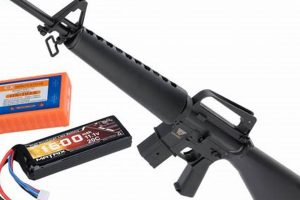
The pursuit of enhanced performance also necessitates consideration of internal components and upgrades. Upgrading the hop-up unit can improve accuracy and range by optimizing the backspin applied to the BB. A more powerful motor in an AEG can increase the rate of fire and trigger response. Selecting the most suitable battery impacts the consistency of power delivery and the overall reliability of the electrical system. For instance, a high-discharge LiPo battery will typically provide superior performance compared to a standard NiMH battery, though it also requires more careful handling and maintenance. Each performance component can be upgraded in most airsoft guns.
Performance, therefore, is not a static attribute but a dynamic characteristic subject to optimization based on user needs and preferences. While raw performance statistics are valuable, the practical application of these metrics and their alignment with the intended use case determine the degree to which a particular airsoft gun can be deemed “best.” The selection process, consequently, should prioritize a holistic evaluation that balances performance specifications with other relevant factors such as durability, budget, and individual playing style. An informed purchase decision hinges on understanding that optimized performance is not merely about achieving the highest possible numbers but rather about finding the ideal balance between these factors to maximize effectiveness and enjoyment on the field.
2. Durability

The correlation between durability and the optimal airsoft gun acquisition is a pivotal consideration. A weapon’s ability to withstand operational stresses directly impacts its longevity and cost-effectiveness, making it a critical factor in determining overall value. The environment in which airsoft guns are utilized often involves harsh conditions, necessitating robust construction and resistance to wear and tear.
- Material Composition and Impact Resistance
The choice of materials significantly influences an airsoft gun’s durability. Metal alloys, such as aluminum and steel, offer superior impact resistance compared to polymers. A weapon constructed with a robust metal frame is more likely to survive drops, impacts, and exposure to the elements without sustaining critical damage that impairs functionality. This directly affects the gun’s longevity and reduces the need for frequent repairs or replacements.
- Internal Component Quality and Stress Tolerance
Internal components, such as gears, pistons, and springs, are subjected to significant stress during operation. High-quality components made from durable materials are essential for withstanding repeated use and preventing premature failure. Reinforced gears, for example, are less prone to stripping or breaking under stress, ensuring reliable performance and extending the lifespan of the airsoft gun. Investing in models with upgraded internal components is a key factor for longevity.
- Environmental Resistance and Weatherproofing
Airsoft games often occur in varied weather conditions, including rain, humidity, and extreme temperatures. Airsoft guns with adequate environmental resistance are less susceptible to corrosion, rust, and other forms of environmental damage. Sealed gearboxes and weather-resistant coatings contribute to protecting internal mechanisms from moisture and debris, preserving performance and preventing costly repairs.
- Assembly Quality and Structural Integrity
The manner in which an airsoft gun is assembled directly influences its overall durability. Tight tolerances and secure connections prevent loosening and instability over time. A well-assembled weapon maintains its structural integrity, ensuring reliable performance and reducing the risk of critical failures during gameplay. Inspecting the assembly quality and seeking models from manufacturers known for meticulous construction practices is a crucial step in evaluating durability.
In conclusion, the long-term performance and value of an airsoft gun are intrinsically tied to its inherent durability. Selecting a model constructed with robust materials, high-quality internal components, and meticulous assembly practices is crucial for ensuring longevity and maximizing return on investment. Prioritizing durability translates to reduced maintenance costs, increased reliability, and an extended operational lifespan, solidifying its position as a primary consideration in determining the suitability of any airsoft gun.
3. Realism
The degree of realism offered by an airsoft gun significantly influences its appeal and suitability for various users. The pursuit of verisimilitude extends beyond mere aesthetics, impacting handling, operational mechanics, and the overall immersive experience. Consequently, realism constitutes a prominent factor in the selection process.
- External Aesthetics and Replication Accuracy
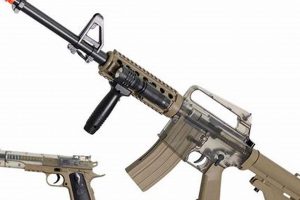
The faithful replication of real-world firearms is a primary aspect of realism. Exacting dimensions, markings, and surface finishes contribute to a visually convincing replica. Airsoft guns mirroring the appearance of specific firearm models, such as the M4 or Glock series, offer a tangible connection to their real-world counterparts, enhancing the sense of authenticity for users seeking a visually immersive experience.
- Operational Realism and Functional Parity
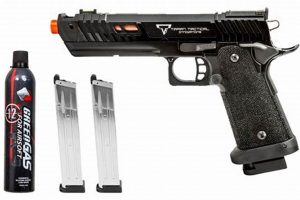
Beyond outward appearance, functional accuracy plays a crucial role in replicating the operation of real firearms. Features such as realistic disassembly, magazine changes, and bolt operation enhance the tactile and mechanical realism of the airsoft experience. Gas blowback systems, which simulate the recoil and cycling of a firearm’s action, further contribute to the immersive sensation of handling and firing a real weapon.
- Weight and Balance Mimicry
The weight and balance of an airsoft gun directly impact its handling characteristics. Replicas that closely match the weight distribution of real firearms offer a more realistic feel and contribute to improved handling and maneuverability. This is particularly important for users seeking to train with airsoft guns to develop skills applicable to real-world firearm handling.
- Sound and Sensory Feedback Simulation
Auditory and tactile feedback mechanisms contribute to the overall sense of realism. The sound produced by firing an airsoft gun, particularly gas blowback models, can enhance the immersive experience. Simulating the tactile feedback associated with recoil and the operation of internal mechanisms further heightens the sensory connection to the replica weapon.
The incorporation of these realism-enhancing attributes into an airsoft gun directly correlates with its perceived value and suitability for users prioritizing an authentic experience. Whether for recreational purposes, training simulations, or historical reenactments, the degree of realism remains a significant determinant in the assessment of an airsoft gun’s overall merit. This facet greatly influences the answer to what the ideal airsoft gun is.
4. Budget
Budgetary constraints represent a primary determinant in the selection of an airsoft gun. The range of available options spans a wide spectrum of price points, necessitating careful consideration of individual financial limitations and the corresponding performance capabilities attainable within those boundaries. The intersection of budget and performance dictates the viability of different models.
- Entry-Level Options and Affordability
The entry-level market segment offers cost-effective solutions for beginners or those with limited budgets. These options often include spring-powered or low-cost electric airsoft guns, prioritizing affordability over advanced features or premium materials. While performance may be limited compared to higher-end models, entry-level guns provide a viable starting point for individuals new to the sport. However, their long-term cost-effectiveness should be weighed against the potential need for upgrades or replacements as skill and interest develop.
- Mid-Range Alternatives and Value Proposition
The mid-range category balances cost and performance, offering improved features and build quality compared to entry-level options. This segment includes more robust electric airsoft guns with enhanced accuracy, rate of fire, and durability. Investing in a mid-range model often represents a strategic compromise, providing a significant performance boost without incurring the high costs associated with premium options. Careful research is essential to identify models that offer the optimal blend of performance and value within this competitive price range.
- High-End Investments and Performance Maximization
The high-end market caters to experienced players and serious enthusiasts seeking maximum performance and realism. These airsoft guns typically feature premium materials, advanced internal components, and meticulous craftsmanship. High-end models often incorporate gas blowback systems, custom modifications, and unparalleled accuracy. While the initial investment is substantial, these options offer a superior level of performance and durability, justifying the cost for users prioritizing a competitive edge or an authentic operational experience.
- Long-Term Cost Considerations and Lifecycle Analysis
Budgetary analysis extends beyond the initial purchase price to encompass long-term costs, including maintenance, repairs, and upgrades. Airsoft guns with higher-quality components and more robust construction may require less frequent maintenance and fewer repairs, resulting in lower overall costs over their operational lifespan. Similarly, the availability of aftermarket parts and upgrade options can influence the long-term cost-effectiveness of different models. A comprehensive lifecycle analysis, factoring in both upfront and recurring expenses, is essential for making informed budgetary decisions.
In summary, budgetary constraints exert a significant influence on the optimal airsoft gun selection. Careful consideration of affordability, value proposition, performance expectations, and long-term cost implications is crucial for aligning individual financial limitations with the appropriate type and quality of airsoft gun. Balancing these factors enables a rational and effective decision-making process, ensuring that the selected weapon aligns with both budgetary realities and performance aspirations.
5. Game type
The type of airsoft game directly dictates the suitability of particular weaponry. A specific game scenario demands particular attributes from the airsoft gun. Close-quarters battle (CQB) necessitates maneuverability and rapid engagement capabilities, influencing the selection toward smaller, lighter weapons with high rates of fire. Outdoor skirmishes, conversely, often require longer-range accuracy and higher power levels. The choice of gun is therefore inextricably linked to the intended game environment and objectives. For example, a sniper rifle, optimized for long-range engagements, proves unsuitable for navigating confined CQB spaces, while a submachine gun struggles to effectively engage targets at extended distances in open fields. This interdependence highlights the importance of game type as a crucial component in determining the best airsoft gun.
The rules and regulations governing different game types also impact weapon selection. Some fields impose velocity limits, measured in feet per second (FPS), which restrict the maximum power output of airsoft guns. Exceeding these limits results in disqualification, making compliance a primary consideration. Similarly, certain game formats may restrict the use of full-automatic fire, necessitating the selection of semi-automatic rifles or pistols. Real-world examples include milsim (military simulation) events that often emphasize realistic weapon loadouts and operational tactics, further influencing the specific airsoft gun models and accessories deemed appropriate. An airsoft player cannot effectively fulfill the role required with an improperly selected weapon.
Understanding the interplay between game type and weapon selection is paramount for maximizing effectiveness and enjoyment in airsoft activities. Prioritizing a weapon tailored to the intended game environment, rules, and objectives ensures a competitive advantage and a more immersive experience. Neglecting this critical connection often results in diminished performance and strategic disadvantages. The ultimate choice of an airsoft gun, therefore, is not solely a matter of personal preference but rather a strategic decision driven by the specific demands of the intended game type.
6. User skill

The correlation between user skill and airsoft gun selection constitutes a critical determinant in optimizing performance and enjoyment. The effectiveness of any weapon, regardless of its technical specifications, is intrinsically linked to the user’s proficiency in handling and employing it within various gameplay scenarios. Novice players, for instance, often benefit from simpler, more forgiving airsoft guns that prioritize ease of use and reliability, while experienced players may seek more complex and customizable models that allow for fine-tuning and advanced tactical maneuvers. The selection of an airsoft gun without considering the user’s skill level may lead to diminished performance, frustration, and ultimately, a less satisfactory airsoft experience. A beginner with a complex, high-performance gun may underutilize its capabilities, while an experienced player may find a basic model limiting.
The user skill level also influences the type of airsoft gun best suited for their needs. Beginners often find electric airsoft guns (AEGs) to be the most accessible, as they are relatively easy to maintain and operate. These guns typically offer a balance of performance and reliability, making them suitable for learning basic airsoft tactics and strategies. Intermediate players may transition to gas blowback (GBB) pistols or rifles, which offer a more realistic shooting experience and require more advanced maintenance skills. Experienced players often gravitate towards high-pressure air (HPA) systems or heavily modified AEGs, which allow for precise control over velocity, rate of fire, and other performance parameters. These systems require a deep understanding of airsoft gun mechanics and a willingness to invest significant time and effort in maintenance and tuning. A practical example of this is that a player with limited experience would struggle to properly maintain and troubleshoot an HPA system, whereas a seasoned player could easily optimize it for various field conditions.
In summary, the optimal airsoft gun selection process must prioritize a comprehensive assessment of the user’s skill level. Matching the complexity and performance characteristics of the weapon to the user’s proficiency ensures a positive and productive airsoft experience. As skills progress, transitioning to more advanced models allows for continuous improvement and the exploration of new tactical opportunities. The importance of aligning user skill with weapon selection extends beyond mere performance, contributing to enhanced enjoyment, safety, and a more fulfilling engagement with the sport of airsoft.
Frequently Asked Questions
This section addresses common inquiries and misconceptions surrounding airsoft gun selection, providing informative answers to aid in making a well-informed purchasing decision.
Question 1: What constitutes the primary determinant in evaluating an airsoft gun’s suitability?
The intended usage scenario constitutes the primary determinant. Factors such as gameplay environment (indoor vs. outdoor), engagement distances, and role within a team dictate the ideal weapon type. A close-quarters battle (CQB) environment necessitates a compact, maneuverable platform, whereas outdoor scenarios often favor longer-range capabilities.
Question 2: Is a higher price point invariably indicative of superior performance?
While a higher price often correlates with enhanced build quality, internal components, and advanced features, it does not unequivocally guarantee superior performance in all situations. A thorough understanding of individual requirements and the specific performance characteristics of each model is crucial to determine whether the added expense justifies the marginal performance gains.
Question 3: What safety precautions should be observed when handling airsoft guns?
Eye protection, specifically ANSI Z87.1 rated goggles or full-face masks, is mandatory at all times when handling or operating airsoft guns. Responsible gun handling practices, including treating every gun as if it is loaded, keeping the finger off the trigger until ready to fire, and observing proper muzzle discipline, are essential for preventing accidental injuries.
Question 4: What are the comparative advantages and disadvantages of electric, gas, and spring-powered airsoft guns?
Electric airsoft guns (AEGs) offer consistent performance, ease of use, and relatively low maintenance requirements, making them suitable for beginners. Gas-powered guns (GBBs) provide a more realistic shooting experience with simulated recoil but necessitate more frequent maintenance. Spring-powered guns are the most affordable option but require manual cocking before each shot, limiting their rate of fire.
Question 5: How does user skill level impact the optimal airsoft gun selection?
Novice players benefit from simpler, more forgiving platforms, such as AEGs, that prioritize ease of use and reliability. Experienced players may prefer more complex and customizable systems, such as HPA or heavily modified AEGs, which allow for fine-tuning and advanced tactical maneuvers.
Question 6: What maintenance procedures are essential for preserving the longevity and performance of an airsoft gun?
Regular cleaning, lubrication, and inspection of internal components are crucial for maintaining optimal performance and preventing premature wear. Proper battery storage, avoidance of extreme temperatures, and adherence to manufacturer-recommended maintenance schedules are also essential for extending the lifespan of the airsoft gun.
In summary, airsoft gun acquisition involves careful consideration of intended usage, budgetary constraints, safety protocols, user skill level, and long-term maintenance requirements. Informed decision-making, based on a thorough understanding of these factors, is essential for maximizing satisfaction and minimizing potential issues.
The subsequent section will explore advanced topics related to airsoft gun customization and performance enhancement.
Determining the Optimal Airsoft Gun
The preceding analysis has explored the multifaceted nature of identifying the most suitable airsoft gun. Key determinants encompass intended use, budget limitations, inherent durability, desired realism, game type constraints, and the user’s demonstrable skill level. Each factor exerts a unique influence on the overall suitability of any given airsoft weapon, and a comprehensive understanding of these elements is paramount for informed decision-making.
Ultimately, the identification of what is the best airsoft gun to buy remains a highly individualized endeavor. The optimal choice necessitates a synthesis of objective performance metrics and subjective user preferences. Continued advancements in airsoft technology and expanding gameplay modalities will further refine the criteria for weapon selection, demanding ongoing assessment and adaptation. Prospective purchasers should leverage the knowledge presented herein as a foundation for their research, thereby maximizing their potential for satisfaction and effectiveness within the dynamic landscape of airsoft activities.