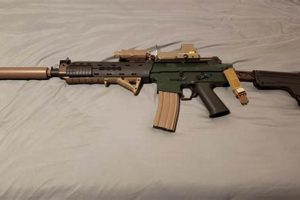
The convergence of additive manufacturing technology and the airsoft hobby has enabled the creation of customized components and even entire replicas of firearms used in the sport. This intersection facilitates design iteration, personalization, and the potential for producing parts that are otherwise difficult or impossible to source. Examples range from enhanced hop-up units and ergonomic grips to complete receiver sets and specialized magazines.
This capability is significant because it empowers enthusiasts to tailor their equipment to specific gameplay styles and performance requirements. Historically, airsoft modification relied heavily on aftermarket parts manufactured at scale. The advent of accessible three-dimensional printing offers an alternative, potentially more cost-effective and adaptable solution, fostering innovation and allowing for community-driven design improvements. This technology democratizes access to specialized equipment, enabling players to personalize their loadouts and improve their competitive edge.
Subsequent sections will delve into the specific applications, materials considerations, design principles, and legal ramifications associated with creating airsoft-related components using this technology. Furthermore, the discussion will encompass the community aspects, sharing platforms, and the overall impact on the airsoft landscape.
Tips for Optimizing Airsoft Components via Additive Manufacturing
These tips address critical aspects of creating reliable and effective airsoft components using three-dimensional printing technology. Adherence to these guidelines can significantly improve the functionality and durability of printed parts.
Tip 1: Material Selection is Paramount: The properties of the printing material directly impact the component’s resilience. Consider using high-impact polymers like ABS or nylon reinforced with carbon fiber for load-bearing parts. Standard PLA exhibits limited durability and heat resistance, rendering it unsuitable for many airsoft applications.
Tip 2: Prioritize Design for Functionality: Components designed solely for aesthetic purposes often fail under stress. Reinforce stress points, utilize fillets to reduce stress concentrations, and incorporate thicker walls in areas prone to impact. Finite Element Analysis (FEA) can simulate stress distribution and identify potential failure points.
Tip 3: Optimize Printing Parameters for Strength: Infill density, layer height, and printing speed significantly affect part strength. Experiment with different settings to find the optimal balance between print time and structural integrity. Generally, a higher infill percentage and lower layer height will improve part strength.
Tip 4: Account for Dimensional Accuracy and Tolerances: 3D-printed parts often exhibit dimensional inaccuracies. Design components with sufficient clearance to accommodate these variations, especially in mating surfaces and moving parts. Post-processing techniques, such as sanding or filing, may be necessary to achieve precise fits.
Tip 5: Consider Post-Processing Methods: Post-processing techniques can enhance the strength, surface finish, and functionality of printed components. Heat treating nylon parts can increase their impact resistance. Applying coatings can improve wear resistance and provide a more durable finish.
Tip 6: Test Extensively Before Deployment: Before deploying printed components in a game, subject them to rigorous testing. Simulate typical usage scenarios and monitor for signs of stress, cracking, or deformation. Iterative design and testing are crucial for ensuring reliability.
These tips offer guidance for improving the performance and longevity of airsoft components created through additive manufacturing. Careful consideration of these factors will lead to more robust and effective designs.
Further exploration of advanced design techniques and specific material properties will provide a deeper understanding of optimizing airsoft components through additive manufacturing.
1. Durability

The intersection of three-dimensional printing and airsoft necessitates a thorough consideration of part durability. The operational environment of airsoft replicas, characterized by impacts, stress, and exposure to varying environmental conditions, places significant demands on component integrity. Additively manufactured parts, unlike their traditionally manufactured counterparts, often exhibit anisotropic material properties and can be susceptible to layer delamination if improperly designed or printed. Consequently, the lifespan and functionality of airsoft components fabricated via this method are intrinsically linked to their capacity to withstand these operational stresses.
Material selection emerges as a primary determinant of durability. While materials like PLA are readily available and easy to print, their low impact resistance and temperature sensitivity render them unsuitable for most functional airsoft parts. High-performance polymers, such as nylon (PA6, PA12) and polycarbonate (PC), either neat or reinforced with additives like carbon fiber, offer substantially improved mechanical properties. These materials exhibit superior impact resistance, tensile strength, and temperature stability, enhancing the longevity of printed components. However, successful utilization requires careful control over printing parameters, including nozzle temperature, bed adhesion, and print speed, to minimize internal stresses and ensure layer bonding.
Ultimately, durability represents a critical constraint on the widespread adoption of this technology within the airsoft community. While the potential for customization and rapid prototyping is undeniable, the long-term viability of additively manufactured airsoft components hinges on the ability to consistently produce parts that meet or exceed the performance of traditionally manufactured alternatives. Ongoing research into advanced materials, optimized printing techniques, and robust design methodologies is crucial to overcome these challenges and unlock the full potential of this technology for airsoft applications.
2. Customization

Three-dimensional printing presents an unprecedented level of customization within the airsoft domain. Traditional manufacturing processes often necessitate mass production to achieve cost-effectiveness, limiting individual modifications. Conversely, additive manufacturing allows for the creation of unique components tailored to specific user needs and preferences. This capability extends to ergonomic enhancements, such as custom grips designed for individual hand sizes, and performance-oriented modifications, including specialized hop-up units optimized for specific projectile weights. The direct effect is a heightened level of personalization unavailable through conventional means.
The importance of customization in this context stems from the inherent variability in player preferences and gameplay styles. Examples include the design of custom magazine adapters to utilize different magazine types, the creation of specialized rail systems for unique accessory configurations, and the development of internal components to fine-tune performance characteristics like rate of fire or trigger response. Furthermore, damaged or obsolete parts can be replicated or modified, extending the lifespan of existing equipment and mitigating the need for complete replacements. The practical significance is therefore threefold: improved ergonomics, enhanced performance, and prolonged equipment usability.
While the potential for customization is significant, challenges remain. Design expertise is necessary to create functional and durable components. Material selection must be carefully considered to ensure adequate strength and resilience. Moreover, adherence to local regulations regarding replica firearms is paramount. Despite these challenges, the capacity for customization provided by three-dimensional printing represents a transformative force within the airsoft community, empowering enthusiasts to create equipment tailored precisely to their individual requirements, contributing to a more personalized and optimized gameplay experience.
3. Material Selection

Material selection is a foundational element in the successful application of additive manufacturing to airsoft. The inherent stresses experienced by airsoft components during gameplay necessitate the use of materials exhibiting specific mechanical properties. Failure to adequately consider material characteristics can result in premature component failure, rendering the printed part unusable. This is particularly relevant when replicating load-bearing components such as gears, pistons, or receiver parts. For instance, using standard PLA, a common but mechanically weak material, for a piston head will likely lead to cracking and failure upon repeated impact during the firing cycle. The selection process therefore requires a deliberate evaluation of material strength, impact resistance, and temperature sensitivity in relation to the intended application.
The availability of engineering-grade filaments, such as nylon (PA6, PA12) and polycarbonate (PC), either neat or reinforced with carbon fiber, offers solutions for creating more durable airsoft components. These materials exhibit significantly enhanced mechanical properties compared to commodity filaments. Nylon, for example, demonstrates superior impact resistance and abrasion resistance, making it suitable for components subject to frictional forces. Carbon fiber reinforcement further increases stiffness and strength, allowing for the creation of lightweight yet robust parts. However, these advanced materials often require specialized printing equipment, including enclosed build chambers and high-temperature nozzles, to achieve optimal results. Moreover, careful calibration of printing parameters is essential to minimize warping and ensure adequate layer adhesion.
In summary, the relationship between material selection and successful three-dimensional printing of airsoft components is direct and critical. Informed decisions regarding material properties, coupled with appropriate printing techniques, are paramount to achieving durable, functional parts. The advancement of material science and additive manufacturing technologies will continue to expand the range of suitable materials, enabling the creation of increasingly sophisticated and reliable airsoft components. Further research into material performance under simulated gameplay conditions will refine the selection process and contribute to the overall robustness of additively manufactured airsoft equipment.
4. Design Optimization

Design optimization is an indispensable element in the realm of 3d printer airsoft. The additive manufacturing process allows for the creation of complex geometries that are often unattainable through traditional machining or molding techniques. However, the mere ability to print intricate shapes does not guarantee functional or durable airsoft components. Design optimization involves a deliberate and iterative process of refining a component’s geometry, material distribution, and internal structure to maximize performance while minimizing material usage and print time. This encompasses considerations such as stress analysis, topology optimization, and feature refinement to ensure that the printed part can withstand the rigors of airsoft gameplay. For example, reinforcing stress concentration points with strategically placed ribs or fillets can significantly enhance the component’s resistance to fracture. Neglecting design optimization often results in components that are either overly bulky and heavy, or structurally weak and prone to failure under stress.
The application of design optimization principles translates directly to improved functionality and longevity of 3d-printed airsoft parts. Consider the design of an airsoft piston head. A naive design might simply replicate the geometry of a commercially available piston head. However, through finite element analysis (FEA), it’s possible to identify areas of high stress concentration during the firing cycle. By strategically adding material to these areas, or by modifying the overall geometry to distribute stress more evenly, the optimized piston head can exhibit significantly greater durability and resistance to cracking. Furthermore, topology optimization can be employed to remove unnecessary material from low-stress regions, reducing the overall weight of the piston and potentially improving the replica’s firing cycle speed. The practical result is an airsoft replica with enhanced performance and reduced maintenance requirements.
In conclusion, design optimization is not merely an optional step but a critical component of successful 3d printer airsoft projects. It bridges the gap between the theoretical potential of additive manufacturing and the practical demands of the airsoft environment. By applying sound engineering principles and leveraging simulation tools, enthusiasts and manufacturers can create customized airsoft components that offer superior performance and durability compared to off-the-shelf alternatives. However, a lack of expertise in design optimization remains a significant challenge, highlighting the need for accessible educational resources and collaborative design platforms within the airsoft community. This allows the development of readily customized high-performance airsoft components.
5. Functionality

Within the context of 3d printer airsoft, functionality dictates the practical utility and operational effectiveness of additively manufactured components. The ability to replicate the intended behavior of original or aftermarket parts is paramount to the success and acceptance of this technology within the airsoft community. Functional considerations extend beyond mere dimensional accuracy and encompass performance under stress, compatibility with existing systems, and adherence to safety standards.
- Operational Reliability
Operational reliability refers to the consistent performance of a 3d-printed airsoft component under typical gameplay conditions. A functionally reliable component must withstand repeated stress cycles, maintain dimensional stability under varying temperatures, and resist degradation from lubricants or cleaning agents. Examples include a 3d-printed hop-up unit that consistently imparts backspin to projectiles, or a 3d-printed gearbox shell that maintains structural integrity throughout extended use. The implication is that 3d printer airsoft components must not only fit and function initially but also retain their operational characteristics over time.
- System Compatibility
System compatibility concerns the ability of a 3d-printed component to seamlessly integrate with existing airsoft replica systems. This includes dimensional conformity with standard interfaces (e.g., threaded barrels, magazine wells, rail systems), as well as functional compatibility with other internal mechanisms (e.g., gears, pistons, nozzles). An example would be a 3d-printed magazine that reliably feeds BBs into a compatible airsoft replica without jamming or misfeeding. The implication is that the functional design must account for the tolerances and operational parameters of the overall system, avoiding any interference or incompatibility that could compromise performance.
- Performance Enhancement
Performance enhancement involves the use of 3d printer airsoft to improve the performance characteristics of an airsoft replica beyond its original specifications. This can involve designing components that optimize airflow, reduce friction, or increase structural rigidity. An example would be a 3d-printed nozzle designed with optimized internal geometry to improve air seal and increase muzzle velocity. The implication is that the functional design should leverage the unique capabilities of additive manufacturing to create components that outperform traditional alternatives, offering a tangible advantage to the user.
- Safety Considerations
While not always explicitly stated, safety is a critical facet of functionality. 3d-printed airsoft components, particularly those under high stress, must be designed and manufactured to minimize the risk of failure that could lead to injury. This includes selecting appropriate materials, incorporating safety margins into the design, and adhering to relevant safety standards. A functional 3d-printed safety selector, for example, must reliably prevent the replica from firing when engaged. The implication is a necessary commitment to responsible design and manufacturing practices to ensure user safety.
These facets of functionality highlight the importance of a comprehensive approach to 3d printer airsoft component design and manufacturing. The ability to create customized, high-performance parts is contingent upon a thorough understanding of operational requirements, system integration, and safety considerations. The ongoing development of advanced materials and design tools will continue to expand the functional capabilities of 3d-printed airsoft components, enabling the creation of increasingly sophisticated and reliable replicas.
6. Regulatory Compliance
The intersection of additive manufacturing and airsoft necessitates careful consideration of regulatory compliance. The ability to readily produce replica firearm components raises potential legal and ethical concerns, demanding strict adherence to applicable laws and regulations. The absence of such adherence may result in legal penalties, including fines and potential confiscation of equipment. An example includes the creation of a near-identical replica receiver that lacks required markings, potentially violating laws regarding the manufacturing of imitation firearms. The significance of regulatory compliance stems from the need to prevent the misuse of these technologies for illegal purposes and to ensure the safe and responsible practice of the airsoft hobby.
Specific regulations vary by jurisdiction and may encompass restrictions on the external appearance of airsoft devices, the materials used in their construction, and the markings required for identification. Some regions may prohibit the manufacture or possession of airsoft replicas that are indistinguishable from real firearms, while others may impose limits on muzzle velocity or require the use of specific safety features. Furthermore, the unauthorized replication of patented designs or trademarks may infringe on intellectual property rights. Therefore, thorough research and understanding of local, national, and international laws are crucial prior to engaging in the design and production of airsoft components via additive manufacturing. Practical application involves verifying component designs against applicable regulations, documenting manufacturing processes, and maintaining records to demonstrate compliance.
In summary, regulatory compliance constitutes a fundamental aspect of responsible participation in 3d printer airsoft. The potential legal ramifications of non-compliance necessitate a proactive approach to understanding and adhering to relevant regulations. Challenges remain in the dynamic nature of legal frameworks and the need for clear guidance on the application of existing laws to the rapidly evolving field of additive manufacturing. This ensures the safe and legal development of 3d-printed airsoft components within established boundaries.
Frequently Asked Questions
The following questions and answers address common inquiries and concerns regarding the utilization of additive manufacturing in the airsoft hobby.
Question 1: Is it legal to 3d print airsoft components?
Legality varies by jurisdiction. Many regions permit the creation of airsoft parts for personal use. However, the manufacture of complete replicas or components that violate local laws regarding imitation firearms is often prohibited. Consult local regulations before commencing any project.
Question 2: What materials are best suited for 3d printed airsoft parts?
High-impact polymers such as nylon (PA6, PA12) and polycarbonate (PC), often reinforced with carbon fiber, are generally recommended for load-bearing components. Standard PLA is typically inadequate due to its low impact resistance and temperature sensitivity.
Question 3: How durable are 3d printed airsoft parts compared to traditionally manufactured parts?
Durability depends heavily on material selection, design, and printing parameters. Optimized designs printed with appropriate materials can approach the durability of traditionally manufactured parts. However, improperly designed or printed components are likely to exhibit premature failure.
Question 4: Can 3d printing improve the performance of an airsoft replica?
Yes, additive manufacturing allows for the creation of customized components with optimized geometries, potentially enhancing performance characteristics such as air seal, rate of fire, or trigger response. However, significant design expertise is required to achieve meaningful improvements.
Question 5: What are the limitations of 3d printing airsoft parts?
Limitations include material costs, the need for specialized printing equipment, the potential for dimensional inaccuracies, and the time required to print complex parts. Furthermore, achieving smooth surface finishes and tight tolerances often requires post-processing.
Question 6: Where can I find 3d models for airsoft parts?
Online repositories such as Thingiverse, Cults3D, and MyMiniFactory host a variety of 3d models for airsoft components. However, the quality and accuracy of these models can vary significantly. Exercise caution and verify the design before printing.
Understanding these key aspects provides a foundation for navigating the complexities of 3d printer airsoft and making informed decisions regarding material selection, design, and manufacturing processes.
The following section will examine case studies of successful 3d printer airsoft projects.
Conclusion
The exploration of 3d printer airsoft reveals a confluence of technological innovation and recreational pursuit. This examination has traversed the landscape of material selection, design optimization, functionality considerations, and regulatory compliance, establishing a framework for understanding both the potential and the limitations inherent in this practice. The ability to customize, replicate, and enhance airsoft components through additive manufacturing represents a significant paradigm shift, empowering enthusiasts and potentially impacting the broader airsoft industry.
The future of this field hinges on continued advancements in material science, accessible design tools, and a commitment to responsible development. As the technology matures, a sustained focus on safety, legal adherence, and community collaboration will be paramount. The responsible exploration of 3d printer airsoft holds the promise of innovation and personalization, while simultaneously demanding vigilance to ensure ethical and legal boundaries are respected.