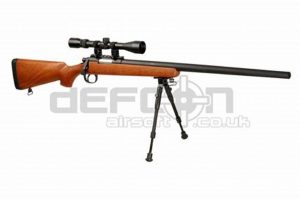
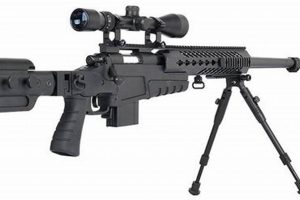
The pursuit of maximum power in airsoft sniper rifles often involves a complex interplay of factors. While a single, definitive “most powerful” model remains elusive due to varying metrics and field regulations, the concept centers on achieving high muzzle energy, usually measured in Joules or feet per second (FPS) with a specific weight BB. This energy translates to greater range and impact on the target, offering a tactical advantage in gameplay. For example, a rifle capable of consistently firing at the upper limit of field-legal FPS (often around 500 FPS with 0.20g BBs in the US) would be considered powerful.
The desire for enhanced power stems from the sniper role’s inherent need for precision and long-range engagement. A rifle with increased energy can overcome wind resistance more effectively, leading to improved accuracy and a flatter trajectory. Historically, airsoft snipers have sought modifications and upgrades to push the limits of their rifles, often focusing on components like upgraded springs, precision inner barrels, and enhanced hop-up units. However, responsible airsoft play emphasizes adherence to field regulations regarding maximum power output to ensure player safety and fair gameplay.
Understanding the variables affecting airsoft sniper rifle performance is crucial for discerning the potential for maximizing its power within safe and regulated boundaries. The subsequent sections will delve into specific rifle models, performance-enhancing modifications, and the importance of field regulations in determining what can be considered a powerful airsoft sniper rifle.
Tips for Optimizing Airsoft Sniper Rifle Performance
Achieving optimal performance from an airsoft sniper rifle necessitates a comprehensive approach. The following tips provide guidance on maximizing power and accuracy within the constraints of field regulations and safety considerations.
Tip 1: Invest in Quality Internal Components: Upgrade internal components, such as the spring, piston, and cylinder head. A stronger spring increases the force behind each shot, resulting in a higher FPS. Selecting durable materials for these components ensures longevity and consistent performance.
Tip 2: Ensure Proper Air Seal: A compromised air seal results in a loss of power. Implement a Teflon tape modification or replace O-rings to achieve a perfect seal between the cylinder head, piston, and nozzle. Consistency in air compression is paramount.
Tip 3: Employ a Precision Inner Barrel: Replace the stock inner barrel with a tighter bore precision barrel. A tighter bore reduces the space around the BB as it travels down the barrel, resulting in improved accuracy and increased FPS. Stainless steel barrels are preferred for their durability and consistency.
Tip 4: Optimize Hop-Up Performance: The hop-up unit imparts backspin on the BB, increasing its range and accuracy. Fine-tune the hop-up adjustment for the specific BB weight being used. Experiment with different buckings (hop-up rubbers) to find the best grip and consistency.
Tip 5: Maintain Consistent BB Weight: Use high-quality, heavy-weight BBs (e.g., 0.30g or heavier). Heavier BBs maintain their momentum better over long distances and are less affected by wind, leading to increased accuracy and effective range. Uniform BB weight contributes to consistent shot-to-shot performance.
Tip 6: Perform Regular Maintenance: Regularly clean and lubricate the rifle’s internal components. Dirt and grime can impede performance and reduce the lifespan of critical parts. Use appropriate lubricants designed for airsoft guns to avoid damaging the seals and other components.
Tip 7: Verify Field Regulations: Before making any modifications, confirm the field’s FPS and Joule limits. Exceeding these limits can result in disqualification and potential safety hazards. Ensure the rifle complies with all applicable rules.
Implementing these tips can significantly enhance the performance of an airsoft sniper rifle. The combination of quality components, meticulous maintenance, and adherence to field regulations ensures both optimal power and safe gameplay.
These guidelines provide a foundation for maximizing airsoft sniper rifle capabilities, setting the stage for a discussion of specific rifle models and advanced tuning techniques.
1. Muzzle Energy (Joules)

Muzzle energy, measured in Joules, serves as a primary indicator of an airsoft sniper rifle’s power output. It quantifies the kinetic energy imparted to the projectile (BB) as it exits the barrel. A higher Joule value generally translates to greater velocity and potential range, thereby influencing the perceived power of the rifle. However, muzzle energy must be considered within the context of safety regulations and overall performance characteristics.
- Measurement and Calculation
Muzzle energy is calculated using the mass of the BB and its velocity at the muzzle. The standard formula is Kinetic Energy (Joules) = 0.5 mass (kg) velocity (m/s)^2. Chronographs are employed to measure the BB’s velocity, and this data, combined with the BB’s known mass, allows for accurate determination of muzzle energy. For example, a 0.20g BB traveling at 400 FPS (feet per second) equates to approximately 1.49 Joules of energy.
- Impact on Range and Trajectory
Higher muzzle energy contributes to a flatter trajectory and extended range. A BB propelled with greater force experiences less drop over distance, allowing for more accurate shots at long range. However, the effect is also influenced by factors such as BB weight, hop-up adjustment, and aerodynamic properties. A rifle producing 2.5 Joules of energy will generally exhibit a greater effective range than one producing 1.5 Joules, assuming other variables are held constant.
- Regulation and Safety Considerations
Airsoft fields typically impose limits on muzzle energy to ensure player safety. These limits are often expressed in Joules or FPS with a specified BB weight (usually 0.20g). Exceeding these limits can result in disqualification from gameplay and potential injury to other players. For example, many fields in the US limit sniper rifles to approximately 500 FPS with 0.20g BBs, corresponding to around 2.32 Joules. Rifles exceeding these limits are considered unsafe and are not permitted.
- Balancing Power with Accuracy
While high muzzle energy is desirable, it must be balanced with accuracy and consistency. A rifle generating significant power but exhibiting poor accuracy is less effective than a rifle with moderate power and excellent precision. Upgrades aimed solely at increasing muzzle energy can negatively impact accuracy if not properly implemented. Factors such as barrel quality, hop-up performance, and trigger mechanism contribute significantly to the overall accuracy potential of an airsoft sniper rifle.
Ultimately, maximizing “what is the most powerful airsoft sniper rifle” involves optimizing muzzle energy within the boundaries of safety regulations and simultaneously enhancing accuracy and consistency. A high Joule output alone is insufficient; the rifle’s overall design and performance must prioritize both power and precision to achieve a competitive advantage on the field. Therefore, a nuanced understanding of muzzle energy’s implications, alongside factors such as effective range and accuracy consistency, proves essential in evaluating the true capability of an airsoft sniper rifle.
2. Effective Range
Effective range constitutes a critical performance metric when evaluating the capabilities of an airsoft sniper rifle. It directly correlates with the rifle’s practical utility on the field, defining the distance at which accurate and consistent shots can be reliably delivered. Assessing effective range is crucial in determining the true potential of “what is the most powerful airsoft sniper rifle,” going beyond mere muzzle energy specifications.
- Defining Effective Range
Effective range is not simply the maximum distance the BB can travel, but rather the distance at which the shooter can consistently hit a target of a reasonable size (e.g., a torso-sized target) with a high degree of probability. This range is influenced by multiple factors, including muzzle energy, BB weight, hop-up configuration, and environmental conditions. A rifle capable of propelling a BB 250 feet but only hitting the target 20% of the time does not possess a practical effective range of 250 feet.
- Influence of Muzzle Energy
Higher muzzle energy generally translates to a greater potential effective range, as the BB retains its velocity and resists wind influence more effectively. However, this increased energy must be coupled with precise hop-up tuning to optimize the BB’s trajectory. A rifle with excessive muzzle energy but a poorly adjusted hop-up may exhibit an unstable flight path, reducing its effective range despite its high power output. For example, two rifles with identical hop-up units, one with 2 Joules and another with 3 Joules, will invariably see the 3-Joule rifle have a greater effective range.
- Impact of BB Weight and Quality
The weight and quality of the BB significantly impact effective range. Heavier BBs retain their momentum better over longer distances and are less susceptible to wind drift, leading to improved accuracy and consistency. High-quality BBs, characterized by consistent weight and roundness, ensure a stable flight path. Using low-quality or lightweight BBs can drastically reduce effective range, even with a high-powered rifle. For instance, upgrading from 0.20g BBs to 0.30g BBs can extend the effective range of an airsoft sniper rifle by 20-30%.
- Environmental Factors
Wind, humidity, and temperature can significantly affect effective range. Wind can cause BBs to drift off course, reducing accuracy and effective range. Humidity can affect the performance of the hop-up unit, altering the BB’s trajectory. Temperature variations can affect the air pressure within the rifle’s cylinder, impacting muzzle energy. Snipers must account for these environmental factors when making adjustments to their rifle and aiming techniques. Training in diverse weather conditions will significantly improve performance in the field.
In conclusion, effective range is a comprehensive measure of an airsoft sniper rifle’s performance, encompassing muzzle energy, BB characteristics, hop-up tuning, and environmental considerations. Maximizing effective range requires a holistic approach, optimizing each of these factors to achieve the desired accuracy and consistency at extended distances. Identifying “what is the most powerful airsoft sniper rifle” necessitates evaluating its effective range alongside its muzzle energy, ensuring that the rifle’s power translates into practical battlefield performance.
3. Accuracy Consistency

Accuracy consistency represents a pivotal attribute in evaluating an airsoft sniper rifle’s overall effectiveness. While muzzle energy and effective range indicate potential power, the ability to repeatedly place shots within a tight grouping at extended distances defines true performance. Therefore, accuracy consistency is a crucial determinant in assessing “what is the most powerful airsoft sniper rifle”.
- Defining Accuracy Consistency
Accuracy consistency refers to the rifle’s capacity to deliver shots within a predictable and repeatable pattern. It is not merely about hitting a target once, but consistently striking the same area shot after shot. This metric is typically evaluated by measuring the grouping size of a series of shots fired at a fixed target at a specified range. Smaller grouping sizes indicate greater accuracy consistency.
- Components Influencing Accuracy Consistency
Several components contribute to accuracy consistency, including the quality of the inner barrel, the hop-up unit, the trigger mechanism, and the overall build quality of the rifle. A precision inner barrel with a consistent bore diameter ensures a stable flight path for the BB. A well-tuned hop-up unit imparts consistent backspin, enhancing stability and range. A smooth and predictable trigger mechanism minimizes shooter-induced errors. A robust and well-assembled rifle minimizes vibrations and inconsistencies during firing.
- Impact of Internal Upgrades
Internal upgrades play a significant role in enhancing accuracy consistency. Replacing the stock inner barrel with a high-quality precision barrel is a common modification. Upgrading the hop-up bucking to a model with improved grip and consistency can also improve accuracy. Installing a trigger unit with adjustable sear engagement can minimize trigger pull variations, further improving consistency. These upgrades, when properly implemented, can transform a mediocre rifle into a highly accurate and consistent platform.
- External Factors Affecting Accuracy Consistency
External factors, such as wind, temperature, and shooter skill, can also influence accuracy consistency. Wind can cause BBs to drift, requiring adjustments to aiming. Temperature variations can affect the air pressure within the rifle, altering muzzle energy. Shooter skill, including proper breathing, trigger control, and stance, is paramount for achieving consistent results. Even with the most accurate rifle, poor shooting technique will negate its potential.
Ultimately, accuracy consistency is a multifaceted attribute that reflects the synergy between the rifle’s internal components, external factors, and shooter skill. While “what is the most powerful airsoft sniper rifle” might imply high muzzle energy, a rifle lacking accuracy consistency is of limited practical value. A truly effective sniper rifle must possess both power and precision, enabling the shooter to consistently engage targets at extended ranges with confidence.
4. Upgrade Potential

Upgrade potential, in the context of airsoft sniper rifles, represents the degree to which a particular model can be modified and enhanced beyond its stock configuration. The capacity for upgrades significantly influences the long-term power and effectiveness of a rifle, thereby directly impacting any determination of “what is the most powerful airsoft sniper rifle.” A rifle with extensive upgrade options possesses the capacity to transcend its initial performance limitations, potentially reaching levels of power and accuracy unattainable in its stock form. This transformational ability makes upgrade potential a crucial consideration.
The correlation between upgrade potential and attainable power is often observed in several areas. Internal components such as springs, pistons, and inner barrels can be replaced with higher-performance alternatives, directly increasing muzzle energy and accuracy. Hop-up units, responsible for imparting backspin on the BB, can be exchanged for more precise and adjustable models, extending effective range. Furthermore, the trigger mechanism, cylinder head, and air nozzle are subject to upgrades aimed at improving consistency and durability, indirectly contributing to sustained high performance. For example, a stock airsoft sniper rifle might produce 1.5 Joules of energy, with a limited effective range of 60 meters. However, through comprehensive upgrades, including a stronger spring, precision inner barrel, and improved hop-up, that same rifle could potentially achieve 2.3 Joules and an effective range exceeding 80 meters. The availability of aftermarket parts and the rifle’s inherent design for accepting these modifications define its upgrade potential.
However, the practical implications extend beyond mere power metrics. A rifle’s ease of disassembly and modification, the availability of compatible parts, and the robustness of its construction all contribute to its upgrade potential. A rifle that is difficult to disassemble or lacks readily available aftermarket support will be less amenable to upgrades, thereby limiting its long-term performance potential. While a rifle’s initial power output is relevant, its capacity for future enhancement ultimately determines its place among “what is the most powerful airsoft sniper rifle” available. The potential for continuous improvement is often valued more than immediate, static performance levels.
5. Field Legal Limits

Field legal limits significantly constrain the definition of “what is the most powerful airsoft sniper rifle.” Maximum permissible energy outputs, typically measured in Joules or feet per second (FPS), are dictated by individual airsoft field regulations. These limits are imposed to ensure player safety and maintain a level playing field. Consequently, the most powerful airsoft sniper rifle, in a practical sense, is not necessarily the rifle with the highest potential power output, but rather the rifle that maximizes performance within those pre-defined legal boundaries. For example, a rifle capable of firing at 600 FPS would be considered powerful from a purely technical standpoint, yet it would be rendered unusable at fields with a 500 FPS limit for sniper rifles. The rifle, therefore, has no practical field application.A cause-and-effect relationship is evident: field legal limits directly restrict the acceptable range of power for an airsoft sniper rifle. The most powerful legal rifle effectively becomes the optimal rifle that operates at the cusp of the field restrictions. These limitations force players to prioritize accuracy, consistency, and range optimization, rather than pursuing sheer power at the expense of these critical performance attributes.
The emphasis on adhering to field legal limits has several practical consequences. Airsoft players and manufacturers must focus on developing and utilizing technologies to maximize performance within the legal constraints. This often involves optimizing air seal, using precision inner barrels, and fine-tuning hop-up systems. The drive to push performance within acceptable safety margins has led to advancements in airsoft technology, improving accuracy and effective range without necessarily increasing muzzle velocity beyond regulated levels. In practical terms, the “most powerful” airsoft sniper rifle is a rifle modified to perform at the highest level possible while staying within established limits. This requires extensive modification and testing to find the most effective power levels.
In summary, understanding and respecting field legal limits is paramount when evaluating “what is the most powerful airsoft sniper rifle.” The concept of sheer power is tempered by the reality of practical application, which necessitates compliance with established safety regulations. The pursuit of the “most powerful” rifle transforms into an effort to optimize performance within those limitations, rewarding players who prioritize accuracy, consistency, and strategic adaptation over raw energy output. While the theoretical maximum potential of a rifle may be significant, it is the regulated, field-ready performance that ultimately defines its effectiveness and suitability as a powerful tool in airsoft gameplay.
Frequently Asked Questions
The following questions address common inquiries and misconceptions surrounding the concept of power in airsoft sniper rifles, providing clarity on various performance aspects.
Question 1: What constitutes “power” in an airsoft sniper rifle?
Power, in the context of airsoft sniper rifles, is multifaceted. It encompasses muzzle energy (measured in Joules or FPS), effective range, and accuracy consistency. A truly powerful rifle exhibits a balance of these attributes, allowing for effective engagement of targets at extended distances with predictable accuracy.
Question 2: Is higher FPS always indicative of a more powerful airsoft sniper rifle?
Higher FPS, while contributing to muzzle energy and potential range, does not definitively equate to a more powerful rifle. Accuracy consistency and the ability to effectively utilize that energy are equally crucial. A rifle with high FPS but poor accuracy is less effective than one with moderate FPS and superior precision.
Question 3: How do field legal limits impact the concept of “most powerful” airsoft sniper rifle?
Field legal limits impose restrictions on maximum permissible FPS or Joule output. The “most powerful” airsoft sniper rifle, in a practical context, is the rifle that maximizes performance within those regulatory boundaries, prioritizing accuracy and consistency alongside permitted power levels.
Question 4: What internal upgrades contribute most significantly to enhancing the power of an airsoft sniper rifle?
Key internal upgrades include a stronger spring (increasing muzzle energy), a precision inner barrel (improving accuracy), and an enhanced hop-up unit (optimizing range and consistency). The combined effect of these upgrades can substantially improve the rifle’s overall performance.
Question 5: How does BB weight affect the performance of a powerful airsoft sniper rifle?
BB weight plays a critical role. Heavier BBs retain momentum better over longer distances and are less susceptible to wind drift. Using appropriate BB weights (typically 0.30g or heavier for sniper rifles) optimizes accuracy and effective range.
Question 6: What role does shooter skill play in maximizing the effectiveness of a “powerful” airsoft sniper rifle?
Shooter skill is paramount. Even with a high-performing rifle, poor shooting technique negates its potential. Proper breathing, trigger control, and stance are essential for achieving consistent accuracy and maximizing the rifle’s effectiveness on the field.
In conclusion, the concept of “what is the most powerful airsoft sniper rifle” encompasses a complex interplay of factors, including muzzle energy, accuracy, field regulations, and shooter skill. A holistic approach is crucial for maximizing performance.
The subsequent sections will explore specific rifle models and advanced modification techniques.
Conclusion
The preceding discussion has examined the multifaceted nature of “what is the most powerful airsoft sniper rifle,” revealing the complexities beyond simple metrics such as muzzle velocity. A comprehensive understanding necessitates evaluating factors including muzzle energy, effective range, accuracy consistency, upgrade potential, and adherence to field-specific regulations. The pursuit of enhanced power must align with responsible airsoft practices.
Ultimately, the determination of “what is the most powerful airsoft sniper rifle” rests on a holistic assessment that balances performance characteristics with practicality and safety. Continued advancements in airsoft technology and ongoing refinement of gameplay regulations will undoubtedly shape future perspectives on optimal sniper rifle configurations. Responsible engagement with these developments is crucial for promoting fair and safe airsoft gameplay.