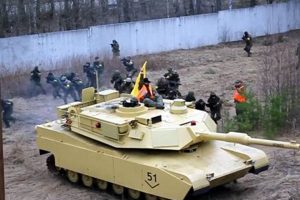
This aggressive maneuver, originating in tactical first-person shooter games, involves players rapidly advancing toward a designated objective point, often marked as “B”, with the intent of overwhelming any defending forces. The strategy emphasizes speed and coordinated teamwork to gain a decisive advantage and secure the area. As an example, a squad might simultaneously deploy smoke grenades and charge forward, suppressing enemy fire while capturing the specified location.
The efficacy of this bold tactic lies in its potential to disrupt established defensive positions, forcing opponents into disarray and creating opportunities for follow-up attacks. It can also be a psychological tool, instilling hesitation and fear in defenders. Historically, similar blitzkrieg tactics have been observed in various forms of combat and strategy, demonstrating the enduring value of rapid, focused aggression. The method’s success often hinges on meticulous planning, clear communication, and the ability to adapt to unforeseen circumstances.
The following discussion will delve into specific loadout considerations, effective communication strategies, and risk mitigation techniques crucial for maximizing the success rate of executing such a forceful maneuver. Furthermore, we will explore how scenario planning and understanding map layouts can significantly enhance the effectiveness of this aggressive play style in different operational environments.
Effective Tactics for Rapid Objective Control
The following guidelines provide strategic recommendations for maximizing the effectiveness of a rapid offensive focused on capturing a designated objective. These principles emphasize coordinated teamwork, tactical awareness, and efficient resource utilization.
Tip 1: Prioritize Communication: Clear and concise communication is paramount. Establish predetermined callouts for enemy positions, movement patterns, and potential threats. Utilize established communication protocols to ensure information is relayed efficiently.
Tip 2: Implement Smoke Cover: Strategic deployment of smoke grenades can effectively obscure enemy lines of sight, providing a crucial window for advancing. Coordinate smoke deployment with the advance, ensuring adequate cover while minimizing visibility obstruction for friendly forces.
Tip 3: Employ Suppressive Fire: Utilize sustained, accurate fire to suppress enemy defenders, limiting their ability to effectively target advancing units. Prioritize targeting high-value targets, such as entrenched machine gunners or snipers.
Tip 4: Maintain Formation: Maintain a cohesive formation to maximize firepower and minimize vulnerability to flanking maneuvers. Units should advance in close proximity to provide mutual support and cover.
Tip 5: Exploit Flanking Opportunities: Identify and exploit flanking routes to bypass entrenched defenses and engage enemy forces from unexpected angles. Flanking maneuvers can create confusion and disrupt established defensive positions.
Tip 6: Utilize Grenades Tactically: Employ fragmentation and stun grenades to dislodge entrenched defenders and create openings for advancement. Coordinate grenade throws to maximize their impact and minimize risk to friendly units.
Tip 7: Anticipate Counterattacks: Be prepared for potential counterattacks following the initial assault. Establish defensive positions and maintain situational awareness to repel any attempts to retake the objective.
These strategies promote a synergistic approach to rapid objective capture, emphasizing the importance of coordination, communication, and tactical adaptability. Adherence to these guidelines enhances the likelihood of success in dynamic combat scenarios.
The subsequent sections will analyze the specific equipment configurations and training methodologies that can further enhance the implementation of these rapid assault tactics in diverse operational environments.
1. Aggressive Forward Movement

Aggressive forward movement forms a critical cornerstone of the tactical approach. It represents the proactive and decisive advance toward a designated objective, intended to overwhelm opposing forces through speed and concentrated firepower. In the context, this element necessitates a rapid, coordinated breach of enemy lines, minimizing exposure time and maximizing the potential for disruption. The effectiveness hinges on synchronizing movement with supporting elements, such as smoke screens and suppressive fire, to create an advantageous environment for the advancing team. A failure to execute this phase aggressively can lead to delayed engagement, increased casualties, and ultimately, objective failure.
Consider a scenario where a team hesitates during the initial advance. This pause allows defenders to consolidate their positions, reinforce weak points, and establish interlocking fields of fire. Consequently, the assault force faces a significantly more challenging engagement, requiring greater resource expenditure and potentially resulting in a failed attempt. Conversely, a well-executed, aggressive push capitalizes on the element of surprise, catching defenders off guard and reducing their ability to mount an effective defense. Historical military examples, such as blitzkrieg tactics, demonstrate the efficacy of rapid, overwhelming advances in achieving strategic objectives. Furthermore, understanding the specific map layout, including choke points and potential ambush locations, informs the optimal route and pace of the forward movement, enhancing its effectiveness.
In summation, aggressive forward movement represents a critical determinant of success within this tactical framework. Its successful implementation requires meticulous planning, precise coordination, and unwavering commitment to the objective. The absence of aggressive initiative allows defenders to consolidate and effectively thwart the advance, while a well-executed push seizes the initiative and disrupts enemy defenses. Effective aggressive forward movement requires synchronizing movement with smoke and suppressive fire, careful consideration of map layouts, and is crucial for success.
2. Team Coordination

Team coordination constitutes a foundational element for the successful execution of a rapid offensive maneuver. Its absence directly correlates with increased risk and diminished effectiveness. The tactic, by its nature, demands synchronized actions and shared understanding among participating individuals. A lack of coordinated effort creates vulnerabilities exploitable by opposing forces and jeopardizes the achievement of the objective. Effective team coordination includes real-time communication, pre-defined roles, and adaptability based on evolving circumstances. As an example, one squad member might focus on deploying smoke cover, while others provide suppressive fire, and another leads the charge towards the objective point. Without precise timing and mutual support, the maneuver devolves into a disorganized advance, easily countered by a prepared defense.
The practical significance of this understanding extends to tactical planning and training exercises. Teams should simulate various scenarios to refine their communication protocols and reaction times. Drills focusing on synchronized movements, target prioritization, and contingency responses are crucial. In scenarios where communication is compromised, pre-determined fallback strategies and non-verbal cues become essential. The value of this preparedness can be seen in organized events, where teams with superior coordination routinely outperform those relying solely on individual skill. This difference arises from the collective ability to adapt to unexpected developments and exploit tactical advantages.
In summary, the relationship between team coordination and the rapid offensive tactic is synergistic and indispensable. Effective coordination enables the successful execution of the maneuver, maximizing its potential to disrupt enemy defenses and secure the objective. Challenges to coordination, such as communication failures or lack of training, must be addressed proactively to mitigate risks and enhance operational effectiveness. The focus on meticulous preparation and collaborative execution is essential for achieving a desired outcome.
3. Smoke Deployment

Smoke deployment represents a critical enabling element for a successful aggressive objective assault. The primary function of strategically released obscurants is to impede the defenders line of sight, thus mitigating their capacity to accurately engage the advancing forces. The effective use of smoke generates a temporary visual barrier, allowing the attacking team to close the distance to the objective with reduced risk of direct fire. Examples of this tactical application are observable in various military doctrines and historical combat scenarios. Its implementation necessitates precise timing and coordinated execution to maximize the intended effect. An incorrectly placed or poorly timed screen can inadvertently hinder the attackers’ visibility and movement, undermining the overall operation.
The practical application of this tactic involves careful consideration of wind direction, terrain features, and the defenders likely positions. Smoke grenades, launchers, or other obscurant dispensing methods must be employed to create a continuous and sufficient screen along the intended path of advance. Furthermore, the attacking team must maintain awareness of the smoke’s dispersion and adjust their movements accordingly. Real-world military training often includes extensive drills on smoke deployment techniques, emphasizing the importance of timing, coordination, and adaptation to environmental factors. Utilizing different types of smoke, offering varying densities and durations, can provide tactical flexibility depending on the specific objectives.
In conclusion, smoke deployment is inextricably linked to aggressive offensive strategies. Its successful integration requires not only mastery of the delivery methods but also a deep understanding of environmental conditions and opposing force tactics. The strategic use of smoke creates opportunities for the attackers, while ineffective employment can compromise the entire operation. Therefore, comprehensive training and meticulous planning are vital to harness its full potential within aggressive maneuvers.
4. Suppressive Fire

Suppressive fire is intrinsically linked to a rapid objective breach. It provides a crucial protective mechanism, enabling advancing units to reduce the threat posed by defending forces. This tactic involves delivering a high volume of accurate shots towards known or suspected enemy positions, aiming to force defenders to take cover and thereby limit their ability to effectively target the assaulting team. The application of suppressive fire necessitates a coordinated effort, with designated individuals or groups responsible for maintaining a continuous barrage while others advance towards the objective. Without adequate suppression, the maneuver becomes significantly riskier, exposing advancing forces to potentially overwhelming enemy fire.
The effectiveness of suppressive fire is contingent upon several factors, including the weaponry used, the accuracy of the shooters, and the enemy’s defensive positions. High-capacity weapons, such as light machine guns, are often preferred for this role, as they can sustain a high rate of fire for extended periods. Furthermore, identifying and targeting key defensive positions, such as windows or fortified emplacements, maximizes the impact of the suppression. Scenario planning is crucial; knowing likely enemy positions allows for pre-aiming and immediate suppressive fire upon initiating the assault. In practical terms, a successful suppressive fire operation can pin down defenders, allowing the assaulting team to reach the objective with minimal casualties and gain a decisive advantage.
In summary, suppressive fire represents an indispensable component of a successful aggressive offensive tactic. It directly reduces the threat posed by defending forces, creating a window of opportunity for advancing units. A well-coordinated and executed suppressive fire plan is essential for mitigating risks and maximizing the likelihood of achieving the objective. The absence of effective suppression undermines the entire operation, exposing the assault team to potentially devastating consequences. Therefore, proficiently implementing suppressive fire tactics is paramount.
5. Objective Focus
Objective focus is paramount when executing this rapid, aggressive maneuver. The tactic’s inherent risk necessitates unwavering commitment to the primary goal: securing the designated area. Diverting attention or resources to secondary targets diminishes the overall effectiveness and increases the likelihood of failure. The strategic value derives from its capacity to swiftly overwhelm defenders and control vital areas. This potential is unrealized if the attacking force becomes disoriented or fixated on tangential engagements. As an example, a team might encounter resistance along the approach path; while suppressing this opposition is necessary, it must not become the primary focus, overshadowing the ultimate objective of reaching and securing the designated point. Effective execution requires prioritizing the rapid attainment of the objective, minimizing distractions, and maintaining relentless momentum.
The importance of objective focus extends to pre-mission planning and real-time decision-making. Teams must meticulously study maps, identify key entry points, and establish clear roles for each member. During the assault, leaders must maintain situational awareness and redirect resources as needed, ensuring the team remains aligned with the primary objective. Consider a scenario where defenders attempt to flank the advancing force; while addressing this threat is essential, it should be managed in a way that supports, rather than hinders, the advance towards the primary objective. Real-world tactical doctrines echo this principle, emphasizing the importance of a clearly defined objective and unwavering focus on achieving it, even in the face of adversity.
In summary, objective focus represents a non-negotiable element for this approach. It directs the team’s efforts, maximizes their impact, and minimizes the potential for mission failure. Challenges to maintaining objective focus, such as unexpected resistance or flanking maneuvers, must be addressed strategically, with the primary goal remaining the driving force behind all decisions. This relentless pursuit of the objective transforms an aggressive tactic into a decisive strategic advantage.
6. Risk Mitigation
Executing a rapid breach tactic inherently involves elevated levels of risk. Mitigating these potential hazards is not merely a precautionary measure but a fundamental component that differentiates a calculated gamble from a reckless charge. Potential risks encompass exposure to concentrated enemy fire, vulnerability to flanking maneuvers, and the possibility of encountering unforeseen obstacles or defensive emplacements. Effective risk mitigation strategies directly influence the success rate and casualty rate of the operation. A failure to adequately address these potential pitfalls significantly increases the likelihood of mission failure and unacceptable losses. Thorough planning, reconnaissance, and the implementation of appropriate countermeasures are, therefore, crucial for minimizing inherent dangers. This necessity is amplified by the speed and intensity of the maneuver, leaving little room for improvisation in the face of unexpected challenges.
Practical applications of risk mitigation within this aggressive scenario are diverse. Prior reconnaissance of the objective area enables identification of likely enemy positions, escape routes, and potential ambush locations. The use of flashbang grenades prior to entry can disorient defenders, reducing their ability to effectively engage. Pre-planned fallback positions allow the attacking team to withdraw and regroup if the initial assault is unsuccessful. Furthermore, maintaining constant communication and situational awareness enables rapid adaptation to unforeseen circumstances, such as unexpected enemy reinforcements. Real-world tactical training emphasizes these mitigation strategies, highlighting the importance of minimizing exposure time and maximizing the team’s capacity to react to threats. Scenario-based drills are utilized to prepare individuals for the dynamic and unpredictable nature of close-quarters engagements.
In summation, the integration of robust risk mitigation measures is indispensable for a successful implementation of a rapid aggressive tactic. A failure to proactively address potential hazards significantly undermines the entire operation, leading to increased casualties and a higher probability of mission failure. Thorough planning, reconnaissance, and the implementation of appropriate countermeasures are essential components. Prioritizing risk mitigation transforms a high-stakes gamble into a calculated maneuver, maximizing the likelihood of achieving the objective while minimizing potential losses. It forms the foundation for responsible and effective tactical decision-making in challenging operational environments.
Frequently Asked Questions
The following addresses common inquiries regarding this tactical approach. These responses aim to clarify prevailing misconceptions and provide a deeper understanding of associated principles.
Question 1: Is this approach always the optimal strategy?
No. This method is situationally dependent and may not be suitable for all scenarios. Map layout, enemy positioning, and available resources significantly influence its effectiveness.
Question 2: What are the primary weaknesses?
The main vulnerabilities include exposure to flanking maneuvers, susceptibility to well-prepared defenses, and reliance on coordinated teamwork. A lack of any of these can lead to failure.
Question 3: How important is communication?
Communication is paramount. Real-time updates on enemy positions, movement patterns, and potential threats are critical for maintaining situational awareness and adapting to changing circumstances.
Question 4: What equipment loadout is most effective?
A balanced loadout is recommended. High-capacity weapons for suppressive fire, smoke grenades for cover, and reliable sidearms for close-quarters engagements are generally advisable.
Question 5: How does map knowledge contribute to success?
Thorough map knowledge allows for efficient navigation, identification of key entry points, and anticipation of likely enemy positions. This tactical awareness is crucial for maximizing the maneuver’s impact.
Question 6: What training is recommended?
Drills focusing on close-quarters combat, communication protocols, and coordinated movement are essential. Scenario-based training simulates real-world conditions and prepares teams for unexpected challenges.
These frequently asked questions highlight critical considerations for understanding and implementing the tactical approach. Evaluating these factors ensures responsible and effective deployment of the maneuver.
The subsequent section will examine case studies that illustrate the practical application of these principles in diverse operational environments.
“Rush B Airsoft”
This exploration has underscored the multifaceted nature of the offensive maneuver. The convergence of aggressive forward movement, coordinated teamwork, and strategic support elements like smoke and suppressive fire are critical to its successful execution. Moreover, the imperativeness of objective focus and diligent risk mitigation further defines its strategic complexity.
Mastering these principles transforms this aggressive playstyle from a simplistic charge into a tactical instrument, capable of disrupting established defensive lines and seizing crucial objectives. The future implementation of this dynamic tactic should prioritize comprehensive team training and thorough scenario analysis, ensuring its effective and responsible application in ever-evolving operational environments.