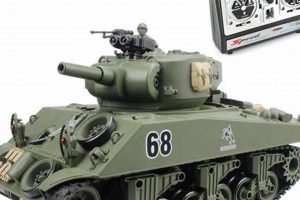
Radio-controlled armored vehicles equipped with airsoft pellet firing mechanisms represent a niche segment within the broader RC hobby market. These miniature replicas of military tanks offer users the ability to engage in simulated combat scenarios, launching small plastic projectiles at designated targets or opposing vehicles. Operation typically involves a remote control interface managing movement, turret rotation, and the firing of the airsoft mechanism.
This category of RC devices combines the enjoyment of remote-controlled vehicles with the strategic element of simulated warfare. Their appeal lies in providing a safe and controlled environment for recreational battle simulations. The historical development of this particular hobby reflects advancements in both RC technology and airsoft weaponry, allowing for increasingly sophisticated and realistic miniature tank models. These models foster an understanding of tactical maneuvers and promote strategic thinking.
The subsequent sections will delve into the various aspects of these specialized RC vehicles, including their features, selection criteria, safety considerations, and popular models currently available.
Essential Guidance for RC Tanks with Airsoft Capabilities
The following constitutes a series of recommendations intended to optimize the experience when operating radio-controlled armored vehicles equipped with airsoft pellet projection systems. These tips are designed to enhance safety, prolong equipment lifespan, and improve overall performance.
Tip 1: Battery Management. Proper battery care is paramount. Overcharging or deep discharging lithium polymer (LiPo) batteries can lead to premature failure or even hazardous conditions. Utilize chargers specifically designed for LiPo batteries and adhere strictly to the manufacturer’s recommended charging parameters.
Tip 2: Airsoft Mechanism Maintenance. Regular cleaning and lubrication of the airsoft firing mechanism are crucial for consistent performance. Accumulation of dirt and debris can impede functionality and reduce projectile velocity. Use compressed air and appropriate lubricants to maintain optimal operation.
Tip 3: Terrain Selection. The operational environment significantly impacts performance. Avoid excessively rough or abrasive surfaces, as they can damage tracks, suspension components, and the hull. Opt for relatively smooth terrains to minimize wear and tear.
Tip 4: Projectile Selection. Employ only high-quality, seamless airsoft pellets of the recommended weight and diameter. Inferior projectiles can cause jamming or damage the internal mechanisms of the airsoft firing system. Consistent projectile quality ensures reliable operation.
Tip 5: Target Practice and Calibration. Consistent target practice aids in refining aiming techniques and calibrating the firing system for optimal accuracy. Understand the projectile trajectory and adjust elevation settings accordingly to compensate for distance and environmental factors.
Tip 6: Storage Procedures. Proper storage extends the lifespan of the vehicle. Clean the tracks and hull after each use, disconnect the battery, and store the vehicle in a dry, temperature-stable environment. Avoid direct sunlight exposure, which can degrade plastic components.
Tip 7: Safety Precautions. Always wear appropriate eye protection when operating the airsoft firing system. Ensure that the designated firing range is clear of people and animals. Adherence to safety protocols is non-negotiable.
Implementing these guidelines facilitates enhanced performance and prolonged operational lifespan of these radio-controlled armored vehicles, ensuring a safer and more enjoyable experience.
The subsequent section will address common troubleshooting scenarios encountered with RC tanks with airsoft capabilities.
1. Realism

The degree of realism embedded within a radio-controlled tank equipped with airsoft capabilities significantly impacts its user engagement and perceived value. Realism extends beyond mere visual resemblance to a full-scale military tank; it incorporates functional accuracy, such as realistic sound effects mimicking engine noise and turret rotation, and detailed external components. The cause-and-effect relationship is evident: higher realism leads to a more immersive and engaging user experience. The importance of realism as a component is substantiated by consumer preferences, where models exhibiting greater attention to detail and functional accuracy command a higher market value. Consider, for example, meticulously crafted scale models accurately depicting the weathering and battle damage of a specific tank variant. The inclusion of a functional smoke generator, synchronized with engine sounds, further elevates the sense of authenticity.
The practical significance of realism lies in its ability to appeal to a wider audience, encompassing not only RC enthusiasts but also military history buffs and scale model collectors. The level of realism directly influences the perceived value and collectability of the model. Manufacturers often invest considerable resources in replicating intricate details, such as accurate track links, detailed road wheels, and faithfully reproduced armament. The pursuit of realism also drives technological innovation, leading to more sophisticated features like proportional control systems for smoother and more realistic movements, and advanced sound systems that accurately simulate the acoustic characteristics of different tank engines and weaponry.
In summary, realism is not merely an aesthetic consideration but a critical factor driving user engagement and market value in this niche hobby. The challenges associated with achieving high levels of realism often involve increased manufacturing costs and greater technological complexity. However, the benefits derived from a more authentic and immersive experience justify these investments, solidifying the connection between realism and these RC vehicles. This focus ensures continued product development within this segment.
2. Mobility

Mobility is a critical attribute of remote-controlled tanks equipped with airsoft mechanisms. It directly influences the vehicle’s capacity to navigate varied terrains, engage in tactical maneuvers, and effectively deliver airsoft projectiles. A causal relationship exists between the tank’s mobility and its operational effectiveness; limited mobility restricts maneuverability and tactical options, while enhanced mobility expands the potential combat scenarios. For example, a tank with superior climbing ability can occupy advantageous firing positions inaccessible to less mobile counterparts. The importance of mobility stems from its direct impact on the tank’s ability to perform its intended function: engaging and neutralizing simulated targets in diverse environments.
Practical significance of understanding mobility parameters extends to selecting appropriate vehicles for specific operational needs. Track width and design, suspension system characteristics, motor power, and gear ratios all contribute to the vehicle’s overall mobility. A tank with wide tracks distributes weight over a larger surface area, improving traction on soft ground like sand or snow. Similarly, a robust suspension system enables the vehicle to traverse uneven terrain without losing stability or damaging internal components. Gear ratios determine the balance between speed and torque, affecting the tank’s ability to climb steep inclines or overcome obstacles. Understanding the interaction of these factors allows users to choose tanks best suited for their intended playing environment and tactical style.
In summary, mobility is a fundamental performance parameter of RC tanks with airsoft capabilities, impacting operational effectiveness and maneuverability. The selection and configuration of key components like tracks, suspension, and powertrain directly determine the vehicle’s mobility characteristics. Challenges related to mobility include balancing performance across diverse terrain types and maintaining durability under demanding operating conditions. Recognizing the link between mobility and overall performance is essential for maximizing the enjoyment and strategic potential of these vehicles.
3. Accuracy

The accuracy of radio-controlled tanks equipped with airsoft mechanisms is a key determinant of their effectiveness in simulated combat scenarios. Accuracy, in this context, refers to the degree to which the airsoft projectile impacts the intended target. A direct causal relationship exists: increased accuracy directly translates to enhanced hit probability and improved overall performance in simulated battles. The importance of accuracy as a component is rooted in its ability to replicate the strategic considerations of real-world armored warfare, where precise targeting is paramount. For example, a tank possessing superior accuracy can effectively engage and neutralize targets at longer ranges, gaining a tactical advantage over opponents with less precise firing systems. This focus is substantiated by the inclusion of adjustable sights and hop-up systems in higher-end models, features specifically designed to enhance projectile trajectory and accuracy. These features attempt to counter the effect of gravity and air resistance on the trajectory of the projectiles.
The practical significance of accuracy extends beyond mere target acquisition; it encompasses the ability to consistently hit specific weak points on opposing vehicles or fortifications. The airsoft mechanism design, projectile quality, and environmental factors, such as wind, influence the precision of the firing system. Understanding these variables allows users to fine-tune their aiming techniques and calibrate the firing system for optimal performance in varying conditions. The application of ballistic principles, such as accounting for projectile drop over distance, further enhances the likelihood of achieving accurate shots. Examples of practical applications include simulating scenarios that require precise fire support or engaging in target practice to develop marksmanship skills.
In summary, accuracy is a critical performance attribute, determining the effectiveness and strategic value of radio-controlled tanks with airsoft capabilities. While the inherent limitations of airsoft projectiles and scale models present challenges in achieving pinpoint accuracy, manufacturers and users alike strive to optimize firing systems and aiming techniques to maximize hit probability. Recognizing the link between accuracy and operational effectiveness is crucial for maximizing the enjoyment and strategic potential of these vehicles. The constant push for greater precision drives innovation in airsoft mechanism design and related accessories, leading to progressively more accurate and realistic simulation experiences.
4. Durability

Durability, in the context of radio-controlled tanks equipped with airsoft firing mechanisms, constitutes the vehicle’s capacity to withstand physical stress, impacts, and operational wear over an extended period. It is a cardinal factor influencing the longevity, maintenance requirements, and overall value proposition of these devices.
- Hull Material Composition
The composition of the tank’s hull is paramount in determining its resistance to damage. Materials such as high-impact ABS plastic, reinforced polymers, and metal alloys are commonly employed. The material’s tensile strength, impact resistance, and resistance to environmental degradation directly correlate to the tank’s ability to survive collisions, rough terrain, and exposure to weather elements. Inferior materials are susceptible to cracking, fracturing, or warping under stress, leading to premature failure. For example, a metal-hulled tank will inherently exhibit greater durability compared to one constructed from standard ABS plastic, particularly when subjected to repeated impacts.
- Track and Suspension System Integrity
The track and suspension system endure substantial stress during operation, navigating uneven terrain and absorbing shocks. Robust tracks, constructed from durable rubber or metal alloys, are essential to withstand abrasion, tearing, and breakage. Suspension systems, comprising springs, torsion bars, or hydraulic dampers, must effectively absorb impacts and maintain track contact with the ground. Failure of these components can result in impaired mobility, track detachment, or damage to the chassis. A well-designed suspension system will evenly distribute load, minimizing stress on individual components and extending their lifespan.
- Internal Component Protection
Internal components, including the motor, gearbox, electronic speed controller (ESC), and airsoft firing mechanism, require adequate protection from physical damage. A well-designed internal layout, coupled with protective housings and shock-absorbing mounts, minimizes the risk of damage from impacts, vibrations, and environmental factors. Failure to protect these components can lead to malfunctions, reduced performance, or complete system failure. For example, an ESC exposed to excessive vibration may experience solder joint fatigue, leading to intermittent power loss.
- Resistance to Environmental Factors
Operational environments often expose these vehicles to a range of detrimental factors, including moisture, dust, and temperature extremes. Dust ingress can impair the functionality of gears, motors, and electronic components. Moisture exposure can lead to corrosion and electrical shorts. Temperature fluctuations can affect the performance of batteries and electronic components, and in some cases, cause deformation of certain plastic components. Effective sealing, corrosion-resistant materials, and temperature-rated components contribute to enhanced durability in adverse environmental conditions.
These facets of durability, working in concert, define the overall robustness and longevity of radio-controlled tanks equipped with airsoft functionality. An investment in durable construction and component selection translates to reduced maintenance costs, extended operational lifespan, and a more satisfying ownership experience. Conversely, compromising on durability can result in frequent repairs, premature failure, and diminished value.
5. Safety
The operation of radio-controlled tanks equipped with airsoft projectile firing mechanisms necessitates strict adherence to safety protocols to prevent injury and property damage. The potential for misuse, coupled with the inherent risks associated with projectile weapons, mandates a comprehensive understanding and implementation of safety measures.
- Eye Protection
The use of appropriate eye protection is non-negotiable. Airsoft projectiles, while relatively low-velocity, can inflict serious eye injuries. ANSI Z87.1 rated goggles or full-face masks provide the necessary impact resistance to protect the eyes from direct hits or ricochets. Failure to wear adequate eye protection can result in corneal abrasions, retinal damage, or permanent vision impairment. Compliance with this measure is paramount for all individuals within the operational area.
- Operational Area Control
Maintaining control over the operational environment is essential to prevent unintended harm. A designated firing range, free from bystanders, pets, and vulnerable property, must be established prior to operation. Barriers or warning signs can be used to delineate the boundaries of the safe zone and prevent accidental entry. A clear line of sight to the target area is crucial to ensure that projectiles do not stray beyond the designated zone and pose a risk to unintended targets. Responsible operation entails vigilance and proactive measures to mitigate potential hazards.
- Projectile Velocity Limitations
Adherence to established projectile velocity limits is crucial to minimize the risk of injury. Airsoft projectiles are typically classified by their weight and muzzle velocity, measured in feet per second (FPS). Exceeding established velocity limits increases the potential for skin penetration, bruising, and other impact-related injuries. Chronographs are used to measure the FPS of airsoft weapons, ensuring compliance with safety regulations. Responsible operators must ensure that their tanks do not exceed the maximum permissible FPS for the intended operational environment.
- Safe Handling and Storage
Proper handling and storage practices are essential to prevent accidental discharge and misuse. Tanks should be stored in a secure location, inaccessible to unauthorized individuals, particularly children. Batteries should be disconnected when the tank is not in use to prevent accidental activation. Airsoft projectiles should be stored separately, in a container that prevents accidental spillage. Responsible storage protocols minimize the risk of unauthorized use and accidental injury.
These safety facets are not merely suggestions but essential prerequisites for the responsible operation of radio-controlled tanks with airsoft capabilities. Neglecting these precautions can have serious consequences, including physical injury and legal liability. A commitment to safety ensures a safe and enjoyable experience for all participants.
6. Customization

Customization represents a significant facet of the radio-controlled tank hobby, especially within the subset of models equipped with airsoft projectile capabilities. The connection between customization and these RC vehicles is multifaceted, encompassing aesthetic enhancements, performance augmentations, and functional modifications. A direct causal relationship exists: enhanced customization opportunities increase the potential for personalization and improved performance. The importance of customization stems from its ability to cater to individual preferences, allowing hobbyists to create unique and high-performing replicas that reflect their specific interests. For example, a user might customize a tank to resemble a specific vehicle from a particular historical battle, adding details such as weathering effects, unit markings, and scale accessories. This personalization enhances the sense of ownership and fosters a deeper connection with the hobby.
The practical significance of customization extends beyond mere aesthetics. Performance-oriented modifications, such as upgraded motors, enhanced suspension systems, and improved airsoft firing mechanisms, can significantly improve the tank’s mobility, accuracy, and overall combat effectiveness. Examples include replacing the stock motor with a higher-torque variant for improved climbing ability, upgrading the suspension with adjustable dampers for better handling on rough terrain, or installing a precision inner barrel and hop-up system to increase the range and accuracy of the airsoft firing mechanism. These performance modifications enable users to tailor their tanks to specific playing styles or competitive scenarios. Furthermore, customization options can address specific design flaws or limitations in the stock configuration, improving the tank’s reliability and durability. Upgrading plastic tracks to metal tracks, for instance, provides enhanced traction and reduces the risk of breakage, extending the operational lifespan of the vehicle.
In summary, customization is integral to the radio-controlled tank hobby. While challenges related to sourcing compatible parts and performing complex modifications may arise, the benefits derived from a personalized and optimized vehicle justify the effort. This emphasis ensures continued product development within this segment. Recognizing the interplay between customization, performance, and aesthetic appeal is crucial for maximizing the enjoyment and long-term value of these RC tanks. The diverse range of available customization options caters to a wide spectrum of hobbyists, from casual enthusiasts seeking minor aesthetic improvements to dedicated competitors striving for peak performance.
Frequently Asked Questions
This section addresses common inquiries regarding radio-controlled tanks equipped with airsoft projectile firing mechanisms. It aims to provide clear and concise answers to frequently encountered questions, ensuring a comprehensive understanding of this niche hobby.
Question 1: What safety precautions are essential when operating these RC tanks?
Eye protection, such as ANSI Z87.1 rated goggles, is mandatory for all individuals within the operational area. A designated firing range, free from bystanders and hazards, must be established. Projectile velocity should be verified to be within permissible limits. Safe storage practices are essential to prevent unauthorized use.
Question 2: What factors influence the accuracy of airsoft projectiles fired from these RC tanks?
Airsoft mechanism design, projectile quality, and environmental conditions, such as wind, all influence accuracy. Adjustable sights and hop-up systems contribute to improved projectile trajectory. Calibration and practice are crucial for optimizing aiming techniques.
Question 3: What types of terrain are suitable for operating these RC tanks?
Relatively smooth terrains are recommended to minimize wear and tear on tracks, suspension components, and the hull. Avoid excessively rough or abrasive surfaces. Terrain selection should also consider the tank’s mobility characteristics, such as its climbing ability and traction.
Question 4: What are the key considerations when selecting a battery for these RC tanks?
Battery type (typically Lithium Polymer or NiMH), voltage, and capacity are crucial considerations. Select a battery that meets the voltage requirements of the tank’s motor and electronic components. Battery capacity determines runtime. Proper charging and storage practices are essential for battery longevity.
Question 5: How can the durability of these RC tanks be enhanced?
Select models constructed from durable materials, such as high-impact ABS plastic, reinforced polymers, or metal alloys. Upgrade tracks and suspension components for improved resistance to wear and tear. Protect internal components from impacts and environmental factors. Regular maintenance and cleaning extend the lifespan of the vehicle.
Question 6: What types of customization options are typically available for these RC tanks?
Customization options encompass aesthetic enhancements, such as painting and weathering effects, and performance augmentations, such as upgraded motors, suspension systems, and airsoft firing mechanisms. Scale accessories and detailing parts are also commonly available. Customization allows for personalization and performance optimization.
In conclusion, careful consideration of safety precautions, operational parameters, and maintenance practices is crucial for maximizing the enjoyment and longevity of radio-controlled tanks with airsoft firing capabilities.
The subsequent section will provide a list of resources for further exploration of this hobby.
Conclusion
This exposition has elucidated various facets of radio-controlled tanks equipped with airsoft projectile mechanisms. The analysis encompassed safety considerations, accuracy determinants, terrain suitability, battery selection, durability enhancement, and customization options. These elements collectively define the performance, longevity, and overall value of devices categorized as “rc tanks that shoot airsoft.”
Continued adherence to safety protocols and informed selection of components will promote responsible engagement with this hobby. Further advancements in technology and design are anticipated, which will enhance the realism, durability, and operational capabilities of this class of devices, cementing their position within the broader landscape of radio-controlled hobbies.