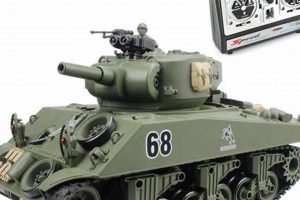
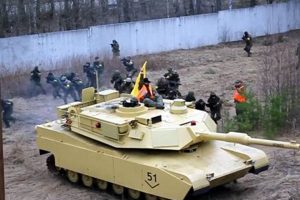
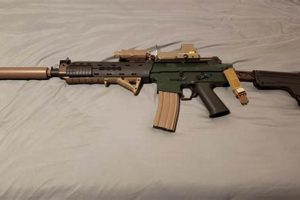
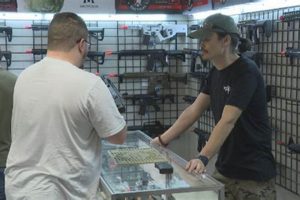
A temporary, often mobile, form of the airsoft experience, this setup typically involves establishing a playing field in a location not normally designated for airsoft activities. These events can occur in diverse environments, ranging from private land to rented warehouses or outdoor spaces secured for a limited duration. For example, a local airsoft group might organize a weekend event in a wooded area with the landowner’s permission, creating a playing field with temporary barriers and objectives.
The significance of these events lies in their ability to introduce airsoft to new players and provide seasoned enthusiasts with varied gameplay scenarios. This approach can overcome limitations posed by fixed airsoft fields, such as geographical constraints or repetitive layouts. Historically, these spontaneous gatherings have fostered a sense of community and innovation within the airsoft hobby, allowing players to explore tactical approaches in novel settings. They also provide flexibility in scheduling and location, catering to a broader audience.
The subsequent sections will delve into the logistical considerations involved in organizing such events, including site selection, safety protocols, and the equipment necessary for a successful and enjoyable experience. Furthermore, a discussion of the rules and gameplay variations commonly employed in these settings will be presented, alongside insights into promoting and managing these events to maximize participation and ensure a safe environment for all involved.
Tips for Successful Pop Up Airsoft Events
The following guidelines aim to enhance the safety, organization, and overall enjoyment of temporary airsoft engagements. Careful consideration of these points can mitigate risks and improve the experience for all participants.
Tip 1: Secure Comprehensive Site Permissions. Obtaining explicit written consent from the landowner or relevant authority is paramount. This documentation should outline the boundaries of the designated play area, permitted activities, and any stipulations regarding noise levels or environmental impact.
Tip 2: Implement Rigorous Safety Briefings. Prior to commencement, a thorough safety briefing must be conducted. This should cover mandatory eye protection, minimum engagement distances, prohibited areas, and emergency procedures. Visual aids, such as maps and diagrams, can reinforce understanding.
Tip 3: Establish Clear Boundaries and Markings. The perimeter of the playing field must be clearly demarcated using highly visible tape, cones, or other barriers. Warning signs should be posted to alert non-participants of ongoing airsoft activities.
Tip 4: Enforce Strict Velocity Limits. All airsoft guns must be chronographed to ensure compliance with established velocity limits. A designated chronograph station with trained personnel is essential for enforcing this regulation.
Tip 5: Provide Adequate First Aid Provisions. A well-stocked first-aid kit, including supplies for treating common airsoft injuries such as welts and sprains, should be readily accessible. Designated first-aid personnel with appropriate certifications should be present.
Tip 6: Maintain Effective Communication Channels. Establishing a clear communication system, such as two-way radios, is vital for coordinating game play, responding to emergencies, and disseminating information to participants.
Tip 7: Adhere to a Strict Waste Management Protocol. Implementing a system for collecting and disposing of BBs and other waste materials is crucial for maintaining the environmental integrity of the site. Participants should be encouraged to practice a “leave no trace” philosophy.
These guidelines promote a safer, more organized, and more enjoyable temporary airsoft experience. Adherence to these recommendations enhances the reputation of the airsoft community and fosters positive relationships with landowners and the general public.
The final section will summarize the key considerations for promoting and managing these gatherings to ensure maximum participation and minimize potential challenges.
1. Location

Location is a foundational element for temporary airsoft engagements, exerting significant influence on gameplay dynamics, safety considerations, and the overall feasibility of an event. The selection of a suitable site directly impacts the tactical opportunities available to players. For instance, a wooded area with natural cover will necessitate different strategies compared to an open field requiring the construction of artificial barriers. Furthermore, the geographical characteristics of the location influence the type of game modes that can be effectively implemented. A large, sprawling terrain might be suitable for long-range scenarios, while a smaller, more confined space may be better suited for close-quarters combat.
The importance of location extends beyond mere gameplay. The suitability of the site also dictates the level of safety protocols required. Locations with uneven terrain or natural hazards necessitate stricter safety briefings and potentially more rigorous equipment checks. Furthermore, securing explicit permission from the landowner or relevant authority is paramount before conducting any activities. Failure to obtain proper authorization can result in legal repercussions and damage the reputation of the airsoft community. A real-world example includes an instance where an unsanctioned event on private property led to legal action and negative publicity for the organizers. Consequently, the selection process must prioritize not only the gameplay possibilities but also the legal and safety implications.
Ultimately, the connection between location and temporary airsoft operations is inextricable. A well-chosen location provides an engaging and safe environment for players, while a poorly selected site can lead to logistical challenges, safety hazards, and potential legal issues. Recognizing the practical significance of this understanding is essential for organizers seeking to create successful and responsible airsoft experiences. The subsequent consideration of factors such as accessibility, environmental impact, and noise pollution are vital for ensuring the long-term sustainability of this type of activity.
2. Safety

The inherent nature of temporary airsoft activities necessitates a heightened emphasis on safety protocols. Unlike established airsoft fields with permanent safety infrastructure, temporary venues often lack pre-existing safety features. This absence introduces potential hazards requiring proactive mitigation. For example, a wooded area used for a single event may contain unseen obstacles such as fallen branches or hidden holes, increasing the risk of trips and falls. The temporary nature of these events also means that safety briefings and equipment checks are crucial, as participants may be unfamiliar with the specific terrain or regulations of the impromptu playing field.
The impact of inadequate safety measures can be significant. Injuries ranging from minor abrasions to serious eye damage are possible outcomes of lax enforcement of safety rules or insufficient player awareness. Instances of eye injuries due to improper eye protection have underscored the critical importance of mandatory and verifiable protective gear. Furthermore, unsecured boundaries can lead to unintentional encounters with non-participants, potentially resulting in accidents and legal liabilities. The absence of clearly defined safe zones and designated first-aid personnel can also delay necessary medical assistance in the event of an injury.
In summary, safety is not merely a procedural requirement for temporary airsoft skirmishes; it is a fundamental component that dictates the ethical and responsible practice of the activity. A comprehensive safety plan, encompassing thorough site assessments, rigorous equipment inspections, detailed safety briefings, and readily available medical support, is essential for minimizing risks and ensuring the well-being of all participants. Prioritizing safety safeguards the integrity of the airsoft community and fosters positive relationships with landowners and local authorities.
3. Organization
Organization constitutes a critical determinant of success for temporary airsoft events. Unlike established fields, these undertakings necessitate meticulous planning and execution to ensure a safe and enjoyable experience. Poor organization directly translates to increased risks, diminished player satisfaction, and potential legal liabilities. The absence of a structured registration process, for instance, can lead to unverified participants, increasing the likelihood of rule violations or safety breaches. Similarly, inadequate game planning and coordination can result in chaotic gameplay, player dissatisfaction, and a compromised overall experience. An example is a poorly planned event where lack of communication between teams led to numerous disputes and an early termination of the game.
Effective organization extends beyond gameplay to encompass logistical considerations. Site preparation, including boundary demarcation and hazard mitigation, requires a coordinated effort. Equipment management, such as chronographing and safety gear inspections, demands a systematic approach. Furthermore, effective communication channels must be established to facilitate coordination during the event and to address any emergencies that may arise. A well-defined chain of command and clear roles and responsibilities are essential for efficient problem-solving and ensuring the smooth execution of the event. Practical applications include utilizing checklists for equipment inspection, pre-event site surveys to identify potential hazards, and designated personnel responsible for specific tasks, such as first aid and rule enforcement.
In summary, organization is not merely an administrative detail but rather an indispensable component of responsible temporary airsoft engagement. It directly influences safety, player satisfaction, and the overall viability of the event. Overcoming organizational challenges requires proactive planning, clear communication, and a commitment to meticulous execution. These efforts translate to a safer, more enjoyable, and ultimately more successful experience for all participants, contributing positively to the airsoft community and mitigating potential negative consequences. A strong organizational foundation ensures that the focus remains on the gameplay and camaraderie, rather than logistical shortcomings.
4. Legality

Adherence to legal frameworks is non-negotiable when organizing temporary airsoft engagements. The absence of proper legal consideration can result in severe penalties, including fines, legal action, and the potential cessation of activities. The following facets detail critical legal aspects to consider.
- Local Ordinances and Regulations
Airsoft activities are subject to local ordinances governing firearms, noise pollution, and public gatherings. Before conducting an event, a thorough understanding of these regulations is essential. For example, certain jurisdictions may require permits for outdoor recreational activities or have restrictions on the discharge of airsoft guns in public areas. Failure to comply can lead to legal repercussions and community disapproval. Investigation into local laws should be standard practice prior to establishing the location of engagement.
- Property Rights and Permissions
Gaining explicit written consent from the landowner or relevant authority is paramount. This documentation should clearly outline the permitted activities, boundaries of the designated play area, and any stipulations regarding usage. Unauthorised use of private or public property constitutes trespassing, which is a legal offense. An example includes an instance where an event on private property without owners consent led to legal action, highlighting the importance of adherence to property laws.
- Insurance Coverage
Obtaining adequate liability insurance is crucial for mitigating potential financial risks associated with injuries or property damage. Standard homeowner’s or business insurance policies may not cover airsoft activities. Specialized insurance policies designed for recreational events can provide coverage for personal injury, property damage, and legal defense costs. The cost of such a policy is a necessary operational expense.
- Age Restrictions and Consent
Enforcing age restrictions and obtaining parental consent for minors are vital legal safeguards. Minors participating in airsoft activities require the explicit written consent of their parents or legal guardians. These forms should detail the risks involved and acknowledge that the participant is physically fit to participate. Legal liability increases significantly if minors are involved without appropriate consent or supervision.
These legal considerations are not merely bureaucratic hurdles, but rather essential safeguards for protecting participants, organizers, and the community. Prioritizing legal compliance ensures the long-term sustainability of temporary airsoft events and demonstrates a commitment to responsible and ethical conduct. Diligence in this area minimizes risks and supports the continued enjoyment of the sport.
5. Community
Temporary airsoft gatherings are heavily dependent on a strong and engaged community for their viability and sustained success. The absence of a dedicated player base directly impacts the event’s attendance and overall atmosphere. The creation and maintenance of a cohesive community foster a sense of shared purpose, encouraging participation and cooperation. Positive community dynamics are crucial for attracting both experienced players and newcomers to the activity. This sense of belonging enhances the gameplay experience, promoting sportsmanship and fair play. A practical example involves airsoft groups leveraging online forums and social media platforms to organize events, share information, and build relationships amongst members. Such interactions pre- and post-event directly influence player turnout and the overall level of community engagement.
The community’s role extends beyond mere participation. It actively contributes to the planning and execution of events. Members often volunteer their time and resources to assist with site preparation, equipment maintenance, and rule enforcement. Collective problem-solving and shared responsibility contribute to the smooth operation of events, reducing the burden on individual organizers. Additionally, an established community provides a platform for mentorship and skill-sharing. Experienced players can guide newcomers, promoting safe practices and tactical proficiency. This knowledge transfer strengthens the community and ensures the perpetuation of responsible airsoft practices. The collective expertise and voluntary effort of the community is vital to the practical implementation of event logistics.
However, challenges exist in fostering and maintaining a thriving community. Internal conflicts, rule violations, and a lack of communication can negatively impact community cohesion. Active moderation, transparent decision-making, and consistent enforcement of community guidelines are essential for mitigating these issues. Furthermore, proactive efforts to recruit new members and engage with diverse player groups are necessary to ensure the long-term sustainability of the community. A strong community is not just beneficial but essential to the success of pop-up airsoft, as it contributes to all aspects of the experience, from event planning to ensuring a positive and safe playing environment.
Frequently Asked Questions About Temporary Airsoft Events
The following addresses common inquiries and concerns regarding the nature, logistics, and regulations surrounding temporary airsoft engagements.
Question 1: What distinguishes a temporary airsoft event from a permanent airsoft field?
A temporary airsoft event, frequently referred to as “pop up airsoft,” is characterized by its temporary nature. Unlike permanent fields, these events are held in locations not specifically designed or permanently designated for airsoft activities. They often occur on private land, rented spaces, or other areas secured for a limited duration.
Question 2: What legal considerations are paramount when organizing a temporary airsoft gathering?
Securing explicit written permission from the landowner or relevant authority is essential. Adherence to local ordinances governing firearms, noise pollution, and public gatherings is also crucial. Adequate liability insurance and enforcement of age restrictions, coupled with parental consent for minors, are further legal safeguards.
Question 3: What safety protocols must be implemented at temporary airsoft events?
Mandatory eye protection, strict velocity limits, and thorough safety briefings are indispensable. Clear boundary demarcation, adequate first-aid provisions, and effective communication channels are also vital for ensuring participant safety.
Question 4: How are potential hazards identified and mitigated at temporary airsoft locations?
Conducting a comprehensive site assessment is crucial for identifying potential hazards, such as uneven terrain or hidden obstacles. Implementing appropriate mitigation measures, such as clearing debris or marking hazardous areas, is necessary to minimize risks.
Question 5: What measures ensure fair play and prevent rule violations at temporary airsoft engagements?
Enforcing established rules, implementing a clear refereeing system, and promoting sportsmanship are essential. Utilizing chronographing to ensure compliance with velocity limits and addressing any disputes promptly and impartially are also critical.
Question 6: How can organizers attract participants and build a community around temporary airsoft activities?
Leveraging online forums, social media platforms, and local airsoft groups to promote events is effective. Offering diverse game modes, fostering a welcoming atmosphere, and providing opportunities for skill-sharing can encourage participation and build a cohesive community.
In summary, successful temporary airsoft events require careful planning, a strong emphasis on safety, and adherence to legal frameworks. A vibrant community fosters engagement and promotes responsible airsoft practices.
The concluding section provides a concise summary of key insights for organizing and managing these temporary airsoft engagements.
Conclusion
This exploration of “pop up airsoft” underscores several critical components necessary for its responsible and successful execution. The preceding sections detailed the legal obligations, the paramount importance of safety, the need for meticulous organization, and the dependence on a supportive community. Location selection was highlighted as a primary determinant of gameplay and safety considerations. The commitment to these elements defines the distinction between a well-managed temporary airsoft event and a potentially hazardous undertaking.
The future viability of “pop up airsoft” rests on the collective responsibility of participants and organizers alike. Adherence to established guidelines, respect for legal boundaries, and a dedication to creating a safe and inclusive environment are essential for ensuring its continued growth and acceptance within the broader community. Neglecting these principles risks undermining the positive aspects of the activity and potentially jeopardizing its long-term sustainability. The information presented serves as a practical guide for those seeking to contribute positively to the evolving landscape of temporary airsoft engagements.