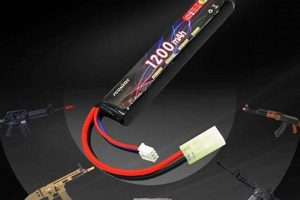
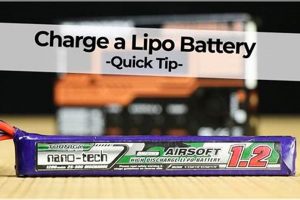
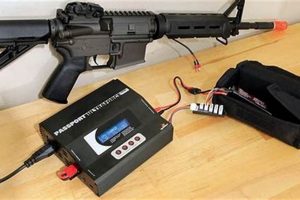
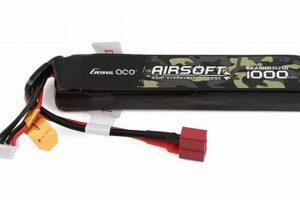
Lithium-ion power sources are utilized within the airsoft sport to energize electric-powered guns (AEGs). These compact, rechargeable units offer a higher energy density compared to traditional Nickel-Cadmium (NiCd) or Nickel-Metal Hydride (NiMH) batteries, leading to improved performance. As an example, a 7.4V lithium-ion pack provides consistent voltage output for sustained firing rates in an AEG.
The adoption of this technology significantly enhances gameplay due to increased responsiveness and reduced weight compared to older battery types. Its use allows for faster trigger response, higher rates of fire, and prolonged operational periods between charges. Initially, airsoft guns primarily relied on NiCd batteries, but advancements in battery technology and the pursuit of greater efficiency led to the widespread adoption of lithium-ion solutions. This evolution has empowered players with more reliable and potent equipment.
Subsequent sections will delve into the specifics of selecting the appropriate type for a given airsoft gun, safe charging practices, storage guidelines, and potential safety considerations. Additionally, the impact on AEG performance and lifespan will be explored.
Essential Guidance for Utilizing Lithium-Ion Power in Airsoft
This section provides crucial guidelines for maximizing performance and ensuring the longevity of lithium-ion power sources within the airsoft context. Adhering to these principles is paramount for safety and optimal AEG functionality.
Tip 1: Voltage Compatibility is Critical: Verify that the voltage rating of the lithium-ion power unit matches the specifications of the airsoft gun’s gearbox. Using an incompatible voltage can result in irreparable damage to the motor or other internal components.
Tip 2: Employ a Balance Charger: A balance charger is essential for maintaining individual cell equilibrium within the battery pack. This prevents overcharging of some cells and undercharging of others, extending the battery’s lifespan and minimizing safety risks.
Tip 3: Avoid Deep Discharging: Allowing a lithium-ion power source to fully discharge can significantly reduce its capacity and overall lifespan. Disconnect the battery from the airsoft gun before it is completely drained. Many smart chargers can monitor voltage level and automatically shut off the battery to prevent deep discharge.
Tip 4: Optimal Storage Practices: When not in use, store the battery in a cool, dry location, ideally at a storage voltage of approximately 3.8V per cell. Avoid exposing the battery to extreme temperatures or direct sunlight.
Tip 5: Regular Inspection for Damage: Routinely inspect the battery for physical damage, such as swelling, punctures, or frayed wires. Do not use a damaged battery, as it presents a significant safety hazard.
Tip 6: Monitor During Charging: Never leave a lithium-ion power unit unattended while charging. Observe the charging process and immediately disconnect the battery if any abnormalities, such as overheating or swelling, are detected.
Tip 7: Utilize Appropriate Connector Types: Ensure the airsoft gun and the power unit connector match, like a Tamiya or Deans connector. This assures that a stable and efficient electrical connection is created, minimizing the risk of electrical arcing or overheating.
By following these guidelines, users can maximize the performance, lifespan, and safety of the lithium-ion energy sources in their airsoft equipment. These practices contribute to a safer and more enjoyable airsoft experience.
The concluding section of this article will address common troubleshooting scenarios and offer resources for further information and assistance.
1. Voltage and Compatibility

The operational effectiveness and longevity of airsoft guns are intrinsically linked to voltage compatibility when utilizing lithium-ion power. A mismatch between the battery’s voltage output and the airsoft gun’s designed operating voltage can result in a spectrum of adverse effects, ranging from diminished performance to catastrophic failure. For example, supplying an AEG designed for a 7.4V lithium-ion battery with an 11.1V battery can significantly increase the rate of fire but also potentially overstress the motor, gearbox, and wiring, leading to premature wear or immediate breakage. Conversely, undervolting the AEG may lead to sluggish performance and an inability to properly cycle the gearbox, thus rendering the equipment ineffective.
Lithium-ion packs commonly used in airsoft are available in varying voltage configurations, typically 7.4V, 9.6V, and 11.1V. Selecting the appropriate voltage for a given airsoft gun hinges on understanding the specifications provided by the manufacturer, gearbox ratings, and the desired performance characteristics. An informed decision necessitates considering the internal components of the airsoft gun and ensuring they are capable of handling the increased stress associated with higher voltage batteries. Modifying internal components, such as upgrading the motor and gears, may allow an airsoft gun to safely utilize a higher voltage battery, yielding a higher rate of fire and trigger response.
Therefore, diligent attention to voltage compatibility represents a crucial aspect of maintaining the operational integrity of airsoft guns powered by lithium-ion batteries. A thorough understanding of the airsoft gun’s requirements, coupled with a cautious approach to voltage selection, helps prevent damage and optimizes performance, thus prolonging the equipment’s useful life.
2. Charging Protocols

Adherence to specified charging protocols is paramount for the safe and efficient operation of lithium-ion power solutions within the airsoft context. Deviation from these protocols can result in decreased battery lifespan, diminished performance, or, in extreme cases, thermal runaway and potential fire hazards. Correct charging procedures optimize energy transfer and maintain cell stability, thus prolonging battery serviceability.
- Balance Charging
Balance charging is a critical procedure where individual cells within a multi-cell lithium-ion pack are charged to the same voltage level. Without balance charging, one or more cells may become overcharged while others remain undercharged, leading to reduced overall capacity and accelerated degradation. Dedicated balance chargers monitor and adjust the charging current to each cell independently, ensuring optimal charge distribution and cell longevity. This is particularly relevant in airsoft, where high discharge rates can exacerbate cell imbalance.
- Appropriate Charger Selection
The charger employed must be specifically designed for lithium-ion batteries and compatible with the voltage and cell configuration of the power unit being charged. Using an incorrect charger can lead to overcharging, undercharging, or cell damage. Chargers designed for other battery chemistries, such as NiMH or NiCd, are not suitable for lithium-ion solutions and can cause irreversible damage. Proper charger selection ensures that the appropriate charging parameters are utilized.
- Charging Current Limits
Exceeding the recommended charging current for a lithium-ion pack can generate excessive heat and stress on the cells, resulting in decreased lifespan and potential safety hazards. Charging current is typically specified as a “C-rate,” where 1C represents a charging current equal to the battery’s capacity. For example, a 1600mAh battery charged at 1C would receive a charging current of 1.6A. Adhering to the manufacturer’s recommended C-rate is vital for maintaining battery health. Most batteries used in airsoft has charging rate of 1c – 5c.
- Voltage Cut-Off Thresholds
A lithium-ion charger must incorporate a voltage cut-off threshold to prevent overcharging. Overcharging occurs when the voltage of a cell exceeds its maximum allowable limit, leading to cell damage, capacity reduction, and potential thermal runaway. The charger should automatically terminate the charging process when the battery reaches its fully charged voltage, typically around 4.2V per cell. Reliable voltage cut-off mechanisms are crucial for ensuring the safety and longevity of lithium-ion packs used in airsoft applications.
These protocols are foundational to the successful integration of lithium-ion technology within the airsoft domain. Adhering to balance charging principles, selecting appropriate chargers, respecting current limits, and ensuring voltage cut-off thresholds are met are crucial for maximizing performance, extending battery lifespan, and minimizing safety risks associated with the use of lithium-ion power sources in airsoft equipment.
3. Storage Conditions

Proper storage directly impacts the performance, lifespan, and safety of lithium-ion energy sources used in airsoft. Suboptimal storage conditions can accelerate degradation, reduce capacity, and increase the risk of hazardous incidents. Understanding the nuances of battery storage is, therefore, essential for responsible airsoft practices.
- Temperature Control
Temperature is a primary factor affecting the long-term health of lithium-ion batteries. Elevated temperatures accelerate chemical degradation within the cells, leading to capacity loss and increased internal resistance. Conversely, extremely low temperatures can reduce the battery’s ability to deliver power and may cause irreversible damage if the battery is charged while frozen. The ideal storage temperature range typically falls between 15C and 25C. Storing packs in a cool, dry environment away from direct sunlight or heat sources is crucial for preserving battery integrity. For example, leaving batteries inside a hot car during the summer months can significantly reduce their lifespan and increase the risk of swelling or rupture.
- State of Charge (SoC)
The state of charge during storage also influences battery longevity. Storing lithium-ion packs at a full charge (100% SoC) can accelerate degradation, particularly at elevated temperatures. Conversely, storing at a completely discharged state can lead to irreversible damage and prevent the battery from accepting a charge in the future. The optimal storage state of charge typically falls between 30% and 50% of its full capacity. This balance minimizes stress on the battery cells and promotes long-term stability. Many smart chargers offer a “storage mode” that automatically charges or discharges the battery to the recommended storage voltage.
- Humidity Levels
High humidity levels can promote corrosion of electrical contacts and internal components within the battery pack. Moisture ingress can also lead to short circuits and premature failure. Storing batteries in a dry environment with low humidity is recommended. Using airtight containers or desiccant packs can further mitigate the risk of moisture-related damage. This is particularly important in regions with high humidity, where batteries are more susceptible to corrosion and degradation.
- Physical Protection
Protecting the battery from physical damage is crucial during storage. Impact, punctures, or crushing can compromise the integrity of the battery cells and lead to short circuits, thermal runaway, or electrolyte leakage. Storing batteries in protective cases or containers minimizes the risk of physical damage during handling and storage. Avoid stacking heavy objects on top of the batteries, and ensure they are stored in a secure location where they are unlikely to be accidentally damaged.
In summary, responsible storage practices are indispensable for maximizing the lifespan, performance, and safety of lithium-ion packs in airsoft. Temperature regulation, maintaining an optimal state of charge, controlling humidity, and providing physical protection are key considerations. Adhering to these guidelines minimizes the risk of battery degradation and potential hazards, ensuring a more reliable and safer airsoft experience.
4. Discharge Management

Effective discharge management is paramount to maximizing both the lifespan and operational safety of lithium-ion energy storage systems within airsoft applications. Uncontrolled discharge, characterized by excessive current draw or allowing the battery to reach critically low voltage levels, can lead to irreversible damage to the cells, rendering them unusable and potentially creating hazardous conditions. Discharge management, therefore, comprises a series of strategies and safeguards designed to mitigate these risks. For example, sustained high rates of fire in an AEG place significant demand on the battery, necessitating the use of batteries with adequate discharge ratings and potentially requiring active cooling solutions in extreme scenarios. The absence of appropriate management strategies diminishes the reliability and longevity of the lithium-ion power source, undermining the performance of the airsoft gun.
Practical implementation of effective discharge management involves several key considerations. One crucial aspect is understanding the “C-rating” of the battery, which indicates its maximum safe continuous discharge current. Exceeding this rating can cause overheating and cell damage. Another important element is monitoring the battery’s voltage during use. Smart chargers and battery monitors can provide real-time voltage readings and alert the user when the battery is approaching a critically low level. Implementing low-voltage cutoff systems within the airsoft gun’s electronic control unit (ECU) or using MOSFETs with built-in low-voltage protection can automatically disconnect the battery before it is fully discharged. Furthermore, understanding the internal resistance characteristics of the battery is crucial, because an increase in internal resistance could lead to overheating, thus early replacement can happen.
In conclusion, discharge management is an indispensable component of responsible lithium-ion energy use in airsoft. By adhering to recommended discharge ratings, closely monitoring voltage levels, and implementing appropriate cutoff systems, users can safeguard the health of their batteries, extend their operational lifespan, and minimize the risk of hazardous incidents. The challenges associated with discharge management are offset by the enhanced performance, reliability, and safety offered by lithium-ion technology, highlighting the practical significance of this understanding for the airsoft community.
5. Safety Precautions

The integration of lithium-ion power sources into airsoft necessitates strict adherence to safety protocols. These protocols mitigate inherent risks associated with lithium-ion technology, ensuring user safety and preventing equipment damage.
- Overcharge Prevention
Overcharging lithium-ion packs used in airsoft can lead to thermal runaway, resulting in fire or explosion. Utilizing chargers specifically designed for lithium-ion batteries and incorporating overcharge protection circuits is essential. Monitoring charging progress and immediately disconnecting the power source upon completion further minimizes risk. Leaving a charging battery unattended for extended periods is inadvisable. For instance, attempting to charge an 11.1V battery with a charger designed for 7.4V batteries will almost certainly result in overcharging and potential damage or combustion.
- Physical Damage Mitigation
Physical damage to lithium-ion cells, such as punctures or crushing, can cause internal short circuits, potentially leading to thermal runaway. Protecting batteries from impacts and sharp objects during storage and use is crucial. Inspecting batteries for signs of damage, such as swelling or deformation, before each use is also recommended. A battery that has been dropped or subjected to significant impact should be considered compromised and replaced. For example, if a bb directly hits the battery causing it to puncture it can cause fire due to electrolyte spillage and exposure to oxygen.
- Short Circuit Avoidance
Short circuits can generate significant heat, causing battery damage or fire. Preventing contact between battery terminals and conductive materials is paramount. Storing batteries in protective cases and avoiding loose wires or metal objects in proximity to the terminals reduces the risk of short circuits. If a short circuit does occur, immediately disconnect the power source and allow the battery to cool down before handling it. As an example, using metal tools to remove batteries from tightly packed compartments can inadvertently create a short circuit, so the use of insulated tools is highly recommended.
- Proper Disposal Procedures
Lithium-ion batteries contain materials that can be harmful to the environment if improperly discarded. Disposing of batteries in regular trash can lead to leakage of hazardous substances and environmental contamination. Following local regulations for recycling or disposing of lithium-ion batteries is essential. Many retailers and recycling centers offer collection programs for used batteries. As an example, some manufacturers offer take-back programs where they accept used batteries for proper disposal, ensuring that valuable materials are recovered and hazardous substances are managed responsibly. This promotes environmentally responsible behavior and minimizes the potential for negative impacts.
These safety precautions are not optional considerations but are integral to the safe and responsible use of lithium-ion power within the context of airsoft. Diligent adherence to these guidelines minimizes the potential for accidents and promotes a safer environment for all participants.
Frequently Asked Questions
This section addresses common inquiries regarding the use of lithium-ion batteries within the airsoft sport, providing concise and informative answers.
Question 1: What voltage battery is suitable for a stock airsoft gun?
The appropriate voltage depends on the AEG’s specifications. Generally, 7.4V lithium-ion batteries are a safe starting point for stock AEGs. Consulting the manufacturer’s recommendations is always advisable.
Question 2: How often should lithium-ion batteries be replaced?
The lifespan depends on usage and storage conditions. Typically, with proper care, a lithium-ion battery used in airsoft can last for 1-3 years before performance noticeably degrades.
Question 3: Can different brands of lithium-ion batteries be used interchangeably in the same airsoft gun?
Yes, provided they meet the voltage and connector requirements of the airsoft gun and possess sufficient discharge capability.
Question 4: What risks exist charging lithium-ion units?
Overcharging, using an incorrect charger, and charging damaged batteries carry the risk of fire or explosion. Employing a balance charger and adhering to recommended charging parameters are essential.
Question 5: Is it essential to use a battery with a high discharge rate in the field?
A higher discharge rate is necessary only if the airsoft gun needs it. Airsoft guns with lower voltage and rate of fire typically can live with lower discharge rates.
Question 6: Does lithium-ion care vary by gun or AEG model?
The fundamental principles of lithium-ion care (voltage, charging, storage, safety) remain consistent. However, specific AEG models may have unique battery compartment sizes or connector types, which require consideration.
Proper handling and maintenance of lithium-ion power sources are vital for ensuring optimal performance and safety in airsoft.
The final section of this article outlines troubleshooting steps for common lithium-ion related issues in airsoft guns.
Li Ion Battery Airsoft
This article has provided a comprehensive overview of lithium-ion battery technology as applied within the airsoft sport. Essential considerations have been detailed, spanning voltage compatibility, charging protocols, storage conditions, discharge management, and overarching safety precautions. Understanding and implementing these guidelines is not merely preferential, but fundamental for maintaining equipment performance, prolonging battery lifespan, and, most critically, ensuring player safety.
As airsoft technology advances, lithium-ion solutions will likely remain a primary power source. Prioritizing the safety measures and guidelines outlined herein is paramount. Continued awareness and education within the airsoft community regarding responsible utilization of these energy systems will foster a safer and more sustainable sporting environment.