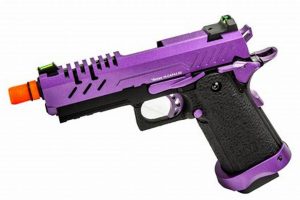
The practice of operating an airsoft gun without a projectile loaded in the magazine or chamber is a common point of discussion among players and technicians. This action, specifically pulling the trigger and releasing the internal mechanisms when the gun is unloaded, generates concerns about potential damage and reduced performance over time. The debate centers on whether the resulting impact on internal components, without the cushioning of a BB, accelerates wear and tear.
Understanding the mechanics of airsoft guns is crucial in assessing the impact of this practice. The repeated release of the piston and other moving parts against their stops can cause stress fractures, deformation of seals, and weakening of springs. This, in turn, could lead to reduced air compression, inconsistent firing velocities, and ultimately, the failure of critical gun components. Prior to the widespread adoption of airsoft, similar concerns existed regarding firearms, highlighting the long-standing awareness of mechanical stress resulting from unloaded firing.
Consequently, the following discussion will delve into the specific components most vulnerable to wear from this practice, the different types of airsoft guns and their susceptibility, and provide best practices for maintaining airsoft gun performance and longevity. These practices aim to mitigate potential damage and ensure optimal operation of the equipment.
Mitigating Potential Damage
The following guidelines are designed to minimize the potential negative consequences associated with operating an airsoft gun without a BB, thereby prolonging the lifespan and maintaining the performance of the equipment.
Tip 1: Employ Caution with Gas Blowback Systems: Gas Blowback (GBB) pistols and rifles rely on gas pressure for cycling. Repeated operation without a BB can overstress the nozzle, loading arm, and other gas system components. Minimize unloaded operation with GBB airsoft guns.
Tip 2: Exercise Restraint with Electric Guns (AEGs): Although AEGs are generally more robust, the impact of the piston head against the cylinder head without a BB buffer can still induce stress. Limit the frequency of unloaded firing, especially with high-performance or upgraded AEGs.
Tip 3: Consider the Spring Power: Airsoft guns with higher spring power ratings are often more susceptible to damage. The increased force generated by the piston can exacerbate the impact on internal components during unloaded operation. Heed extra caution.
Tip 4: Implement Regular Maintenance: Proper lubrication and maintenance are crucial for all airsoft guns. Regularly inspect internal components for signs of wear or damage, paying particular attention to the piston head, cylinder head, and hop-up bucking. Address any issues promptly.
Tip 5: Utilize Decompression Levers (Where Available): Certain airsoft guns feature decompression levers or buttons. These mechanisms release the spring tension without operating the entire firing cycle. Utilize these features when storing or disassembling the airsoft gun.
Tip 6: Prioritize Responsible Storage: Store airsoft guns in a manner that prevents accidental trigger actuation. Consider unloading the magazine and ensuring the selector switch is set to “safe” to prevent unintentional operation.
Tip 7: Consult Manufacturer Guidelines: Refer to the airsoft gun manufacturer’s instructions for specific recommendations regarding operation and maintenance. Adhering to these guidelines can help prevent potential damage and maintain warranty coverage.
Adherence to these guidelines reduces the risks associated with unloaded operation, contributing to the extended operational life and consistent performance of airsoft guns.
The final section will explore alternative methods for testing or troubleshooting airsoft guns without resorting to unloaded operation, ensuring safe and responsible handling practices.
1. Component Stress

The operation of an airsoft gun without a projectile, commonly referred to as ‘dry firing,’ induces stress on its internal components. This stress stems from the lack of cushioning typically provided by the BB during the firing cycle. The repetitive impact of internal parts without this buffer can lead to premature wear, deformation, and eventual failure.
- Piston and Cylinder Head Impact
Within an AEG (Automatic Electric Gun), the piston, driven by a spring, slams forward to compress air within the cylinder. During normal operation, the BB absorbs a portion of this energy. However, when dry firing, the full force of the piston impacts the cylinder head directly. This repeated high-energy impact can deform the cylinder head, crack the piston head, and stress the piston assembly, potentially shortening its lifespan. Examples of damage include cracks on the cylinder head’s rubber buffer, or a sheared-off piston head.
- Gearbox Stress in AEGs
The gearbox, the heart of an AEG, houses the gears responsible for compressing the spring and driving the piston. During dry firing, the sudden deceleration of the gears, without the usual energy transfer to the BB, can induce stress on the gear teeth and bearings. Over time, this can lead to gear stripping, bearing failure, and cracking of the gearbox shell itself. The audible “whine” from a stressed gearbox can be an early indicator of this type of damage.
- Nozzle and Loading Nozzle Stress in GBBs
In Gas Blowback (GBB) airsoft guns, the nozzle is responsible for loading the BB into the chamber and directing the gas behind it to propel it forward. During dry firing, the nozzle extends fully without encountering the resistance of a BB. This sudden stop can stress the nozzle’s plastic or metal components, leading to cracking or breakage. The loading nozzle, responsible for feeding BBs from the magazine, can also experience similar stress during repeated dry firing, leading to feed malfunctions. A common symptom is inconsistent gas seal, causing erratic power output.
- Spring Fatigue
Regardless of the airsoft gun type, the mainspring experiences compression and decompression during the firing cycle. Repeated dry firing cycles can accelerate spring fatigue, leading to a reduction in spring strength and, consequently, a decrease in the gun’s firing velocity (FPS). Over time, a spring subjected to frequent dry firing may lose its ability to deliver consistent and powerful shots. This manifests as lower and more variable FPS readings over the chronograph.
These examples of component stress illustrate the potential negative effects of dry firing on airsoft guns. While occasional unloaded operation may not cause immediate and catastrophic failure, the cumulative effect of repeated stress can significantly reduce the lifespan and performance of these intricate mechanisms. By understanding the risks associated with dry firing, users can adopt responsible handling and maintenance practices to mitigate component stress and prolong the operational life of their equipment.
2. Piston Damage

Piston damage is a direct consequence of repeated actuation without a projectile, an instance recognized as “is dry firing a airsoft gun bad.” Airsoft gun pistons are engineered to withstand impacts while propelling a BB. The BB absorbs a significant portion of the impact energy. When no BB is present, the piston strikes the cylinder head with considerably more force. This intensified impact, sustained over repeated cycles, induces stress fractures, deformation, and eventual breakage of the piston body or its components, such as the piston head. The absence of a BB shifts the entire impact burden onto the piston assembly, thereby escalating the risk of damage.
Specifically, the piston head, often constructed of polymer or aluminum, is vulnerable to cracking or shattering. The O-ring, responsible for maintaining an airtight seal within the cylinder, can deform or tear under the increased stress. In scenarios involving upgraded or high-performance airsoft guns, the higher spring pressures exacerbate the impact force, accelerating piston degradation. A fractured piston head compromises air compression, leading to a noticeable reduction in firing power and inconsistent shot velocity. A damaged O-ring results in air leakage, further diminishing performance. An airsoft technician, upon disassembly of a frequently dry-fired AEG, may observe cracks in the piston head, a flattened O-ring, or even a completely fractured piston body.
Understanding the connection between unloaded actuation and piston deterioration holds practical significance for airsoft gun maintenance. By minimizing the frequency of dry firing, players can significantly extend the lifespan of their piston assemblies. Regular inspection of the piston and related components is recommended, particularly in airsoft guns subjected to frequent dry firing. Implementing preventive measures, such as using decompression levers where available, and refraining from unnecessary trigger pulls when the gun is unloaded, contributes to the overall longevity and consistent performance of the airsoft gun.
3. Seal Degradation

Seal degradation is a key consequence associated with the practice of operating an airsoft gun without a BB loaded, often queried under the phrase “is dry firing a airsoft gun bad.” Within airsoft gun mechanisms, seals, typically O-rings or similar pliable materials, ensure airtight compression between components such as the piston head and cylinder. This airtight seal is paramount for efficient power transfer and consistent projectile velocity. When an airsoft gun is fired without a BB, the piston strikes the cylinder head with increased force, as the usual energy absorption by the BB is absent. This intensified impact subjects the seals to significantly higher stress and pressure.
Over time, this repeated over-compression causes the seals to deform, crack, or lose their elasticity. The degradation is further accelerated by heat generated from friction during the rapid piston movement within the cylinder. The compromised seal allows air leakage, diminishing the efficiency of the air compression. This manifests as reduced firing power, inconsistent shot-to-shot velocity, and, in some cases, complete failure of the airsoft gun to cycle properly. For example, a gas blowback pistol may exhibit significantly reduced gas efficiency, requiring more frequent magazine refills, while an AEG may experience a dramatic drop in FPS. Experienced airsoft technicians often find flattened or cracked piston head O-rings in airsoft guns that have been extensively subjected to dry firing.
Understanding the link between unloaded operation and seal degradation underlines the importance of responsible airsoft gun handling. Minimizing this action is crucial for maintaining optimal performance and prolonging the lifespan of the gun’s internal components. Regular maintenance, including lubrication of seals and periodic inspection for signs of wear or damage, further mitigates the negative effects. By addressing the potential for seal degradation, airsoft enthusiasts can uphold consistent performance and avoid costly repairs, supporting the sustainable use of their equipment.
4. Spring Fatigue

Spring fatigue, the gradual weakening of a spring’s ability to exert force, is intrinsically linked to the practice of operating an airsoft gun without a projectile, commonly addressed by the question “is dry firing a airsoft gun bad”. This is because the spring, a critical component in most airsoft gun designs, undergoes repeated compression and decompression cycles during operation. When an airsoft gun is discharged without a BB, the spring experiences an unmitigated release of energy. Under normal operation, a portion of this energy propels the BB, which provides resistance and cushions the spring’s return to its resting state. The absence of this resistance during dry firing results in a more abrupt and forceful impact on the spring’s end stops. Over time, these repeated, unchecked impacts cause microscopic structural changes within the spring material, diminishing its spring constant and ability to store energy. The direct consequence is a reduction in the airsoft gun’s firing velocity (FPS) and a decrease in its overall power output.
A tangible example of spring fatigue can be observed by comparing the FPS of a new AEG (Automatic Electric Gun) spring versus one that has been subjected to frequent dry firing. A new spring might consistently deliver 350 FPS, while a spring used extensively for dry firing could exhibit a drop to 320 FPS or lower. Furthermore, the consistency of shots degrades, as the weakened spring provides less predictable energy output. In gas blowback systems, the recoil spring can similarly degrade, resulting in weaker blowback action and cycling issues. Certain spring materials, such as lower-grade steel, are more susceptible to fatigue than others. Therefore, upgraded springs made of higher-quality alloys are often recommended for users concerned about maintaining performance over extended periods. Observing variations in projectile trajectory and diminished range are further indicators that spring fatigue is affecting performance.
In summation, understanding the effects of dry firing on spring fatigue is crucial for responsible airsoft gun maintenance. While occasional unloaded operation is unavoidable, minimizing the frequency of dry firing significantly contributes to prolonging the lifespan of the spring and maintaining the consistent performance of the airsoft gun. Implementing proper storage techniques, such as decompressing the spring when the gun is not in use (if possible), and considering higher-quality spring replacements are proactive measures to mitigate spring fatigue. Addressing this concern ensures greater longevity and dependable performance, highlighting the practical importance of considering “is dry firing a airsoft gun bad.”
5. Accuracy Loss
Accuracy loss, a critical detriment to performance, is indirectly related to the act of dry firing an airsoft gun. While dry firing itself does not immediately and directly alter the trajectory of a projectile, the repeated stress and wear it inflicts on internal components contribute to decreased accuracy over time. This connection stems from the degradation of key parts responsible for consistent projectile delivery and hop-up functionality. Therefore, addressing “is dry firing a airsoft gun bad” becomes relevant in understanding long-term precision degradation.
The hop-up unit, responsible for imparting backspin to the BB for increased range and stable flight, is particularly susceptible to negative effects. Dry firing, as previously detailed, increases stress on the piston and cylinder head. The vibrations and impacts resulting from these stresses can gradually shift the position of the hop-up unit, alter the hop-up bucking’s alignment, or damage the bucking itself. A misaligned or damaged hop-up bucking results in inconsistent backspin, causing BBs to deviate from their intended trajectory, leading to both horizontal and vertical dispersion. Similarly, repeated impacts can loosen the barrel within its housing, introducing wobble and further reducing shot-to-shot consistency. Furthermore, weakened internal components, like the spring, lead to decreased and inconsistent FPS. Variations in muzzle velocity directly impact the BB’s flight path, contributing to a wider spread pattern. The combined effect of these subtle degradations cumulatively translates into a noticeable loss of accuracy over time. For instance, an airsoft rifle initially capable of consistently hitting a target at 50 meters might experience significant difficulty hitting the same target after prolonged dry firing, necessitating repairs or part replacements.
In conclusion, while dry firing is not a direct cause of accuracy loss, it serves as an accelerant in the degradation of internal components that are crucial for maintaining accuracy. The gradual deformation, misalignment, and weakening of these components negatively impact shot-to-shot consistency, leading to noticeable reductions in precision. Therefore, minimizing the frequency of dry firing, coupled with regular maintenance and inspection of key components, is essential for preserving the accuracy and overall performance of an airsoft gun. Addressing concerns surrounding is dry firing a airsoft gun bad is inherently linked to maintaining the weapon’s precision and intended functionality.
6. Gas System Strain
Gas system strain, a critical concern for gas-powered airsoft guns, relates directly to the question of “is dry firing a airsoft gun bad.” The repetitive cycling of internal components without a projectile introduces undue stress on various parts of the gas system, potentially leading to accelerated wear and performance degradation. Understanding the specific areas of strain is essential for maintaining the longevity and optimal function of these airsoft guns.
- Nozzle Stress and Cracking
The nozzle, responsible for loading BBs into the chamber and directing gas to propel them, experiences significant stress during each firing cycle. Dry firing exacerbates this stress as the nozzle extends fully without encountering the resistance of a BB. This abrupt stop can lead to cracking or breakage, particularly in nozzles made from polymer materials. The nozzle’s integrity is vital for consistent gas seal and efficient BB loading; compromised nozzles result in misfeeds and reduced power output. Frequent dry firing accelerates nozzle fatigue, potentially necessitating premature replacement.
- Magazine Valve Wear
Gas magazines rely on intricate valve systems to regulate gas flow. During a normal firing cycle, a metered amount of gas is released to propel the BB. However, dry firing places additional strain on the magazine valve as the gun attempts to cycle without a BB present. The valve may repeatedly snap open and shut, leading to wear and potential leaks. These leaks reduce gas efficiency and contribute to inconsistent FPS. Damaged magazine valves can significantly impair the overall performance of a gas blowback airsoft gun.
- Hammer and Sear Fatigue
The hammer and sear mechanism releases the gas valve within the magazine. Dry firing subjects these components to repetitive impact and friction. Over time, this leads to fatigue and potential rounding of the sear engagement surfaces. A worn sear can cause inconsistent gas release, resulting in erratic firing power or complete failure to cycle. Maintaining the proper engagement and condition of the hammer and sear is crucial for reliable gas system operation.
- Gas Route Bucking Damage
The gas route bucking in a GBB airsoft gun is the rubber piece that seals the connection between the magazine and the hop-up chamber. When dry firing, the nozzle slams forward with more force than normal, because there is no BB to slow it down, causing more stress on the bucking. This causes the bucking to lose its sealing ability and can also result in cracking over time. A compromised bucking results in inconsistent gas output, which leads to poor FPS and accuracy.
These specific examples of gas system strain highlight the importance of mitigating dry firing practices. Understanding these factors is directly relevant to addressing the query “is dry firing a airsoft gun bad.” While occasional dry firing may be unavoidable for maintenance or testing purposes, minimizing its frequency is crucial for preserving the longevity and optimal performance of gas-powered airsoft guns. Proper maintenance, including lubrication of moving parts and periodic inspection for signs of wear, further contributes to reducing gas system strain and ensuring reliable operation.
7. Longevity Reduction
The practice of dry firing, or operating an airsoft gun without a projectile, significantly contributes to the reduction of the equipment’s operational lifespan. The cumulative effect of stress and wear on internal components, resulting from repeated activation without the cushioning effect of a BB, directly impacts the long-term durability and performance of airsoft guns. This premature wear and tear ultimately necessitates repairs or complete replacement of the equipment, shortening its useful life. The question of “is dry firing a airsoft gun bad” is, therefore, directly tied to the lifespan of the airsoft gun.
- Accelerated Component Wear
Dry firing leads to increased friction and impact forces on internal parts. Pistons, gears, springs, and other mechanisms experience heightened stress without the energy absorption typically provided by the BB. This accelerated wear degrades the materials, leading to deformation, cracking, and eventual failure. For example, a piston head O-ring may flatten and lose its seal, or a spring may weaken and reduce firing power, all due to the amplified stress during dry firing cycles. This premature wear drastically reduces the time before component replacement is required.
- Compromised Material Integrity
Repeated impacts and vibrations caused by dry firing can compromise the structural integrity of various materials used in airsoft gun construction, especially polymers and softer metals. These materials become brittle over time and are more susceptible to cracking or breaking under stress. For instance, a plastic gearbox shell may develop hairline fractures, eventually leading to catastrophic failure. The reduction in material integrity directly contributes to a shorter operational lifespan of the airsoft gun.
- Increased Maintenance Frequency
Airsoft guns subjected to frequent dry firing require more frequent maintenance and component replacements. The accelerated wear on internal parts necessitates more regular inspections, lubrication, and repairs. This increased maintenance demand consumes more time and resources, and it also increases the likelihood of unexpected breakdowns. For example, a user who frequently dry fires may need to replace the piston head or bucking much sooner than someone who practices responsible handling, leading to higher operational costs and downtime.
- Decreased Resale Value
The practice of dry firing has implications beyond mere functionality and maintenance; it influences the resale value of the airsoft gun. Repeated actuation without a projectile leads to increased wear on internal components, potentially affecting the precision and overall performance. This impact diminishes the gun’s appeal to prospective buyers, resulting in a lower resale price. A well-maintained airsoft gun that has been used carefully, and not subjected to excessive dry firing, retains a higher value due to its prolonged lifespan and consistent performance, illustrating the financial implications of addressing “is dry firing an airsoft gun bad”.
In summation, dry firing, while seemingly innocuous, has far-reaching consequences on the lifespan of airsoft guns. The combination of accelerated wear, compromised material integrity, increased maintenance, and ultimately, reduced resale value, underscores the importance of responsible handling practices. Addressing the concern of “is dry firing a airsoft gun bad” is essential for maximizing the investment in airsoft equipment and ensuring long-term enjoyment of the sport.
Frequently Asked Questions
The following questions address common concerns regarding unloaded operation of airsoft guns. Understanding these concerns is crucial for responsible handling and maintenance.
Question 1: Does unloaded operation of an airsoft gun void its warranty?
The conditions for warranty coverage vary among manufacturers. Certain warranties explicitly exclude damage resulting from improper use, which may include repeated operation without a projectile. Consult the specific warranty terms for clarification.
Question 2: Are all airsoft gun types equally susceptible to damage from unloaded operation?
No. Gas blowback systems and high-powered spring airsoft guns are generally more vulnerable due to the increased stress on internal components. Electric airsoft guns tend to be more resilient, but still susceptible to damage over time.
Question 3: Is it ever necessary to operate an airsoft gun without a BB?
Limited unloaded operation may be required for diagnostic purposes, such as verifying mechanical function after maintenance. However, this should be minimized and performed with caution.
Question 4: Can unloaded operation damage the battery of an electric airsoft gun?
While the primary damage is mechanical, repeated cycling without a load can place undue strain on the motor and electrical system, potentially shortening battery lifespan. This is more pronounced in high-torque or upgraded systems.
Question 5: What are the alternatives to operating an airsoft gun without a BB for testing purposes?
Utilizing a chronograph to measure FPS with loaded magazines provides a more accurate assessment of performance. Alternatively, inspecting internal components for wear or damage during disassembly offers a direct evaluation of their condition.
Question 6: How does temperature affect the risk of damage during unloaded operation?
Extreme temperatures can exacerbate the effects of unloaded operation. Cold temperatures can make plastics brittle and more prone to cracking, while high temperatures can soften seals and reduce their effectiveness.
Minimizing unloaded operation and adhering to proper maintenance practices significantly contributes to the longevity and performance of airsoft guns. Refer to manufacturer guidelines for specific recommendations.
The following section will summarize best practices for airsoft gun handling and storage to maximize operational life.
Mitigating Risks
The preceding discussion has thoroughly explored the potential detriments associated with operating an airsoft gun without a projectile, commonly referred to as unloaded operation. Damage to internal components, particularly the piston, seals, and spring, leading to performance degradation and a shortened lifespan are significant concerns. These concerns are relevant in the context of addressing whether “is dry firing a airsoft gun bad.” Gas-powered systems are particularly susceptible to strain on the nozzle, magazine valves, and hammer mechanisms. Furthermore, the long-term effects can compromise accuracy and increase the frequency of required maintenance.
Responsible ownership necessitates minimizing occurrences of unloaded operation. Prioritizing proper storage, implementing regular maintenance schedules, and adhering to manufacturer guidelines are crucial for preserving equipment integrity and operational efficiency. Users are encouraged to adopt handling practices that promote longevity and reliable performance, thereby maximizing their investment and ensuring safe participation in the sport.