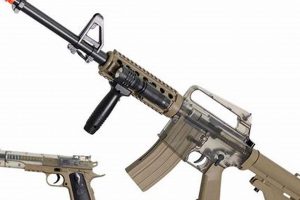
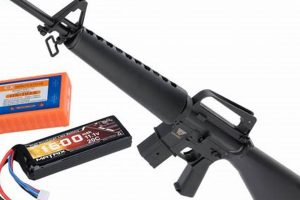
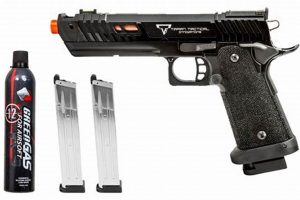
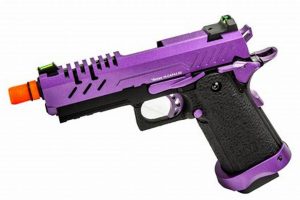
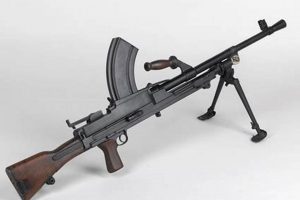
The act of altering an airsoft gun from its original factory configuration can encompass a broad spectrum of adjustments, ranging from simple cosmetic enhancements to complex internal upgrades. These alterations can be performed to improve performance metrics such as accuracy, range, and rate of fire, or to customize the aesthetic appearance of the replica firearm. An example includes replacing the inner barrel with a tighter bore model to enhance projectile trajectory, or installing a new motor for increased firing speed.
Modifications provide several advantages. Performance enhancements can translate to a more competitive edge in airsoft skirmishes. Aesthetically focused changes allow individuals to personalize their equipment, reflecting their individual style or replicating specific real-world firearms. Historically, the practice of altering these devices has evolved alongside the sport of airsoft itself, with innovations in aftermarket parts and techniques continually pushing the boundaries of what’s possible.
Understanding the nuances of upgrading components, selecting compatible parts, and employing proper installation techniques is essential for successful and safe alterations. Key considerations involve choosing the appropriate modification based on desired outcome, ensuring compatibility with the existing system, and adhering to safety guidelines throughout the process. This discussion will explore common modification categories, necessary tools, and important safety precautions.
Tips for Airsoft Gun Alteration
Successful airsoft gun modification requires careful planning, precise execution, and a thorough understanding of both the device’s mechanics and the potential consequences of each change. The following tips serve as guidelines for achieving desired performance enhancements and aesthetic customizations while maintaining safe operation.
Tip 1: Research Compatibility Thoroughly: Prior to purchasing any aftermarket parts, confirm their compatibility with the specific airsoft gun model. Manufacturer websites and online forums often provide compatibility charts and user reviews. Incorrectly matched components can lead to diminished performance or irreparable damage.
Tip 2: Prioritize Internal Upgrades for Performance: While aesthetic modifications offer visual appeal, internal alterations such as improved inner barrels, hop-up units, and motors generally yield more significant performance gains in terms of accuracy, range, and rate of fire.
Tip 3: Invest in Quality Tools: Using appropriate tools, such as precision screwdrivers and specialized pliers, is crucial for avoiding damage to delicate parts during disassembly and reassembly. Cheap or ill-fitting tools can strip screws and damage internal components.
Tip 4: Document the Disassembly Process: Take detailed photographs or videos during disassembly to serve as a reference guide for reassembly. This documentation helps prevent errors and ensures correct placement of internal components.
Tip 5: Test Modifications Incrementally: Implement upgrades one at a time, testing the gun’s performance after each modification. This incremental approach allows for easy identification of any issues or performance bottlenecks caused by a specific component.
Tip 6: Adhere to Local Regulations: Be aware of and comply with local laws and regulations regarding airsoft gun modifications. Some jurisdictions may have restrictions on power output, barrel length, or other modifications.
Tip 7: Maintain Regular Maintenance: After modification, consistently clean and lubricate internal components to ensure optimal performance and prolong the lifespan of the altered airsoft gun. Regular maintenance prevents malfunctions and maintains accuracy.
These tips highlight the importance of informed decision-making and careful execution. Prioritizing compatibility, quality tools, documentation, incremental testing, and regulatory compliance are key to achieving successful and safe airsoft gun modifications.
With these fundamental considerations in mind, the following sections will address specific modification categories in greater detail.
1. Compatibility

The concept of compatibility forms a foundational pillar when considering any alterations to an airsoft gun. It directly influences the success or failure of intended modifications. The cause-and-effect relationship is stark: incompatible components, when installed, can lead to decreased performance, mechanical failure, or, in some cases, complete inoperability of the airsoft gun. Compatibility issues can manifest in numerous ways. For example, installing a high-torque motor into a gearbox not designed to handle the increased stress can result in premature wear or breakage of internal gears. Similarly, attempting to use an air nozzle designed for a different brand or model of airsoft gun may lead to air leaks, thus reducing the gun’s power and range. Ignoring compatibility effectively undermines any effort to improve the airsoft gun.
Understanding compatibility necessitates research and adherence to manufacturer specifications. Airsoft gun manufacturers design their products with specific tolerances and component pairings in mind. Deviating from these established parameters without careful consideration can introduce unforeseen problems. A practical example involves upgrading the inner barrel. While a tighter bore barrel may improve accuracy, it also increases friction. If the air volume produced by the cylinder and piston assembly is insufficient, the BB may not accelerate properly, negating any potential accuracy gains. Instead, it may result in reduced range and inconsistent shots. Therefore, selection of the barrel must be done in conjunction with reviewing other performance parts.
In summary, compatibility serves as a crucial determinant in the viability of any modification attempt. Lack of attention to this factor frequently causes damage to the gun or reduces its original capabilities. The process requires verifying that all upgrades match the specifications of the particular model. It is necessary to research and test potential changes. This ensures the process leads to actual improvement in the device’s performance and durability. Ignoring these factors can compromise the airsoft gun’s functionality and negate the intended performance gains.
2. Performance Enhancement

Performance enhancement represents a primary objective within the realm of airsoft gun modifications. The pursuit of improved performancemeasured through metrics such as accuracy, range, rate of fire, and trigger responsemotivates many alterations. The relationship is direct: the degree to which a modification successfully addresses a specific performance limitation dictates its value. For example, installing a high-speed motor aims to increase the rate of fire. A tighter bore inner barrel is often utilized to enhance accuracy by minimizing projectile deviation. These modifications, when correctly implemented, directly contribute to elevated performance metrics. Performance enhancement, therefore, acts as a key driving force in decision-making when selecting and executing airsoft gun modifications.
Achieving genuine performance enhancement necessitates a systems-level understanding of the airsoft gun’s internal mechanics. Individual component upgrades, while potentially beneficial, may not yield the desired results unless they are appropriately matched to the existing configuration. For instance, upgrading the spring to increase power necessitates consideration of the piston, cylinder, and gearbox components to ensure they can withstand the increased stress. Failure to account for these interdependencies can lead to premature wear or failure of other parts. Further, modifications impacting rate of fire must consider the power supply. Batteries and wiring must be sufficient to handle the increased amperage draw. A comprehensive approach ensures that modifications work synergistically to deliver tangible performance gains. It minimizes the risk of creating bottlenecks or introducing new points of failure.
In conclusion, performance enhancement is inextricably linked to the practice of airsoft gun modifications. The efficacy of any modification hinges on its ability to address a specific performance deficit and deliver measurable improvements. A holistic approach, considering the interplay of various components and potential downstream effects, is paramount. Such considerations serve to guide modification efforts toward achieving meaningful performance enhancement while maintaining the overall reliability and longevity of the airsoft gun. The overarching goal is optimization without compromising the device’s integrity.
3. Safety Protocols
Safety protocols are a critical, inseparable element of airsoft gun modification. Ignoring or neglecting these protocols creates significant risk. Modifications alter the device’s original design. Consequently, factory-tested safety parameters may no longer be applicable. A modified gun could exceed safe operating limits, leading to component failure, projectile instability, or unintentional injuries. For example, an over-powered spring installed without reinforcing the gearbox increases the risk of gearbox shattering. This creates dangerous shrapnel. Protective eyewear is also a necessity. BB velocity increases pose greater risk to the eyes. Safety measures are essential to manage risks during and after the airsoft gun alteration.
Proper execution of airsoft gun modifications demands adherence to specific safety practices. Before commencing any modification, disengaging the power source, whether battery or gas cylinder, is paramount. This prevents accidental discharge. Throughout the modification process, wearing appropriate eye protection shields against flying debris or malfunctioning parts. Testing modifications should be conducted in a secure environment. A designated area prevents projectiles from causing unintended harm. A responsible approach to altering the inner workings is the standard.
In summary, integrating rigorous safety protocols is non-negotiable when modifying an airsoft gun. Modifications inherently change the performance parameters and potentially compromise factory safety standards. Adherence to these is essential. Proper safety measures minimize the risk of injury and maintain the integrity of the airsoft sport. The ethical responsibility of airsoft gun alterations involves protecting users. This creates a secure environment. Safety is the top priority in airsoft gun modification.
4. Regulation Compliance

Regulation compliance forms a critical and often overlooked aspect of modifying airsoft guns. Modifying these devices without adhering to legal and regulatory frameworks can result in serious legal repercussions, ranging from fines and confiscation to criminal charges. Therefore, a thorough understanding of applicable laws is paramount prior to undertaking any modifications.
- Velocity Restrictions
Many jurisdictions impose limits on the muzzle velocity of airsoft guns, typically measured in feet per second (FPS) with a standard weight BB. Modifications that increase velocity beyond these legal limits render the airsoft gun non-compliant and potentially illegal. Enforcement can occur at organized airsoft events or during transportation. Violations can lead to fines or legal action.
- Coloration Requirements
Some regions mandate that airsoft guns be readily distinguishable from real firearms. Regulations often require a blaze orange tip permanently affixed to the barrel. Modifications that remove or obscure the orange tip can result in legal penalties. The purpose is to prevent confusion and avoid potential misidentification by law enforcement.
- Licensing and Registration
In certain areas, airsoft guns may be subject to licensing or registration requirements, particularly if modifications alter their performance characteristics. Increasing the power output beyond a certain threshold might necessitate registration as a different class of device. Failure to comply with these requirements can lead to confiscation of the airsoft gun and potential legal charges.
- Public Display and Transportation
Laws governing the public display and transportation of airsoft guns vary significantly. Openly carrying a modified airsoft gun in public, even with compliant coloration, can be misconstrued and may violate local ordinances regarding imitation firearms. Similarly, transporting an airsoft gun in a manner that does not meet legal requirements, such as an unlocked case in plain view, can result in legal consequences.
Adherence to these diverse regulations is crucial when modifying airsoft guns. Ignoring or neglecting these legal requirements not only exposes individuals to potential legal liabilities but also jeopardizes the responsible image of the airsoft sport as a whole. Prioritizing regulation compliance is an integral component of ethical and responsible airsoft gun modification.
5. Tool Requirements
The execution of airsoft gun modifications hinges significantly on access to appropriate tools. Modifications, by their nature, often involve disassembly, component replacement, and reassembly. The availability of suitable tools directly influences the quality of the work and the likelihood of a successful outcome. Inadequate or improper tools can lead to damaged components, compromised performance, and potential safety hazards.
- Precision Screwdrivers
Airsoft guns frequently utilize small, specialized screws to secure internal components. Standard screwdrivers may not fit properly, resulting in stripped screw heads and potential damage to the surrounding plastic or metal. Precision screwdrivers, available in various sizes and head types (Phillips, flathead, Torx), are essential for accessing and manipulating these fasteners without causing harm. They are indispensable for tasks such as gearbox disassembly, hop-up unit adjustment, and motor replacement.
- Pin Punches and Armorer’s Hammer
Many airsoft guns, particularly those replicating real steel firearms, employ pins to secure components such as the receiver, trigger assembly, and stock. Removing and reinstalling these pins requires specialized pin punches of the appropriate diameter. An armorer’s hammer, typically made of brass or nylon, minimizes the risk of damaging the surrounding metal surfaces during pin manipulation. Using improvised tools, such as nails or standard hammers, can easily lead to bent pins, marred finishes, or even structural damage to the airsoft gun.
- Pliers and Cutters
Airsoft gun modifications often involve working with wires, connectors, and small plastic parts. Needle-nose pliers are useful for gripping and manipulating small components in confined spaces. Wire cutters are necessary for trimming wires to the correct length and stripping insulation for electrical connections. Side cutters are effective for removing plastic parts from sprues or trimming excess material from custom modifications. Employing the correct pliers or cutters ensures clean cuts, secure connections, and prevents damage to delicate components.
- Multimeter
When modifying the electrical system of an airsoft gun, such as installing a new motor or electronic trigger unit, a multimeter becomes an essential diagnostic tool. It allows for measuring voltage, current, and resistance, enabling the user to verify proper wiring connections, diagnose electrical faults, and ensure that the new components are functioning correctly. A multimeter can prevent short circuits, battery damage, and potential fire hazards associated with improper electrical modifications.
The selection and utilization of appropriate tools are paramount to achieving successful and safe airsoft gun modifications. These specific tools provide the accuracy and controlled force necessary for proper adjustment. Precision-based methods are preferred for more delicate actions. This minimizes the risk of damage to delicate internal parts. A sound selection of tools also increases the overall quality of alterations.
6. Maintenance Schedules

Maintenance schedules assume heightened importance following airsoft gun modifications. Alterations to internal components, power systems, or external features can significantly affect the airsoft gun’s reliability and longevity. Implementing a structured maintenance regimen is essential to ensure continued performance and mitigate potential risks associated with modified components.
- Increased Inspection Frequency
Following modifications, the frequency of inspection should increase. Internal components, particularly those directly impacted by the modifications, require more frequent examination for signs of wear, stress, or misalignment. Gearboxes, pistons, and hop-up units are primary areas of focus. Early detection of issues prevents catastrophic failures during operation.
- Lubrication Requirements
Modifications often introduce new friction points or alter existing lubrication dynamics. Implementing a revised lubrication schedule, utilizing appropriate lubricants for specific materials (e.g., silicone grease for O-rings, Teflon-based lubricants for gears), is crucial. Insufficient lubrication accelerates wear and reduces performance. Excessive lubrication attracts dirt and debris, potentially causing jams and malfunctions.
- Component-Specific Maintenance
Each modified component may necessitate specific maintenance procedures. For instance, a high-torque motor may require more frequent brush replacement. A tight-bore inner barrel may be more susceptible to debris accumulation and require regular cleaning with specialized cleaning rods and solvents. Understanding the unique maintenance needs of each modified component ensures optimal performance and prevents premature failure.
- Performance Monitoring
Regular monitoring of performance metrics, such as muzzle velocity, accuracy, and rate of fire, is essential for identifying potential issues. Deviations from expected performance levels can indicate underlying problems with modified components. Consistent monitoring allows for timely adjustments or repairs, preventing further damage and maintaining the airsoft gun’s overall functionality.
These facets underscore the critical link between maintenance schedules and modified airsoft guns. Neglecting post-modification maintenance can negate any performance gains achieved and may even lead to a decrease in the device’s lifespan. A proactive and component-specific approach to maintenance is essential for preserving the functionality and reliability of a modified airsoft gun, while also ensuring safe operation.
Frequently Asked Questions
This section addresses common inquiries pertaining to the alteration of airsoft guns. The following questions and answers aim to provide clarity and guidance regarding responsible and informed modification practices.
Question 1: Is modifying an airsoft gun legal?
The legality of modifying an airsoft gun varies depending on jurisdiction. Modifications that increase muzzle velocity beyond legally defined limits, alter required coloration (e.g., removing the orange tip), or violate local ordinances are subject to legal penalties. Prior to undertaking any modifications, a thorough understanding of applicable laws and regulations is essential.
Question 2: What are the primary risks associated with modifying an airsoft gun?
Modifying an airsoft gun can introduce several risks, including decreased reliability, potential component failure, and increased risk of injury due to component malfunction or projectile instability. Overpowering the spring or motor without reinforcing other components may result in gearbox failure or dangerous projectile velocities.
Question 3: Can modifications void the manufacturer’s warranty?
Yes, modifying an airsoft gun typically voids the manufacturer’s warranty. Altering the internal components or external features in any way typically nullifies the warranty agreement, leaving the owner responsible for any subsequent repairs or replacements.
Question 4: What is the significance of component compatibility in airsoft gun modifications?
Component compatibility is paramount to the success of any airsoft gun modification. Incompatible parts can lead to decreased performance, mechanical stress, and potential damage to other components. Prior to purchasing any upgrade parts, careful research and verification of compatibility with the specific airsoft gun model is essential.
Question 5: Are specialized tools required for modifying an airsoft gun?
Yes, specialized tools are often necessary for modifying an airsoft gun. Precision screwdrivers, pin punches, armorer’s hammers, and multimeters are commonly required for disassembly, component replacement, and diagnostics. Utilizing appropriate tools minimizes the risk of damage to delicate components and ensures proper installation.
Question 6: How does modifying an airsoft gun affect its required maintenance?
Modifying an airsoft gun typically necessitates a revised maintenance schedule. Increased inspection frequency, component-specific lubrication procedures, and regular performance monitoring are crucial for maintaining the airsoft gun’s reliability and longevity. Neglecting post-modification maintenance can negate performance gains and lead to premature component failure.
In summary, responsible airsoft gun modification necessitates a comprehensive understanding of legal regulations, potential risks, component compatibility, required tools, and revised maintenance schedules. Informed decision-making and careful execution are essential for achieving desired performance enhancements while maintaining safety and reliability.
The subsequent section will offer a concluding summary of essential considerations for responsible airsoft gun modification.
Conclusion
The preceding sections have comprehensively explored the multifaceted aspects of how to modify an airsoft gun. This examination encompassed critical considerations ranging from legal compliance and safety protocols to component compatibility, specialized tool requirements, and adapted maintenance schedules. Each element demands careful attention to ensure responsible alteration practices. The modification of airsoft guns inherently involves navigating a complex interplay of technical, practical, and ethical factors.
Ultimately, the decision to alter an airsoft gun necessitates a commitment to informed decision-making and meticulous execution. Further inquiry and rigorous adherence to established guidelines are strongly advised. The pursuit of performance enhancements should never eclipse the paramount importance of user safety, regulatory compliance, and the ethical responsibilities inherent in modifying these devices. Continued diligence ensures responsible participation in the airsoft sport.