Establishing a designated area for airsoft gameplay requires careful planning and execution. It involves designing a safe and engaging environment suitable for simulated combat scenarios. This undertaking necessitates consideration of terrain, boundaries, safety protocols, and game objectives. A well-constructed space will enhance the overall player experience and minimize potential risks associated with the activity.
The provision of a dedicated location offers numerous advantages. It creates a controlled environment for safe and organized recreational activity. By providing specific boundaries and safety rules, the potential for accidents and property damage is significantly reduced. Furthermore, it fosters a sense of community among participants and provides a focused outlet for teamwork and strategic thinking. Historically, the concept of designated spaces for simulated combat evolved from military training grounds, adapting over time to civilian recreational purposes.
The subsequent sections will detail essential aspects of setting up such a space, including site selection, field layout considerations, safety measures, and game type implementation. Careful attention to these elements is crucial for creating a enjoyable and secure environment for all participants.
Essential Considerations for Airsoft Field Development
Optimizing the design and functionality of an airsoft field requires careful consideration of several key elements. Prioritizing safety, playability, and environmental impact will ensure a sustainable and enjoyable experience for all participants.
Tip 1: Conduct a Thorough Site Assessment: Before commencing development, evaluate the terrain, natural features, and potential hazards of the location. Identify areas suitable for cover, movement, and objective placement. Document any environmental sensitivities or restrictions.
Tip 2: Establish Clear Boundaries: Define the field’s perimeter with highly visible markers, such as netting, fencing, or brightly colored tape. Clearly communicate these boundaries to all players during safety briefings. Ensure the boundaries are sufficient to prevent projectiles from exiting the playing area.
Tip 3: Prioritize Player Safety: Implement mandatory eye protection protocols. Establish designated safe zones where protective gear can be removed. Conduct regular field inspections to identify and mitigate potential hazards, such as tripping hazards or sharp objects.
Tip 4: Incorporate Varied Terrain Features: Utilize natural elements such as trees, hills, and vegetation to create diverse gameplay scenarios. Construct artificial barriers using materials such as plywood, sandbags, or repurposed tires. Varying the terrain promotes tactical diversity and player engagement.
Tip 5: Develop Clearly Defined Game Objectives: Design game modes with clear objectives, rules, and win conditions. This may include capture the flag, team deathmatch, or objective-based missions. Clear objectives enhance strategic gameplay and reduce ambiguity.
Tip 6: Establish a Robust Marshalling System: Deploy trained marshals to oversee gameplay, enforce safety rules, and resolve disputes. Marshals should be equipped with communication devices and clearly identifiable uniforms. Their presence ensures fair play and rapid response to any incidents.
Tip 7: Plan for Maintenance and Upkeep: Implement a routine maintenance schedule to address wear and tear, remove debris, and ensure the field remains safe and playable. Regularly inspect and repair barriers, boundary markers, and other field elements. Consider seasonal adjustments to adapt to changing weather conditions.
By adhering to these recommendations, developers can establish an airsoft field that is not only safe and enjoyable but also contributes positively to the airsoft community. Focusing on safety, strategic design, and sustainable practices will ensure long-term success.
The final section will offer considerations for the long-term sustainability and success of the developed field.
1. Site Selection

Site selection is a foundational component in the creation of an airsoft field. The chosen location directly dictates the field’s inherent playability, safety profile, and long-term viability. Neglecting a thorough site assessment can lead to significant challenges in subsequent stages of development, potentially resulting in increased construction costs, compromised safety, and diminished player enjoyment. For instance, selecting a site with unstable terrain may necessitate extensive ground stabilization efforts, escalating initial expenses. Similarly, a location near residential areas could lead to noise complaints and operational restrictions. A site’s topography, vegetation, and existing infrastructure fundamentally shape the possibilities and limitations of field design.
The influence of site selection extends to the practical aspects of gameplay. A site with varied terrain, such as hills, wooded areas, and open fields, allows for diverse tactical approaches and game modes. Conversely, a flat, featureless site may limit strategic options and diminish player engagement. Accessibility is another critical factor. A location that is difficult to reach or lacks adequate parking may deter players, negatively impacting attendance and revenue. Real-world examples demonstrate that successful airsoft fields often leverage the natural advantages of their chosen site to create unique and challenging playing environments, such as fields built within abandoned quarries or leveraging dense forestation for cover.
In summary, effective site selection is not merely a logistical consideration; it is a strategic imperative. A comprehensive evaluation of terrain, accessibility, environmental factors, and potential hazards is essential for establishing a safe, engaging, and sustainable airsoft field. Addressing these elements proactively mitigates risks and maximizes the potential for long-term success. The investment in a thorough site assessment is demonstrably justified by the reduced costs, enhanced safety, and improved player experience that result from informed decision-making.
2. Safety Protocols

The establishment of comprehensive safety protocols is inextricably linked to the development of any airsoft field. These protocols are not merely supplementary measures but are integral to the responsible and ethical operation of such a facility. Failure to prioritize safety can result in injuries, legal liabilities, and damage to the reputation of the field operator. Therefore, the creation of an airsoft field necessitates the simultaneous development and implementation of rigorous safety guidelines. The cause-and-effect relationship is direct: inadequate safety measures invariably lead to increased risk of incidents. For instance, the absence of mandatory eye protection policies can result in severe eye injuries, potentially leading to permanent vision impairment. These incidents can then trigger legal action and erode player confidence. A well-defined safety framework serves as a preventative mechanism, mitigating potential harm and fostering a secure playing environment.
The practical application of safety protocols extends to various aspects of field management. Before gameplay commences, all participants must undergo a mandatory safety briefing. This briefing should cover key safety rules, boundary definitions, and emergency procedures. Strict enforcement of these rules is paramount. Marshals must actively monitor gameplay, intervening to address unsafe behavior and resolve disputes. Furthermore, regular inspections of the field are necessary to identify and mitigate potential hazards, such as uneven terrain, exposed wiring, or sharp objects. Consider the example of a field that experienced a decrease in player injuries after implementing a rule requiring all players to wear full-face masks in close-quarters combat scenarios. This demonstrates the tangible impact of proactive safety measures.
In conclusion, safety protocols are not an optional add-on but a fundamental component of airsoft field development. Their implementation ensures player well-being, mitigates legal risks, and contributes to the long-term sustainability of the field. Challenges may arise in consistently enforcing these protocols, particularly with experienced players who may become complacent. However, consistent and unwavering enforcement, coupled with regular review and adaptation of safety guidelines, is essential for maintaining a secure and enjoyable playing environment. The success of the airsoft field is ultimately dependent on its commitment to prioritizing safety above all else.
3. Field Layout
The design and arrangement of an airsoft field, known as the field layout, significantly influences the overall gameplay experience and safety, directly impacting the success of “how to make a airsoft field.” The layout dictates the flow of movement, tactical options available to players, and the inherent level of challenge. A poorly designed layout can result in stagnant gameplay, increased risk of injury, and diminished player satisfaction. Conversely, a well-conceived layout fosters strategic thinking, promotes dynamic engagements, and contributes to a safe and engaging environment. Therefore, a thoughtful approach to field layout is not merely an aesthetic consideration but a critical component of any successful airsoft field.
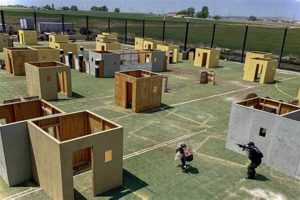
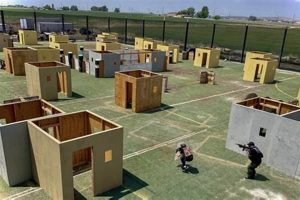
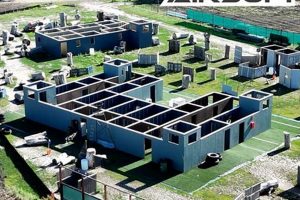
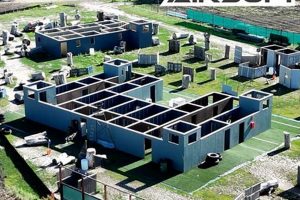
The practical application of field layout principles involves the strategic placement of cover, obstacles, and pathways. Cover should be varied in height, material, and orientation to provide diverse tactical options. Obstacles, such as walls, bunkers, or trenches, can create chokepoints or defensible positions. Pathways should encourage fluid movement between objectives and promote flanking maneuvers. Consider, for instance, an airsoft field designed to resemble a small urban environment. The inclusion of buildings, alleyways, and barricades replicates the challenges of urban combat, requiring players to adapt their strategies accordingly. Alternatively, a woodland field might utilize natural features, such as trees, hills, and dense undergrowth, to create concealment and ambush opportunities. In both scenarios, the specific arrangement of these elements shapes the tactical landscape and dictates the flow of gameplay.
In conclusion, the field layout is an integral and indispensable element of “how to make a airsoft field.” Its design profoundly influences player engagement, safety, and tactical depth. Challenges may arise in balancing competing considerations, such as creating a challenging environment while minimizing the risk of injury. However, a systematic approach to field layout, informed by an understanding of tactical principles and player psychology, is essential for creating a successful and sustainable airsoft field. The investment in thoughtful planning and execution of the field layout directly translates to a superior gameplay experience and enhanced player satisfaction, directly supporting the long-term viability of the field.
4. Game Modes

Game modes represent a core determinant of player engagement and longevity within an airsoft field, directly influencing the success of its establishment and operation. The variety and design of game modes offered shape the overall experience, affecting player retention and the field’s ability to attract a diverse clientele. A well-curated selection of game modes can transform a simple playing space into a dynamic and compelling environment.
- Objective-Based Scenarios
Objective-based scenarios, such as Capture the Flag or Bomb Defusal, provide structured goals that encourage teamwork and strategic planning. These scenarios often necessitate clear communication and coordinated efforts among players. Real-world examples include scenarios that mimic military operations, requiring players to secure specific locations or extract simulated intelligence. The implication for field development is the need to create environments that support these objectives, incorporating features such as designated capture points, defended strongholds, and strategically placed obstacles.
- Team Deathmatch Variations
Team Deathmatch variants, including standard elimination and respawn modes, offer a more straightforward, action-oriented experience. These modes emphasize individual skill and tactical maneuvering. Variations may incorporate restrictions on weapon types or limitations on ammunition to introduce additional challenges. From a field design perspective, this necessitates a balanced layout that provides opportunities for both offensive and defensive play, avoiding chokepoints that favor one team over another. The inclusion of flanking routes and varied cover arrangements can enhance the strategic depth of these modes.
- Asymmetrical Game Types
Asymmetrical game types involve teams with differing objectives or capabilities, creating dynamic and unpredictable scenarios. Examples include VIP Escort, where one team must protect a vulnerable player while the opposing team attempts to eliminate them, or Attack and Defend, where one team is tasked with breaching a fortified position. Implementing these modes effectively requires careful consideration of balance and fairness. Field layouts must provide opportunities for both teams to succeed, avoiding situations where one side has an insurmountable advantage. Consideration should be given to terrain features or obstacles that can be used to compensate for imbalances in team size or equipment.
- Scenario-Driven Events
Scenario-driven events, often spanning extended periods or incorporating complex narratives, offer a more immersive and engaging experience. These events may involve multiple objectives, branching storylines, and interactions with non-player characters. Real-world examples include milsim (military simulation) events that recreate historical battles or fictional conflicts. For field operators, organizing these events requires significant planning and logistical support. The field layout must be adaptable to accommodate diverse objectives and storylines, potentially involving the construction of temporary structures or the modification of existing terrain features. Effective communication and coordination among players and organizers are crucial for successful execution.
The connection between game modes and “how to make a airsoft field” is evident in the way successful fields prioritize flexibility and adaptability. Fields that can accommodate a wide range of game types are better positioned to attract and retain players. Considering the intended game modes during the initial design phase allows for the creation of a more versatile and engaging playing environment. Furthermore, regular updates and additions to the game mode roster can help to keep the experience fresh and prevent player burnout, contributing to the long-term success and sustainability of the field.
5. Boundary Definition
Effective boundary definition is a critical and often overlooked aspect of establishing an airsoft field. The establishment of clear, unambiguous boundaries directly contributes to player safety, reduces the potential for property damage, and mitigates legal liabilities. A poorly defined boundary can lead to unintended engagements beyond the designated playing area, exposing participants and bystanders to potential injury. The connection between boundary definition and “how to make a airsoft field” lies in its foundational role in ensuring a controlled and contained environment for simulated combat. For example, failing to clearly mark the field’s perimeter can result in players inadvertently straying onto neighboring properties, leading to disputes and potentially involving law enforcement. The presence of visible and easily identifiable boundaries acts as a constant reminder to players, reinforcing the limits of the playing area and promoting responsible conduct. It is a preventive measure that directly minimizes the risk of incidents and enhances the overall safety profile of the field.
The practical implementation of boundary definition involves several key considerations. The use of highly visible materials, such as brightly colored netting, fencing, or tape, is essential. These materials should be durable and weather-resistant to withstand prolonged exposure to the elements. Boundaries should be clearly marked at regular intervals and reinforced with signage indicating that the area is an active airsoft field. In addition, boundary definition must account for the terrain. In areas with dense vegetation, it may be necessary to create a physical barrier to prevent players from unintentionally crossing the line. Real-world examples include fields that utilize natural features, such as rivers or steep embankments, as part of their boundary definition, supplementing these natural barriers with artificial markers to ensure clarity. Furthermore, the boundary definition should be regularly inspected and maintained to ensure its continued effectiveness. Damaged or faded markers should be promptly repaired or replaced.
In conclusion, effective boundary definition is not a mere formality but a critical component of responsible airsoft field management and directly tied to “how to make a airsoft field.” The absence of clear boundaries increases the risk of accidents, property damage, and legal complications. The implementation of visible, durable, and well-maintained boundaries is essential for creating a safe, controlled, and sustainable environment for simulated combat activities. While the initial investment in boundary definition may seem minimal, the long-term benefits in terms of risk mitigation and enhanced player safety are substantial. The commitment to clear and effective boundary definition demonstrates a dedication to responsible field operation and contributes to the positive perception of the airsoft community.
6. Maintenance Plan

A comprehensive maintenance plan is an indispensable component in the sustained operation of any airsoft field. The initial design and construction represent only the first phase; consistent upkeep and proactive maintenance are essential to preserving safety, playability, and the overall value of the investment. A field without a structured maintenance plan is susceptible to deterioration, increased hazards, and eventual operational failure. The connection between a robust maintenance plan and “how to make a airsoft field” is direct: the latter is unsustainable without the former.
- Terrain Management
Terrain management involves the regular assessment and remediation of the playing surface. This encompasses tasks such as erosion control, vegetation management, and the repair of ground irregularities. Eroded terrain can create tripping hazards, while unchecked vegetation can obscure visibility and impede movement. Neglecting terrain management can lead to player injuries and diminished gameplay quality. Real-world examples include fields that implement seasonal mowing schedules to maintain clear lines of sight, or those that utilize geotextiles to stabilize slopes and prevent soil erosion. The implication for “how to make a airsoft field” is that terrain management should be factored into the initial site selection and ongoing operational budget.
- Structure Integrity
Structure integrity refers to the assessment and repair of artificial barriers, fortifications, and other constructed elements within the field. These structures are subject to wear and tear from player use, weather exposure, and deliberate damage. Compromised structures can pose safety risks and detract from the immersive experience. Examples include fields that conduct regular inspections of plywood walls for splintering or that reinforce barricades with additional supports to prevent collapse. The role in “how to make a airsoft field” is that the materials used in construction should be selected for durability and resistance to environmental factors, and a schedule for structural inspections should be established.
- Boundary Maintenance
Boundary maintenance involves the regular inspection and repair of fencing, netting, and other perimeter markers. Clearly defined boundaries are essential for preventing unintended engagements beyond the designated playing area. Damaged or missing boundary markers can lead to player incursions onto neighboring properties and potential legal liabilities. Real-world examples include fields that implement a system for tagging damaged boundary markers for repair, or those that utilize high-visibility materials that are easily identifiable even in low-light conditions. The implication for “how to make a airsoft field” is that the boundary definition should be regularly reviewed and adapted to account for changes in terrain or surrounding land use.
- Safety Equipment Inspection
Safety equipment inspection encompasses the routine examination and replacement of essential safety gear, such as eye protection and first-aid supplies. Ensuring that players have access to functional and appropriate safety equipment is paramount for preventing injuries. Compromised or expired safety equipment can negate its protective capabilities. Examples include fields that require all players to have their eye protection inspected before gameplay commences, or those that maintain a readily accessible first-aid station staffed by trained personnel. The connection to “how to make a airsoft field” is that a budget should be allocated for the ongoing purchase and maintenance of safety equipment, and a system should be established for tracking expiration dates and conducting regular inspections.
These facets, encompassing terrain management, structure integrity, boundary maintenance, and safety equipment inspection, are interconnected and collectively contribute to the long-term viability of an airsoft field. Neglecting any one of these areas can have cascading effects, leading to increased safety risks, diminished player satisfaction, and ultimately, the failure of the operation. A proactive and well-funded maintenance plan is not merely an expense but a strategic investment that ensures the sustained success and responsible operation of “how to make a airsoft field”.
Frequently Asked Questions
The following section addresses common inquiries concerning the creation and operation of an airsoft field. These questions and answers aim to provide clarity and guidance on critical aspects of field development and management.
Question 1: What is the minimum land area required for an operational airsoft field?
The optimal land area varies depending on the intended scale of operations and types of gameplay envisioned. However, a minimum of one acre is generally recommended to accommodate a reasonably sized playing area and safe zones. Smaller areas may restrict maneuverability and tactical options, while larger areas may present challenges in terms of supervision and boundary control.
Question 2: What legal considerations are involved in establishing an airsoft field?
Legal considerations encompass zoning regulations, business licensing requirements, and liability insurance coverage. Compliance with local ordinances pertaining to noise levels and firearm regulations is also essential. Consultation with legal counsel is strongly advised to ensure adherence to all applicable laws and regulations.
Question 3: What are the essential safety requirements for an airsoft field?
Essential safety requirements include mandatory eye protection for all participants, the establishment of designated safe zones, clear communication protocols, and regular field inspections to identify and mitigate potential hazards. Adherence to established safety standards and protocols is paramount to minimizing the risk of injuries.
Question 4: How should potential conflicts with neighboring properties be addressed?
Proactive communication with neighboring property owners is crucial. Addressing concerns regarding noise, trespassing, and perceived safety risks can help to mitigate potential conflicts. Implementing noise reduction measures, establishing clear boundaries, and maintaining open lines of communication are essential for fostering positive relationships with the surrounding community.
Question 5: What strategies can be employed to maximize player engagement and retention?
Strategies to maximize player engagement include offering a diverse range of game modes, organizing regular events and tournaments, maintaining a well-maintained and challenging playing environment, and fostering a positive and inclusive community atmosphere. Soliciting player feedback and adapting game modes and field layouts accordingly can also enhance player satisfaction.
Question 6: What are the key elements of a sustainable maintenance plan for an airsoft field?
Key elements of a sustainable maintenance plan include regular terrain management, structural inspections of barriers and fortifications, consistent boundary maintenance, and routine inspection and replacement of safety equipment. Proactive maintenance is essential for preserving the safety, playability, and overall value of the airsoft field.
The information provided in this FAQ section is intended for general guidance only and does not constitute legal or professional advice. Seeking expert consultation is recommended for specific situations.
The following section explores strategies for marketing and promoting the developed airsoft field.
Concluding Remarks on Airsoft Field Development
This exploration of “how to make a airsoft field” has emphasized the multifaceted nature of the undertaking. Site selection, safety protocols, field layout, game modes, boundary definition, and a robust maintenance plan each contribute significantly to the creation of a safe, engaging, and sustainable environment. The effective integration of these elements is critical for long-term operational success.
Aspiring airsoft field operators are encouraged to consider these guidelines carefully. A commitment to safety, responsible land management, and community engagement will not only foster a positive playing experience but also contribute to the growth and legitimacy of the sport. The future of airsoft depends on a dedication to ethical practices and sustainable development within the airsoft field community.
![Ultimate Guide: Best Airsoft Fields in the World [Ranked] | Ultimate Airsoft Guide for Beginners, Tactics & Gear Reviews](https://airsoftica.com/wp-content/uploads/2026/05/th-147-300x200.jpg "Ultimate Guide: Best Airsoft Fields in the World [Ranked] Ultimate Airsoft Guide for Beginners, Tactics & Gear Reviews")