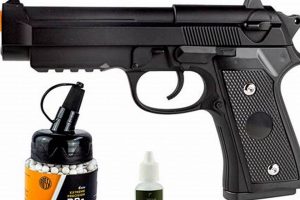
The process of preparing an airsoft handgun for operation involves several key steps focused on ammunition and power source integration. The most common procedure entails filling a magazine with 6mm BBs, inserting the loaded magazine into the pistol’s magazine well, and, depending on the model, charging the mechanism by pulling back the slide or cocking the hammer. This primes the weapon, making it ready to fire upon trigger activation.
Proper preparation is crucial for safe and effective airsoft gameplay. A correctly loaded and charged airsoft pistol ensures reliable performance during skirmishes, contributing to a more immersive and enjoyable experience. Understanding the loading procedure also promotes responsible handling and minimizes the risk of malfunctions or accidental discharges. Historically, replicating firearms handling procedures adds realism to the sport.
The following sections will detail the specific steps involved in preparing different types of airsoft pistols for use, including considerations for gas-powered, spring-powered, and electric models. It will cover magazine types, charging techniques, and safety precautions relevant to each variant.
Loading Airsoft Pistols
Effective handling of airsoft pistols necessitates a thorough understanding of proper loading techniques. Consistent application of these tips will enhance operational reliability and ensure safety.
Tip 1: Magazine Maintenance is Paramount. Regularly clean airsoft pistol magazines to remove debris. Use a silicone-based lubricant sparingly to maintain smooth BB feeding and prevent jams. Neglecting magazine upkeep can lead to inconsistent firing and potential damage to the pistol’s internal components.
Tip 2: Verify BB Compatibility. Ensure the airsoft pistol is loaded with BBs of the appropriate weight and size. Most airsoft pistols use 6mm BBs, but variations exist. Using incorrect ammunition can cause malfunctions and compromise accuracy. Consult the pistol’s manual for specifications.
Tip 3: Employ Controlled Magazine Insertion. When inserting the magazine, apply firm, even pressure until a distinct click is heard. Avoid slamming the magazine into the well, as this can damage the magazine catch or the magazine itself. A properly seated magazine is crucial for reliable feeding.
Tip 4: Optimize Gas Pressure (Gas Pistols Only). For gas-powered airsoft pistols, ensure the gas reservoir is adequately filled. Inconsistent gas pressure can result in reduced power and diminished accuracy. Use the recommended gas type and follow the manufacturer’s guidelines for filling procedures.
Tip 5: Practice Slide Rack Technique. The method for racking the slide influences loading reliability. Grip the slide firmly with the non-dominant hand, pulling it fully rearward and releasing it with force. Avoid riding the slide forward, as this may not fully chamber a BB. Consistent practice will refine the technique.
Tip 6: Exercise Caution During Decocking. Some airsoft pistols feature a decocking mechanism. Exercise caution when decocking to prevent accidental discharge. Always point the pistol in a safe direction and ensure the finger is removed from the trigger before activating the decocker.
Tip 7: Double-Check Chamber Status. Prior to storing or handling after use, always verify the chamber is empty. Remove the magazine, rack the slide several times, and visually inspect the chamber to ensure no BBs remain. This practice mitigates the risk of unintentional discharge.
Adhering to these best practices will contribute to the longevity and consistent performance of the airsoft pistol. Moreover, it promotes a culture of safety and responsible handling within the airsoft community.
The subsequent sections will address common issues encountered during loading and troubleshooting strategies to maintain optimal performance.
1. Magazine Retention

Magazine retention is a foundational aspect of airsoft pistol operation, intrinsically linked to the process of ensuring the weapon is correctly prepared for firing. Its effectiveness directly impacts the reliability of the loading mechanism, influencing the pistol’s ability to consistently feed ammunition.
- Secure Magazine Seating
Proper magazine seating is paramount. The magazine must be firmly locked into the magazine well. An insufficient or incomplete insertion can lead to misfeeds, jams, and the magazine dislodging during operation. Auditory and tactile confirmation of a secure lock is essential. A loose magazine will not properly align with the feeding mechanism.
- Magazine Catch Integrity
The magazine catch is the component responsible for securing the magazine. Its integrity is critical for reliable retention. A worn or damaged magazine catch may fail to hold the magazine securely, causing it to drop free or malfunction. Regular inspection and maintenance of the magazine catch are necessary to ensure proper function. A weak magazine catch Spring can also compromise this.
- Magazine Compatibility
Ensuring the correct magazine type is used is vital. Airsoft pistols are often designed for specific magazine types. Using incompatible magazines can result in poor retention, feeding issues, or even damage to the pistol. Verification of magazine compatibility with the specific airsoft pistol model is a prerequisite for proper loading. This includes ensuring the magazine matches the dimensions and feeding mechanisms of the airsoft pistol.
- Effect of External Pressure
External pressure exerted on the magazine during operation can negatively impact retention. If the user inadvertently applies pressure to the magazine base while firing, it could disrupt the locking mechanism, leading to misfeeds or magazine release. Awareness of hand placement and grip is necessary to mitigate this issue. Likewise, certain tactical holsters might inadvertently depress the magazine release button.
The interplay of these facets highlights that proper magazine retention is not merely about inserting the magazine; it is a holistic process encompassing component condition, compatibility, and user technique. Neglecting any of these factors can result in inconsistent performance and compromise the overall effectiveness of the airsoft pistol loading sequence.
2. BB Alignment

Proper BB alignment within the magazine and feeding mechanism is a critical component of the airsoft pistol loading process. This alignment directly influences the reliability and efficiency of ammunition delivery from the magazine into the chamber. Misaligned BBs can cause jams, feeding failures, and inconsistent firing performance. Correct loading practices actively promote optimal BB alignment, thereby reducing the likelihood of malfunctions. For instance, improper insertion techniques, such as overfilling the magazine or using damaged BBs, can disrupt the BB stack and impede smooth feeding. A common symptom of BB misalignment is a noticeable drop in firing rate or the complete cessation of firing due to a BB becoming lodged in the loading nozzle.
The practical significance of understanding BB alignment lies in its direct impact on airsoft gameplay. A well-aligned magazine ensures a consistent and predictable rate of fire, enhancing the user’s effectiveness during engagements. Troubleshooting feeding issues often involves inspecting the BB stack within the magazine and ensuring the BBs are properly seated and oriented. Advanced airsoft enthusiasts may disassemble magazines to clean and realign the BB followers, further optimizing feeding performance. Certain high-capacity magazines employ winding mechanisms to maintain BB alignment and consistent pressure, underscoring the importance of this factor in achieving reliable operation.
In summary, BB alignment is not merely a passive element but an active consideration in the correct loading and operation of an airsoft pistol. Maintaining awareness of BB orientation within the magazine, employing proper loading techniques, and performing regular maintenance to ensure the BB stack remains consistent are all crucial steps in preventing malfunctions and maximizing the weapon’s performance. The challenge often lies in identifying subtle alignment issues, which necessitates a thorough understanding of the airsoft pistol’s internal mechanisms and the characteristics of the BBs being used. BB weight plays a part in this issue as well. Heavier BBs will typically stack better in the magazine than lighter BBs.
3. Gas Pressure Regulation

Gas pressure regulation is a critical parameter in gas-powered airsoft pistols, fundamentally influencing the ammunition loading and firing processes. Consistent and controlled gas pressure is essential for repeatable performance and safe operation. Variations in pressure can lead to inconsistent velocities, malfunctions, and potential damage to the pistol.
- Valve Mechanism Function
The valve mechanism within a gas-powered airsoft pistol regulates the release of gas from the reservoir. This mechanism must function reliably to deliver a consistent volume of gas behind each BB. Malfunctions within the valve, such as leaks or restricted flow, directly impact gas pressure, causing velocity fluctuations and potentially preventing the pistol from cycling correctly. For instance, a worn valve seal can cause gas leakage, resulting in a weak or non-existent shot.
- Gas Reservoir Temperature Sensitivity
The pressure within the gas reservoir is affected by temperature. Lower temperatures decrease gas pressure, resulting in reduced velocity and potential feeding issues. Conversely, excessively high temperatures can increase pressure beyond safe operating limits, potentially damaging the pistol. Users should be aware of temperature effects and select appropriate gas types and operating conditions accordingly. Some gases are specifically formulated for lower temperatures.
- Adjustable Pressure Systems
Some airsoft pistols feature adjustable pressure systems, allowing users to fine-tune the gas output. These systems enable customization of velocity and power. However, improper adjustment can lead to inconsistent performance or damage. Knowledge of the pistol’s operating parameters and careful adjustment procedures are necessary for safe and effective use. Adjusting the pressure too high could cause internal components to fail.
- Magazine Valve Integrity
The magazine valve, which releases gas into the pistol’s firing chamber, plays a direct role in regulating pressure. A damaged or leaking magazine valve results in pressure loss, leading to diminished velocity and potential feeding problems. Regular maintenance, including lubrication and inspection of the magazine valve, is crucial for maintaining consistent gas pressure and ensuring reliable loading. The use of high-quality silicone oil is recommended for maintaining the valve’s seal.
These facets of gas pressure regulation are inextricably linked to the process of correctly loading and operating a gas-powered airsoft pistol. Understanding these principles enables users to diagnose and resolve performance issues, ensuring safe and consistent operation. Neglecting gas pressure considerations can lead to unpredictable performance and potential damage to the equipment, emphasizing the importance of informed handling.
4. Spring Tension Control

Spring tension control is a critical factor in the loading and firing sequence of spring-powered airsoft pistols. Precise management of spring force is essential for consistent BB loading and propulsion. Inadequate or excessive tension can compromise the pistol’s operational performance.
- Cocking Mechanism Engagement
The cocking mechanism, typically involving a slide or lever, directly influences spring tension. Proper engagement of this mechanism fully compresses the spring, storing the energy required to propel the BB. Incomplete or improper cocking results in insufficient spring tension, leading to weak or non-existent shots. Consistent technique and complete engagement of the cocking mechanism are therefore necessary. Failure to fully engage the cocking mechanism is one of the most common reasons for inconsistent performance in spring-powered airsoft pistols.
- Spring Condition and Degradation
The spring’s physical condition plays a pivotal role in maintaining consistent tension. Over time, repeated compression and decompression can cause spring fatigue, reducing its ability to store and release energy effectively. A degraded spring results in diminished projectile velocity and inconsistent loading. Regular maintenance and replacement of worn springs are recommended to sustain optimal performance. A visibly corroded or misshapen spring should be replaced immediately.
- Loading Nozzle Interaction
The loading nozzle, driven by the spring’s release, pushes the BB into the chamber. Precise alignment and timing between the nozzle and the spring are crucial. Insufficient spring tension can cause the nozzle to fail to properly seat the BB in the chamber, leading to misfeeds or jams. Correct spring tension ensures the nozzle delivers the BB accurately and consistently. A broken or cracked loading nozzle may also be a sign of incorrect spring tension.
- Trigger Mechanism Release
The trigger mechanism directly controls the release of the compressed spring. A smooth and consistent trigger pull is necessary for reliable firing. Excessive spring tension can make the trigger difficult to pull, while insufficient tension can lead to inconsistent release. A properly tuned trigger mechanism, in conjunction with optimal spring tension, ensures predictable firing performance. Some spring-powered pistols incorporate adjustable trigger mechanisms for fine-tuning.
The interplay of these facets underscores the significant influence of spring tension control on the loading and firing cycle of spring-powered airsoft pistols. Maintaining appropriate spring force, ensuring proper cocking technique, and addressing spring degradation are crucial for consistent and reliable performance. Neglecting these factors can lead to operational inconsistencies and compromise the overall effectiveness of the airsoft pistol in gameplay. Proper spring tension translates to a BB being chambered properly and with the correct force which reduces the chance of jams.
5. Slide Racking Precision
Slide racking precision is a fundamental aspect of loading many airsoft pistols. It dictates the reliable chambering of a BB and prepares the firing mechanism. A properly executed slide rack is essential for consistent operation; conversely, an imprecise rack can lead to misfeeds, jams, and inconsistent performance.
- Full Slide Travel
Achieving full slide travel, meaning the slide moves completely rearward and then returns fully forward under spring pressure, is paramount. Short-stroking the slide, or failing to allow it to travel its entire range, may not strip a BB from the magazine or fully engage the firing mechanism. A full rack ensures that the BB is properly positioned in the chamber and ready to be fired. This requires a firm grip and deliberate action, particularly with airsoft pistols utilizing heavier recoil springs.
- Slide Release Engagement
Some airsoft pistols employ a slide release mechanism. Releasing the slide using the slide release, rather than manually guiding it forward, often provides more consistent and forceful chambering. This is particularly important for pistols with stiffer recoil springs or magazines that require greater force to strip a BB. Using the slide release ensures the slide returns to battery with sufficient force to overcome any resistance and properly seat the BB.
- Grip and Hand Position
The grip and hand position used during slide racking significantly impact precision. A firm, stable grip is necessary to maintain control of the pistol and ensure the slide travels smoothly. The hand pulling the slide should have a secure purchase to prevent slippage or short-stroking. Improper hand placement can impede the slide’s movement and lead to inconsistent loading. A common technique involves using the support hand to firmly grip the slide while the dominant hand maintains a secure hold on the frame.
- Maintenance and Lubrication
Proper maintenance and lubrication of the slide rails and internal components are crucial for smooth slide operation. Dry or dirty slide rails can increase friction, making it more difficult to rack the slide with precision. Regular cleaning and lubrication with appropriate silicone-based lubricants reduce friction, allowing the slide to move freely and consistently. This is especially important for airsoft pistols that are frequently used or exposed to dusty environments.
In conclusion, slide racking precision directly influences the reliability of the loading cycle in numerous airsoft pistols. Proper technique, attention to grip and hand position, and consistent maintenance are all critical for ensuring a smooth and reliable loading process. Inconsistent slide racking is a common source of malfunctions, emphasizing the importance of mastering this fundamental skill for any airsoft enthusiast. Some airsoft pistols have serrations to improve gripping surface area.
6. Chamber Inspection

Chamber inspection is a non-negotiable step in the operation of an airsoft pistol, directly linked to responsible handling practices. It is the visual and physical verification of the presence, or more importantly, the absence, of a BB within the firing chamber, mitigating potential risks associated with unintentional discharge. This procedure is especially vital after the loading process, ensuring the pistol is in the anticipated state.
- Verification of Empty Chamber Post-Loading
After attempting to load an airsoft pistol, whether successfully or not, it is imperative to verify the chamber is clear if the intent is not to immediately fire. This involves removing the magazine, racking the slide several times, and visually inspecting the chamber to ensure no BB remains. This step prevents the inadvertent discharge of a BB when the user believes the pistol to be unloaded. This action is crucial prior to storage or handing the airsoft pistol to another individual.
- Identification of Misfeeds and Jams
During the loading process, misfeeds or jams can occur, leaving a BB partially lodged in the chamber. Chamber inspection allows for the identification of such malfunctions. Recognizing and addressing these issues promptly prevents further complications, such as damage to the pistol’s internal components or unintended discharges during subsequent attempts to load or fire. The process often involves using a cleaning rod to dislodge any obstructions.
- Confirmation of Proper BB Seating
Chamber inspection can also confirm that a BB is properly seated in the chamber, ready for firing. This ensures that the airsoft pistol will function as expected when the trigger is pulled. It may involve visually checking the BB’s position relative to the barrel and confirming that it is not obstructed or misaligned. Inconsistent BB seating can lead to inaccurate shots or a failure to fire.
- Safe Handling Protocol Reinforcement
Performing a chamber inspection serves as a constant reminder of safe handling protocols. It reinforces the habit of treating every airsoft pistol as if it were loaded, even when the user believes it to be unloaded. This mindset promotes responsible behavior and reduces the likelihood of accidents. Consistent execution of this step contributes to a culture of safety within the airsoft community. A lack of attention during chamber inspection can lead to negligence, where the pistol can be accidentally discharged into an unsafe location.
Chamber inspection is, therefore, more than a simple procedural step; it is an integral part of a comprehensive safety protocol governing the handling of airsoft pistols. It is the final verification point in the loading process, ensuring that the user is fully aware of the weapon’s state and can act responsibly. Neglecting this step increases the risk of accidents and undermines the integrity of safe airsoft practices.
7. Safety engagement.

The proper engagement of the safety mechanism is paramount to responsible airsoft pistol handling, directly complementing the process of preparing the device for operation. This step serves as a critical safeguard against unintentional discharge, particularly crucial after completing the loading procedure. A correctly engaged safety physically prevents the firing mechanism from activating, mitigating the risk of accidental BB release.
- Mechanical Lock Function
The safety mechanism, typically a switch or lever, mechanically interlocks with the trigger or firing pin mechanism. When engaged, it physically blocks the trigger from being pulled or prevents the firing pin from striking the gas valve, thus preventing discharge. The design and effectiveness of this lock vary depending on the airsoft pistol model. For example, some safeties block the trigger completely, while others simply disconnect the trigger linkage. A malfunctioning or poorly designed safety can compromise this crucial function.
- Visual and Tactile Confirmation
Relying solely on visual cues for safety engagement is insufficient. The user must confirm the safety is engaged both visually and tactilely. This involves not only observing the position of the safety lever but also attempting to gently pull the trigger to ensure it is indeed locked. This double-check procedure reduces the potential for user error and ensures the safety mechanism is functioning as intended. Ignoring tactile feedback can lead to a false sense of security.
- Contextual Awareness During Loading
Safety engagement must be an integral part of the loading sequence. Immediately after loading an airsoft pistol, if it is not to be immediately fired, the safety should be engaged. This establishes a consistent habit of prioritizing safety, especially during periods of heightened activity or stress during gameplay. This prevents accidental discharge while holstering, transporting, or otherwise handling the airsoft pistol. Consistent application makes engagement automatic.
- Maintenance and Functional Checks
The safety mechanism, like any other component of an airsoft pistol, requires periodic maintenance and functional checks. This involves inspecting the safety lever for damage or wear, ensuring it moves freely and engages fully, and verifying that it effectively blocks the trigger or firing pin. Neglecting this maintenance can lead to a compromised safety mechanism that fails to function when needed. Regular cleaning and lubrication can help maintain optimal safety performance.
These integrated elements highlight the necessity of safety engagement as a crucial step complementing preparation. A conscientious approach to safety protocols reinforces responsible behavior and significantly reduces the potential for accidents. This component must be prioritized in the sequence of usage of any airsoft pistol.
Frequently Asked Questions
This section addresses common inquiries regarding the correct and safe methods for preparing airsoft pistols for operation. The following questions and answers aim to clarify best practices and mitigate potential misunderstandings related to airsoft pistol loading.
Question 1: Is it necessary to lubricate airsoft pistol magazines?
Silicone-based lubricant application to airsoft pistol magazines aids in maintaining smooth BB feeding and prevents jamming. However, excessive lubrication can attract dirt and debris, exacerbating feeding problems. A light, even coat is sufficient; complete disassembly and thorough cleaning are preferable to excessive lubrication.
Question 2: What occurs if the incorrect type of BB is used in an airsoft pistol?
Employing BBs that deviate from the manufacturer’s specified weight or diameter can cause malfunctions, reduce accuracy, and potentially damage the airsoft pistol’s internal components. Most airsoft pistols utilize 6mm BBs; using 8mm BBs, for instance, will likely result in a jam or damage the barrel. Always consult the pistol’s manual for ammunition specifications.
Question 3: How tight should an airsoft pistol magazine be seated?
The magazine should be firmly seated within the magazine well, audibly clicking into place. Overly forceful insertion can damage the magazine catch or magazine itself. Conversely, insufficient insertion leads to misfeeds. A deliberate and controlled insertion is recommended for reliable magazine retention.
Question 4: How often should gas be refilled in a gas-powered airsoft pistol?
Gas refill frequency depends on usage and temperature. Reduced power or velocity indicates a need to replenish the gas reservoir. Following the manufacturers guidelines regarding gas type and filling procedures is crucial to avoid damage. Partial filling is generally preferable to complete depletion, maintaining pressure and extending seal life.
Question 5: What is the correct procedure for racking the slide on an airsoft pistol?
The slide must be fully retracted with a firm grip, then released abruptly, allowing the spring to return it to its forward position. Riding the slide forward can result in incomplete chambering. Consistent practice of this technique ensures reliable loading. The slide serrations are designed to facilitate a firm grip during this operation.
Question 6: Why is chamber inspection important after loading?
Chamber inspection confirms whether a BB is present in the chamber, mitigating the risk of accidental discharge. It also identifies misfeeds or jams, allowing for prompt corrective action. This step is critical for safe handling and storage protocols; overlooking it can lead to unintentional discharges.
These frequently asked questions address common concerns related to airsoft pistol loading. Adherence to these guidelines promotes safe and effective operation.
The subsequent section will address troubleshooting common problems encountered during the loading process.
Conclusion
The comprehensive understanding of “how to load airsoft pistol” is not merely a procedural exercise; it is foundational to responsible and effective airsoft participation. Attention to magazine maintenance, BB compatibility, gas pressure regulation (where applicable), and proper racking techniques dictates the reliability and safety of operation. Neglecting these essential steps invites malfunctions, diminishes performance, and elevates the risk of accidents.
Mastery of airsoft pistol loading protocols distinguishes responsible users from those who treat these devices with insufficient regard. Consistent application of these principles cultivates a culture of safety, ensuring that airsoft remains a challenging and enjoyable activity. Prioritizing this knowledge preserves the integrity of the sport and safeguards participants from unnecessary harm. Further inquiry into specific airsoft pistol models and maintenance procedures is strongly encouraged for continued improvement.