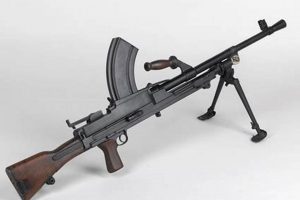
The process of restoring a manually operated, compressed air-powered projectile weapon to functional order encompasses several diagnostic and repair procedures. Typically, these firearms utilize a spring-loaded piston to generate the necessary air pressure for propelling projectiles. Addressing malfunctions often requires disassembly, inspection, part replacement, and reassembly. For example, if a firearm of this type fails to fire, the internal compression system warrants scrutiny.
Maintaining the operational effectiveness of these mechanisms is crucial for both recreational activities and training exercises. Proper repair extends the lifespan of the device, ensuring consistent performance and minimizing the need for costly replacements. Historically, understanding mechanical principles was essential for maintaining and repairing these simpler projectile devices, providing a foundational knowledge base for more complex systems.
The subsequent sections will detail common issues encountered with these specific firearms, providing guidance on troubleshooting compression problems, addressing trigger mechanism failures, and resolving projectile feed malfunctions. Each section aims to offer a systematic approach to restoring the device to its intended working condition.
Essential Considerations for Spring Airsoft Gun Maintenance
The following guidelines provide a structured approach to maintaining the functionality of spring-powered airsoft firearms.
Tip 1: Prioritize Safety Disassembly. Before initiating any repair work, ensure the firearm is unloaded and the safety mechanism is engaged. Failure to observe this precaution could result in unintentional discharge.
Tip 2: Conduct Thorough Visual Inspections. Examine the exterior for any signs of damage, such as cracks in the body or deformation of the barrel. Such damage can impact performance and should be addressed promptly.
Tip 3: Inspect the Piston and Spring. The piston and spring are crucial components in the firing mechanism. Inspect these parts for wear, breakage, or deformation. Replacement may be necessary if damage is detected.
Tip 4: Lubricate Moving Parts Sparingly. Use silicone-based lubricant on internal components to reduce friction and ensure smooth operation. Avoid excessive lubrication, as this can attract debris and impede performance.
Tip 5: Examine the Air Seal Integrity. The air seal between the piston and cylinder is vital for generating sufficient pressure. Check for leaks or damage to the seal and replace if necessary.
Tip 6: Diagnose Trigger Mechanism Issues. A malfunctioning trigger can prevent the firearm from firing. Inspect the trigger assembly for damage, wear, or misalignment. Proper alignment is essential for reliable operation.
Tip 7: Properly Reassemble Components. When reassembling the firearm, ensure all parts are correctly positioned and securely fastened. Incorrect assembly can lead to malfunction or damage.
Adhering to these guidelines enhances the firearms reliability and extends its operational lifespan, promoting a safe and enjoyable user experience.
The subsequent section will delve into advanced troubleshooting techniques for complex malfunctions.
1. Disassembly sequence adherence

Disassembly sequence adherence is paramount to the successful repair of a spring airsoft gun. Deviating from the prescribed order can lead to component damage, making subsequent repairs more complex and potentially rendering the device irreparable. Incorrectly disassembling a spring airsoft gun can strain or break fragile plastic parts, strip screw threads, or dislodge internal mechanisms, disrupting the overall assembly. This, in turn, can compromise the firearm’s ability to operate correctly and safely.
Consider, for example, the removal of the outer barrel before disengaging the spring tension. Attempting this can result in uncontrolled spring release, potentially causing injury or damaging internal components. Similarly, forcing components apart without understanding the correct release points can fracture the body or damage the trigger mechanism. Repair manuals or exploded diagrams offer clear guidance on the appropriate disassembly order and should be consulted before initiating any repair. These resources often highlight specific screw locations and internal component arrangements, minimizing the risk of error during disassembly.
Therefore, a methodical and cautious approach to disassembly, guided by established procedures, is essential. Prioritizing disassembly sequence adherence minimizes the potential for further damage, streamlining the repair process and increasing the likelihood of a successful outcome. Failure to do so can transform a minor repair into a major overhaul or necessitate complete replacement of the device. A detail oriented approach when disassembling a spring airsoft gun is the most important step in how to fix a spring airsoft gun.
2. Component damage identification

Component damage identification is intrinsically linked to the process of restoring a spring airsoft gun to working order. Locating and cataloging of failures within the firing mechanism is a prerequisite for implementing effective repairs. A failure to identify damage accurately will inevitably lead to ineffective solutions, persistent malfunctions, or even further damage to the firearm. This vital step is, therefore, crucial in any procedure aimed at “how to fix a spring airsoft gun.” A broken piston head, for example, will preclude effective air compression, rendering the device inoperable, no matter how thoroughly other parts are cleaned or lubricated. Similarly, a cracked hop-up unit will disrupt projectile trajectory and accuracy, negating the benefits of other performance enhancements.
Consider the specific case of a malfunctioning trigger sear. Wear or breakage to this component will prevent the piston from being held back, resulting in a failure to fire. Repair efforts focused on other areas, such as replacing the spring or lubricating the piston, will not address the root cause. A systematic approach, involving a thorough visual inspection and functional testing of individual components, is essential. This may include examining the cylinder for scratches, testing the air seal of the piston, and evaluating the trigger mechanism for smooth engagement and release. Specialized tools, such as magnifying glasses and bore scopes, may be necessary to detect subtle cracks or deformities.
In summary, accurate component damage identification forms the foundation of effective repair. Without this critical step, repair efforts risk being misdirected, leading to wasted time and resources. A meticulous and comprehensive approach is essential to ensure that all damaged parts are identified and addressed, ultimately facilitating the successful restoration of the firearm to its intended operational condition. Without a clear understanding of components that are broken, fixing the spring airsoft gun is an exercise in futility.
3. Spring integrity assessment

Assessment of spring integrity forms a critical stage in the maintenance and repair of spring-powered airsoft guns. The spring serves as the primary energy source, directly impacting projectile velocity and overall firearm performance. Therefore, evaluating its condition is indispensable for determining the appropriate course of action when addressing operational issues.
- Visual Inspection for Deformation
A visual inspection for deformation is crucial in assessing spring integrity. Springs exhibiting bends, kinks, or irregular coiling patterns are indicative of fatigue or overstress. Such deformities directly reduce the spring’s ability to store and release energy efficiently, leading to a decrease in projectile velocity. A spring that is misshapen won’t provide the intended power needed to fix the airsoft gun to full potential.
- Measurement of Spring Length
Measuring the spring’s free length provides quantitative data regarding its structural integrity. A spring that is significantly shorter than its original specification has likely experienced compression set, reducing its maximum potential energy storage. This measurement, compared against the manufacturer’s specifications, serves as a reliable indicator of the spring’s remaining lifespan. Without this measure, the spring airsoft gun can fail to achieve desired velocity.
- Assessment of Spring Rate
Spring rate, defined as the force required to compress the spring a given distance, offers insight into its stiffness and energy transfer characteristics. A reduction in spring rate signifies a weakening of the material, impacting its ability to generate consistent projectile velocities. Specialized tools or testing apparatus may be required to accurately assess spring rate, enabling precise diagnosis of degradation. Identifying a reduction in spring rate is an important part of identifying how to fix a spring airsoft gun.
- Evaluation of Spring End Condition
The condition of the spring ends, particularly the degree of squareness and finish, influences its ability to seat properly within the piston assembly. Damaged or uneven ends can lead to inconsistent compression and increased friction, impacting overall efficiency. A spring that doesn’t provide a tight seal on the piston is not operating at full potential. Thus, part of assessing the function and fixing of a spring airsoft gun includes its proper integration with internal parts.
The integration of these facets of spring integrity assessment within the diagnostic process ensures a thorough understanding of the energy source’s condition. This comprehensive evaluation allows for informed decisions regarding spring replacement or other maintenance procedures, ultimately contributing to the successful repair and restoration of the firearm.
4. Air seal restoration
Air seal restoration is fundamentally linked to the successful repair of a spring airsoft gun. A compromised air seal directly diminishes the firearm’s ability to generate sufficient air pressure for propelling projectiles with the intended velocity and range. This degradation in performance necessitates targeted intervention to restore the integrity of the seal, effectively constituting a critical step in “how to fix a spring airsoft gun.” The absence of a proper air seal results in significant air leakage during the compression stroke, reducing the force applied to the projectile. For instance, a damaged piston head O-ring will allow air to escape past the piston, resulting in a noticeable decrease in muzzle velocity. The practical significance of understanding this lies in recognizing that replacing a worn spring alone will not rectify the issue if the air seal remains compromised.
Addressing air seal deficiencies typically involves several procedures. These include inspecting the piston head O-ring for wear, cracks, or deformation; examining the cylinder walls for scratches or imperfections that might compromise the seal; and ensuring proper lubrication with silicone-based greases specifically designed for airsoft applications. Furthermore, the hop-up unit, responsible for imparting backspin to the projectile, must also maintain an airtight seal. Leaks in this area can also reduce velocity and accuracy. A practical application of this understanding is the use of Teflon tape to seal the threads of the hop-up unit, or the careful replacement of the bucking (the rubber piece that interfaces with the BB).
In conclusion, air seal restoration is not merely a supplementary task, but rather an integral component of restoring a spring airsoft gun to its intended functionality. Neglecting this aspect renders other repair efforts less effective, potentially leading to continued performance issues. Overcoming the challenge of accurately diagnosing and rectifying air seal leaks is paramount for achieving optimal performance and extending the lifespan of the device. Understanding of the process and the techniques of air seal restoration is therefore critical for anyone attempting to learn “how to fix a spring airsoft gun”.
5. Trigger mechanism adjustment

Trigger mechanism adjustment constitutes a critical aspect of maintaining and repairing spring airsoft guns. The proper function of the trigger mechanism directly influences the firearm’s ability to cycle correctly and safely, directly impacting usability. A malfunctioning trigger mechanism can prevent firing, cause unintended firing, or lead to inconsistent performance, necessitating careful adjustment to restore optimal operation. Understanding the process is central to the question of “how to fix a spring airsoft gun.”
- Sear Engagement Adjustment
Sear engagement is the interface between the trigger and the piston, responsible for holding the piston back until the trigger is pulled. Improper engagement, either too shallow or too deep, can result in firing malfunctions. Shallow engagement may cause premature release of the piston, while deep engagement can make the trigger difficult to pull or prevent firing altogether. Accurate adjustment of sear engagement is essential for a reliable and consistent firing cycle. Fixing or restoring correct sear engagement is important to how to fix a spring airsoft gun.
- Trigger Spring Tension Calibration
Trigger spring tension determines the force required to pull the trigger. Insufficient tension can result in a “hair trigger,” prone to accidental discharge, while excessive tension makes the trigger difficult to pull and reduces accuracy. Calibrating trigger spring tension to a comfortable and safe level enhances user control and overall performance. Reducing the chances of negligent discharge is paramount. Fixing or restoring correct spring tension calibration is important to how to fix a spring airsoft gun.
- Over-Travel Adjustment Implementation
Over-travel refers to the distance the trigger moves after the sear has disengaged. Excessive over-travel can prolong the firing cycle and reduce the rate of fire. Implementing an over-travel stop or adjusting the trigger assembly to limit over-travel enhances responsiveness and improves overall performance. This allows for quicker follow-up shots with the mechanism. Fixing or restoring correct over-travel adjustment implementation is important to how to fix a spring airsoft gun.
- Safety Mechanism Synchronization
The safety mechanism must reliably prevent the trigger from engaging the sear when activated. Misalignment or improper adjustment of the safety can compromise its effectiveness, creating a potential safety hazard. Ensuring proper synchronization between the safety mechanism and the trigger assembly is paramount for preventing accidental discharge. Improving the general safety of the firearm is the goal. Fixing or restoring correct safety mechanism synchronization is important to how to fix a spring airsoft gun.
These facets of trigger mechanism adjustment collectively contribute to the overall functionality and safety of the spring airsoft gun. By addressing each aspect systematically, it becomes possible to restore optimal trigger performance, prevent malfunctions, and ensure a safe and enjoyable user experience. Neglecting the specific details will reduce the airsoft guns efficiency, reducing its overall performance. This provides the basis for exploring the topic “how to fix a spring airsoft gun”.
Frequently Asked Questions
The following section addresses common inquiries regarding the maintenance and repair of spring-powered airsoft firearms. The information aims to provide clarity on persistent issues and effective troubleshooting strategies.
Question 1: Why is disassembly sequence adherence emphasized during spring airsoft gun repair?
Following the correct disassembly sequence minimizes the risk of damaging fragile components. Incorrect disassembly can strain plastic parts, strip screw threads, or dislodge internal mechanisms, potentially rendering the firearm irreparable. Adherence to the prescribed sequence safeguards against unintended damage.
Question 2: What is the significance of component damage identification in the repair process?
Accurate identification of damaged components is fundamental for effective repair. Repair efforts directed at undamaged parts are futile. A systematic approach involving visual inspection and functional testing is essential to pinpoint specific points of failure within the firing mechanism.
Question 3: How does the spring integrity assessment influence the repair of a spring airsoft gun?
The spring is the primary energy source. Assessment of its condition including visual inspection, length measurement, and spring rate analysis determines its capacity to deliver consistent projectile velocities. Spring replacement may be necessary if significant degradation is detected.
Question 4: Why is air seal restoration considered a crucial step in repairing spring airsoft guns?
A compromised air seal directly reduces the firearm’s ability to generate sufficient air pressure. Repair efforts aimed at other components will be less effective if air leakage persists. Restoring the air seal maximizes projectile velocity and overall performance.
Question 5: What aspects of the trigger mechanism warrant careful adjustment during repair?
Sear engagement, trigger spring tension, over-travel, and safety mechanism synchronization all require meticulous adjustment. These factors collectively influence the firing cycle, trigger pull, and overall safety of the firearm. Proper adjustment ensures consistent and reliable operation.
Question 6: What are the potential consequences of neglecting regular maintenance of a spring airsoft gun?
Neglecting regular maintenance can lead to a cascade of issues, including decreased projectile velocity, inconsistent firing, increased wear and tear on internal components, and a shortened lifespan for the firearm. Proactive maintenance minimizes the likelihood of costly repairs and ensures continued performance.
Understanding these frequently asked questions provides a solid foundation for addressing common issues and maintaining the operational effectiveness of spring airsoft guns.
The subsequent section will present a checklist for spring airsoft gun troubleshooting.
How to Fix a Spring Airsoft Gun
The preceding exploration has detailed various facets of restoring spring airsoft guns to functional order. Key aspects discussed include adhering to proper disassembly sequences, accurately identifying damaged components, assessing spring integrity, restoring air seals, and meticulously adjusting trigger mechanisms. Each of these areas contributes significantly to the overall effectiveness of repair efforts.
Mastering these techniques and principles empowers individuals to maintain and repair spring airsoft guns effectively. Consistent application of the information presented can extend the lifespan of these devices, enhance performance, and promote a safer user experience. Diligent practice and a thorough understanding of these concepts are essential for responsible ownership and effective maintenance.