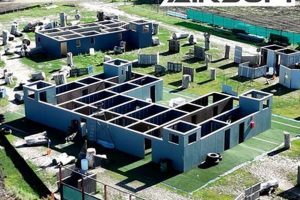
Determining the resources required to establish a recreational area for simulated combat games is a multifaceted process. The financial outlay depends significantly on various elements, including land acquisition or rental, infrastructure development, insurance coverage, and operational expenses such as equipment maintenance and staffing. This investment is crucial for entrepreneurs seeking to provide a dedicated space for airsoft enthusiasts.
Providing a dedicated locale for this activity offers numerous advantages to both business owners and the airsoft community. It furnishes a safe, regulated environment for players, fostering a sense of camaraderie and promoting responsible gameplay. The provision of designated areas for simulated combat evolved from informal gatherings of enthusiasts to structured, commercially viable ventures that cater to a growing demand for organized recreational activities.
This analysis will delve into the specific cost drivers associated with developing and maintaining an airsoft venue, providing a detailed overview of the expenditures involved. This exploration will cover aspects such as property considerations, safety requirements, operational overhead, and marketing strategies essential for success.
Tips for Assessing Initial Investment
Careful planning and meticulous cost analysis are paramount before embarking on the creation of a simulated combat recreational area. Thorough investigation of potential expenses can mitigate financial risks and enhance the likelihood of a successful launch.
Tip 1: Secure a Feasibility Study: A comprehensive feasibility study should be conducted to evaluate the market demand, competitive landscape, and potential profitability. This assessment aids in refining the business plan and identifying potential revenue streams.
Tip 2: Conduct a Detailed Land Survey: Before leasing or purchasing property, a detailed land survey is essential. This survey should identify any environmental concerns, zoning restrictions, or potential development obstacles that could impact costs.
Tip 3: Invest in a Professional Business Plan: A well-structured business plan that incorporates accurate financial projections is critical for securing funding from lenders or investors. This plan should outline projected startup costs, operating expenses, and revenue forecasts.
Tip 4: Obtain Multiple Insurance Quotes: Adequate insurance coverage is essential to protect against liability claims, property damage, and other unforeseen events. Procuring multiple quotes ensures competitive rates and comprehensive protection.
Tip 5: Prioritize Safety Equipment: Investing in high-quality safety equipment, such as masks, goggles, and barricades, is paramount for player safety. Compromising on safety can lead to injuries and legal liabilities.
Tip 6: Develop a Phased Implementation Strategy: A phased implementation strategy can help manage initial capital outlay by prioritizing essential components and deferring non-critical investments until the business generates sufficient revenue.
Tip 7: Leverage Strategic Partnerships: Collaborating with airsoft equipment retailers, local businesses, and community organizations can provide access to resources, marketing opportunities, and potential customer base.
Adhering to these guidelines can contribute to a more informed and financially sound decision-making process, resulting in a more sustainable and prosperous simulated combat recreational area.
The subsequent section will address ongoing operational costs and strategies for revenue generation and sustained profitability.
1. Land Acquisition

The procurement of suitable land represents a primary determinant in establishing the budgetary framework for a recreational area dedicated to simulated combat games. Its impact is significant, influencing operational capabilities and overall financial feasibility. The location, size, and existing characteristics of the property directly correlate with the ultimate investment required.
- Purchase vs. Lease
The decision to purchase land outright or enter into a lease agreement significantly alters the financial outlay. Purchasing land entails a substantial upfront capital investment, providing long-term ownership and potential appreciation but tying up significant resources. Leasing, conversely, requires lower initial capital but involves recurring monthly expenses, precluding long-term asset ownership. This decision hinges on capital availability, long-term business strategy, and prevailing market conditions.
- Location and Accessibility
The geographical location of the property profoundly impacts its cost. Proximity to urban centers typically increases land values, reflecting higher demand and accessibility. However, more remote locations may offer lower acquisition costs but necessitate investment in infrastructure improvements to ensure accessibility for customers. This trade-off must be carefully evaluated, considering target demographics and transportation logistics.
- Zoning and Regulatory Compliance
Zoning regulations imposed by local authorities dictate permissible land usage. Properties zoned for recreational activities are generally more costly due to their inherent suitability. Compliance with environmental regulations and building codes can further escalate development costs. Conducting thorough due diligence regarding zoning restrictions and potential regulatory hurdles is essential prior to land acquisition.
- Terrain and Site Preparation
The existing topography of the land directly influences site preparation expenses. Properties requiring extensive grading, clearing, or drainage improvements incur higher development costs. The presence of natural features, such as forests or water bodies, can also necessitate additional investment to integrate these elements into the simulated combat environment while ensuring safety and compliance with environmental regulations. Detailed site assessments are imperative to accurately estimate these associated costs.
In conclusion, the nuances of land acquisition have a substantial influence on the overall financial commitment to establish an airsoft recreational area. The interplay between purchase or lease decisions, geographical location, regulatory compliance, and site preparation requirements collectively determine the financial threshold necessary to initiate and sustain operations. A thorough understanding of these factors is essential for effective budgeting and financial planning.
2. Infrastructure Development

Infrastructure development represents a substantial component of the overall financial investment required to establish an airsoft recreational area. The extent and nature of this development directly influence the operational capacity, safety standards, and overall player experience, consequently affecting the venue’s attractiveness and profitability. Neglecting adequate infrastructure investments can result in operational inefficiencies, increased safety risks, and diminished customer satisfaction, all of which contribute to long-term financial strain.
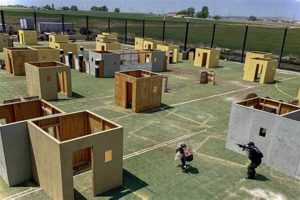
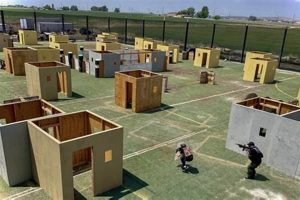
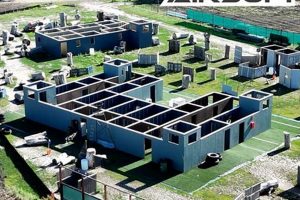
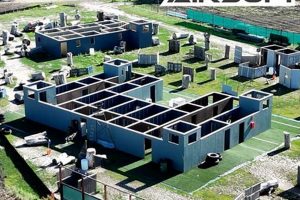
Examples of crucial infrastructure elements include the construction of playing fields with appropriate cover and obstacles, the erection of safety netting and barriers, the establishment of a staging area for players, and the provision of restroom facilities. The materials used in these constructions, such as wood, metal, or prefabricated structures, vary significantly in cost. The complexity of the field design, the size of the staging area, and the number of restroom facilities directly impact the overall expenditure. Moreover, accessibility considerations, such as the construction of ramps or pathways for individuals with disabilities, add to the infrastructure costs but also broaden the potential customer base. A real-world example demonstrates this: A facility prioritizing low initial infrastructure costs by using readily available but less durable materials for field construction faces frequent repairs, ultimately incurring higher long-term expenses compared to a facility investing in durable, weather-resistant materials.
Therefore, comprehensive infrastructure planning is paramount to accurately estimate the startup costs for an airsoft recreational area. By carefully considering the field design, safety requirements, accessibility standards, and durability of construction materials, one can optimize the infrastructure investment, minimizing long-term operational expenses and enhancing the venue’s appeal. Failure to account for these factors can lead to underestimated startup costs and potential financial challenges in the long run.
3. Insurance Coverage
Securing adequate insurance coverage is a mandatory consideration in determining the financial resources needed to launch a recreational area for simulated combat games. Its significance extends beyond mere compliance; it directly safeguards the business from potentially devastating financial liabilities arising from accidents, injuries, or property damage. The breadth and depth of the required insurance influence initial capital expenditure and ongoing operational costs.
- General Liability Insurance
This insurance protects against claims of bodily injury or property damage caused by the business’s operations. A slip and fall incident on the premises, or damage to a customer’s vehicle, could trigger a general liability claim. Premiums are directly related to the perceived risk, which is inherently higher for activities involving projectiles. Higher liability limits lead to increased premium costs, but also offer greater protection against substantial claims.
- Workers’ Compensation Insurance
If the business employs staff, workers’ compensation insurance is typically legally mandated. This coverage protects employees injured on the job, covering medical expenses and lost wages. The cost is determined by payroll size and the risk classification associated with the duties performed by employees. Tasks such as field maintenance or refereeing carry a higher risk and therefore increase the premium.
- Property Insurance
This insurance protects the physical assets of the business, including buildings, equipment, and inventory, from damage caused by fire, theft, vandalism, or natural disasters. The cost is influenced by the value of the insured property, the location of the business, and the type of coverage selected. A higher deductible will reduce the premium but increase out-of-pocket expenses in the event of a claim.
- Equipment Insurance
Specialized equipment, such as airsoft guns and safety gear, can be covered by equipment insurance. This coverage is often necessary to protect against damage, theft, or loss of this equipment. The cost is dependent on the value of the equipment being insured and the scope of the coverage. Replacement cost coverage will provide funds to purchase new equipment, whereas actual cash value coverage will only pay the depreciated value.
The cumulative cost of insurance premiums represents a significant operational expense that must be factored into the financial planning for starting and operating an airsoft recreational area. Obtaining multiple quotes from reputable insurance providers and carefully evaluating the coverage options is crucial for securing adequate protection at a competitive price. Underestimating the necessary insurance coverage could expose the business to substantial financial risks, potentially jeopardizing its long-term viability.
4. Equipment Purchase
The initial capital expenditure for equipment significantly contributes to the overall cost of establishing a recreational area for simulated combat games. This investment encompasses a range of items, each with varying price points, directly impacting the accessibility and operational viability of the venue. The scale of the equipment purchase is a primary determinant of the financial resources required, influencing the scope and quality of the gaming experience offered.
Key components of the equipment budget include airsoft replicas (guns), protective gear (masks, goggles, vests), field maintenance tools, and communication devices. The quality and quantity of airsoft guns influence the player experience and directly affect the cost. Protective gear is essential for safety and must meet specific standards, adding to the expense. Field maintenance tools are needed to maintain the playing environment and prevent damage, ensuring long-term operational efficiency. Communication devices are used for coordination and safety during gameplay, demanding a reliable and often costly investment. Consider two examples: a budget-conscious establishment might opt for lower-grade airsoft guns and minimal safety equipment, resulting in lower initial costs but potentially compromising player safety and game quality. Conversely, a premium venue might invest in high-end airsoft replicas and comprehensive safety gear, incurring higher initial costs but attracting more serious players willing to pay a premium for a superior experience.
In summary, the extent and quality of equipment purchased have a substantial influence on the startup cost of an airsoft field. Prioritizing safety and considering the target audience when making equipment decisions is critical for balancing initial investment with long-term operational sustainability and player satisfaction. Underestimating the importance of equipment or opting for substandard items can lead to higher maintenance costs, decreased customer satisfaction, and ultimately, a negative impact on the business’s financial health.
5. Operational Expenses
Operational expenses represent a crucial and ongoing element directly influencing the overall cost associated with initiating and maintaining an airsoft recreational area. These recurring costs, in contrast to one-time startup investments, dictate the long-term financial viability of the venture. Accurate projection and effective management of these expenses are essential to ensure profitability and sustained operation.
Core components of operational expenses include staffing costs, utility bills (electricity, water), maintenance and repair of equipment and facilities, ammunition and consumable supplies, and marketing and advertising expenditures. The number of employees required, including referees, maintenance personnel, and administrative staff, significantly impacts payroll expenses. Utility costs are influenced by the size of the facility, the intensity of usage, and prevailing energy rates. Regular maintenance of airsoft guns, safety gear, and field infrastructure is necessary to ensure safety and prevent costly breakdowns. Ammunition and other consumable supplies, such as compressed gas, represent recurring expenses directly tied to player activity. Marketing and advertising efforts are crucial for attracting and retaining customers, requiring a dedicated budget allocation. Consider the following example: an airsoft field that neglects regular maintenance experiences equipment failures and safety hazards, ultimately leading to decreased customer satisfaction and increased repair costs, exceeding the savings from initially minimizing maintenance spending.
Therefore, thorough budgeting and cost control measures are paramount for managing operational expenses and ensuring the long-term financial sustainability of the airsoft facility. Prioritizing energy-efficient equipment, implementing proactive maintenance programs, and optimizing staffing levels can contribute to significant cost savings. The ability to accurately forecast and effectively control these operational expenses is directly correlated with the ability to maintain profitability and achieve long-term business success within the competitive airsoft market.
6. Marketing Initiatives
Marketing initiatives represent a significant, often underestimated, component of the overall investment required to establish a successful airsoft recreational area. The cost associated with these initiatives directly correlates with the field’s ability to attract and retain customers, thereby impacting revenue generation and long-term financial sustainability. Neglecting marketing efforts or underfunding this critical area can result in low customer traffic, reduced revenue streams, and ultimately, business failure. The initial outlay for marketing should be viewed not as an expense, but as a strategic investment that directly influences the return on investment of the entire project.
Effective marketing strategies for an airsoft field encompass a variety of channels, each with its associated costs. These include digital marketing (website development, search engine optimization, social media advertising), traditional advertising (print ads, local radio spots), public relations (press releases, community outreach), and promotional events (grand opening, special themed games). Digital marketing, while potentially cost-effective, requires ongoing investment in content creation, website maintenance, and advertising campaigns. Traditional advertising can provide broader reach but often carries higher costs per impression. Promotional events can generate initial excitement and attract new customers, but require careful planning and budgeting. Consider a real-world example: an airsoft field that relies solely on word-of-mouth advertising experiences slow growth and limited customer acquisition compared to a field that invests in targeted digital advertising campaigns, resulting in higher initial costs but significantly greater revenue generation.
In conclusion, the investment in marketing initiatives is an integral part of determining the total cost of launching and operating an airsoft field. The selection of marketing strategies, the budget allocated to these efforts, and the ongoing evaluation of their effectiveness directly influence the field’s ability to attract customers and generate revenue. A comprehensive marketing plan, tailored to the target audience and the local market conditions, is essential for ensuring long-term financial success. Understanding the connection between marketing spend and revenue generation is crucial for making informed decisions and maximizing the return on investment in the airsoft business.
Frequently Asked Questions
The subsequent section addresses common inquiries regarding the financial commitments associated with establishing an airsoft recreational area. These answers provide insights into critical cost factors and assist in informed decision-making.
Question 1: What is the minimal land area required for a viable airsoft field?
The minimal land area varies contingent upon the intended field design and gameplay style. A compact, CQB (Close Quarters Battle) field might function effectively on one acre, while a larger, woodland-style field could necessitate five acres or more. Zoning regulations and environmental considerations may further dictate minimum size requirements.
Question 2: What types of insurance are absolutely essential for an airsoft field?
General liability insurance, which protects against claims of bodily injury or property damage, is non-negotiable. Workers’ compensation insurance is typically required if employing staff. Property insurance safeguards physical assets from damage or loss. Additional coverage, such as equipment insurance, may be advisable depending on the value of the assets.
Question 3: Can existing structures be repurposed for use in an airsoft field?
The repurposing of existing structures is potentially feasible, but depends heavily on their condition, layout, and suitability for simulated combat activities. Structural assessments, safety modifications, and compliance with building codes are crucial considerations. Renovation costs may offset the savings compared to constructing new facilities.
Question 4: What are some often-overlooked startup costs when opening an airsoft field?
Permitting fees, environmental impact assessments, legal consultations, marketing materials, website development, and point-of-sale systems are frequently underestimated. Contingency funds to address unforeseen expenses are also essential for accurate financial planning.
Question 5: How can operational costs be effectively managed to ensure profitability?
Implementing energy-efficient equipment, establishing preventative maintenance schedules, optimizing staffing levels, negotiating favorable supplier contracts, and tracking expenses meticulously are critical cost-saving strategies. Revenue diversification, such as offering equipment rentals or merchandise sales, can further enhance profitability.
Question 6: How much contingency funding is needed for a project?
The amount of contingency funding depends on project complexity and inherent uncertainties. A general guideline suggests allocating between 10% and 20% of the total estimated project cost to address unexpected expenses or delays. Factors such as site conditions and regulatory hurdles can impact this amount.
These answers highlight the financial considerations associated with the establishment of airsoft fields, ranging from land acquisition to operational management. Proper planning and diligent financial administration are paramount for success.
The subsequent section will delve into strategies for generating revenue and sustaining profitability in the airsoft field business.
Financial Commitment
The preceding analysis elucidates the multifaceted financial considerations involved in initiating an airsoft recreational area. Determining how much does it cost to start an airsoft field requires careful assessment of land acquisition, infrastructure development, insurance procurement, equipment purchasing, operational expenditures, and marketing initiatives. Each element necessitates meticulous planning and resource allocation to ensure viability and sustained operational capacity.
Prospective entrepreneurs must conduct thorough market research, develop comprehensive business plans, and secure adequate funding to navigate the inherent financial challenges. Success hinges upon informed decision-making, proactive cost management, and a commitment to providing a safe and engaging recreational environment. A strategic approach, coupled with diligent execution, is paramount for realizing long-term sustainability within the competitive landscape of simulated combat gaming.