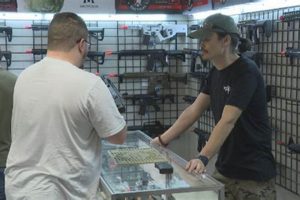
The expense associated with engaging in the airsoft hobby represents a significant factor for prospective participants. The financial commitment varies widely depending on numerous elements, from the type of equipment selected to the level of involvement desired. This article examines the diverse cost considerations involved in acquiring the necessary gear and maintaining participation in airsoft activities.
Understanding the financial implications before entering the sport is crucial for proper budgeting and realistic expectations. The initial investment can be relatively modest for casual players, while dedicated enthusiasts may allocate considerably larger sums to enhance their performance and overall experience. Throughout its evolution, airsoft has transitioned from a niche activity with limited accessibility to a more mainstream pursuit with a broader range of pricing options.
The following sections will delve into the specific components contributing to the overall expense, including the primary weapon, protective gear, accessories, field fees, and ongoing maintenance. Each of these elements contributes to the total expenditure and requires careful consideration when planning to participate in airsoft.
Tips for Managing Airsoft Expenditures
Prudent financial planning allows for sustained engagement in airsoft without excessive budgetary strain. Strategic purchasing and diligent maintenance are essential for optimizing investment.
Tip 1: Research Different Tiers. The entry-level airsoft guns, often AEGs (Automatic Electric Guns), may appear appealing due to their lower upfront pricing. However, considering mid-range options can provide superior performance and durability, potentially offering better long-term value by reducing the need for frequent replacements or upgrades.
Tip 2: Prioritize Protective Gear. Eye protection is paramount. Compromising on eye protection quality to save expenses is a hazardous decision. Invest in ANSI-rated goggles or a full-face mask to ensure adequate safety. Additional protective gear, such as vests and gloves, can be acquired gradually as budget allows.
Tip 3: Consider Used Equipment. A secondary market exists for airsoft gear. Purchasing used guns or accessories from reputable sellers can offer significant savings. However, thorough inspection for damage or wear is essential before completing the transaction.
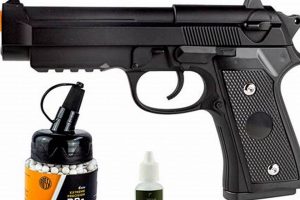
Tip 4: Budget for Consumables. BBs, batteries, and gas are recurring expenses. Purchasing these items in bulk can often reduce the unit cost. Carefully select BBs that are appropriate for the specific airsoft gun to prevent damage or malfunction.
Tip 5: Maintain Equipment Regularly. Proper maintenance extends the lifespan of airsoft guns and accessories. Regularly cleaning and lubricating the gun, along with properly storing batteries, can prevent costly repairs or replacements.
Tip 6: Leverage Field Memberships. For frequent players, consider purchasing a field membership. While requiring an upfront investment, memberships often offer discounted entry fees and other benefits, resulting in overall cost savings over time.
Tip 7: Upgrade Selectively. Resist the urge to immediately upgrade every component of an airsoft gun. Focus on upgrades that offer the most significant performance improvements, such as the hop-up unit or inner barrel. Research compatibility before purchasing any upgrade parts.
Effective management of expenses associated with airsoft requires careful planning, informed purchasing decisions, and proactive maintenance. Prioritizing safety and performance over mere cost-cutting ensures a more enjoyable and sustainable experience.
The succeeding section will address potential avenues for reducing involvement costs further.
1. Initial Gun Purchase

The initial gun purchase represents a primary driver in determining the overall cost associated with participation in airsoft. This acquisition sets the baseline for subsequent expenditures and influences the level of engagement possible. The selected airsoft gun directly impacts performance, reliability, and the need for future upgrades, all of which contribute to the financial burden. For instance, a low-cost, low-quality gun may require frequent repairs or immediate replacement, offsetting any initial savings. Conversely, a higher-priced, more durable option can provide years of reliable service, reducing long-term costs. Therefore, a discerning choice during the initial gun purchase phase is critical for managing the total financial commitment.
Consider a hypothetical scenario: individual A procures an entry-level airsoft gun for $80. Within six months, due to malfunctioning components, individual A needs to invest an additional $50 in repairs. Subsequently, the gun’s limited performance motivates individual A to purchase a new mid-range option for $150. This culminates in a total expenditure of $280. Conversely, individual B opts for a mid-range gun initially priced at $150. While the upfront investment is higher, the gun’s superior quality and reliability negate the need for repairs or replacements, resulting in a lower overall cost and a more sustained involvement.
Ultimately, the initial gun purchase dictates the trajectory of subsequent financial obligations within airsoft. A comprehensive understanding of available options, coupled with a realistic assessment of individual needs and financial constraints, is paramount for effective cost management. The choice between short-term savings and long-term value significantly influences the overall expenditure and the sustainability of participation in the sport. Carefully assessing the relationship between upfront cost and future expenditure is a crucial step in mitigating unnecessary expense.
2. Protective Gear Necessity

The requirement for protective gear represents a non-negotiable element of the overall expenditure associated with airsoft. Safety considerations mandate the use of specific equipment, directly influencing the total financial commitment. Failure to invest adequately in protective gear constitutes a hazardous practice, outweighing any potential cost savings. The ensuing points outline the facets of this essential expense.
- Eye Protection Standards
Airsoft projectiles, typically 6mm plastic BBs, can inflict serious ocular injury upon impact. ANSI-rated Z87.1 goggles or full-face masks are the minimum acceptable standard for eye protection. These standards ensure resistance to high-velocity impacts, preventing potential blindness. Lower-cost alternatives often fail to meet these safety benchmarks, presenting unacceptable risks. The price range for compliant eye protection typically falls between $20 and $100, depending on features and brand.
- Facial Protection Options
Beyond eye protection, facial injuries are a common risk in airsoft. Mesh masks or full-face masks offer protection against BB impacts to the nose, mouth, and ears. While mesh masks provide ventilation, the potential for BB fragments to pass through the mesh necessitates high-quality construction and tight weave. Full-face masks provide comprehensive protection but may affect breathability and field of view. The cost of facial protection ranges from $15 to $75.
- Body Armor Considerations
While not strictly mandatory, the use of body armor, such as vests or plate carriers, can mitigate the impact of BBs on the torso. The level of protection varies widely, from simple padded vests to replica plate carriers. The cost of body armor depends on the materials and construction, ranging from $30 for basic vests to several hundred dollars for high-end plate carriers with simulated ballistic plates. The decision to invest in body armor depends on individual pain tolerance and play style.
- Limb Protection Variables
Gloves protect hands and fingers from BB impacts, while knee and elbow pads mitigate injury during falls or tactical maneuvers. Fingerless gloves offer dexterity but leave fingertips exposed. Full-finger gloves provide complete coverage. Knee and elbow pads come in various styles, from soft foam pads to hard-shell versions. The cost of limb protection varies considerably, with gloves ranging from $10 to $50 and knee/elbow pads ranging from $15 to $60 per pair.
The protective gear element fundamentally adds to “how much do airsoft cost”. Minimizing expenditure within this sphere represents a false economy. The health and safety consequences associated with insufficient protection vastly outweigh potential monetary savings. A judicious approach necessitates allocating an appropriate budget to procure and maintain adequate protective equipment. This is crucial for safe and sustained engagement within the hobby.
3. Ammunition Replenishment Frequency

Ammunition replenishment represents a recurring operational expense directly impacting the overall cost of engaging in airsoft. The frequency with which BBs are consumed influences the sustained financial commitment required for participation. This facet is critical for budgetary planning.
- Rate of Fire and Expenditure
Airsoft guns possessing a higher rate of fire, measured in rounds per minute (RPM), demonstrably deplete ammunition supplies at an accelerated pace. Automatic Electric Guns (AEGs), known for their full-auto capabilities, necessitate more frequent BB purchases compared to spring-powered or gas-powered counterparts with lower RPM. Consider a scenario where a player with an AEG expends 2,000 BBs per game day, whereas a sniper using a bolt-action rifle may only use 200. This tenfold difference directly correlates to expenditure on ammunition.
- Play Style and Consumption
Aggressive play styles, characterized by constant firing and suppression tactics, invariably increase ammunition consumption. Players adopting a more cautious or strategic approach, conserving ammunition and prioritizing accuracy, will experience a lower replenishment frequency. A player engaging in close-quarters combat (CQB) will likely expend more BBs than a player assuming a designated marksman role.
- BB Quality and Waste
The quality of BBs used directly influences their consistency and reliability, thereby affecting waste. Low-quality BBs are prone to shattering or jamming within the airsoft gun, leading to unusable ammunition. The purchase of higher-quality BBs, while potentially incurring a higher initial cost, can reduce waste and optimize ammunition usage. Furthermore, bio-degradable BBs are often required by certain fields, representing another cost consideration.
- Magazine Capacity and Reloading
The magazine capacity of an airsoft gun indirectly affects ammunition replenishment frequency. High-capacity magazines allow for extended firing sequences before reloading, potentially encouraging less conservative ammunition usage. Conversely, low-capacity magazines necessitate more frequent reloading, fostering a more deliberate approach to firing and potentially reducing overall consumption. Mid-cap magazines strike a balance, requiring more reloading than high-caps, but less than real-caps which can influence BB expenditure.
The interplay between rate of fire, play style, BB quality, and magazine capacity collectively determines the ammunition replenishment frequency, and subsequently, its contribution to airsoft expenditure. Optimized ammunition usage, through conscious play and judicious selection of supplies, demonstrably reduces the long-term financial burden. This factor emphasizes the importance of aligning equipment choices and tactical approaches with budgetary considerations.
4. Field Entry Fees

Field entry fees represent a direct and unavoidable component of the overall cost associated with participating in organized airsoft activities. These fees are typically levied by airsoft field operators to cover operational expenses, including rent or property taxes, insurance, utilities, field maintenance, and staffing. The cost structure varies widely depending on location, field size, amenities, and the type of event offered. The absence of entry fees would preclude access to established airsoft playing environments, thereby eliminating the possibility of engaging in organized games. Consequently, field entry fees constitute an integral part of the total expenditure for airsoft enthusiasts.
The specific impact of field entry fees on “how much do airsoft cost” can be quantified. For instance, a player participating in one game per month at a field charging $30 per entry would incur an annual expenditure of $360 solely on field access. This figure can represent a significant portion of the total annual airsoft budget, particularly for individuals with limited financial resources. Furthermore, some fields offer discounted rates for members or season pass holders. While these memberships require an upfront investment, they can yield significant savings for frequent players. Conversely, infrequent participants may find that paying per-game fees is a more cost-effective option. Special events, such as milsim (military simulation) operations, often carry higher entry fees due to their extended duration, increased resource requirements, and specialized scenarios. Understanding the fee structure of local airsoft fields is thus a crucial step in managing airsoft expenditures.
In conclusion, field entry fees constitute a tangible and recurring expense that significantly contributes to “how much do airsoft cost.” Their impact varies depending on playing frequency, event type, and available membership options. Effective budgetary planning necessitates considering these fees as a core operational expense, alongside equipment, ammunition, and maintenance costs. Failing to account for field entry fees can lead to inaccurate budgeting and potentially limit participation in organized airsoft events. Therefore, understanding and factoring in these fees is essential for responsible and sustainable engagement in the sport.
5. Maintenance and Repairs

The cost of maintaining and repairing airsoft equipment represents a significant, albeit often overlooked, component of the total financial outlay. Regular maintenance serves to prolong the lifespan of equipment and prevent costly repairs arising from neglect. A direct correlation exists between the frequency and quality of maintenance procedures and the likelihood of incurring repair expenses. For instance, neglecting to lubricate the internal components of an Automatic Electric Gun (AEG) can lead to premature wear and eventual motor failure, necessitating replacement or extensive repair. Similarly, failing to properly clean and maintain gas-powered airsoft guns can result in seal degradation and gas leakage, impacting performance and requiring the replacement of seals or even entire gas magazines. These scenarios illustrate how preventative maintenance directly mitigates the potential for more substantial and expensive repairs, ultimately influencing “how much do airsoft cost” over time.
The importance of understanding the relationship between maintenance, repairs, and overall cost lies in the potential for proactive cost management. A player who invests time and resources in performing routine maintenance tasks, such as cleaning, lubrication, and parts inspection, is less likely to encounter unexpected equipment failures during gameplay. This proactive approach minimizes downtime, maximizes equipment lifespan, and reduces the need for costly repairs. Conversely, neglecting maintenance leads to accelerated wear and tear, increasing the probability of breakdowns and the subsequent need for professional repair services. Airsoft technicians typically charge hourly rates for labor, in addition to the cost of replacement parts. A complex repair can therefore quickly escalate into a significant expense. Furthermore, the unavailability of specialized repair services in certain geographical areas may necessitate shipping equipment to a technician, adding shipping costs to the overall repair bill.
In summary, maintenance and repairs are intrinsically linked to the overall cost of airsoft participation. Routine maintenance serves as a proactive measure to minimize the need for repairs, thereby reducing long-term financial burdens. Neglecting maintenance increases the risk of equipment failures and necessitates costly professional repair services. Therefore, understanding the significance of maintenance, acquiring the necessary skills to perform basic tasks, and allocating resources to preventative measures are essential for responsible and cost-effective engagement in the sport. The challenges associated with maintenance include the time commitment required and the acquisition of technical skills, but these challenges are outweighed by the long-term financial benefits.
6. Upgrades and Customization

The pursuit of enhanced performance and personalized aesthetics through upgrades and customization demonstrably increases the overall expenditure associated with airsoft. This facet, while optional, significantly contributes to “how much do airsoft cost” for a substantial segment of the player base. The desire to optimize functionality or achieve a unique visual identity necessitates investing in aftermarket components and modifications, leading to increased financial outlay. Upgrades, such as improved hop-up units or high-torque motors, are implemented to enhance accuracy, range, or rate of fire. Customization, on the other hand, focuses on visual modifications like custom paint jobs or the addition of tactical accessories. These alterations, while not strictly essential for participation, often represent a substantial portion of an individual’s total airsoft investment. The effect is cumulative, as the addition of each upgrade or customized element adds to the overall expense.
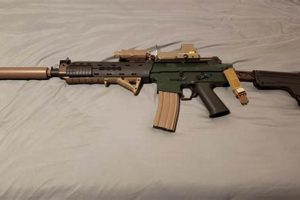
The connection between upgrades/customization and escalating costs can be illustrated through several practical examples. An airsoft rifle initially costing $200 can easily accrue an additional $300-$500 in upgrades. Common upgrades include: a precision inner barrel ($50-$100), a high-performance hop-up unit ($30-$70), a more robust motor ($40-$80), and reinforced internal gears ($30-$60). Customization can involve the addition of tactical rails, foregrips, optics, and unique camouflage patterns, further increasing the investment. The cost-benefit analysis of these modifications is subjective, as perceived improvements in performance or aesthetics are weighed against the financial expenditure. Moreover, the installation of upgrades may require specialized tools and technical expertise, potentially necessitating professional gunsmithing services, which adds to the cost.
In conclusion, upgrades and customization represent a significant cost driver within the airsoft hobby. While not mandatory, these modifications contribute substantially to the overall financial investment, often exceeding the initial cost of the airsoft gun itself. Understanding this relationship is crucial for budgetary planning and making informed decisions about equipment modification. The challenge lies in balancing the desire for enhanced performance and personalization with the practical constraints of a finite budget. Prudent decision-making and a clear understanding of the performance gains versus the financial investment are essential for responsible engagement in upgrades and customization within the sport.
Frequently Asked Questions
The following questions and answers address common inquiries regarding the financial commitment associated with airsoft participation. These aim to provide clarity and informed guidance for prospective and current players.
Question 1: What is the minimum initial investment required to begin playing airsoft?
The absolute minimum initial investment typically encompasses the cost of an entry-level airsoft gun (approximately $80-$150), ANSI-rated eye protection (approximately $20-$50), and a supply of BBs (approximately $10-$20). This basic setup allows for participation in some games, but additional equipment is strongly recommended for safety and improved gameplay.
Question 2: How do the different types of airsoft guns impact the overall cost?
Automatic Electric Guns (AEGs) generally require battery and charger purchases, adding to the initial cost. Gas blowback pistols necessitate the purchase of gas canisters, representing a recurring expense. Spring-powered guns have the lowest initial cost but may lack performance capabilities of AEGs or gas guns. Higher priced items will lead to how much do airsoft cost.
Question 3: Are expensive airsoft guns always superior to cheaper alternatives?
While higher-priced airsoft guns often offer enhanced durability, performance, and features, this is not always guaranteed. Thorough research and consideration of individual needs are crucial. A less expensive gun, properly maintained, may suffice for casual play, while dedicated players may benefit from the increased capabilities of a premium model. Assessing the requirements will affect how much do airsoft cost.
Question 4: What recurring expenses should be anticipated beyond the initial equipment purchase?
Recurring expenses include BBs, batteries (for AEGs), gas (for gas guns), field entry fees, and potential repair costs. The frequency of these expenses varies based on playing habits and equipment maintenance. Budgeting for these recurring costs is crucial for sustained participation in airsoft. These concerns influences how much do airsoft cost.
Question 5: How can one minimize the cost of participating in airsoft?
Cost-saving measures include purchasing used equipment from reputable sources, performing regular maintenance to prevent repairs, buying BBs in bulk, and opting for fields with lower entry fees. Prioritizing safety equipment and avoiding unnecessary upgrades are also effective strategies.
Question 6: Does joining an airsoft team or community affect the overall cost?
Joining an airsoft team or community can potentially reduce costs through shared resources, group discounts on equipment or field fees, and the exchange of knowledge regarding maintenance and repairs. However, team participation may also involve additional expenses, such as team uniforms or travel costs to regional events.
Understanding the cost factors involved in airsoft is paramount for responsible financial planning. By carefully considering these factors and adopting cost-saving strategies, individuals can maximize their enjoyment of the sport while minimizing financial strain.
The following section discusses options for financing airsoft equipment.
Concluding Observations
This exploration has detailed the multifaceted components contributing to the overall expense. From the initial weapon investment to recurring ammunition costs and the imperative of protective gear, numerous factors influence the total financial commitment. Understanding these elements facilitates informed decision-making and responsible budgeting for those considering or currently engaged in the hobby. Diligent maintenance, strategic purchasing, and a realistic assessment of individual needs are crucial for managing the financial burden.
The final determination of “how much do airsoft cost” depends largely on the individual’s level of engagement and purchasing habits. Prudent management of resources, combined with a focus on safety and long-term value, allows enthusiasts to sustain their participation without undue financial strain. The future viability of the sport relies on transparent understanding of associated expenses and the promotion of cost-effective practices.