The requirement for authorization to possess or use replica firearms varies significantly depending on geographic location. These regulations are influenced by local laws, which can range from complete prohibition to minimal oversight. Therefore, determining the applicable legal framework is essential before acquiring or utilizing these devices.
Understanding the local regulations protects individuals from potential legal repercussions. Adherence to applicable statutes ensures responsible handling and storage, contributing to public safety and minimizing the risk of misuse or misidentification. The legal landscape surrounding these items is often shaped by concerns related to public safety and potential confusion with real firearms.
This discussion will delve into specific examples of jurisdictions with varying regulations, examine the underlying rationale for these differences, and offer guidance on how to ascertain the pertinent legal requirements in a given area. Understanding these principles facilitates informed decision-making and compliance with relevant laws.
Guidance on Airsoft Gun Regulations
Navigating the legal landscape surrounding airsoft guns necessitates careful research and adherence to specific guidelines. Due diligence is crucial to ensure compliance and avoid potential legal issues.
Tip 1: Research Local Ordinances: Investigate municipal and county codes, as regulations can differ even within the same state. Direct inquiries with local law enforcement agencies can provide clarity regarding specific requirements.
Tip 2: Consult State Statutes: State laws often establish minimum age requirements for possession, transportation, and use. Reviewing the state penal code or contacting the state attorney general’s office is recommended.
Tip 3: Understand Federal Law: Federal law primarily addresses markings on airsoft guns to differentiate them from real firearms. Ensure compliance with federal regulations regarding orange tips or other required identifiers.
Tip 4: Check Transportation Laws: When transporting an airsoft gun, ensure it is unloaded, stored securely in a case or container, and kept out of plain sight. Some jurisdictions may have specific regulations regarding the manner of transportation.
Tip 5: Verify Field Regulations: Airsoft fields often have their own rules and regulations regarding permissible projectile velocity, protective gear, and conduct. Familiarize yourself with these rules before participating in any activities.
Tip 6: Stay Informed of Updates: Laws and regulations are subject to change. Periodically review relevant statutes and ordinances to stay informed of any updates or modifications.
Following these guidelines promotes responsible ownership and use, mitigating the risk of legal complications and ensuring compliance with applicable laws. Consistent vigilance is paramount for navigating the evolving regulatory framework.
This understanding of regulations surrounding these devices empowers individuals to make informed decisions and operate within legal boundaries.
1. Local Ordinances

Local ordinances constitute a critical element in determining if authorization is required for airsoft guns. These regulations, enacted at the municipal or county level, often supersede or supplement state and federal laws, establishing specific prohibitions, restrictions, or requirements unique to a particular locality. A seemingly permissible activity under state law can be rendered illegal by a conflicting local ordinance. For example, a state might not require a permit for airsoft gun possession, but a city ordinance could mandate registration or restrict use to designated areas, effectively requiring a form of local authorization. Failure to comply with such ordinances can result in fines, confiscation of the device, or even criminal charges.
The practical significance of understanding local ordinances is underscored by the diverse range of regulations across different jurisdictions. One city might classify airsoft guns as toys, subject to minimal regulation, while a neighboring city could categorize them as weapons, necessitating permits, background checks, and specific storage requirements. Consider the case of municipalities near school zones, where ordinances frequently prohibit the possession of any item resembling a firearm, including airsoft guns, within a specified distance. Ignorance of these location-specific regulations offers no legal defense.
Consequently, thorough research into local ordinances is a prerequisite for responsible airsoft gun ownership and use. This investigation should involve consulting municipal codes, contacting local law enforcement agencies, and seeking clarification from legal professionals when necessary. While state and federal laws provide a general framework, the operational realities and legal consequences are often determined by the specific nuances of local regulations. Adhering to these ordinances ensures compliance and mitigates the risk of unintended legal repercussions.
2. State Statutes

State statutes play a pivotal role in determining the legality of airsoft gun ownership and usage, often establishing the primary regulatory framework within a specific jurisdiction. These statutes define the legal boundaries within which municipalities operate and dictate the overarching conditions for possessing, transporting, and using these devices.
- Age Restrictions
Many states impose age restrictions on airsoft gun ownership and usage. These laws typically prohibit minors from possessing airsoft guns without adult supervision or parental consent. Violation of these statutes can result in fines or even criminal charges for both the minor and the supervising adult. For example, a state statute might stipulate that individuals under 18 years of age must have direct parental supervision while using an airsoft gun on private property.
- Definition and Classification
State statutes frequently define and classify airsoft guns within the legal framework. The classification of these devices impacts the level of regulation applied. States may classify airsoft guns as toys, imitation firearms, or even as weapons, each classification triggering a different set of legal requirements. If classified as a weapon, possession may require permits or licenses akin to those needed for actual firearms, a circumstance which directly relates to whether a permit is legally mandated.
- Transportation and Storage
Statutes governing the transportation and storage of airsoft guns are frequently established at the state level. These regulations typically mandate that airsoft guns be transported in a case or container and stored unloaded, out of plain sight. States may also have laws prohibiting the carrying of airsoft guns in public places or within certain distances of schools or government buildings. Violation of these provisions can lead to confiscation of the airsoft gun and potential criminal charges.
- Use Restrictions
State statutes may restrict the use of airsoft guns to specific locations, such as designated airsoft fields or private property with the owner’s permission. Discharging an airsoft gun in a public area or in a manner that endangers others can result in criminal charges, depending on the specific state laws. Some states may also have statutes addressing the modification of airsoft guns to increase their projectile velocity, as this can increase the risk of injury and potentially reclassify the device as a regulated weapon.
The cumulative effect of these state statutes directly determines whether a permit or license is required for airsoft guns. The specific requirements vary considerably from state to state, necessitating diligent research to ensure compliance. Engaging with the state’s legal resources or consulting with legal counsel is advisable to navigate these complexities and uphold responsible ownership.
3. Federal Markings

Federal regulations pertaining to markings on airsoft guns, while not directly mandating permits for possession, significantly influence how these devices are perceived and regulated at the state and local levels. These markings serve to differentiate airsoft guns from real firearms, impacting potential restrictions on their use and ownership.
- Orange Tip Requirement
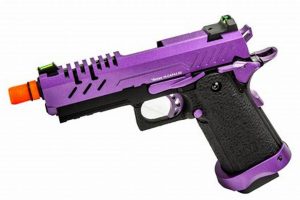
Federal law mandates that airsoft guns be equipped with a blaze orange tip, typically 6mm in length, to visually distinguish them from actual firearms. This requirement aims to prevent misidentification and reduce the risk of accidental shootings or use in criminal activities. The absence of an orange tip can lead to an airsoft gun being mistaken for a real weapon, potentially triggering severe legal consequences, even in jurisdictions where permits are not generally required. Consequently, maintaining the integrity of this marking is crucial, regardless of local authorization requirements.
- Import Regulations
Federal regulations governing the importation of airsoft guns stipulate adherence to marking requirements. Imported airsoft guns must meet specific criteria to ensure they are readily identifiable as non-lethal devices. Failure to comply with these regulations can result in seizure of the items by customs officials. While not directly necessitating a permit for domestic possession, compliance at the point of import sets the stage for lawful ownership and minimizes potential conflicts with local law enforcement.
- Impact on State Laws
Federal marking requirements influence the development of state laws concerning airsoft guns. States often reference or incorporate federal standards into their own regulations. A state might, for instance, use compliance with federal marking requirements as a criterion for distinguishing between regulated firearms and unregulated airsoft devices. Even in states without stringent permit requirements, adhering to federal marking standards reinforces the perception of the airsoft gun as a non-lethal training or recreational tool, potentially reducing the likelihood of attracting undue scrutiny.
- Consequences of Removal or Alteration
Removing or altering federally mandated markings on airsoft guns can have significant legal ramifications. Such actions can lead to the device being classified as an imitation firearm, potentially subjecting it to stricter regulations or even criminal penalties. In jurisdictions with permissive laws, tampering with the orange tip can erase the visual distinction that separates the airsoft gun from a real weapon, thereby invoking more restrictive legal oversight, regardless of general permit requirements. The intent behind the alteration, whether to enhance realism or facilitate misuse, can further aggravate the legal consequences.
In summation, while federal marking regulations do not directly mandate a “do you need a permit for airsoft guns,” compliance with these standards indirectly affects the device’s legal status and the likelihood of encountering legal issues at the state and local levels. Maintaining proper markings contributes to responsible ownership and mitigates potential conflicts with law enforcement, irrespective of local permit requirements. These markings provide a baseline for responsible regulation and differentiation, influencing the perception and legal treatment of airsoft guns across different jurisdictions.
4. Transportation Laws

Transportation laws exert a significant influence on the question of whether authorization is needed for airsoft guns. These laws, enacted at both state and local levels, dictate the acceptable methods for moving airsoft guns from one location to another, often imposing specific requirements that, while not always a direct permit mandate, effectively function as such due to their restrictive nature. For example, many jurisdictions require airsoft guns to be transported unloaded and encased in a secure container, rendering them inaccessible during transit. Failure to adhere to these regulations can lead to legal repercussions, irrespective of whether a permit is otherwise required for mere possession within that jurisdiction.
The rationale behind transportation laws stems from concerns about public safety and the potential for airsoft guns to be mistaken for real firearms. Strict rules regarding visibility, accessibility, and packaging are designed to minimize the risk of brandishing or misuse during transport. Consider a scenario where an individual openly carries an airsoft gun in public, even if the state does not require a permit for its ownership. The act of visibly transporting the device could trigger alarm, leading to police intervention and potential legal charges, such as disturbing the peace or violating local ordinances regarding imitation firearms. Compliance with transportation laws, therefore, becomes a de facto requirement for responsible ownership, even in the absence of a formal permit obligation.
In conclusion, while not always directly stipulating a formal permit, transportation laws function as a crucial component of the regulatory landscape surrounding airsoft guns. These laws impose practical requirements that restrict how the devices can be moved, effectively mandating responsible handling and storage during transit. Understanding and adhering to these regulations is essential for airsoft gun owners, regardless of the specific permit requirements in their jurisdiction, as failure to do so can lead to legal penalties and jeopardize the ability to possess and use the devices lawfully. This understanding contributes to responsible gun ownership and lawful compliance.
5. Field Regulations
Field regulations, while not directly dictating whether authorization is required for airsoft guns by law, operate as a crucial layer of governance that influences usage and safety practices. These regulations, established by airsoft field operators, supplement existing legal frameworks and effectively control the conditions under which these devices can be used, thereby impacting the practical need for awareness of local laws.
- Velocity Limits and Safety Gear
Airsoft fields typically impose strict velocity limits on airsoft guns, often measured in feet per second (FPS) with specific weight BBs. These limits are designed to minimize the risk of injury during gameplay. Additionally, mandatory safety gear, such as eye protection and face masks, is universally required. Compliance with these field-specific rules is essential for participation and may indirectly reduce the likelihood of legal scrutiny, as adhering to high safety standards demonstrates responsible use. Failure to comply results in expulsion from the field, regardless of legal permissibility of the device itself.
- Age Restrictions and Waivers
Many airsoft fields implement age restrictions, often requiring minors to have parental consent or supervision. These restrictions align with, or sometimes exceed, state and local laws concerning airsoft gun possession by minors. Furthermore, liability waivers are commonly required to participate, acknowledging the inherent risks associated with airsoft activities. These requirements serve to limit legal exposure for the field operator and ensure that participants are aware of and accept the potential for injury. Even where a permit is not legally mandated, these field-level restrictions govern actual gameplay.
- Game Rules and Conduct
Airsoft fields establish specific rules of engagement, including prohibited areas, allowed firing modes, and acceptable conduct. These rules are designed to ensure fair play and maintain a safe environment. Violation of these rules can result in penalties, ranging from temporary suspension to permanent expulsion from the field. Abiding by these guidelines underscores responsible behavior and can mitigate potential legal issues arising from reckless or negligent use of airsoft guns. Such responsible conduct can be seen favorably by local authorities, particularly if questions of legal compliance arise.
- Insurance and Liability
Airsoft field operators often carry liability insurance to protect against claims arising from injuries sustained on their premises. This insurance coverage necessitates adherence to stringent safety protocols and risk management practices. Participants may be required to provide proof of their own insurance or sign waivers that limit the field operator’s liability. The presence of insurance and well-defined liability policies creates a structured environment that promotes responsible airsoft activities, indirectly reinforcing the importance of legal compliance and minimizing the potential for disputes related to airsoft gun use.
In summary, while “do you need a permit for airsoft guns” is ultimately determined by legal statutes, field regulations create a framework for responsible airsoft activity. By enforcing safety standards, age restrictions, and codes of conduct, airsoft fields contribute to responsible use and mitigate legal risks. Even if permits are not legally mandated, compliance with field regulations is essential for participation and fosters a culture of safety and accountability within the airsoft community. These regulations, therefore, serve as a practical complement to legal requirements, promoting responsible gun usage within the broader context of the community.
6. Age Restrictions
Age restrictions represent a critical intersection between airsoft gun regulations and the requirement for authorization. These stipulations dictate the minimum age at which individuals can legally possess or use these devices, influencing the need for permits or supervised access. The establishment of age thresholds reflects societal concerns regarding the responsible handling and potential misuse of airsoft guns by minors.
- Minimum Age for Possession
Many jurisdictions establish a minimum age for airsoft gun possession, often ranging from 16 to 18 years. Individuals below this age are typically prohibited from owning or possessing airsoft guns without adult supervision. This restriction aims to ensure that those using these devices possess a sufficient level of maturity and understanding of safety protocols. In some regions, this may translate to requiring a permit for adults supervising minors, or simply making the adult responsible for the minor’s compliance.
- Supervised Use Requirements
Even when a jurisdiction does not mandate a minimum age for possession, supervised use requirements are frequently imposed. These stipulations dictate that minors can only use airsoft guns under the direct supervision of a parent, guardian, or other responsible adult. The rationale behind this requirement is to provide guidance and oversight, minimizing the risk of accidents or misuse. In practical terms, the adult may need to demonstrate knowledge of airsoft safety rules or obtain some form of certification, indirectly impacting whether authorization, in the form of training or registration, becomes necessary.
- Impact on Purchase Regulations
Age restrictions directly influence purchase regulations for airsoft guns. Retailers are often prohibited from selling these devices to individuals below the specified minimum age. Proof of age, such as a driver’s license or identification card, may be required at the point of sale. This restriction ensures that airsoft guns are not readily accessible to minors who may lack the maturity or understanding to handle them responsibly. Enforcement of these laws may lead to retailers requiring proof of age or even keeping a record of sales, again indirectly requiring documentation which approaches authorization.
- Consequences of Violations
Violations of age restrictions can result in significant legal consequences. Minors found in possession of airsoft guns in violation of these laws may face fines, confiscation of the devices, or even juvenile delinquency charges. Adults who knowingly provide airsoft guns to minors in violation of age restrictions may also face criminal penalties. The severity of these consequences underscores the importance of compliance with age-related regulations and highlights the potential need for legal guidance to ensure adherence.
Age restrictions form a critical element in the regulatory landscape surrounding airsoft guns. These stipulations shape the conditions under which individuals can legally possess, purchase, and use these devices. Understanding and complying with age-related regulations is paramount for both airsoft gun owners and retailers, and knowing these laws is essential for responsible ownership. These restrictions may lead to a need for permits, licenses, or other forms of authorization, especially in jurisdictions prioritizing safety and responsible use by minors.
7. Storage Requirements
Storage requirements represent a crucial, often overlooked, component in determining the necessity for authorization related to airsoft guns. While a jurisdiction may not explicitly mandate a permit for simple possession, regulations governing the secure storage of these devices can indirectly create a de facto authorization process. Proper storage aims to prevent unauthorized access, particularly by minors or individuals prohibited from possessing firearms. Consequently, jurisdictions prioritize secure storage methods to mitigate potential misuse or theft. The stringency of these requirements can influence the need for documentation or inspection, effectively functioning as a form of authorization. For instance, a locality may require airsoft guns to be stored in locked containers, triggering a need for proof of purchase or compliance with specific locking mechanisms, indirectly creating a “permit” based on demonstrating adherence to storage protocols.
Consider a real-world scenario where a homeowner residing in a permit-free state is found to have an unsecured airsoft gun accessible to children. While the state may not require a permit for owning the device, local child endangerment laws, coupled with unsecured storage, could lead to legal repercussions. In such cases, demonstrating compliance with safe storage practices becomes paramount, potentially requiring documentation or inspection to prove responsible ownership. Furthermore, insurance companies often require evidence of secure storage for coverage purposes, creating an indirect incentive to document and demonstrate compliance. Similarly, some airsoft fields may demand proof of secure transportation and storage at home before allowing participation, adding another layer of practical “authorization” based on storage requirements.
In conclusion, while the direct question of do you need a permit for airsoft guns may yield a negative answer in certain locales, understanding storage requirements reveals a more nuanced reality. The demand for secure storage acts as a critical safeguard against unauthorized use and accidental injury, and demonstrating compliance effectively functions as a form of de facto authorization. This understanding is crucial for responsible airsoft gun ownership, regardless of formal permit mandates. Ignoring these requirements exposes individuals to potential legal liabilities and undermines the commitment to safety that should underpin all aspects of airsoft activities. These storage practices also promote safer communities by reducing gun violence from unsecured weapon.
Frequently Asked Questions Regarding Airsoft Gun Authorizations
This section addresses common inquiries related to the legal requirements for owning and operating airsoft guns, aiming to clarify potential misconceptions and provide concise, informative answers.
Question 1: Does federal law require a permit for airsoft guns? Federal law primarily focuses on the marking of airsoft guns, mandating an orange tip to distinguish them from real firearms. It does not, however, impose a federal requirement for permits to own or possess these devices.
Answer: No, federal law does not mandate a permit for airsoft guns.
Question 2: Are state-level permits always necessary for airsoft gun ownership? State laws vary significantly regarding airsoft guns. Some states may classify them as toys, subjecting them to minimal regulation, while others may treat them as imitation firearms, necessitating permits or licenses. A definitive answer requires consulting the specific statutes of the state in question.
Answer: Not necessarily; it depends on the specific state laws.
Question 3: Do local ordinances ever impose permit requirements even if state law does not? Yes, local ordinances can impose restrictions or requirements that exceed state law. A city or county may mandate registration or permits for airsoft guns, even if the state has no such requirement. Researching local ordinances is crucial.
Answer: Yes, local ordinances can be more restrictive than state laws.
Question 4: If a permit is not required, are there other regulations that apply? Even in the absence of a permit requirement, regulations often govern the transportation, storage, and use of airsoft guns. These regulations may include restrictions on carrying them in public, mandates for secure storage, and limitations on permissible projectile velocity.
Answer: Yes, other regulations often apply, even without a permit requirement.
Question 5: Are there age restrictions associated with airsoft gun ownership that impact authorization? Many jurisdictions establish age restrictions, prohibiting minors from possessing airsoft guns without adult supervision. While not always a direct permit requirement, these restrictions can effectively necessitate adult oversight and control, indirectly functioning as a form of authorization.
Answer: Yes, age restrictions often exist and can indirectly necessitate adult supervision, impacting authorization.
Question 6: If an airsoft gun is modified, does it change the permit requirements? Modifying an airsoft gun, particularly to increase its projectile velocity or remove required markings, can alter its legal classification. Such modifications may subject the device to stricter regulations, potentially requiring permits that were not initially necessary. Alteration of federally required markings is illegal and can carry severe penalties.
Answer: Yes, modifications can change the legal classification and permit requirements.
In summary, determining whether a permit is needed for airsoft guns necessitates a thorough understanding of federal, state, and local laws. Due diligence and responsible gun handling are crucial, irrespective of specific permit requirements.
This overview provides a foundation for navigating the regulatory framework surrounding airsoft guns. Further exploration into specific legal jurisdictions is recommended for precise information.
Concluding Remarks on Airsoft Gun Authorization
This analysis has demonstrated that the determination of whether authorization is needed for airsoft guns is a multifaceted inquiry, dependent upon a confluence of federal guidelines, state statutes, and local ordinances. While federal law primarily addresses marking requirements, the onus of regulating possession, transportation, and usage largely falls to state and municipal jurisdictions. The absence of a universal permit mandate does not preclude the existence of stringent regulations governing storage, age, and modifications, all of which can indirectly influence the legal permissibility of ownership.
Responsible airsoft gun ownership necessitates proactive engagement with the relevant legal frameworks. Understanding the intricacies of these regulations is paramount to ensuring compliance and mitigating potential legal ramifications. Further investigation into the specific laws of one’s jurisdiction is strongly advised, promoting safety and upholding the principles of responsible device handling.