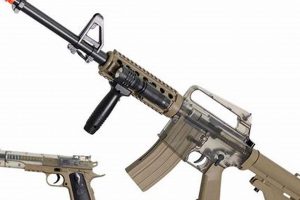
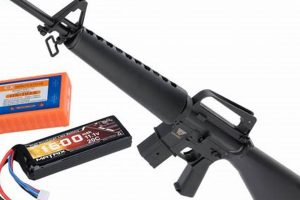
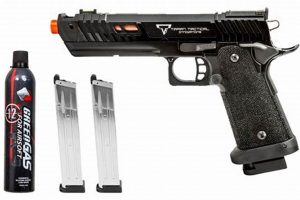
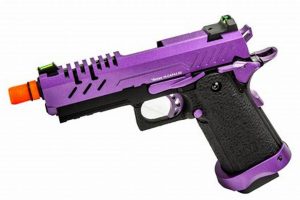
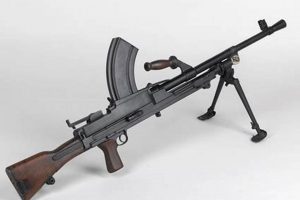
The question of whether an imitation firearm designed for recreational use can be employed as a means of protecting oneself is complex. Airsoft guns, which project non-lethal projectiles, are primarily intended for simulated combat scenarios and target practice. Their suitability for personal protection raises significant legal and practical considerations.
The perceived benefit of using such a device often stems from its availability and superficial resemblance to real firearms. However, relying on this resemblance carries considerable risk. The historical precedent shows instances where individuals brandishing imitation weapons have faced severe consequences due to misinterpretation by law enforcement and civilians alike. Furthermore, the effectiveness of these devices in incapacitating an assailant is questionable.
Therefore, a detailed examination of the legal ramifications, potential dangers, and viable alternatives is necessary to fully understand the implications of using these devices for self-defense. The following analysis will delve into these aspects, offering a clearer perspective on the matter.
Considerations Regarding the Use of Airsoft Devices for Personal Protection
The following points offer critical insights for those contemplating the utilization of airsoft guns as a defensive tool. Due diligence and careful consideration are paramount before making any decisions regarding personal safety and security.
Tip 1: Legal Ramifications: Before even considering this option, a thorough understanding of local and state laws pertaining to airsoft guns is crucial. Some jurisdictions may regulate their use and possession as strictly as actual firearms, potentially leading to legal penalties if misused.
Tip 2: Risk of Misidentification: Law enforcement officers and civilians may struggle to differentiate between an airsoft gun and a real firearm. Displaying one in a self-defense situation could result in being perceived as a threat, potentially leading to escalation or lethal force being used against the individual.
Tip 3: Limited Stopping Power: Airsoft projectiles are designed to be non-lethal. While they may cause temporary discomfort, their ability to effectively incapacitate a determined attacker is highly questionable. Relying solely on this capability could prove ineffective and dangerous.
Tip 4: Training and Proficiency: Even if legal and perceived threat concerns are mitigated, proficiency in handling the device is essential. Regular training is required to ensure accuracy and effectiveness in a high-stress situation. Consider professional self-defense courses instead.
Tip 5: Alternatives for Self-Defense: Explore alternative self-defense options that are more reliable and legally sound. Pepper spray, personal alarms, and self-defense training courses are all potentially more effective and less risky options to consider.
Tip 6: Psychological Impact: Wielding anything resembling a firearm can have significant psychological effects on both the user and the potential assailant. The situation could escalate unexpectedly, leading to unintended consequences.
In summary, while possessing the superficial appearance of firearms, airsoft guns present significant limitations and potential risks when considered for self-defense. Legal implications, the possibility of misidentification, and limited stopping power all contribute to the substantial drawbacks of this choice.
The following section will present a conclusion consolidating these perspectives and offering a final assessment of this complex topic.
1. Legality
The legal permissibility of carrying an airsoft gun for self-defense is a paramount consideration. Jurisdictional variations significantly impact the feasibility and consequences of such actions, rendering generalized advice unreliable. Thorough research into applicable laws is essential before considering this option.
- State and Local Regulations
Airsoft guns are often subject to state and local ordinances that may classify them similarly to firearms. These regulations can restrict open or concealed carry, requiring specific permits or licenses. Violating these regulations can result in fines, confiscation of the device, or even criminal charges. For example, some cities may prohibit the carrying of any item that resembles a firearm in public, regardless of its functionality.
- Federal Laws and Interstate Transport
While federal laws primarily govern actual firearms, interstate transportation of airsoft guns can still be subject to scrutiny, particularly if they are mistaken for real weapons. Transportation laws vary, and it is imperative to understand the regulations of each state through which the device will be transported. Furthermore, certain federal regulations may apply if the airsoft gun has been modified or altered in a manner that increases its potential for misuse.
- Brandishing and Use of Force Laws
Even if legally possessed, brandishing an airsoft gun in a threatening manner can lead to charges related to menacing or aggravated assault. Laws regarding the use of force dictate when and how an individual can legally defend themselves. Using an airsoft gun in a situation that does not warrant the use of deadly force can result in criminal prosecution and civil liability. The perceived threat posed by the imitation firearm may lead to unintended consequences.
- Misdemeanor vs. Felony Charges
Depending on the specific circumstances, charges related to the misuse of an airsoft gun can range from misdemeanors to felonies. Factors such as prior criminal history, the presence of aggravating circumstances (e.g., using the device to commit a robbery), and the jurisdiction’s laws all play a role in determining the severity of the charges. A felony conviction can have long-lasting repercussions, including the loss of firearm ownership rights and employment opportunities.
In conclusion, the legal aspects surrounding the carriage of these devices are intricate and highly context-dependent. The potential for misinterpretation, coupled with varying jurisdictional regulations, makes this a risky proposition. The legal consequences of misunderstanding or violating applicable laws can be severe, highlighting the need for comprehensive research and informed decision-making.
2. Misidentification

The potential for misidentification constitutes a critical flaw in the notion of employing an airsoft gun for self-defense. Due to their realistic appearance, these devices are easily mistaken for genuine firearms by both law enforcement personnel and civilians. This misidentification carries significant and potentially lethal consequences. An individual brandishing an airsoft gun, even with the intent of self-protection, may be perceived as an active threat, triggering a response appropriate for a situation involving an actual firearm. This can result in the use of deadly force by law enforcement or armed citizens who reasonably believe their lives or the lives of others are in imminent danger. The very act of displaying what appears to be a lethal weapon can escalate a situation, making it far more dangerous than it initially was.
Consider the real-world implications: a person carrying an airsoft gun for self-defense is confronted by an assailant. Upon displaying the device, a bystander, believing it to be a real firearm, calls the police. Responding officers, acting under the assumption that they are facing an armed individual, may react with lethal force to neutralize the perceived threat. Alternatively, the assailant themselves might escalate the confrontation, believing they are facing a legitimate weapon and therefore increasing the risk of serious injury or death for all involved. Furthermore, even after the situation is resolved and the device is identified as an airsoft gun, the individual who brandished it may face legal repercussions for creating a situation that put others in fear for their safety.
In summary, the inherent risk of misidentification renders the use of airsoft guns for self-defense highly problematic. The realistic appearance of these devices, while appealing from a self-defense perspective, creates a high probability of misinterpretation and escalated responses. This risk outweighs any perceived benefit, making alternative, less ambiguous self-defense tools a far safer and more responsible choice. The potential for tragic consequences stemming from misidentification cannot be overstated.
3. Effectiveness
The effectiveness of an airsoft gun as a self-defense tool is significantly limited by its design and intended purpose. Airsoft guns are engineered for recreational use, specifically simulated combat scenarios and target practice, where the emphasis is on safety and fair play rather than causing serious harm. As a result, the projectiles used are low-impact, and their ability to incapacitate an attacker is questionable. Real-world scenarios involve determined assailants who may be under the influence of substances, mentally unstable, or highly motivated, rendering the minor pain inflicted by an airsoft projectile ineffective in deterring their actions. The physiological effect of an airsoft projectile is unlikely to stop a determined attacker, even at close range. Therefore, the fundamental lack of stopping power makes it a dubious choice for self-defense.
The psychological impact on an assailant is also uncertain. While the sight of what appears to be a firearm might initially deter some individuals, experienced criminals or those in a heightened state of aggression may be undeterred, recognizing the device as non-lethal or simply pushing through the minor discomfort. Furthermore, relying on the psychological effect carries the risk of escalating the situation. An assailant who initially intended only to rob a person might become enraged by the deception, leading to increased violence. The limited effectiveness necessitates a critical examination of alternative self-defense options that offer a higher likelihood of successfully neutralizing a threat. Pepper spray, tasers, or personal alarms, coupled with self-defense training, are likely to be more effective in deterring or incapacitating an attacker.
In conclusion, the lack of demonstrable effectiveness makes an airsoft gun an unreliable tool for self-defense. Its inability to consistently incapacitate an attacker, coupled with the risk of escalating the situation, undermines its viability as a protective measure. Prioritizing effective and reliable self-defense tools and training is crucial for personal safety and security.
4. Training
The effectiveness of any self-defense tool is inextricably linked to the level of training an individual possesses in its proper use. In the context of the debate surrounding whether an airsoft gun can be carried for self-defense, training is not merely an ancillary consideration but a critical determinant of the potential outcome. Even if legal and practical hurdles are overcome, a lack of adequate training renders the device virtually useless, and potentially dangerous, in a high-stress situation. Proper training encompasses safe handling procedures, target acquisition, malfunction drills, and the ability to make rapid, informed decisions under duress. Without this foundation, an individual is ill-equipped to effectively deploy the airsoft gun, and may even inadvertently harm themselves or others. The assumption that simply possessing the device is sufficient for self-protection is demonstrably false.
Consider a scenario where an individual attempts to use an airsoft gun for self-defense but, lacking sufficient training, fumbles with the device, fails to properly aim, or experiences a malfunction they cannot resolve. This hesitation can provide the assailant with an opportunity to overpower them, turning the intended act of self-defense into a disadvantage. Conversely, an individual who has undergone rigorous training is more likely to react decisively and effectively, increasing the chances of deterring the attacker or creating an opportunity to escape. However, even with extensive training, the limitations of the airsoft gun itself its low stopping power, potential for misidentification, and legal ambiguity must still be acknowledged. Training cannot compensate for inherent inadequacies in the tool itself; it can only maximize the user’s ability to operate it within its limited capabilities.
In summary, while training is undeniably crucial for anyone considering using an airsoft gun for self-defense, it should not be viewed as a panacea. Training addresses the user’s proficiency but cannot mitigate the device’s inherent shortcomings. The decision to carry an airsoft gun for self-defense necessitates a comprehensive evaluation of all factors, including legal ramifications, practical limitations, and ethical considerations, with training serving as one component of a larger, more nuanced assessment. The pursuit of self-defense proficiency should also explore alternatives that may offer a more reliable and legally sound means of personal protection.
5. Liability

Liability, in the context of whether one can carry an airsoft gun for self-defense, represents a significant legal and financial risk. If an individual uses an airsoft gun, even in what they perceive to be a defensive situation, and causes injury or property damage, they are potentially liable for civil damages. This liability extends beyond direct physical harm caused by the projectile itself. The perception of the airsoft gun as a real firearm can trigger unintended consequences, such as emotional distress or economic losses for bystanders or the perceived assailant, creating grounds for legal action. For example, an individual who brandishes an airsoft gun during an altercation, causing the other party to suffer a heart attack, may be held responsible for resulting medical expenses and related damages, even if the airsoft projectile did not directly contribute to the medical event.
Furthermore, the issue of liability is compounded by the realistic appearance of many airsoft guns. If law enforcement responds to a situation where an airsoft gun is displayed, and mistakenly uses excessive force, the individual who initially brandished the airsoft gun may be held partially liable for contributing to the escalation of the incident. Similarly, if a civilian, reasonably believing they are facing a lethal threat, uses deadly force against someone wielding an airsoft gun, the legal aftermath can be complex and may lead to lawsuits. Insurance policies may also exclude coverage for incidents involving airsoft guns, leaving the individual financially responsible for any resulting damages. The lack of clear legal precedent regarding the use of airsoft guns in self-defense further complicates the matter, making it difficult to predict the outcome of a legal challenge.
In summary, the potential for liability is a critical factor to consider when evaluating the use of an airsoft gun for self-defense. The risks associated with causing injury, triggering unintended consequences, and facing legal action significantly outweigh the limited benefits offered by such a device. The combination of realistic appearance, uncertain legal standing, and potential for escalating situations makes it a high-risk choice from a liability perspective, underscoring the importance of exploring alternative and legally sound self-defense strategies.
6. Alternatives
The examination of whether airsoft guns serve as suitable self-defense tools necessitates a thorough consideration of available alternatives. These alternatives often present a more legally sound, effective, and ethically justifiable means of personal protection.
- Personal Safety Alarms
Personal safety alarms, compact devices emitting a loud, attention-grabbing sound, serve as a non-violent deterrent. These alarms can disorient an attacker and alert others to the individual’s distress, creating an opportunity to escape. Unlike airsoft guns, their deployment carries minimal risk of misinterpretation or escalation, avoiding potential legal repercussions associated with brandishing imitation firearms. Their effectiveness relies on attracting attention and disrupting the attacker’s plan, offering a safe alternative.
- Pepper Spray
Pepper spray, a non-lethal irritant, provides a means of incapacitating an assailant temporarily, allowing the individual to escape and seek assistance. Its effectiveness stems from its ability to cause intense burning sensations and temporary blindness, disrupting the attacker’s ability to continue the assault. Unlike airsoft guns, pepper spray is specifically designed for self-defense, and its legal status is generally more clearly defined, although regulations vary by jurisdiction. Its use offers a direct and immediate defense mechanism without the ambiguities and risks associated with airsoft devices.
- Self-Defense Training Courses
Self-defense training courses equip individuals with the skills and knowledge to assess threats, de-escalate conflicts, and physically defend themselves if necessary. These courses often emphasize situational awareness, verbal assertiveness, and practical techniques for striking, grappling, and escaping. Unlike relying solely on a device, self-defense training provides a comprehensive approach to personal safety, enhancing an individual’s ability to protect themselves in various situations. This proactive approach offers lasting benefits, empowering individuals with the confidence and skills to manage potentially dangerous encounters.
- Tasers and Stun Guns
Tasers and stun guns deliver an electric shock that temporarily incapacitates an assailant, allowing the individual to escape. These devices offer a greater level of stopping power compared to airsoft guns, while still being considered non-lethal. However, their legal status and usage regulations vary considerably by jurisdiction, requiring careful consideration and adherence to local laws. Their effectiveness relies on direct contact, necessitating close proximity to the attacker, which introduces a degree of risk. Despite this, they represent a more reliable and effective alternative compared to the uncertainties associated with employing an airsoft gun for self-defense.
These alternatives to carrying an airsoft gun for self-defense offer varying degrees of protection while mitigating the legal, ethical, and practical concerns associated with imitation firearms. The selection of the most appropriate alternative depends on individual circumstances, risk assessment, and adherence to local regulations. A comprehensive approach to personal safety often involves a combination of these strategies, tailored to the individual’s needs and capabilities. Choosing the correct alternative is a far safer and more legally sound option.
Frequently Asked Questions
The following questions address common concerns regarding the suitability of airsoft guns for personal protection. The information provided is intended to offer clarity on this complex issue.
Question 1: Is it legal to carry an airsoft gun for self-defense?
Legality varies significantly by jurisdiction. Some regions may regulate airsoft guns similarly to firearms, requiring permits or licenses. Carrying one without proper authorization can result in fines, confiscation, or criminal charges. Thoroughly research local and state laws.
Question 2: Can an airsoft gun effectively stop an attacker?
The stopping power of airsoft projectiles is limited. Designed for recreational use, they may not incapacitate a determined assailant under the influence of substances or in a heightened state of aggression. Relying solely on an airsoft gun is a risky proposition.
Question 3: What are the risks of misidentification?
Airsoft guns closely resemble real firearms, increasing the risk of misidentification by law enforcement and civilians. Brandishing one can trigger a response appropriate for a real firearm, potentially leading to the use of deadly force. Misidentification presents a significant safety hazard.
Question 4: Does training with an airsoft gun guarantee effective self-defense?
Training enhances proficiency but cannot overcome the inherent limitations of airsoft guns. It cannot compensate for their low stopping power or the risk of misidentification. Training is a complement, not a replacement, for more effective self-defense strategies.
Question 5: What are the potential legal liabilities?
Using an airsoft gun, even in self-defense, can result in civil liability if it causes injury or property damage. The user may be held responsible for medical expenses, emotional distress, or other damages. Insurance policies may not cover incidents involving airsoft guns, increasing financial risk.
Question 6: Are there better alternatives for self-defense?
Alternatives like pepper spray, personal alarms, and self-defense training often offer a more reliable and legally sound means of personal protection. These options minimize the risk of misidentification and provide a more effective response to potential threats. Explore alternative self-defense options.
In summary, while airsoft guns may offer a superficial sense of security, the legal risks, limited effectiveness, and potential for misidentification outweigh any perceived benefits. Prioritizing legally sound and effective self-defense strategies is paramount.
The following section will provide a conclusion consolidating these perspectives.
Conclusion
The preceding analysis explored the complexities associated with the question of whether an airsoft gun is a viable self-defense tool. Examination of legal ramifications, the high probability of misidentification, and the limited effectiveness of airsoft projectiles reveals substantial drawbacks. While training can enhance proficiency, it cannot compensate for the inherent limitations of these devices. Furthermore, the potential for civil and criminal liability underscores the risks involved. The availability of more effective and legally sound alternatives further diminishes the appeal of airsoft guns as a means of personal protection.
Therefore, a judicious approach to personal safety necessitates a comprehensive understanding of applicable laws and a careful evaluation of potential risks and benefits. Individuals are strongly encouraged to prioritize demonstrably effective and legally defensible self-defense strategies, ensuring their actions align with both personal safety and responsible citizenship. The pursuit of security should not compromise adherence to the law or create undue risk for oneself or others.