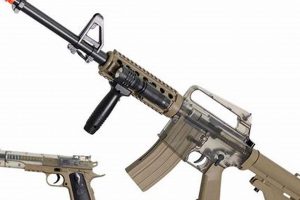
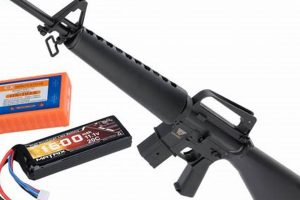
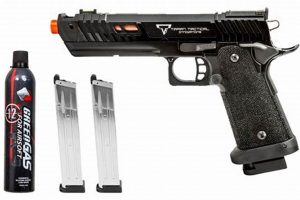
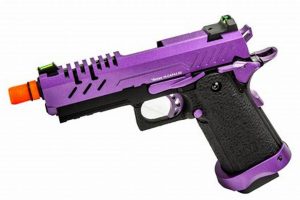
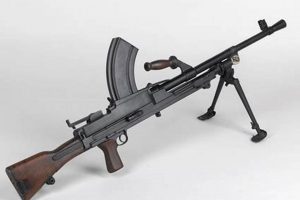
The compatibility of airsoft guns with gel balls is a frequent inquiry. Airsoft guns are specifically designed to fire plastic BBs, typically 6mm in diameter. These projectiles are propelled by compressed gas or spring mechanisms, optimized for the size, weight, and density of the airsoft BB. Altering the projectile type can affect performance and potentially damage the internal components of the airsoft gun.
The appeal of using alternative projectiles often stems from perceived advantages, such as lower impact or biodegradability. However, the internal mechanisms of airsoft devices are calibrated for specific projectile characteristics. Employing projectiles with different properties, particularly significantly increased size or moisture content, can lead to malfunctions, reduced accuracy, and premature wear on the system. Furthermore, the operational pressures and tolerances within the airsoft gun may not be suitable for safely or effectively propelling gel balls.
Therefore, this examination will detail the inherent differences between airsoft BBs and gel balls, analyze the potential ramifications of using gel balls in airsoft guns, and address safety concerns that arise from such modifications. This understanding will clarify the potential risks and benefits associated with altering the designed projectile of airsoft devices.
Considerations Regarding Projectile Compatibility
When evaluating the use of alternative projectiles in airsoft devices, several factors must be carefully considered to prevent damage and ensure user safety.
Tip 1: Projectile Caliber. Airsoft guns are engineered for precise projectile diameters, typically 6mm. Diverting from this specification may cause jamming or internal damage.
Tip 2: Projectile Weight. The propulsion system is calibrated for a specific projectile weight. Using a lighter or heavier projectile affects range, accuracy, and the longevity of internal components.
Tip 3: Material Composition. Airsoft BBs are constructed from rigid plastic. Softer or more pliable projectiles may deform during firing, causing barrel obstructions or inconsistent trajectories.
Tip 4: Moisture Content. Gel balls contain significant moisture. Introducing moisture into the internal mechanisms of an airsoft gun can lead to corrosion and decreased performance.
Tip 5: Nozzle and Barrel Tolerance. The gap between the nozzle and barrel of an airsoft gun is designed for rigid BBs. Gel balls can expand and cause failures in the compression system.
Tip 6: Pressure and Velocity. Airsoft guns are designed to operate within a specific pressure and velocity range for airsoft BBs. The usage of gel balls may change pressure and cause damages.
Therefore, modifying an airsoft gun to fire projectiles other than those intended by the manufacturer poses a risk to the user and the device. Carefully assess the potential drawbacks before introducing alternative ammunition.
The subsequent sections will explore the potential ramifications of altering projectile types in airsoft devices, providing a comprehensive overview of the relevant safety considerations.
1. Incompatible projectile dimensions

The core reason airsoft guns are generally unsuitable for launching gel balls lies in the fundamental disparity in projectile dimensions. Airsoft guns are meticulously designed to accommodate 6mm plastic BBs with precise tolerances. Introducing gel balls, which are significantly larger when hydrated, disrupts this established system. The result is often immediate mechanical failure, as the internal mechanism cannot effectively chamber or propel the oversized projectile. The nozzle, barrel, and hop-up unit are all calibrated for the specific diameter of an airsoft BB; attempting to force a gel ball through these components can cause jamming, breakage, or irreversible damage.
An analogy can be drawn to the use of incorrect ammunition in a firearm. A firearm chambered for a specific cartridge is unsafe and non-functional with a cartridge of a different caliber. Similarly, an airsoft gun designed for 6mm BBs cannot reliably or safely fire larger gel balls. This is not merely a matter of reduced accuracy or performance; the structural integrity of the airsoft gun itself is compromised. Furthermore, the inconsistent size and shape of hydrated gel balls, which can vary slightly even within the same batch, introduces an additional element of unreliability. This contrasts sharply with the consistent, uniform dimensions of manufactured airsoft BBs.
In conclusion, the dimensional incompatibility between airsoft BBs and gel balls presents a critical barrier to their interchangeable use. The potential for mechanical damage, coupled with the unpredictable nature of gel ball dimensions, underscores the importance of adhering to the manufacturer’s specified ammunition. Understanding this incompatibility is essential for responsible airsoft operation and the preservation of equipment.
2. Potential Internal Damage

The query of whether airsoft guns can effectively utilize gel balls necessitates careful examination of the potential for internal damage. The structural integrity and operational lifespan of airsoft devices can be significantly compromised by the introduction of non-specified projectiles.
- Stress on the Gearbox
The gearbox, a critical component responsible for cycling and propelling projectiles, is calibrated for the specific weight and resistance of airsoft BBs. Gel balls, when swollen with water, often possess a higher mass and coefficient of friction than standard BBs. This discrepancy can impose undue stress on the gearbox gears, piston, and motor, leading to accelerated wear, component failure, and eventual gearbox malfunction. Prolonged use of gel balls can therefore necessitate premature replacement of the gearbox or its constituent parts.
- Barrel Obstruction and Nozzle Damage
Airsoft barrels and nozzles are manufactured to precise tolerances to ensure consistent projectile velocity and trajectory. Gel balls, due to their deformable nature and potential for inconsistent sizing, present a risk of barrel obstruction. If a gel ball becomes lodged within the barrel, subsequent firing attempts can generate excessive pressure, potentially causing the barrel to rupture or the nozzle to crack or shatter. Such damage can render the airsoft gun inoperable and pose a safety hazard to the user.
- Hop-Up Unit Malfunction
The hop-up unit imparts backspin to airsoft BBs, extending their range and improving accuracy. Gel balls, with their differing surface texture and propensity for disintegration, may not interact effectively with the hop-up bucking. Furthermore, residual moisture from gel balls can accumulate within the hop-up unit, leading to swelling of the bucking, reduced effectiveness, or complete unit failure. The altered trajectory caused by a malfunctioning hop-up can significantly decrease accuracy and introduce unpredictable projectile behavior.
- Air Seal Degradation
Maintaining a proper air seal within the cylinder and piston assembly is essential for efficient propulsion. The use of gel balls, with their potential for fragmentation and moisture introduction, can compromise the integrity of these seals. Debris from burst gel balls can lodge within the cylinder, scoring the cylinder walls and degrading the piston head seal. Moisture can also promote corrosion and swelling of O-rings, leading to air leaks and a reduction in overall performance. Loss of air seal results in diminished velocity, inconsistent shot-to-shot performance, and ultimately, the need for internal repairs.
In summary, while the idea of using gel balls in airsoft guns may seem appealing, the potential for internal damage outweighs any perceived benefits. The resulting wear and tear on critical components can substantially reduce the lifespan and reliability of the device, rendering the airsoft gun ineffective and potentially unsafe. Understanding these risks is crucial for responsible airsoft ownership and the preservation of equipment.
3. Velocity calibration mismatch

The performance of an airsoft gun hinges on precise velocity calibration, a process intricately linked to the type of projectile it is designed to fire. This calibration ensures that the projectile achieves the intended velocity within legal and safety parameters. Airsoft guns are typically calibrated for plastic BBs of a specific weight and diameter. Introducing gel balls into this equation fundamentally disrupts this calibration due to the gel balls’ differing mass, density, and aerodynamic properties. This velocity calibration mismatch can manifest in several undesirable outcomes, including inconsistent shot velocity, reduced effective range, and potential damage to the airsoft gun’s internal components. For example, an airsoft gun calibrated to fire a 0.20g BB at 350 feet per second will likely fire a gel ball, which typically has a significantly higher mass when hydrated, at a much lower and inconsistent velocity.
The implications of this mismatch extend beyond mere performance degradation. The internal mechanisms of an airsoft gun, particularly the piston and spring, are engineered to withstand specific forces generated during the firing cycle with the intended projectile. If a heavier gel ball is used, these components may experience excessive stress, potentially leading to premature wear or even breakage. Furthermore, the lower velocity of the gel ball may not provide sufficient energy to effectively engage the hop-up system, which is designed to impart backspin and extend the range of the BB. This results in a drastically reduced and unpredictable trajectory, rendering the airsoft gun ineffective for its intended purpose. The lower velocity may also lead to gel balls dribbling out of the barrel instead of being forcefully shot, which renders airsoft gun to not shoot gel balls successfully.
In conclusion, velocity calibration is a critical factor in airsoft gun operation, and attempting to use gel balls fundamentally undermines this calibrated system. The resulting mismatch can lead to performance issues, internal damage, and ultimately, a compromised and ineffective airsoft gun. Understanding the delicate balance between projectile characteristics and gun mechanics is essential for responsible airsoft gun ownership and ensures the device operates safely and effectively with its designed ammunition. Adherence to the manufacturer’s specifications regarding projectile type is, therefore, paramount.
The introduction of moisture into airsoft gun mechanisms, a direct consequence of attempting to use gel balls, poses a significant risk of malfunctions. Airsoft guns are designed to operate with dry, solid projectiles; therefore, the inherent moisture content of gel balls can induce a range of operational problems.
- Corrosion and Rust
The internal components of airsoft guns, particularly those made of metal, are susceptible to corrosion and rust when exposed to moisture. Gel balls, being primarily water, introduce a substantial amount of moisture into the system. This moisture can accelerate the oxidation of metal parts, leading to rust formation and subsequent degradation of critical components such as gears, springs, and barrels. The resulting friction and wear can significantly reduce the lifespan and performance of the airsoft gun.
- Short Circuiting in Electric Airsoft Guns (AEGs)
Electric airsoft guns (AEGs) rely on electrical circuits to power their firing mechanisms. Moisture introduced by gel balls can cause short circuits within these circuits, leading to malfunctions, damage to electronic components such as MOSFETs, and even complete failure of the AEG. Water can bridge electrical connections, creating unintended pathways for current flow and disrupting the intended operation of the system. This is particularly problematic in areas around the motor, battery, and wiring harness.
- Swelling and Deformation of Polymer Parts
While metal components are susceptible to corrosion, polymer parts can also be adversely affected by moisture. Certain polymers can absorb water, leading to swelling and deformation. This can cause dimensional changes in critical components such as hop-up buckings, nozzles, and piston heads, disrupting the air seal and negatively impacting performance. The swelling of these parts can also cause binding and friction within the system, leading to further mechanical stress.
- Lubrication Degradation
Airsoft guns rely on lubrication to reduce friction and ensure smooth operation. Moisture introduced by gel balls can wash away or dilute these lubricants, reducing their effectiveness. This can lead to increased wear and tear on moving parts, as well as increased friction and resistance within the system. The lack of proper lubrication can also contribute to increased heat generation and accelerated component failure. Certain types of grease can also emulsify when mixed with water, reducing their lubricating properties.
In summary, the introduction of moisture into airsoft guns through the use of gel balls presents a significant risk of malfunctions. The resulting corrosion, short circuits, swelling, and lubrication degradation can compromise the performance, lifespan, and reliability of the device. Understanding these risks is crucial for responsible airsoft gun ownership and the preservation of equipment. It underscores the importance of adhering to the manufacturer’s specifications regarding ammunition and avoiding the use of moisture-laden projectiles.
5. Material composition divergence
The divergence in material composition between airsoft BBs and gel balls is a primary factor determining the unsuitability of airsoft guns for firing gel balls. Airsoft guns are engineered to function with rigid, plastic projectiles possessing specific material properties. Gel balls, conversely, are primarily composed of water-absorbent polymers, resulting in vastly different physical characteristics.
- Rigidity and Deformability
Airsoft BBs are manufactured from hard plastic compounds designed to withstand the forces exerted during firing without significant deformation. This rigidity is essential for maintaining consistent trajectory and preventing jamming. Gel balls, in contrast, are highly deformable due to their water-saturated structure. This deformability can lead to barrel obstructions, inconsistent propulsion, and unpredictable flight paths. The firing mechanism within an airsoft gun is not designed to accommodate such a pliable projectile.
- Surface Friction
Airsoft BBs possess a low coefficient of friction, allowing them to move smoothly through the barrel and hop-up unit. The hop-up unit relies on consistent surface contact to impart backspin. Gel balls, due to their higher surface friction and tendency to fragment, interact differently with the hop-up, leading to erratic spin and compromised accuracy. The increased friction can also strain the internal components of the airsoft gun, potentially accelerating wear and tear.
- Impact Resistance
Airsoft BBs are designed to withstand a certain level of impact without shattering, ensuring safe use in skirmishes. While they may crack or chip upon impact, they typically remain intact. Gel balls, being fragile and water-filled, are designed to burst upon impact. This disintegration introduces debris into the airsoft gun’s internal mechanisms, potentially causing blockages and malfunctions. The residue can also contribute to corrosion and reduce the effectiveness of lubricants.
- Density and Weight Distribution
The density and weight distribution of airsoft BBs are carefully controlled to ensure consistent flight characteristics. This allows for predictable trajectory and accurate targeting. Gel balls, due to their variable water content and asymmetrical structure, often exhibit inconsistent density and weight distribution. This inconsistency can result in erratic flight paths and reduced accuracy, rendering the airsoft gun less effective.
In conclusion, the significant divergence in material composition between airsoft BBs and gel balls renders the latter unsuitable for use in airsoft guns. The differences in rigidity, surface friction, impact resistance, and density all contribute to potential performance issues and internal damage. These material properties underscore the critical importance of adhering to the manufacturer’s specified ammunition to ensure safe and effective operation.
6. Warranty invalidation risks

The practice of utilizing gel balls in airsoft guns presents a significant risk of warranty invalidation. Manufacturers design and warranty their products based on the assumption that they will be used with specified ammunition. Deviating from this specification, particularly by using a projectile with different material properties, can void the warranty, leaving the owner responsible for any repairs or replacements resulting from the modification.
- Ammunition Specifications
Airsoft gun warranties typically stipulate the use of standard 6mm plastic BBs within a specified weight range. These parameters are integral to the firearm’s safe and efficient operation. Introducing gel balls, which have disparate weight and density characteristics, falls outside the manufacturer’s specifications. This is often explicitly stated as grounds for warranty voidance in the product documentation.
- Internal Damage Liability
Warranties generally cover manufacturing defects and failures under normal operating conditions. When an airsoft gun malfunctions due to the use of non-approved ammunition, such as gel balls causing internal damage or obstruction, the manufacturer can reasonably deny warranty claims. The onus is on the owner to demonstrate that the malfunction was not a result of using inappropriate projectiles.
- Modification Restrictions
Attempting to modify an airsoft gun to better accommodate gel balls further exacerbates the risk of warranty invalidation. Any alterations to the firing mechanism, hop-up system, or barrel assembly can be construed as unauthorized modifications, regardless of whether they directly caused the malfunction. Warranties typically emphasize that the device must remain in its original condition to maintain coverage.
- Burden of Proof
In the event of a warranty claim, the airsoft gun owner bears the responsibility of proving that the malfunction was not caused by misuse or unauthorized modification. Traces of gel ball residue or evidence of internal damage consistent with their use can be sufficient grounds for the manufacturer to reject the claim. The complexity of airsoft gun mechanisms can make it difficult to definitively demonstrate that gel balls were not a contributing factor to the failure.
These facets highlight the considerable risk of warranty invalidation when considering the use of gel balls in airsoft guns. Given the potential for internal damage and the explicit restrictions outlined in most warranty agreements, adhering to the manufacturer’s specifications regarding ammunition is crucial for preserving warranty coverage. The financial implications of self-funded repairs can far outweigh any perceived benefits of using alternative projectiles.
7. Safety concerns paramount
The question of whether airsoft guns can shoot gel balls is inherently linked to safety considerations. Prioritizing user and bystander safety is crucial when considering the modification of any device designed to launch projectiles. Understanding the potential hazards associated with using non-standard ammunition in airsoft guns is essential before experimenting with alternative projectile types.
- Eye Protection Adequacy
Airsoft eye protection is designed and tested to withstand the impact of standard airsoft BBs. The integrity of this protection may be compromised when subjected to projectiles with different masses, velocities, or fragmentation patterns, such as gel balls. Even if a gel ball itself does not penetrate the eye protection, the force of impact or subsequent shattering could still cause injury. Therefore, the suitability of standard airsoft eye protection for use with gel balls must be rigorously evaluated, and alternative protection may be necessary.
- Ricochet and Fragmentation Hazards
The behavior of gel balls upon impact differs significantly from that of plastic BBs. While BBs tend to retain their shape upon impact or shatter into a few large pieces, gel balls are designed to burst into numerous small fragments. These fragments can pose a hazard to exposed skin, particularly mucous membranes, and could potentially enter the eyes. Furthermore, the altered trajectory and increased fragmentation can make it more difficult to predict where the projectile or its fragments will travel after impact, increasing the risk to bystanders.
- Velocity and Impact Energy Control
Airsoft fields typically have velocity limits to ensure player safety. These limits are based on the impact energy of standard airsoft BBs. If an airsoft gun is used to fire gel balls, the velocity and impact energy may change unpredictably. This can lead to the projectile exceeding safe velocity limits, potentially causing injury to those hit. Without proper testing and recalibration, it is impossible to guarantee that an airsoft gun firing gel balls remains within safe velocity parameters.
- Material Toxicity and Environmental Impact
The materials used to manufacture gel balls may not be as thoroughly tested for toxicity as those used for standard airsoft BBs. There is a potential risk of exposure to harmful chemicals through skin contact or inhalation of fragmented gel ball particles. Furthermore, the biodegradability of gel balls can vary significantly depending on the specific polymer used. The environmental impact of widespread gel ball use, particularly in outdoor environments, needs careful consideration, as improper disposal could lead to soil or water contamination.
These safety considerations highlight the potential dangers associated with deviating from the manufacturer’s recommended ammunition for airsoft guns. While the allure of using gel balls may be strong, a thorough assessment of the associated risks is paramount. Any decision to modify an airsoft gun to fire gel balls must be accompanied by a commitment to comprehensive safety protocols, including appropriate personal protective equipment and adherence to responsible handling practices. Ultimately, the safe operation of any projectile-launching device should be the highest priority.
Frequently Asked Questions
This section addresses common inquiries regarding the potential for using alternative projectiles, specifically gel balls, in airsoft guns. The responses provided are intended to offer factual information and highlight potential risks associated with such practices.
Question 1: Is it possible to modify an airsoft gun to fire gel balls effectively?
Modification is possible; however, achieving reliable and consistent performance presents significant challenges. The internal mechanisms of airsoft guns are designed for specific projectile characteristics, and alterations may compromise the device’s integrity.
Question 2: What types of damage can occur when using gel balls in airsoft guns?
Potential damage includes gearbox stress, barrel obstruction, nozzle damage, hop-up unit malfunction, and air seal degradation. These issues can lead to diminished performance, component failure, and safety hazards.
Question 3: Does using gel balls in an airsoft gun void the manufacturer’s warranty?
In most cases, yes. Airsoft gun warranties typically stipulate the use of standard 6mm plastic BBs. Using non-approved ammunition like gel balls can invalidate the warranty, leaving the owner responsible for repairs.
Question 4: Are there safety concerns associated with firing gel balls from an airsoft gun?
Significant safety concerns exist. Standard eye protection may not be adequate for gel ball impacts, and the resulting fragmentation can pose additional hazards. Velocity and impact energy may also be unpredictable.
Question 5: Can gel balls be used in all types of airsoft guns (AEGs, gas blowback, spring)?
The inherent incompatibility applies to all types of airsoft guns, although the specific failure modes may vary. Electric airsoft guns (AEGs) are particularly vulnerable to moisture-related damage from gel balls.
Question 6: Are there alternative projectiles that are safer to use in airsoft guns?
Adhering to the manufacturer’s specified ammunition type is generally the safest option. Exploring alternative projectiles is discouraged unless specifically approved by the manufacturer and accompanied by rigorous safety testing.
The key takeaways from this FAQ section emphasize the potential risks and limitations associated with using gel balls in airsoft guns. Adherence to manufacturer specifications is crucial for maintaining safety, performance, and warranty coverage.
The subsequent section will provide a summary of the article, reinforcing the importance of responsible airsoft gun ownership and the safe use of equipment.
Can Airsoft Guns Shoot Gel Balls
This exploration has comprehensively examined the compatibility of airsoft guns with gel balls. The analysis revealed significant disparities in projectile dimensions, material composition, and performance characteristics. These differences result in a high likelihood of internal damage, velocity calibration mismatch, and moisture-related malfunctions. Further, warranty invalidation risks and paramount safety concerns associated with altering projectile types were underscored. The evidence presented strongly suggests that airsoft guns are not engineered to safely or effectively fire gel balls.
Therefore, responsible airsoft enthusiasts should adhere to manufacturer specifications regarding approved ammunition. Experimentation with alternative projectiles, while potentially appealing, carries inherent risks that compromise both equipment integrity and user safety. Continued research and adherence to established safety protocols remain essential for promoting responsible airsoft practices and mitigating potential harm. Prioritize safe practices to safeguard yourself and others during the airsoft sessions.