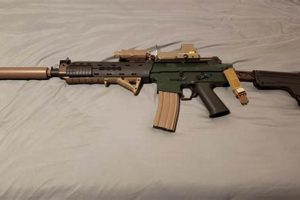
Protective eyewear designed for the sport of airsoft is a critical piece of safety equipment. These items shield the eyes from impacts caused by projectiles, preventing potential injuries. A representative example would be a full-seal goggle system meeting ANSI Z87.1 standards, ensuring resistance to high-velocity impacts.
The use of appropriate eye protection is paramount for participant safety in airsoft. These protective measures mitigate the risk of permanent vision damage. Historically, injuries related to inadequate eye protection have highlighted the necessity for robust, standardized safety gear in the sport.
The selection process for optimal eye protection involves considering factors such as impact resistance, lens clarity, anti-fog properties, and compatibility with other equipment. The following sections will explore these considerations in detail, providing guidance on choosing the most suitable eye protection for individual needs and playstyles.
Selecting Optimal Protective Eyewear
The acquisition of adequate protective eyewear is paramount for safe participation in airsoft activities. The following guidelines provide essential considerations for making informed decisions.
Tip 1: Prioritize Impact Resistance: Ensure the chosen eyewear meets or exceeds ANSI Z87.1 standards. This rating signifies the lens’s ability to withstand high-velocity impacts from projectiles.
Tip 2: Seek Full-Seal Designs: Opt for designs that create a complete seal around the eyes. This minimizes the risk of projectiles entering from the sides or around the frame, offering comprehensive protection.
Tip 3: Evaluate Lens Clarity: Clear lenses are generally preferred for indoor and low-light environments. Tinted lenses, such as smoke or amber, can enhance visibility in bright outdoor conditions.
Tip 4: Address Fog Prevention: Consider eyewear with anti-fog coatings or ventilation systems. Fogging can significantly impair vision, compromising safety and performance. Regular application of anti-fog solutions may also be necessary.
Tip 5: Ensure Compatibility with Other Gear: Verify that the eyewear fits comfortably with other equipment, such as helmets or face masks. Compatibility ensures a secure and comfortable fit, maximizing protection and minimizing distractions.
Tip 6: Assess Ventilation: Adequate ventilation can help reduce fogging and improve comfort during extended periods of activity. Look for models with strategically placed vents.
Tip 7: Consider Lens Material: Polycarbonate lenses are a common and durable choice for protective eyewear due to their impact resistance and optical clarity.
Adhering to these guidelines will facilitate the selection of protective eyewear that effectively mitigates risks and enhances the overall airsoft experience.
The subsequent sections will delve into specific product recommendations and address frequently asked questions regarding protective eyewear maintenance and usage.
1. Impact Resistance
Impact resistance constitutes a cornerstone of adequate protective eyewear for airsoft. Projectiles utilized in the sport, while non-lethal, possess the capacity to inflict severe ocular injury upon impact. Therefore, the capacity of eyewear to withstand these forces becomes a primary determinant in its overall suitability. Eyewear that exhibits insufficient impact resistance presents a direct risk to the user, rendering it unsuitable for airsoft activities.
ANSI Z87.1 certification serves as a widely recognized benchmark for impact resistance in protective eyewear. Eyewear bearing this designation has undergone rigorous testing to demonstrate its capacity to withstand high-velocity impacts. Real-world instances of ocular injury sustained during airsoft games underscore the criticality of selecting eyewear that meets or exceeds this standard. The use of non-certified or substandard eyewear has been implicated in numerous cases of preventable eye damage.
In summary, impact resistance is not merely a desirable feature but an indispensable requirement for protective eyewear intended for airsoft. The selection of eyewear lacking adequate impact resistance exposes the user to unacceptable risks of ocular injury. Prioritizing impact resistance, verified through certifications such as ANSI Z87.1, forms a fundamental aspect of responsible participation in the sport and directly contributes to a safer environment. This understanding is vital for players and referees alike.
2. Field of View

In the context of protective eyewear utilized in airsoft, the extent of the field of view afforded to the wearer is a significant determinant of both safety and tactical effectiveness. Restrictions in peripheral vision can impede threat detection and situational awareness, potentially leading to adverse outcomes.
- Enhanced Situational Awareness
A wider field of view facilitates a more comprehensive understanding of the surrounding environment. This increased awareness allows players to detect flanking maneuvers, identify potential threats from multiple directions, and react more effectively to dynamic scenarios. Restrictive eyewear limits this capability, creating blind spots that can be exploited by opponents.
- Improved Target Acquisition
The ability to quickly locate and track targets is essential in airsoft. A wider field of view enables faster target acquisition by reducing the time required to scan the surrounding area. This is particularly important in close-quarters combat, where rapid reactions are paramount. Eyewear that obstructs peripheral vision can slow down target acquisition, placing the wearer at a disadvantage.
- Reduced Tunnel Vision Effect
Narrow fields of view can induce a “tunnel vision” effect, causing the wearer to focus solely on the immediate area directly in front. This can lead to a neglect of peripheral threats and a decreased ability to anticipate enemy movements. Minimizing this effect through the selection of eyewear with a wide field of view promotes more effective decision-making and overall performance.
- Increased Safety Margin
Expanded peripheral vision provides a greater margin of safety by increasing the likelihood of detecting incoming projectiles or other hazards from the sides. This enhanced awareness allows players to react defensively and avoid potential injury. Limited peripheral vision diminishes this safety margin, increasing the risk of being struck by unseen projectiles.
The factors outlined above emphasize the correlation between an expansive field of view and optimized protective eyewear selection for airsoft. The ability to maintain heightened situational awareness, promptly acquire targets, mitigate tunnel vision, and increase safety margins directly links to the choice of protective eyewear. Prioritizing field of view constitutes a crucial aspect of responsible equipment selection.
3. Fog Prevention

The formation of condensation on the interior lens surface of protective eyewear poses a significant impediment to visual clarity during airsoft activities. This phenomenon, commonly referred to as fogging, arises from the temperature differential between the warm, humid air emanating from the player’s face and the cooler ambient temperature. The resulting obstruction of vision compromises both safety and tactical effectiveness. The selection of protective eyewear with effective fog prevention capabilities is, therefore, a critical factor in ensuring optimal performance.
The consequences of impaired vision due to fogging can be considerable. Players experiencing fogged lenses may be unable to accurately identify targets, assess their surroundings, or react promptly to threats. Real-world examples abound of players sustaining injury due to an inability to clearly perceive incoming projectiles as a result of fogged eyewear. The development and implementation of effective fog prevention technologies, such as specialized lens coatings and active ventilation systems, represents a substantial advancement in protective eyewear design. The application of aftermarket anti-fog solutions also provides a temporary but useful means of mitigating fogging issues.
Effective fog prevention is an essential attribute of quality protective eyewear for airsoft, directly influencing player safety and performance. The ability to maintain clear vision in varying environmental conditions and under periods of intense physical exertion is paramount. Despite advancements in fog prevention technologies, challenges remain, particularly in conditions of extreme humidity or temperature fluctuations. Understanding the mechanisms of fog formation and the limitations of available mitigation strategies is critical for responsible equipment selection and usage.
4. Comfort and Fit

The correlation between comfort, fit, and the performance of protective eyewear in airsoft is significant. Prolonged participation in airsoft activities necessitates eyewear that minimizes discomfort and remains securely positioned. Ill-fitting or uncomfortable eyewear can distract the wearer, leading to compromised focus, reduced reaction times, and potentially increased risk of injury. Real-world scenarios illustrate that poorly fitted eyewear can shift during gameplay, obstructing vision or exposing vulnerable areas of the face to projectile impact. The selection of eyewear that prioritizes ergonomic design and adjustability is, therefore, essential for optimal safety and performance.
Adjustability plays a crucial role in achieving a comfortable and secure fit. Features such as adjustable straps, nose pieces, and facial padding allow users to customize the eyewear to their specific facial contours. This customization ensures a snug fit that minimizes movement during dynamic activities. The materials used in the construction of the eyewear also contribute to overall comfort. Lightweight, breathable materials reduce pressure points and prevent excessive perspiration buildup, enhancing the wearer’s experience during extended periods of use. A proper fit also ensures that the eyewear forms a complete seal around the eyes, preventing the ingress of projectiles.
In conclusion, comfort and fit are integral components in the selection of suitable protective eyewear for airsoft. The negative consequences of ill-fitting or uncomfortable eyewear extend beyond mere inconvenience, impacting both safety and tactical effectiveness. Prioritizing eyewear that offers adjustability, ergonomic design, and breathable materials is essential for maximizing user comfort, minimizing distractions, and ensuring comprehensive protection throughout airsoft activities. This understanding emphasizes the importance of a careful selection process, focusing on fit and comfort as key determinants of overall eyewear quality.
5. Lens Options
The availability and characteristics of lens options significantly impact the overall suitability of protective eyewear for airsoft. Lens options, encompassing factors such as tint, material, and specialized coatings, directly affect visual acuity and protection in varying environmental conditions. Eyewear lacking diverse lens options may prove inadequate in scenarios presenting challenges such as low-light environments, bright sunlight, or rapidly changing weather patterns. Real-world instances demonstrate that improper lens selection can impair target identification, reduce situational awareness, and increase the risk of injury, particularly in outdoor engagements.
The practical application of interchangeable lens systems allows players to adapt their eyewear to prevailing conditions. For instance, clear lenses offer optimal visibility in indoor or low-light environments, while tinted lenses, such as smoke or amber, reduce glare and enhance contrast in bright sunlight. Furthermore, lenses incorporating anti-reflective coatings minimize distracting reflections, and polarized lenses reduce glare from reflective surfaces, such as water or snow. The absence of such options limits the wearer’s ability to optimize their vision, potentially hindering performance and compromising safety. Lens material also contributes to protection, with polycarbonate being a favored choice due to its high impact resistance.
In summary, lens options represent a critical component in the selection of protective eyewear. The ability to adapt to varying light conditions through the use of interchangeable lenses, coupled with specialized coatings to enhance visual clarity and material providing robust impact resistance, are hallmarks of “best goggles for airsoft”. Although interchangeable lens systems may require additional investment, the benefits in terms of enhanced visual acuity, improved situational awareness, and increased safety far outweigh the associated costs. Ignoring lens options during eyewear selection represents a significant oversight that can compromise both performance and personal safety.
Frequently Asked Questions
This section addresses common inquiries regarding protective eyewear utilized in airsoft, providing clarity on essential aspects of selection, usage, and maintenance.
Question 1: What specific impact resistance rating is considered adequate for airsoft eyewear?
A minimum ANSI Z87.1 rating is generally regarded as the baseline for impact resistance in airsoft eyewear. This certification indicates the eyewear’s ability to withstand high-velocity impacts from projectiles.
Question 2: How frequently should anti-fog solutions be applied to protective eyewear lenses?
The frequency of anti-fog solution application varies depending on environmental conditions and the specific product used. It is recommended to apply the solution before each use and reapply as needed to maintain clear vision.
Question 3: Are mesh-style goggles a suitable alternative to polycarbonate lenses?
Mesh goggles are generally discouraged due to the potential for small projectile fragments to pass through the mesh. Solid polycarbonate lenses provide a more reliable barrier against impacts.
Question 4: How should protective eyewear be properly cleaned to avoid damaging the lenses?
Protective eyewear should be cleaned with a soft, lint-free cloth and a mild cleaning solution specifically designed for lenses. Abrasive cleaners can scratch or damage the lens coating.
Question 5: Can prescription lenses be incorporated into airsoft eyewear?
Prescription lens inserts or compatible over-glasses designs can accommodate corrective vision requirements. Consult an optician to determine the most suitable option for individual needs.
Question 6: What is the expected lifespan of protective eyewear used regularly in airsoft?
The lifespan of protective eyewear depends on usage frequency and environmental conditions. Regular inspection for signs of damage, such as scratches or cracks, is crucial. Replacement is recommended when damage is detected, or every one to two years, even if no visible damage is apparent.
The information presented underscores the importance of informed decision-making when selecting and maintaining protective eyewear for airsoft, emphasizing safety as the foremost consideration.
The subsequent section will discuss advanced features and emerging technologies in airsoft eyewear, offering a glimpse into future trends and innovations.
Conclusion
The exploration of protective eyewear for airsoft has illuminated several critical aspects. Impact resistance, field of view, fog prevention, comfort, fit, and lens options collectively define the efficacy of any given product. The absence of any one of these attributes compromises the overall protection and utility of the eyewear.
Prioritizing these factors during the selection process constitutes a crucial element of responsible participation in airsoft. Investing in high-quality eyewear not only enhances the player’s experience but also safeguards against potential ocular injury. Continued vigilance in assessing eyewear performance and adhering to established safety standards remains paramount for maintaining a safe playing environment.