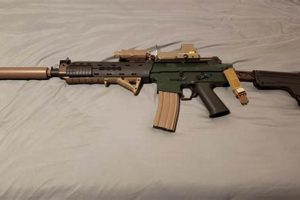
The ideal set of gear for airsoft prioritizes protection, functionality, and adaptability to the playing environment. This combination typically includes appropriate eye protection, tactical clothing designed for movement and durability, load-bearing equipment for carrying magazines and accessories, and comfortable footwear suitable for varied terrain. A well-chosen collection of these items enhances a player’s performance and safety on the field. For example, a player in a woodland environment might prioritize camouflage patterns and lightweight materials, while a player in an urban environment might favor more durable fabrics and gear that facilitates close-quarters combat.
Selecting suitable equipment is crucial for maximizing the airsoft experience. It allows for greater maneuverability, improved target acquisition, and reduced risk of injury. Historically, airsoft gear has evolved from repurposed military surplus to purpose-built equipment designed specifically for the demands of the sport. This evolution reflects the growing sophistication of airsoft and the increasing emphasis on realism and tactical gameplay. Benefits include enhanced immersion, improved safety, and a greater sense of preparedness, leading to a more enjoyable and competitive experience.
The following sections will delve deeper into the essential components of effective airsoft gear, exploring the various options available and providing guidance on selecting the right equipment for specific play styles and environments. The article will cover eye protection standards, clothing considerations, load-bearing equipment options, and footwear requirements, offering a comprehensive overview of how to assemble a functional and protective ensemble.
Tips for Optimizing Airsoft Gear Selection
Selecting the optimal airsoft ensemble requires careful consideration of several factors. The following tips provide guidance to ensure that gear choices align with playing style, environment, and safety requirements.
Tip 1: Prioritize Eye Protection: Compliant eye protection, meeting ANSI Z87.1 standards, is non-negotiable. Full-seal goggles or a suitable face shield protects against projectile impact. Consider anti-fog coatings for enhanced visibility in varying weather conditions.
Tip 2: Camouflage Selection Based on Environment: Match camouflage patterns to the prevalent environment. Woodland environments benefit from traditional camouflage patterns, while urban environments may require neutral or grayscale attire. Effective camouflage reduces visibility to opponents, providing a tactical advantage.
Tip 3: Load-Bearing Equipment for Practicality: Choose load-bearing equipment (vests, chest rigs, or belts) based on the number of magazines and accessories required. Securely attaching pouches and holsters ensures easy access and prevents equipment loss during movement.
Tip 4: Footwear Suited to Terrain: Select footwear appropriate for the terrain. Sturdy boots with ankle support are recommended for uneven surfaces, reducing the risk of sprains. Consider waterproofing and breathability based on weather conditions.
Tip 5: Layering for Temperature Regulation: Employ a layering system to manage body temperature. Base layers wick moisture away from the skin, while insulating layers provide warmth in cooler conditions. Outer layers offer protection from wind and rain, enhancing comfort during extended gameplay.
Tip 6: Glove Selection for Grip and Protection: Gloves protect hands from abrasions and impacts, while also improving grip on the airsoft replica. Tactical gloves with reinforced knuckles and finger protection are advantageous.
Tip 7: Head Protection Considerations: A helmet or other head protection can mitigate the risk of head injuries, particularly in close-quarters combat or on uneven terrain. Ballistic helmets provide superior protection, while bump helmets offer a lighter weight alternative.
Implementing these tips will contribute to assembling a more effective and protective set of gear, improving the overall airsoft experience.
The subsequent sections of this article will explore specific components in more detail, offering further insights into optimal gear selection and maintenance.
1. Protection

Protection forms the foundational element of any effective airsoft ensemble. Without adequate safeguards, participation in airsoft carries inherent risks of injury from high-velocity projectiles. Therefore, careful consideration of protective gear is non-negotiable when assembling appropriate attire.
- Eye and Face Protection
The eyes are particularly vulnerable in airsoft. ANSI Z87.1 rated full-seal goggles or approved face shields are mandatory. These protect against BB impacts that could cause serious ocular damage. Mesh goggles, while providing ventilation, may not offer adequate protection against fragmenting BBs and are generally discouraged. Full face masks offer comprehensive protection, safeguarding the eyes, mouth, and nose. This is crucial in close-quarters combat environments.
- Body Armor and Tactical Clothing
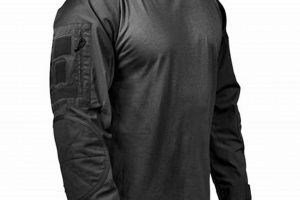
While not typically offering ballistic-level protection, tactical clothing constructed from durable materials like nylon or reinforced cotton can mitigate the impact of BBs, reducing the risk of welts and abrasions. Plate carriers, while often used for aesthetic purposes, can be fitted with foam or dummy plates to provide additional padding. Integrated knee and elbow pads offer protection in dynamic situations involving crawling or maneuvering through obstacles. The thickness and quality of clothing directly influence the level of protection provided.
- Head Protection
Head injuries, though less frequent than eye injuries, can occur from impacts with hard surfaces or close-range BB hits. Helmets, whether ballistic or bump helmets, provide a crucial layer of protection. Ballistic helmets offer a higher level of protection against projectile penetration, while bump helmets are designed to protect against blunt force trauma. Adequate padding and a secure fit are essential for optimal effectiveness.
- Hand Protection
Hands are frequently exposed during airsoft gameplay and are susceptible to BB impacts and abrasions. Tactical gloves with reinforced knuckles and finger protection offer a balance of dexterity and protection. Full-fingered gloves are generally preferred, as they offer more comprehensive coverage. The material of the glove also plays a role, with leather or synthetic materials providing a higher degree of protection than thinner fabrics.
Integrating these protective elements into an airsoft ensemble significantly reduces the risk of injury, allowing participants to engage in gameplay with greater confidence and safety. The selection of appropriate protective gear must be prioritized over purely aesthetic considerations, ensuring the well-being of the player.
2. Camouflage
Camouflage represents a critical element in an optimized airsoft gear configuration. Its primary function is to obscure the wearer from visual detection, providing a tactical advantage within the playing environment. The effectiveness of camouflage hinges on its ability to blend with the surrounding terrain and lighting conditions, reducing the likelihood of being spotted by opponents.
- Pattern Selection
The choice of camouflage pattern directly impacts its effectiveness. Woodland environments typically benefit from patterns featuring green and brown hues that mimic foliage and shadows. Urban environments often require patterns with neutral colors or greyscale tones to blend with concrete and asphalt. Desert environments necessitate patterns with tans and browns to match sand and arid vegetation. Mismatched patterns can render the wearer more conspicuous, negating the intended advantage. Military-derived patterns, such as Multicam or MARPAT, offer versatility across a range of environments but may not be optimal in every situation.
- Color Palette Adaptation
Beyond pattern selection, the specific color palette is crucial. Colors should accurately reflect the natural hues of the environment. Overly bright or saturated colors can stand out against the backdrop. Faded or muted tones often provide better concealment. Consider the seasonal variations in color, as foliage transitions from green to brown. The effectiveness of a color palette can be assessed by observing how well it blends with the environment under varying lighting conditions.
- Disruptive Pattern Design
Effective camouflage utilizes disruptive patterns to break up the human outline. Large, irregular shapes and contrasting colors disrupt the perception of form, making it more difficult for opponents to recognize the wearer as a human figure. These patterns exploit the visual processing mechanisms of the human eye, creating the illusion of being part of the surrounding environment. The density and distribution of the pattern elements influence its ability to disrupt the wearer’s silhouette.
- Environmental Considerations
The effectiveness of camouflage is contingent upon the specific environment in which it is used. Factors such as vegetation density, lighting conditions, and terrain type all play a role. Camouflage that performs well in a dense forest may be ineffective in an open field. Consider the specific characteristics of the playing environment when selecting a pattern. Adaptability may require having multiple sets of gear to suit different environments, or employing reversible camouflage options.
In conclusion, appropriate camouflage significantly enhances the effectiveness of airsoft gear by reducing visual detectability. Careful consideration of pattern, color palette, disruptive design, and environmental factors is essential for maximizing the tactical advantage gained from camouflage. The choice of camouflage should align with the specific environment in which the gear is used, ensuring that it effectively blends with the surrounding terrain and lighting conditions, contributing to an improved overall experience.
3. Comfort

Comfort represents a crucial, often underestimated, component of an optimized airsoft gear ensemble. Its importance extends beyond mere personal preference, directly impacting a player’s performance, endurance, and overall tactical effectiveness. Discomfort, arising from poorly fitted clothing, ill-suited footwear, or improperly adjusted load-bearing equipment, can lead to distraction, reduced mobility, and diminished focus, hindering a player’s ability to execute strategic maneuvers and react effectively to dynamic situations. For example, boots that cause blisters can severely limit movement and concentration, while excessively tight vests can restrict breathing and reduce stamina. Therefore, the selection of gear that prioritizes comfort is not merely a matter of luxury but a practical necessity for peak performance.
The connection between comfort and effectiveness can be observed in the selection of materials, fit, and adjustability of various gear components. Moisture-wicking fabrics, such as those found in base layers, mitigate discomfort caused by perspiration, helping regulate body temperature and prevent chafing. Properly fitted clothing, allowing for a full range of motion without being excessively loose, contributes to agility and responsiveness. Adjustable load-bearing equipment enables the distribution of weight evenly across the body, reducing strain and preventing fatigue. Furthermore, elements like padded straps and breathable mesh improve airflow and minimize pressure points, enhancing comfort during extended periods of activity. Each of these factors directly influences a player’s ability to maintain focus and physical endurance on the field.
In summary, comfort is not an ancillary consideration but an integral part of an effective airsoft gear setup. Discomfort negatively impacts performance, while well-designed, comfortable gear enhances endurance, agility, and focus. While tactical considerations and protective features are paramount, prioritizing comfort optimizes a player’s ability to perform at their best, contributing to a more successful and enjoyable airsoft experience. The challenge lies in balancing protection, functionality, and comfort to create a truly optimized and comfortable airsoft outfit.
4. Mobility

Mobility, in the context of airsoft, denotes the capacity to move freely and efficiently across varied terrain and within confined spaces, reacting swiftly to evolving tactical scenarios. Its direct correlation to an optimized gear configuration is undeniable; restrictions in movement impede a player’s ability to flank, evade, or assume advantageous firing positions. Suboptimal load distribution, bulky armor, or poorly fitted clothing are demonstrable impediments to agility, directly impacting a player’s effectiveness in a dynamic engagement. For example, excessively heavy plate carriers can significantly reduce stamina and increase the time required to transition between positions, potentially leading to tactical disadvantages or increased vulnerability. Footwear that restricts ankle movement or provides inadequate support on uneven surfaces increases the risk of injury and slows overall movement speed. Therefore, a gear assembly neglecting mobility considerations inherently diminishes a player’s tactical efficacy.
The practical application of mobility considerations manifests in specific gear choices and configurations. Streamlined load-bearing equipment, such as chest rigs or minimalist plate carriers, prioritizes carrying essential equipment without excessive bulk. Tactical clothing made from lightweight, breathable materials allows for a full range of motion and facilitates heat dissipation, preventing fatigue. Low-profile knee and elbow pads offer impact protection without significantly restricting agility. Similarly, choosing footwear with a flexible sole and adequate traction enables rapid changes in direction and secure footing on diverse surfaces. Understanding the trade-offs between protection and mobility is crucial; a balance must be struck to maximize tactical effectiveness without compromising safety. The selection should take into account the primary playing environment; engagements in dense woodland necessitate different mobility considerations than those in urban settings.
In conclusion, mobility constitutes a critical, interconnected component of an optimized airsoft gear configuration. Impediments to movement directly translate to reduced tactical effectiveness and increased vulnerability. Prioritizing lightweight materials, ergonomic designs, and appropriate fit allows players to navigate diverse environments with greater agility, enhancing their ability to react to dynamic situations and contribute effectively to team objectives. The challenge lies in balancing protective requirements with the need for unrestricted movement, requiring careful consideration of individual playing style and the prevailing environmental conditions to achieve a truly effective and mobile setup.
5. Load-bearing

Load-bearing capacity represents a fundamental aspect of an effective airsoft ensemble, directly influencing a player’s ability to carry essential equipment and sustain operational readiness. The selection and configuration of load-bearing gear necessitate careful consideration to optimize weight distribution, accessibility, and overall comfort, directly impacting performance and tactical effectiveness.
- Equipment Capacity and Mission Requirements
The primary function of load-bearing equipment is to provide a secure and accessible platform for carrying magazines, communication devices, medical supplies, and other essential items. The specific requirements of a given scenario dictate the necessary capacity. For instance, a prolonged engagement in a field environment necessitates a greater magazine capacity and more extensive support equipment compared to a short, close-quarters skirmish. Load-bearing solutions include vests, chest rigs, belts, and backpacks, each offering varying degrees of capacity and weight distribution. The selection should align with the anticipated duration and intensity of the engagement.
- Weight Distribution and Ergonomics
Proper weight distribution is critical to mitigating fatigue and maintaining mobility. Uneven weight distribution can lead to strain and discomfort, negatively impacting performance and increasing the risk of injury. Ergonomic design principles, such as padded straps and adjustable components, enhance comfort and allow for a customized fit. Load-bearing vests, for example, distribute weight across the torso, while chest rigs concentrate weight on the chest. The optimal configuration depends on individual preferences and body type. Regular adjustment and careful packing are essential to maintain balanced weight distribution throughout the engagement.
- Accessibility and Organization
The ability to quickly access essential equipment is paramount in a dynamic environment. Load-bearing solutions should facilitate efficient magazine changes, rapid deployment of communication devices, and easy access to medical supplies. Organizational systems, such as color-coded pouches and standardized placement, minimize confusion and reduce response times. The arrangement of equipment should prioritize items that are most frequently needed, placing them in easily accessible locations. Practice and familiarity with the load-bearing configuration are essential to ensure smooth and instinctive operation under pressure.
- Modularity and Adaptability
Airsoft scenarios vary widely in terms of environment, duration, and objectives. A modular load-bearing system allows for adaptability to these changing requirements. Pouches and accessories can be added or removed as needed, enabling customization for specific missions. MOLLE (Modular Lightweight Load-carrying Equipment) webbing provides a standardized attachment system for pouches and accessories, offering a high degree of flexibility. A modular system allows a player to tailor the load-bearing configuration to the specific demands of each engagement, optimizing performance and versatility.
The integration of a well-considered load-bearing solution is integral to an optimal airsoft ensemble. Balancing equipment capacity, weight distribution, accessibility, and modularity enhances a player’s ability to carry essential supplies, maintain mobility, and react effectively to evolving tactical situations. The selected load-bearing configuration should align with individual preferences, mission requirements, and the specific environment to ensure peak performance and sustained operational readiness. Careful consideration and regular practice with the chosen system is key to gaining a tactical advantage.
6. Durability

Durability represents a critical, often undervalued, characteristic of effective airsoft gear. The operational environment inherent to airsoft subjects equipment to significant stress, encompassing physical impacts, abrasion against terrain, and exposure to varying weather conditions. Therefore, the longevity and resilience of components comprising the overall outfit directly influence its cost-effectiveness and sustained performance.
- Material Selection and Construction Quality
The materials employed in the construction of tactical clothing, load-bearing equipment, and footwear directly dictate their resistance to wear and tear. High-denier nylon, reinforced stitching, and robust hardware contribute to increased durability. For example, tactical pants constructed from ripstop fabric are less prone to tearing than those made from standard cotton. Similarly, load-bearing vests with reinforced stitching at stress points are more likely to withstand the rigors of repeated use. The quality of zippers, buckles, and other hardware also impacts overall longevity. Inferior components are prone to failure, rendering the associated item unusable.
- Resistance to Environmental Factors
Exposure to environmental factors, such as moisture, sunlight, and extreme temperatures, can degrade materials and compromise the structural integrity of airsoft gear. Water-resistant coatings and UV-resistant fabrics mitigate the damaging effects of these elements. For instance, boots with waterproof membranes prevent moisture penetration, maintaining comfort and preventing material degradation. Fabrics treated with UV inhibitors resist fading and weakening caused by prolonged sun exposure. The ability to withstand environmental stressors extends the lifespan of the gear and maintains its functionality over time.
- Stress Point Reinforcement
Specific areas of airsoft gear are subjected to higher levels of stress than others. These stress points, such as seams, pockets, and attachment points, require reinforcement to prevent premature failure. Reinforced stitching, bar-tacking, and the use of durable hardware strengthen these areas. For example, pockets designed to hold magazines or other heavy items should be reinforced to prevent tearing. Seams at critical junctures, such as shoulder straps and waistbands, benefit from reinforced stitching. Paying attention to stress point reinforcement ensures that the gear can withstand the demands of rigorous use.
- Maintenance and Care
Even the most durable airsoft gear requires regular maintenance and care to maximize its lifespan. Cleaning dirt and debris, applying waterproofing treatments, and repairing minor damage can significantly extend the service life of the equipment. Following manufacturer’s recommendations for cleaning and care is essential. Neglecting maintenance can accelerate material degradation and compromise the functionality of the gear. Proper storage, such as protecting equipment from direct sunlight and moisture, also contributes to its longevity.
In conclusion, the durability of airsoft gear directly impacts its long-term value and performance. Selecting equipment constructed from high-quality materials, resistant to environmental factors, and reinforced at stress points ensures its ability to withstand the rigors of airsoft gameplay. Regular maintenance and proper care further contribute to extending the lifespan of the gear, maximizing its cost-effectiveness and maintaining its operational readiness. Durability, therefore, represents a key determinant in assembling an effective and sustainable ensemble.
Frequently Asked Questions
This section addresses common inquiries and misconceptions regarding the selection of optimal gear for airsoft participation, providing clarity and actionable guidance.
Question 1: What constitutes the most critical component of any airsoft gear assemblage?
Eye protection meeting or exceeding ANSI Z87.1 standards forms the most crucial element. Failure to prioritize adequate eye protection introduces unacceptable risk of ocular injury.
Question 2: How should camouflage selection be determined?
Camouflage effectiveness relies upon environmental adaptation. The predominant terrain and vegetation of the playing area should dictate the camouflage pattern utilized.
Question 3: What considerations influence the choice of load-bearing equipment?
Mission requirements and individual carrying needs inform load-bearing equipment selection. Capacity, weight distribution, and accessibility should be prioritized when selecting vests, chest rigs, or belts.
Question 4: Is specialized footwear truly necessary for airsoft engagements?
Appropriate footwear is essential for mobility and injury prevention. Boots providing ankle support and adequate traction are recommended, particularly on uneven terrain.
Question 5: How should comfort be addressed when assembling an airsoft gear collection?
Comfort should not be undervalued. Ill-fitting or uncomfortable gear detracts from performance. Select components that allow a full range of motion and minimize discomfort during prolonged use.
Question 6: Does the cost of airsoft gear directly correlate with its performance?
Price does not guarantee optimal performance. Thorough research and consideration of specific needs should guide purchasing decisions. Value can often be found in mid-range options that balance cost and functionality.
Effective gear selection requires careful assessment of playing style, environmental conditions, and individual requirements. A balanced approach prioritizing safety, functionality, and comfort yields the most positive outcome.
The subsequent section will provide detailed information regarding specific gear components, offering comprehensive insights into optimal selection and usage.
Conclusion
The preceding discussion has explored the multifaceted considerations inherent in assembling an optimized airsoft ensemble. From prioritizing ballistic protection to selecting appropriate camouflage, ensuring comfort and mobility, optimizing load-bearing capacity, and verifying material durability, each element contributes significantly to a player’s effectiveness and safety. The pursuit of the “best airsoft outfit” is not a quest for a single, universally applicable solution, but rather an iterative process of adaptation and refinement, tailored to individual playing styles, environmental conditions, and tactical requirements.
The understanding and application of these principles are paramount for participants seeking to maximize their performance and mitigate potential risks. Continued vigilance in assessing and adapting gear configurations, coupled with rigorous adherence to safety protocols, ensures a more rewarding and responsible airsoft experience. The investment in quality equipment and informed decision-making ultimately translates to improved tactical capabilities and sustained participation in the sport.