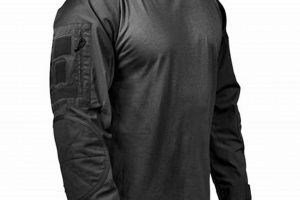
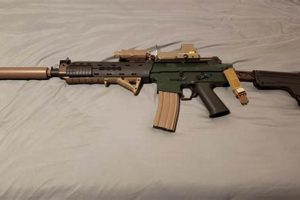
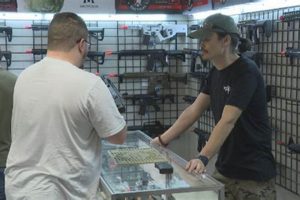
The combination of gear worn by airsoft participants constitutes a significant element of the sport. This equipment serves dual purposes: protection from projectiles and facilitating a chosen tactical role. The ensemble typically includes protective eyewear, appropriate clothing, load-bearing equipment, and often, replica tactical accessories. For example, participants might choose a camouflage pattern suited to the environment in which they are playing, complemented by a vest to carry magazines and other essential items.
This specific type of apparel provides essential protection during gameplay, mitigating the risk of injury from BB impacts. Furthermore, it contributes to the realism and immersive experience of airsoft. The evolution of available options reflects advancements in material science and a growing understanding of tactical requirements. Early iterations often prioritized basic protection; modern designs emphasize comfort, breathability, and modularity.
The following discussion will delve into the various components that comprise effective and visually appealing gear selections, encompassing considerations for safety, functionality, and aesthetic preferences. It will also touch upon factors influencing selection, maintenance, and relevant regulations.
Guidance on Optimal Airsoft Gear Selection
Careful consideration of gear enhances both safety and performance during airsoft activities. The following guidance provides essential advice for selecting suitable equipment.
Tip 1: Prioritize Eye Protection: Eye protection is paramount. Select ANSI Z87.1 rated goggles or a full-face mask designed for airsoft to safeguard against projectile impact. Ensure a secure fit to prevent slippage during dynamic movement.
Tip 2: Camouflage for Environment: Opt for camouflage patterns appropriate for the playing environment. Woodland patterns excel in forested areas, while desert patterns are suitable for arid landscapes. Consider multi-terrain options for adaptability.
Tip 3: Load-Bearing Equipment Efficiency: Choose a chest rig, plate carrier, or tactical belt that allows for efficient magazine access and gear storage. Prioritize ergonomic designs that distribute weight evenly to minimize fatigue.
Tip 4: Footwear Selection: Wear sturdy boots with ankle support to navigate uneven terrain and prevent injuries. Look for slip-resistant soles and water-resistant materials for enhanced performance in varied conditions.
Tip 5: Consider Glove Protection: Gloves protect hands from BB impacts, abrasions, and the elements. Select gloves that provide adequate dexterity for weapon manipulation and equipment handling.
Tip 6: Knee and Elbow Protection: Knee and elbow pads mitigate impact injuries during kneeling and crawling maneuvers. Choose pads that offer a secure fit and allow for a full range of motion.
Tip 7: Head Protection Enhancement: A helmet, whether a replica or functional, provides additional head protection. Consider helmets with accessory rails for mounting lights, cameras, or communication devices.
Adherence to these guidelines promotes a safer and more effective airsoft experience. Strategic gear selection is critical for both protection and tactical advantage.
The subsequent section of this article will explore maintenance and care considerations for airsoft apparel to ensure longevity and optimal performance.
1. Protection

Protection forms the foundational element of any effective airsoft ensemble. It mitigates the inherent risks associated with projectile-based gameplay, safeguarding participants from potential injuries and ensuring a safer environment.
- Eye and Face Protection
ANSI Z87.1 rated goggles or full-face masks are non-negotiable components. These protect the eyes and face from high-velocity BB impacts, preventing severe injuries. Open-mesh goggles, while offering ventilation, often fail to meet the required impact resistance standards and pose a significant risk.
- Body Armor and Load-Bearing Equipment
Chest rigs, plate carriers, and tactical vests, while primarily designed for load-bearing purposes, also offer a degree of torso protection. Certain models incorporate ballistic plates (replica or otherwise) that provide additional impact resistance. The choice of materials, such as reinforced nylon or Cordura, directly influences durability and protective capabilities.
- Limb Protection
Gloves, knee pads, and elbow pads are crucial for safeguarding extremities from BB impacts, abrasions, and environmental hazards. Padded gloves protect hands during weapon manipulation and offer impact absorption. Knee and elbow pads facilitate tactical maneuvers such as kneeling and crawling, reducing the risk of joint injuries on varied terrains.
- Head Protection
Helmets, whether replica or functional, offer significant head protection. They reduce the risk of head injuries from accidental impacts with objects or falls. Modern airsoft helmets often include accessory rails for mounting lights, cameras, and communication equipment, enhancing situational awareness and tactical capabilities.
Therefore, incorporating robust protective gear is essential to completing and defining what constitutes a formidable, and more importantly, safe ensemble. The appropriate protective elements not only prevent injury but also instill confidence, allowing players to engage more effectively and enjoyably within the airsoft environment.
2. Camouflage
Camouflage is an integral component of effective airsoft apparel. Its primary function is to conceal the wearer within a given environment, thus providing a tactical advantage during gameplay. The selection of an appropriate camouflage pattern is not merely an aesthetic consideration; it directly influences a player’s ability to remain undetected and maneuver strategically.
- Environmental Adaptation
Effective camouflage selection hinges on the operational environment. Woodland patterns, characterized by green and brown tones, are suited for forested areas. Desert patterns, with lighter shades of tan and beige, excel in arid landscapes. Consideration must be given to seasonal variations within a given environment. A woodland pattern optimal in summer may prove less effective in winter when vegetation is sparse or covered in snow.
- Pattern Disruptiveness
Camouflage patterns work by disrupting the human form, making it more difficult to discern against the background. Patterns with irregular shapes and contrasting colors are generally more effective at achieving this effect. Digital camouflage patterns, utilizing small, pixelated shapes, are designed to blend into a wider range of environments. The scale of the pattern relative to the engagement distance also matters; larger patterns may be more effective at longer ranges, while smaller patterns excel at close quarters.
- Color Matching and Light Conditions
The colors within a camouflage pattern should closely match the dominant colors of the environment. However, it is important to account for variations in lighting conditions. Darker colors may appear more prominent in low light, while lighter colors may be more visible in direct sunlight. It can be advantageous to adjust the overall camouflage scheme according to predicted lighting conditions.
- Advanced Camouflage Technologies
Beyond traditional camouflage patterns, advanced technologies such as adaptive camouflage are emerging. These systems utilize sensors and displays to dynamically adjust the camouflage pattern based on the surrounding environment. While still in development, these technologies hold promise for significantly enhancing concealment capabilities in the future. The integration of these technologies into airsoft apparel would represent a significant advancement in tactical equipment.
The effectiveness of camouflage in airsoft rests on a multifaceted approach that considers environmental adaptation, pattern disruptiveness, color matching, and emerging technologies. The careful selection and implementation of camouflage is crucial for maximizing concealment and achieving a tactical edge within the airsoft environment, transforming standard airsoft clothing into a strategically advantageous ensemble.
3. Functionality

Functionality serves as a cornerstone in the design and selection of effective airsoft apparel. It dictates how efficiently and effectively a player can operate within the dynamic environment of an airsoft game. An ensemble’s functionality directly impacts a player’s ability to access equipment, maneuver swiftly, and maintain comfort throughout extended gameplay. This facet extends beyond mere aesthetics, influencing performance and strategic advantage. For instance, a well-designed chest rig allows for rapid magazine changes, while properly placed pouches enable quick access to essential items like grenades or radios. An ill-fitting or poorly designed system hinders movement, increases fatigue, and ultimately diminishes performance.
Consider the practical application of a modular load-bearing system. A player equipped with such a system can customize the arrangement of pouches and accessories to match their specific role and mission requirements. A sniper may prioritize concealment and long-range communication, opting for a streamlined setup with a dedicated radio pouch and minimal gear. Conversely, a support gunner might focus on carrying a large quantity of ammunition and utilizing a more robust load-bearing platform. This adaptability provides a significant advantage, enabling players to tailor their loadout to specific scenarios and optimize their effectiveness. A poorly designed system can cause gear to get in the way, slowing movement and compromising the player’s position.
In essence, functionality underscores the practicality of airsoft gear. It represents a symbiotic relationship between equipment design and player performance. Understanding and prioritizing this aspect when selecting apparel ensures that the overall ensemble not only looks aesthetically pleasing but also enhances the player’s capabilities on the field. A well-functioning airsoft setup is the difference between operating effectively, and being hindered by poor design.
4. Comfort

Comfort, frequently an underestimated aspect of airsoft apparel, significantly impacts a participant’s endurance, focus, and overall performance during extended gameplay. An uncomfortable ensemble can lead to distractions, fatigue, and impaired decision-making, negating any potential tactical advantages gained through advanced equipment. Therefore, prioritizing comfort is not merely a matter of preference, but a strategic imperative.
- Material Selection and Breathability
Fabric choice directly influences breathability and moisture management. Synthetic materials such as moisture-wicking polyester and nylon blends are preferable to cotton, which retains moisture and becomes heavy and uncomfortable when wet. Breathable fabrics allow for airflow, reducing perspiration buildup and maintaining a more consistent body temperature. The use of mesh panels in strategic areas, such as the back and armpits, further enhances ventilation.
- Fit and Range of Motion
Proper fit is crucial for unrestricted movement. Garments should allow for a full range of motion without binding or chafing. Articulated designs, featuring pre-shaped knees and elbows, accommodate natural body movements and reduce strain. Adjustable straps and closures allow for a customized fit, accommodating varying body types and layering options. Excessively tight or loose clothing can restrict movement and increase the risk of snagging on obstacles.
- Weight Distribution and Load Carriage
Load-bearing equipment, such as chest rigs and plate carriers, should distribute weight evenly across the torso to minimize strain on specific muscle groups. Padded shoulder straps and waist belts enhance comfort during prolonged use. The placement and design of pouches and pockets should allow for easy access to essential items without hindering movement or creating pressure points.
- Climate Considerations and Layering
Adapting apparel to the prevailing climate conditions is essential for maintaining comfort. In hot weather, lightweight, breathable layers are recommended to facilitate ventilation and moisture evaporation. In cold weather, multiple layers of insulating clothing provide warmth while allowing for adjustable temperature regulation. Waterproof and windproof outer layers offer protection from the elements.
The correlation between comfort and overall effectiveness in airsoft demonstrates its importance. Optimal comfort levels contribute to enhanced focus, reduced fatigue, and improved maneuverability. By prioritizing breathable materials, proper fit, efficient weight distribution, and climate-appropriate layering, airsoft participants can maximize their comfort, thereby maximizing their performance and enjoyment of the sport. The design features of awesome airsoft outfits should not be only based on outlook alone.
5. Realism
Realism holds significant weight for many airsoft participants. It enhances the immersive experience and can influence tactical decision-making. Replicating the appearance and functionality of actual military or law enforcement gear becomes a central focus when constructing an ensemble.
- Authentic Gear Replication
The pursuit of realism often involves acquiring gear that closely mirrors its real-world counterparts. This includes replica plate carriers, tactical vests, helmets, and pouches from reputable manufacturers. Attention is paid to details such as correct camouflage patterns, materials, and stitching. For example, a player might select a specific model of plate carrier used by a particular military unit and outfit it with pouches designed to hold replica magazines and other equipment in a realistic configuration. Adherents to realism emphasize the value of high-quality replicas that accurately replicate form and function, eschewing cheaper alternatives that compromise authenticity.
- Historical Accuracy and Impression
Some airsoft players pursue historical accuracy, creating impressions of specific military units from past conflicts. This requires in-depth research into the uniforms, equipment, and weaponry used by those units. For example, a player might assemble an impression of a U.S. Marine from the Vietnam War, carefully sourcing the correct uniform, webbing, and rifle. Historical impressions demand meticulous attention to detail, often involving specialized knowledge of military history and equipment. This dedication to accuracy allows players to not only immerse themselves in the experience but also honor the history they represent.
- Weapon Manipulation and Training
Realism extends beyond mere appearance to encompass weapon manipulation and tactical training. Participants often seek to replicate the handling characteristics of real firearms through the use of realistic airsoft replicas. They may also engage in training exercises that simulate real-world combat scenarios. This includes practicing reloading drills, clearing malfunctions, and utilizing cover and concealment techniques. The goal is to develop proficiency in weapon handling and tactical skills that closely mirror those employed by military and law enforcement personnel. Simulation provides players with a controlled environment in which to hone their tactical skills.
- Team Dynamics and Communication
Realism can also influence team dynamics and communication. Teams striving for authenticity often adopt military-style communication protocols and organizational structures. This includes using radio call signs, following established chains of command, and employing standardized tactical procedures. The emphasis on clear communication and coordination enhances team cohesion and effectiveness. Replicating military team dynamics fosters a sense of camaraderie and shared purpose, contributing to a more immersive and challenging airsoft experience. Attention to detail allows players to work together more harmoniously and successfully.
The influence of realism in airsoft manifests across various aspects, ranging from gear selection and historical accuracy to weapon manipulation and team dynamics. While not all airsoft players prioritize realism, those who do find that it enhances the overall immersive experience and provides a more challenging and rewarding form of gameplay. The degree to which realism is pursued ultimately depends on the individual’s preferences and goals, making it a subjective but often influential factor in constructing the ideal airsoft ensemble.
6. Mobility

Mobility is intrinsically linked to the effectiveness of airsoft apparel. Restrictions in movement directly impede a player’s capacity to navigate diverse terrains, react swiftly to evolving tactical situations, and maintain sustained engagement during gameplay. An ensemble that sacrifices agility for other attributes, such as excessive armor or cumbersome load-bearing equipment, ultimately diminishes a player’s overall effectiveness. The choice of clothing, the design of load-bearing systems, and the overall weight distribution of the kit must collectively facilitate unimpeded movement for optimal performance.
Practical examples underscore this connection. Consider a player attempting to navigate a dense woodland environment while wearing overly bulky gear. The restrictive nature of the apparel would hinder the ability to crawl under low-hanging branches, quickly transition between firing positions, and maintain balance on uneven terrain. Conversely, a player equipped with lightweight, streamlined gear could move with greater speed and agility, effectively flanking opponents, exploiting cover, and executing rapid maneuvers. Load-bearing equipment should be designed to distribute weight evenly, minimizing strain and preventing fatigue that would otherwise compromise mobility. The selection of footwear also plays a critical role; boots providing adequate ankle support and traction are essential for navigating challenging terrain without risking injury. The understanding that mobility is crucial allows players to select gear that enables their movements, not restricts it.
In conclusion, mobility is a paramount consideration in the construction of effective airsoft apparel. Restrictions in movement diminish a player’s tactical capabilities, while unhindered mobility enhances responsiveness and adaptability. Prioritizing lightweight materials, ergonomic designs, and proper weight distribution ensures that the ensemble complements, rather than compromises, a player’s ability to maneuver effectively within the dynamic airsoft environment. The pursuit of aesthetically pleasing or highly realistic gear should not supersede the fundamental need for mobility, as it directly influences the capacity to engage effectively and successfully during gameplay.
7. Durability

Durability constitutes a critical, and often overlooked, element of effective airsoft apparel. The rigors of gameplay, encompassing diverse terrains, physical exertion, and potential exposure to the elements, demand that gear withstand significant wear and tear. Insufficient durability leads to equipment failure, potentially compromising player safety, hindering performance, and necessitating costly replacements. Therefore, the selection of durable materials and construction techniques is paramount in creating a robust and reliable airsoft ensemble. For example, a tactical vest constructed from substandard nylon may tear under the stress of carrying loaded magazines, rendering it useless during a critical moment in a game. Similarly, boots with poorly constructed soles may delaminate after only a few uses, leaving the wearer vulnerable to injury. Durability is not merely a desirable attribute; it is a prerequisite for effective and dependable gear.
The choice of materials exerts a profound influence on the overall durability of airsoft apparel. High-denier nylon fabrics, such as Cordura, offer exceptional resistance to abrasion, tearing, and water damage. Reinforced stitching, particularly in high-stress areas such as seams and attachment points, enhances the structural integrity of the garment. Metal hardware, such as buckles and zippers, provides superior durability compared to plastic alternatives. Consider the real-world scenario of an airsoft player navigating a rocky, wooded environment. A uniform constructed from durable materials would withstand the constant abrasion against rocks and branches, whereas a garment made from weaker fabrics would quickly succumb to damage. Durability directly translates to a longer lifespan for the gear, reducing the need for frequent replacements and saving the player money in the long run. Ultimately, the ability of gear to endure repeated use under demanding conditions dictates its value and effectiveness on the field.
In summary, durability is an indispensable component of airsoft apparel, directly impacting player safety, performance, and long-term cost-effectiveness. The selection of high-quality materials, robust construction techniques, and adherence to rigorous manufacturing standards are essential for ensuring that gear can withstand the rigors of gameplay. Compromising on durability risks equipment failure, potential injury, and diminished performance. Understanding the significance of durability allows airsoft players to make informed decisions when selecting their gear, investing in equipment that will provide reliable performance and long-lasting value. The challenge lies in striking a balance between durability, weight, and cost, selecting gear that offers optimal performance without exceeding budgetary constraints. A wise selection considers these criteria.
Frequently Asked Questions
This section addresses common inquiries and misconceptions regarding the selection, maintenance, and strategic application of airsoft apparel. It aims to provide clear and concise answers, facilitating informed decision-making for both novice and experienced players.
Question 1: What constitutes the most critical element of protective gear in airsoft, and why?
Eye protection, specifically ANSI Z87.1 rated goggles or full-face masks, is paramount. The high velocity of airsoft projectiles necessitates robust eye protection to prevent potentially severe and permanent injuries. No other piece of gear is as crucial to player safety.
Question 2: How does camouflage selection impact tactical effectiveness during airsoft gameplay?
Camouflage selection is directly related to tactical advantage. Choosing a pattern appropriate for the environment enhances concealment, making it more difficult for opponents to detect the wearer. This increases survivability and provides opportunities for ambushes and flanking maneuvers.
Question 3: What are the primary factors to consider when selecting load-bearing equipment for airsoft?
Weight distribution, accessibility, and modularity are key considerations. Load-bearing equipment should distribute weight evenly across the torso to minimize fatigue. Pouches and accessories must be readily accessible for quick deployment. A modular design allows for customization to meet specific mission requirements.
Question 4: How does clothing material affect comfort and performance during extended airsoft engagements?
Material selection profoundly influences comfort and performance. Moisture-wicking synthetic fabrics are preferable to cotton, as they promote breathability and reduce perspiration buildup. This prevents overheating and discomfort, allowing for sustained engagement without performance degradation.
Question 5: To what extent does realism influence the effectiveness of airsoft apparel?
While not directly impacting performance in a tangible way, realism can enhance the immersive experience and influence tactical decision-making. Replicating authentic gear can foster a greater sense of engagement and promote adherence to realistic tactical protocols, indirectly benefiting team cohesion and effectiveness.
Question 6: What measures can be taken to prolong the lifespan and maintain the performance of airsoft apparel?
Regular cleaning, proper storage, and timely repairs are essential. Mud, dirt, and debris should be removed after each use. Gear should be stored in a dry, well-ventilated area. Damaged seams, zippers, and closures should be repaired promptly to prevent further deterioration.
In summary, informed decisions regarding airsoft apparel are critical for maximizing safety, performance, and overall enjoyment of the sport. Prioritizing protection, selecting appropriate camouflage, and ensuring comfort are essential for effective gameplay.
The following section will explore relevant regulations and legal considerations pertaining to airsoft equipment and gameplay.
Conclusion
This discussion has explored key facets relevant to effective airsoft apparel. The consideration of protection, camouflage, functionality, comfort, realism, mobility, and durability informs the selection process. Prioritizing these elements yields ensembles that enhance player safety, tactical effectiveness, and overall engagement within the sport. Understanding the interplay between these factors facilitates informed decisions, leading to optimal performance and satisfaction.
The evolving landscape of airsoft technology and tactical understanding suggests continual refinement in apparel design and selection. Further research into advanced materials, ergonomic designs, and adaptive camouflage techniques may yield significant advancements in future iterations of equipment. Continued emphasis on safety, functionality, and adaptability will ensure that airsoft apparel remains an integral component of the sport’s dynamic evolution, fostering both enhanced performance and responsible participation.