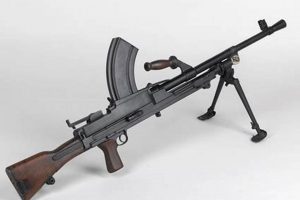
The legality of airsoft guns within Washington State is determined by their classification as either toys or imitation firearms under state law. Regulations pertain to their use, sale, and modification. Distinctions are made regarding age restrictions, permitted locations for use, and requirements for safe handling and storage. Specific statutes address brandishing or misuse that could lead to confusion with actual firearms, resulting in potential legal repercussions.
Understanding the legal framework surrounding these devices is vital for responsible ownership and use. Adherence to state laws helps ensure public safety and avoids potential legal penalties. Historically, concerns about differentiating airsoft guns from real firearms have driven legislative efforts to regulate their handling and prevent misuse. Knowledge of these regulations promotes responsible participation in the sport and safeguards the interests of the community.
The following sections will detail the specific Washington State laws governing airsoft guns, outlining permissible activities, restrictions on ownership and use based on age, and the potential legal consequences of violating these regulations. Further clarification will be provided regarding safe handling practices and appropriate storage guidelines, contributing to a comprehensive understanding of legal compliance.
Compliance Strategies
These recommendations focus on responsible practices to comply with Washington State laws pertaining to airsoft guns.
Tip 1: Understand State Statutes: Familiarize yourself with the specific laws in Washington State regarding airsoft guns, including definitions, restrictions, and penalties. Consult official government websites or legal resources for accurate information.
Tip 2: Adhere to Age Restrictions: Respect the minimum age requirements for purchasing, possessing, and using airsoft guns. Enforce these restrictions within your household or organization.
Tip 3: Use in Designated Areas: Confine airsoft gun activities to private property, designated airsoft fields, or other locations where their use is explicitly permitted. Avoid public areas where they could be mistaken for real firearms.
Tip 4: Employ Protective Gear: Always wear appropriate protective gear, including eye protection, when using airsoft guns. Encourage others to do the same to minimize the risk of injury.
Tip 5: Avoid Brandishing: Refrain from displaying airsoft guns in public in a manner that could cause alarm or fear. Transport them in cases or bags to avoid misinterpretation.
Tip 6: Properly Store Airsoft Guns: Store airsoft guns unloaded and in a secure location, inaccessible to unauthorized individuals, especially children. Separate ammunition from the airsoft guns during storage.
Tip 7: Refrain from Modifications: Avoid modifying airsoft guns in ways that increase their power or make them appear more realistic. Such modifications could violate state law.
Adhering to these practices promotes responsible airsoft gun ownership and helps ensure compliance with Washington State law, minimizing the risk of legal repercussions.
The following section will discuss the potential penalties for non-compliance and resources for further information.
1. State Law

State law in Washington directly determines the permissibility of airsoft guns. Without specific statutes addressing their use, sale, and possession, airsoft guns could fall under broader firearms regulations, potentially leading to unintended restrictions. The existence of specific state laws creates a defined legal space within which airsoft activities can occur, providing clarity for users and vendors alike. For example, a state law might define an airsoft gun based on its projectile velocity and require specific markings to differentiate it from a real firearm, thus influencing its legality. Failure to comply with these statutes can result in confiscation of the devices, fines, or even criminal charges.
The importance of state law stems from its role in balancing recreational interests with public safety concerns. Regulations might specify age limits for purchasing airsoft guns to prevent minors from accessing them unsupervised. Furthermore, laws often address the use of airsoft guns in public spaces, prohibiting actions that could cause alarm or create a risk of misidentification with real firearms. State law also clarifies legal recourse in cases of accidental injury or property damage resulting from the use of these devices. By delineating these boundaries, the state attempts to minimize potential negative consequences while permitting responsible engagement with the hobby.
In conclusion, state law constitutes the foundation upon which the legality of airsoft guns in Washington is established. It provides a structured framework defining permissible activities, restrictions, and consequences, aiming to ensure a balance between recreational use and public safety. Compliance with these laws is not only a legal obligation but also a responsibility to promote safe and responsible use within the community. Understanding the specific provisions of state law is therefore paramount for anyone involved with airsoft guns in Washington.
2. Age Restrictions

Age restrictions are intrinsically linked to the legality of airsoft guns within Washington State. The establishment of minimum age requirements for purchasing, possessing, or using these devices constitutes a core component of state regulations. These restrictions are not arbitrary; they are directly related to concerns regarding judgment, maturity, and responsible handling of objects that closely resemble firearms. Without age restrictions, access to airsoft guns would be unregulated, potentially leading to misuse, accidents, and an increased risk of confusion with actual firearms, thereby jeopardizing public safety and challenging the overall legal framework.
The practical application of age restrictions manifests in various scenarios. Retail establishments selling airsoft guns are legally obligated to verify the age of purchasers. Airsoft fields and organized events often require participants to provide proof of age to ensure compliance. Law enforcement agencies may confiscate airsoft guns from individuals below the legal age and potentially press charges against adults who enable access to these devices by underage persons. Moreover, the enforcement of age restrictions reduces the likelihood of airsoft guns being used in criminal activities or situations that could lead to misidentification by law enforcement, mitigating risks associated with their resemblance to real firearms.
In summary, age restrictions are a critical determinant in the legality of airsoft guns in Washington State. They represent a deliberate effort to mitigate potential risks associated with unsupervised access and irresponsible use. Compliance with these restrictions is vital for upholding public safety and maintaining the legal framework governing airsoft activities. Without defined age limitations, the overall legality of airsoft guns would be significantly compromised, potentially leading to stricter regulations or outright bans. The understanding and enforcement of these restrictions are therefore essential for responsible participation in the sport and the continued legal permissibility of airsoft guns within the state.
3. Permitted Use

The concept of “permitted use” is intrinsically linked to the overall legality of airsoft guns within Washington State. The permissibility of possessing an airsoft gun does not automatically grant unrestricted usage. Instead, legal airsoft activities are confined to specific locations and circumstances, dictated by state and local regulations. Therefore, the manner and location of usage directly determine whether or not an airsoft gun is employed lawfully. Restrictions on permitted use serve as a cornerstone in maintaining the balance between recreational interests and public safety, forming a crucial component of the legal framework.
Consider, for example, designated airsoft fields, private properties with explicit permission, or specific shooting ranges. These areas are commonly recognized as locations where airsoft activities are typically permitted. Conversely, the discharge of an airsoft gun in a public park, on school grounds, or in any area where such activity might cause alarm or be mistaken for real firearm use is generally prohibited. Furthermore, even on private property, discharging an airsoft gun in a manner that violates noise ordinances or endangers neighbors can result in legal consequences. This distinction underscores the critical importance of understanding where and how the devices can be legally operated.
In conclusion, permitted use represents a fundamental limitation on the legality of airsoft guns in Washington State. The right to possess such a device is conditional upon adherence to regulations dictating appropriate locations and methods of utilization. Violations of these regulations can negate the device’s legal status, resulting in penalties ranging from fines to confiscation. Therefore, awareness and respect for permitted use limitations are essential for responsible airsoft gun ownership and compliance with the state’s legal framework.
4. Safe Handling

The legality of airsoft guns in Washington State is directly contingent upon responsible usage, with safe handling practices serving as a critical determinant. Adherence to safe handling protocols reduces the risk of accidents, injuries, and misidentification of airsoft guns with real firearms, mitigating potential legal repercussions for both the user and the wider community. Failure to observe established safety guidelines can transform a legally permissible activity into a violation of state law, potentially resulting in fines, confiscation of the device, or even criminal charges depending on the severity and context of the incident. Thus, safe handling is not merely a suggestion but an implicit condition of their legal standing.
Washington State law does not typically prescribe specific handling requirements in explicit detail, but the implied legal obligation for safe use arises from broader statutes concerning reckless endangerment, assault, and the misuse of imitation firearms. For example, carelessly discharging an airsoft gun in a public area, even if not explicitly prohibited, could result in charges if it causes injury or creates a reasonable fear of harm. Similarly, modifying an airsoft gun to increase its projectile velocity beyond established safety standards could invalidate its legal status and expose the user to liability. This interrelation between safety and legality highlights the importance of responsible conduct as a cornerstone of lawful airsoft activities. Safety measures like using protective eyewear, avoiding aiming at vulnerable body parts, and treating every airsoft gun as if it were loaded serve to minimize the risk of incidents that could attract legal scrutiny.
In summary, safe handling is not an optional element, but an essential prerequisite for the legality of airsoft guns in Washington State. Its absence can lead to violations of existing laws and undermine the legal permissibility of the activity itself. By prioritizing safety and adhering to established best practices, users not only minimize the risk of accidents and injuries but also safeguard their right to engage in this activity legally. Upholding these safety standards is thus a shared responsibility, requiring continuous education, awareness, and commitment from all participants within the airsoft community.
5. Public Display
The manner in which airsoft guns are presented or displayed in public directly influences their legality within Washington State. The open carry or brandishing of these devices can easily blur the line between permissible use and unlawful behavior, particularly given their realistic appearance. Public display that causes alarm, fear, or creates a reasonable apprehension of harm can trigger legal consequences, even if the underlying possession of the airsoft gun is otherwise lawful. For example, carrying an airsoft rifle openly in a shopping mall could lead to charges related to disturbing the peace or unlawful display of an imitation firearm. The key factor is whether the display creates a credible risk of misidentification with a real firearm, prompting a law enforcement response or causing undue public concern. Therefore, while the ownership of an airsoft gun may be legal under specific conditions, the manner of its public presentation is subject to scrutiny and can readily lead to legal infractions.
The legal implications extend beyond individual actions. Businesses selling airsoft guns must also adhere to responsible display practices. Displaying these devices in a manner that encourages theft or promotes their use for unlawful purposes can subject the business to legal liability. Similarly, airsoft events and organized games must take precautions to ensure that participants do not openly transport or display their equipment in public during transit to and from the event location. This often entails requiring participants to keep their airsoft guns concealed in cases or bags to prevent any misinterpretation or alarm among the general public. The enforcement of these guidelines helps to maintain public order and minimize the risk of confusion and potential misuse.
In summary, responsible public display is a vital component of ensuring the legality of airsoft guns in Washington State. It is not sufficient merely to possess these devices legally; their presentation and handling in public must avoid causing alarm, creating fear, or contributing to misidentification with real firearms. The legal burden rests on both individuals and businesses to exercise due care and adopt responsible practices to mitigate these risks. Failure to do so can result in legal sanctions and undermine the permissibility of airsoft activities within the state.
6. Modification Limits

Modification limits are a crucial element determining legality within Washington State. The extent to which an airsoft gun can be altered directly influences its classification under state law. Modifications that increase projectile velocity or enhance the realistic appearance of the device to more closely resemble a firearm can transform a legally permissible airsoft gun into an illegal weapon. State regulations, while not always explicitly defining permissible modifications, imply restrictions through performance standards and prohibitions against creating items easily mistaken for genuine firearms. For example, increasing the velocity beyond a certain threshold could reclassify the device, subjecting it to more stringent firearm regulations. The importance lies in the potential for modified airsoft guns to cause greater harm or be misused, thus undermining the balance between recreational activity and public safety that underlies the initial legality.
Practical applications of these limits are evident in legal precedents and regulatory enforcement. Law enforcement may test modified airsoft guns to determine their projectile velocity and conformity with legal definitions. Retailers face scrutiny for selling modification parts that could enable illegal alterations. Airsoft fields often impose their own rules to ensure compliance and prevent dangerous modifications. The consequences of exceeding these limits can include confiscation of the device, fines, and potential criminal charges if the modifications result in the airsoft gun being classified as an illegal firearm. Understanding these practical ramifications underscores the significance of adhering to modification limits and avoiding alterations that could jeopardize legality.
In summary, modification limits are a critical component governing the legality of airsoft guns in Washington State. The extent to which users can alter these devices is not unlimited; modifications that increase their dangerousness or realism can result in legal repercussions. Compliance with these limits is essential for ensuring the safe and responsible use of airsoft guns and for maintaining their legal status under state law. Furthermore, clear understanding of these restrictions allows all participants to perform safe airsoft gun activity while keeping the Washington State law in mind.
7. Federal Regulations
Federal regulations impact the legality of airsoft guns in Washington State primarily through interstate commerce and product safety standards. While Washington State laws govern the use, possession, and modification of airsoft guns within its borders, federal law dictates how these items are imported, manufactured, and sold across state lines. Specifically, federal regulations require that airsoft guns, as imitation firearms, have a blaze orange tip affixed to the barrel. This marking serves as a visual identifier to distinguish them from actual firearms, mitigating the risk of confusion and potential misuse. This federal requirement directly influences the legality and salability of airsoft guns within Washington, as retailers must comply with this standard to legally offer these products for sale. Failure to adhere to federal regulations can result in fines, import restrictions, and the seizure of non-compliant products. Therefore, compliance with federal law is a prerequisite for the legal distribution of airsoft guns within Washington State.
The influence of federal regulations extends beyond the initial sale and distribution of airsoft guns. Federal consumer product safety standards also play a role, ensuring that airsoft guns are manufactured to certain safety specifications. These standards address potential hazards such as projectile velocity, material composition, and overall product integrity. While Washington State may have its own regulations regarding safe handling and usage, federal standards provide a baseline level of safety that all airsoft guns sold within the state must meet. These standards help to prevent accidents and injuries, thus contributing to the overall legal framework surrounding airsoft activities. Moreover, federal laws prohibiting the alteration of airsoft guns to function as actual firearms reinforce state-level restrictions on modifications, preventing the conversion of these devices into illegal weapons.
In summary, federal regulations, particularly those governing interstate commerce, product safety, and imitation firearms, are inextricably linked to the legality of airsoft guns in Washington State. While state law primarily addresses usage and possession within its boundaries, federal law dictates import, manufacturing, and distribution standards. The requirement for a blaze orange tip and adherence to consumer product safety specifications are key examples of how federal regulations shape the legal landscape for airsoft guns in Washington. Compliance with both federal and state laws is essential for ensuring the safe and legal use of airsoft guns within the state, highlighting the importance of understanding both levels of regulation.
Frequently Asked Questions
The following section addresses common inquiries regarding the legal status of airsoft guns in Washington State, providing concise answers based on existing laws and regulations.
Question 1: Does Washington State require a permit to own an airsoft gun?
Washington State does not mandate a permit for the ownership of airsoft guns, differentiating them from actual firearms that require permits for purchase and possession.
Question 2: Are there age restrictions on purchasing airsoft guns in Washington?
Yes, age restrictions apply to the purchase of airsoft guns. While the specific minimum age is not explicitly defined in state statutes, retailers typically require purchasers to be at least 18 years old.
Question 3: Is it legal to carry an airsoft gun openly in public in Washington?
Openly carrying an airsoft gun in public is strongly discouraged and potentially illegal. Public display that causes alarm or creates a reasonable fear of harm can result in legal consequences, even if the device is otherwise legally owned.
Question 4: Where are airsoft guns permitted to be used in Washington State?
Airsoft guns are generally permitted to be used on private property with the owner’s consent, at designated airsoft fields, and in other areas where such activities are explicitly allowed. Use in public parks or school grounds is typically prohibited.
Question 5: Are there restrictions on modifying airsoft guns in Washington?
Yes, modifying airsoft guns is subject to restrictions. Alterations that increase projectile velocity beyond safe limits or make the device more closely resemble a real firearm can render it illegal under state law.
Question 6: Is it legal to sell airsoft guns without an orange tip in Washington State?
Selling airsoft guns without a blaze orange tip violates federal regulations and is therefore illegal. This requirement is intended to distinguish airsoft guns from real firearms and prevent misidentification.
These answers provide a general overview of common questions. For specific legal advice, consultation with an attorney is recommended.
The next section will summarize the key points covered in this article.
Conclusion
The preceding analysis clarifies the legal landscape surrounding airsoft guns in Washington State. Factors influencing permissibility encompass state statutes, age restrictions, permitted usage locations, safe handling practices, limitations on public display, modification constraints, and relevant federal regulations. Each element contributes to the overall determination of whether owning and using these devices aligns with established laws.
Compliance with both state and federal guidelines is paramount for responsible airsoft activity. Continued vigilance regarding legislative changes and adherence to safe practices are essential for maintaining the legality of airsoft guns within the state. The legal use of such device is a right that comes with responsibilities.