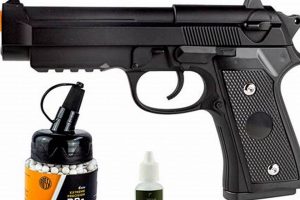
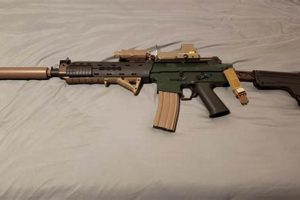
Airsoft guns propel spherical plastic projectiles, typically 6mm or 8mm in diameter. These projectiles, often referred to as BBs, are made of plastic and designed to be lightweight and non-lethal. The mechanism for launching these projectiles typically involves compressed gas, spring power, or electric power.
The use of plastic projectiles allows for relatively safe recreational activity, simulating tactical scenarios without the danger of traditional firearms. The historical development of this recreational activity stems from a desire for realistic training and wargaming simulations. Its benefits include promoting teamwork, strategic thinking, and physical activity.
This article will delve deeper into the types of propulsion systems used in airsoft guns, explore the different weights and materials of the projectiles, and examine the safety precautions necessary for responsible participation in the sport.
Tips Regarding Airsoft Projectiles
The following tips address key considerations concerning airsoft projectiles, their selection, and safe handling practices. Careful adherence to these guidelines enhances safety and optimizes the airsoft experience.
Tip 1: Projectile Weight Matters: Employing the correct projectile weight is critical for accuracy and range. Lighter projectiles are suitable for indoor environments and lower-powered airsoft guns, while heavier projectiles perform better outdoors and with higher-powered models.
Tip 2: Prioritize Quality Projectiles: Inferior quality projectiles can cause damage to the airsoft gun’s internal components and negatively impact accuracy. Invest in reputable brands that manufacture precision-molded, seamless projectiles.
Tip 3: Projectile Storage Protocol: Store projectiles in a dry, sealed container to prevent moisture absorption or contamination. Moisture can affect projectile weight and consistency, leading to performance issues.
Tip 4: Compatibility with Airsoft Gun: Ensure the chosen projectiles are compatible with the specific airsoft gun being used. Utilizing incorrect sizes or materials can damage the gun’s barrel or firing mechanism.
Tip 5: Re-Use Discouraged: Projectiles that have been previously fired should not be re-used. They may have accumulated dirt or sustained damage, increasing the risk of jamming or causing internal damage to the airsoft gun.
Tip 6: Environmental Considerations: When possible, select biodegradable projectiles. This minimizes the environmental impact of the sport, particularly in outdoor settings.
The careful selection and handling of airsoft projectiles directly influence both the performance and longevity of the airsoft gun, as well as ensuring a safer and more enjoyable experience. Paying attention to projectile weight, quality, storage, and compatibility are essential for responsible participation in the sport.
The subsequent sections will elaborate on the maintenance and safety aspects of airsoft guns, further contributing to responsible and informed usage.
1. Plastic Composition
The plastic composition of airsoft projectiles is fundamental to the safety and practicality of the sport. It dictates projectile weight, durability, and environmental impact, directly influencing the gameplay experience and responsible use. The selection of plastic materials is a deliberate compromise between realism, performance, and safety concerns.
- Material Selection and Safety
ABS (Acrylonitrile Butadiene Styrene) and PLA (Polylactic Acid) are common plastics used in airsoft projectiles. ABS offers durability and impact resistance, while PLA, a bioplastic, presents a more environmentally conscious option. These materials are chosen to minimize the risk of injury upon impact, differentiating airsoft from potentially harmful projectile-based activities.
- Impact on Projectile Weight
The density of the plastic directly influences the projectile’s weight, which in turn affects its trajectory, range, and impact force. Lighter plastics result in lower velocities and reduced potential for injury, whereas denser plastics, although offering increased range, necessitate heightened safety precautions. The plastic composition allows for precise control over projectile weight, adapting it to various gameplay scenarios and power levels of airsoft guns.
- Durability and Fragmentation
The plastic composition influences the projectile’s susceptibility to fragmentation upon impact. Ideally, projectiles should remain intact to minimize the risk of small plastic shards entering the eyes or causing other injuries. Specific plastic blends are engineered to withstand the forces generated during firing and impact, promoting safer gameplay through reduced fragmentation.
- Environmental Considerations
Traditional plastics pose environmental concerns due to their slow decomposition rates. The increasing adoption of biodegradable plastics, such as PLA, addresses this issue by offering a more sustainable alternative. These bioplastics decompose more readily in natural environments, mitigating the long-term environmental impact associated with airsoft activities. The choice of plastic composition reflects a growing awareness of environmental responsibility within the sport.
The careful consideration of plastic composition is an integral aspect of airsoft. It determines the projectile’s safety profile, performance characteristics, and environmental footprint. The ongoing development of innovative plastic blends aims to enhance safety, improve performance, and minimize environmental impact, ensuring the continued responsible enjoyment of airsoft activities.
2. Spherical Shape

The spherical shape of projectiles employed in airsoft is a critical design element influencing trajectory, accuracy, and safety. The consistent radius across all axes ensures predictable flight patterns when propelled from an airsoft gun. Deviations from a perfect sphere introduce instability, leading to inaccurate shots and potentially compromising the intended target area. The employment of spherical projectiles minimizes aerodynamic drag compared to irregularly shaped objects, resulting in more efficient energy transfer and extended range.
In practical application, the spherical shape allows for the use of hop-up systems, a backspin application that counteracts gravity’s pull on the projectile. This system relies on the consistent surface area of the sphere to impart a controlled spin, extending the effective range of the airsoft gun. Irregularly shaped projectiles would not interact predictably with the hop-up, rendering the system ineffective. Furthermore, the spherical form reduces the risk of sharp edges or protrusions, mitigating potential injury upon impact.
The spherical shape of airsoft projectiles is thus not merely a design choice but a necessity for ensuring accuracy, maximizing range, and maintaining a reasonable level of safety within the sport. While alternatives exist, their implementation introduces complexities and compromises that outweigh the benefits. The continued reliance on spherical projectiles underscores their fundamental role in the mechanics and responsible practice of airsoft.
3. 6mm/8mm Size

The 6mm and 8mm sizes define the diameter of the spherical projectiles discharged from airsoft guns. These measurements directly influence the gun’s design, power output, and intended application within the sport.
- Standardization and Compatibility
The prevalence of 6mm and 8mm projectiles has led to standardization across airsoft gun manufacturing. This ensures compatibility between different brands and models, simplifying projectile selection for users. The choice between 6mm and 8mm often depends on regional regulations, field preferences, and the desired level of realism.
- Power and Range Implications
The size of the projectile affects the required energy to propel it. 8mm projectiles, being larger and typically heavier, often necessitate more powerful airsoft guns to achieve comparable range and velocity to 6mm projectiles. Some fields restrict the use of 8mm projectiles due to safety concerns related to increased impact energy.
- Accuracy and Trajectory
The diameter of the projectile influences its aerodynamic properties and trajectory. Smaller 6mm projectiles may be more susceptible to wind drift, while larger 8mm projectiles offer improved stability in certain conditions. The optimal size depends on the specific airsoft gun, hop-up system, and environmental factors.
- Safety Considerations
The size of the projectile is a key factor in determining the potential for injury. Larger 8mm projectiles, although potentially more accurate at longer ranges, can impart greater kinetic energy upon impact. Strict adherence to safety protocols, including the use of appropriate protective gear, is essential regardless of the projectile size used.
The selection between 6mm and 8mm projectiles represents a fundamental choice in airsoft, impacting performance, safety, and compatibility. Understanding the implications of each size is crucial for responsible participation and optimizing the airsoft experience.
4. Variable Weights

Projectile weight is a critical variable directly affecting the performance characteristics of airsoft guns. The mass of the projectile influences its velocity, range, accuracy, and impact force, requiring careful consideration for optimal gameplay.
- Trajectory and Range
Heavier projectiles maintain momentum more effectively, resulting in a flatter trajectory and extended range. Lighter projectiles, while achieving higher initial velocities with the same power output, experience greater air resistance and a more pronounced downward trajectory. The selection of projectile weight directly impacts the gun’s effective range and the need for trajectory compensation.
- Accuracy and Stability
Projectile weight influences stability in flight, particularly in windy conditions. Heavier projectiles are less susceptible to wind drift, maintaining a more consistent trajectory. However, excessively heavy projectiles may reduce muzzle velocity and overall accuracy at shorter distances. Finding the optimal balance between weight and stability is crucial for consistent targeting.
- Impact Force and Safety
Kinetic energy, a function of mass and velocity, determines the impact force of a projectile. Heavier projectiles, even at lower velocities, deliver a greater impact. This necessitates adherence to field regulations regarding maximum projectile weights and muzzle velocities to ensure player safety. Projectile weight must be carefully managed to minimize the risk of injury while maintaining competitive gameplay.
- Hop-Up System Optimization
The hop-up system imparts backspin to the projectile, increasing lift and extending range. Different projectile weights require varying hop-up adjustments to achieve optimal performance. Lighter projectiles require less hop-up, while heavier projectiles require more. Proper calibration of the hop-up system with the chosen projectile weight is essential for maximizing accuracy and range.
The manipulation of projectile weight allows players to fine-tune their airsoft guns to specific scenarios and personal preferences. Balancing range, accuracy, and safety concerns requires a comprehensive understanding of the interplay between projectile weight, gun power, and environmental conditions. Careful consideration of these factors is paramount for responsible and effective participation in airsoft activities.
5. Non-Lethal Design

The concept of non-lethal design is central to understanding the nature of projectiles discharged by airsoft devices. The inherent purpose of airsoft is recreational simulation, demanding that the projectiles minimize the risk of serious injury.
- Kinetic Energy Limitation
Airsoft projectiles are designed to operate within a limited kinetic energy range. Velocity and mass are carefully controlled to reduce the potential for penetration or blunt force trauma. Regulations often dictate maximum velocity limits, ensuring compliance with safety standards. This facet is a cornerstone of non-lethal design, prioritizing user safety.
- Material Composition
The use of plastic, rather than metal or other dense materials, is intrinsic to the non-lethal design. Plastic projectiles deform upon impact, distributing force over a larger surface area and reducing the likelihood of tissue damage. The specific type of plastic is selected for its impact resistance and minimal fragmentation characteristics, further enhancing safety.
- Protective Gear Mandates
Complementary to projectile design is the requirement for protective gear. Eye protection is universally mandated in airsoft activities to mitigate the risk of eye injury. Additional gear, such as face masks and body armor, further reduces the potential for superficial injuries. This reliance on protective measures reinforces the commitment to non-lethality.
- Operational Restrictions
Airsoft fields and events typically impose restrictions on minimum engagement distances and prohibited areas. These operational limitations minimize the risk of close-range impacts that could cause injury. Emphasis on responsible gameplay and adherence to safety rules are integral to maintaining the non-lethal nature of the activity. This includes safety briefings and enforcement of rules during gameplay.
These elements, in concert, define the non-lethal design paradigm of airsoft projectiles. They underscore the deliberate effort to balance realistic simulation with a commitment to participant safety, ensuring that the activity remains a recreational pursuit rather than a source of significant harm.
6. Biodegradable Options
The increasing adoption of biodegradable projectiles within the airsoft community represents a significant development related to what airsoft devices discharge. This shift reflects a growing awareness of environmental responsibility and a desire to mitigate the ecological impact associated with the sport.
- Material Composition and Decomposition
Biodegradable airsoft projectiles are typically composed of polymers like Polylactic Acid (PLA), derived from renewable resources such as corn starch or sugarcane. These materials are designed to decompose naturally under specific environmental conditions, such as exposure to moisture, sunlight, and microbial activity. Decomposition rates vary depending on the specific material and environmental factors but generally occur much faster than traditional plastic projectiles.
- Environmental Impact Reduction
The primary benefit of biodegradable projectiles lies in their reduced environmental impact. Traditional plastic projectiles can persist in the environment for hundreds of years, contributing to plastic pollution. Biodegradable options offer a more sustainable alternative, breaking down into less harmful components. This is particularly relevant for outdoor airsoft fields, where projectiles can accumulate over time.
- Performance Considerations
While biodegradable projectiles offer environmental advantages, their performance characteristics may differ slightly from traditional plastic projectiles. Factors such as weight consistency, shattering resistance, and susceptibility to moisture can influence accuracy and reliability. Manufacturers are continually refining biodegradable materials to improve their performance and match the standards of conventional projectiles.
- Cost and Availability
Biodegradable airsoft projectiles are often more expensive than their traditional plastic counterparts, reflecting the higher cost of producing bio-based materials. However, as demand increases and production processes become more efficient, the price difference is gradually decreasing. Availability may also vary depending on location, with some retailers and fields prioritizing biodegradable options more than others.
The transition towards biodegradable projectiles highlights a conscious effort within the airsoft community to minimize its environmental footprint. While performance and cost considerations remain important, the long-term benefits of reducing plastic pollution make biodegradable options an increasingly attractive and responsible choice for those engaged in what airsoft devices discharge.
7. BB Designation
The term “BB Designation” is intrinsically linked to “airsoft what does it shoot” as it represents the common, albeit technically inaccurate, name given to the projectiles used in airsoft guns. Understanding this designation is crucial for comprehending the nature of these projectiles and their role in the sport.
- Historical Context of the Term
The term “BB” originates from the size designation used for lead shot in traditional firearms. Although airsoft projectiles are typically plastic and not lead, the “BB” designation has persisted due to its familiarity and ease of use. This historical connection, while not entirely accurate, illustrates the evolution of airsoft from earlier forms of projectile-based weaponry.
- Material Distinction from Traditional BBs
Unlike traditional BBs, which are typically steel or lead, airsoft projectiles are manufactured from plastic. This material difference is fundamental to airsoft’s non-lethal nature, as plastic projectiles possess significantly lower mass and impact energy compared to their metal counterparts. The material composition directly influences the safety profile of what airsoft devices discharge.
- Size and Weight Variations within the Designation
While commonly referred to as “BBs,” airsoft projectiles exhibit variations in size and weight. The most prevalent sizes are 6mm and 8mm, with weights ranging from 0.12g to 0.40g and beyond. These variations are critical for fine-tuning the performance characteristics of airsoft guns, impacting range, accuracy, and trajectory. The “BB Designation” encompasses a range of projectile specifications, requiring careful selection for optimal gameplay.
- Impact on Airsoft Terminology and Communication
Despite its technical inaccuracy, the “BB Designation” remains deeply ingrained in airsoft terminology. Players, retailers, and manufacturers routinely use the term to refer to airsoft projectiles. This widespread usage necessitates an understanding of the term’s intended meaning within the airsoft context, even while acknowledging its deviation from the literal definition of “BB”. Effective communication within the airsoft community relies on the shared understanding of this designation.
In summary, while the “BB Designation” may not precisely describe the composition of airsoft projectiles, its widespread adoption and historical context make it an indispensable part of understanding what airsoft devices discharge. Recognizing the nuances of this term and its implications for material, size, weight, and communication is essential for anyone involved in the sport.
Frequently Asked Questions
The following section addresses common inquiries regarding the projectiles used in airsoft activities, providing clarification and dispelling misconceptions.
Question 1: What materials constitute airsoft projectiles?
Airsoft projectiles are predominantly composed of plastic polymers. Common materials include ABS (Acrylonitrile Butadiene Styrene) and PLA (Polylactic Acid), with PLA increasingly utilized for its biodegradable properties. These plastics are chosen for their ability to deform upon impact, reducing the risk of injury.
Question 2: Are airsoft projectiles considered lethal?
Airsoft projectiles are designed to be non-lethal. The low mass and limited velocity of these projectiles restrict their kinetic energy, minimizing the potential for serious injury. Adherence to safety protocols, including the use of eye protection, is essential to further mitigate risk.
Question 3: What is the standard size range for airsoft projectiles?
The two primary size standards are 6mm and 8mm. These measurements refer to the diameter of the spherical projectile. The choice between 6mm and 8mm often depends on the specific airsoft gun model, field regulations, and desired performance characteristics.
Question 4: How does projectile weight affect performance?
Projectile weight significantly influences trajectory, range, and accuracy. Heavier projectiles tend to exhibit greater stability in flight and maintain momentum more effectively, resulting in extended range. Lighter projectiles may achieve higher initial velocities but are more susceptible to wind drift.
Question 5: Are biodegradable airsoft projectiles a viable alternative?
Biodegradable airsoft projectiles offer an environmentally responsible alternative to traditional plastic projectiles. Composed of materials like PLA, these projectiles decompose naturally under appropriate conditions. While performance characteristics may vary, ongoing advancements are improving their reliability and consistency.
Question 6: Can airsoft projectiles be reused?
Reusing airsoft projectiles is strongly discouraged. Projectiles that have been previously fired may have accumulated dirt, debris, or surface damage, increasing the risk of jamming or damaging the airsoft gun’s internal components. Additionally, reused projectiles may exhibit inconsistent flight characteristics, negatively impacting accuracy.
Understanding the characteristics and responsible use of airsoft projectiles is paramount for safe and enjoyable participation in the sport. Adherence to safety guidelines and informed selection of projectiles contribute to a positive experience.
The following section will explore the critical safety precautions necessary for engaging in airsoft activities responsibly.
Conclusion
This exploration of what airsoft devices discharge has illuminated the critical aspects of these projectiles. The analysis encompassed material composition, size variations, weight considerations, and safety implications, emphasizing the non-lethal design intent and the increasing prevalence of biodegradable options. Furthermore, the historical context and continued usage of the “BB designation” were clarified, promoting a more informed understanding of airsoft terminology.
Responsible engagement with airsoft necessitates a comprehensive understanding of these fundamental elements. Continued adherence to safety protocols, informed projectile selection, and a commitment to environmental stewardship are essential for ensuring the long-term viability and ethical practice of this recreational activity. Future advancements in materials and design will likely further enhance the safety and sustainability of what airsoft devices discharge.