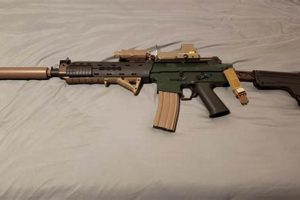
The practice involves utilizing simulated firearms that discharge non-lethal projectiles to develop skills applicable to tactical environments. Such drills can replicate real-world scenarios, affording participants the opportunity to hone decision-making, teamwork, and marksmanship abilities. These exercises often incorporate elements of strategic planning, communication, and adaptability under simulated pressure.
These activities provide a safe and controlled environment for individuals and teams to enhance their performance. The historical context reveals a growing adoption of such techniques across various sectors, including law enforcement, military, and security, owing to the cost-effectiveness and reduced risk compared to live-fire exercises. Key advantages encompass improved situational awareness, leadership development, and the refinement of response protocols.
Subsequent sections will delve into specific applications within diverse professional fields, explore variations in methodologies employed, and analyze the long-term impacts on operational effectiveness. A comparative analysis of different simulation platforms and a discussion of best practices for implementation are also included.
Airsoft Training
The following recommendations aim to optimize the effectiveness of simulated firearms exercises and enhance participants’ skill acquisition.
Tip 1: Emphasize Realistic Scenario Design: Exercises must mirror plausible operational contexts, including environmental factors and potential adversary behaviors. This increases the transferability of learned skills to real-world situations. A scenario involving building clearing should incorporate variable lighting, obstructed views, and simulated civilian presence.
Tip 2: Prioritize Clear Communication Protocols: Establish standardized communication procedures, including pre-determined codes and signals, to facilitate efficient information exchange during drills. Teams should practice relaying critical information such as enemy positions, casualties, and environmental hazards.
Tip 3: Incorporate Stress Inducement: Implement stressors, such as time constraints, simulated injuries, and unexpected challenges, to replicate the psychological impact of real-world operations. Monitor participants’ performance under pressure to identify areas for improvement in stress management and decision-making.
Tip 4: Focus on Tactical Movement: Emphasize the importance of coordinated team movement, utilizing cover and concealment effectively. Drills should incorporate techniques such as bounding overwatch, room clearing, and urban navigation.
Tip 5: Develop Proficiency in Equipment Handling: Participants must become proficient in the safe and effective operation of simulated firearms and related equipment. This includes proper loading, unloading, maintenance, and troubleshooting procedures.
Tip 6: Implement After-Action Reviews (AAR): Conduct thorough AARs immediately following each exercise to identify strengths, weaknesses, and areas for improvement. Encourage open and honest feedback from all participants to foster a culture of continuous learning.
Tip 7: Vary Training Environments: Regularly rotate training locations to expose participants to diverse terrain, weather conditions, and structural layouts. This enhances adaptability and prepares them for a wider range of operational contexts.
Adherence to these guidelines can significantly enhance the benefits derived from simulated firearms exercises, improving participants’ tactical proficiency and operational readiness.
The subsequent sections will explore the integration of this practice into broader training curricula and assess its long-term impact on professional development.
1. Scenario Realism

Scenario realism in the context of simulated firearms exercises directly impacts the transferability of acquired skills to real-world operational environments. The degree to which a training scenario replicates the complexities and nuances of actual situations determines the effectiveness of the training regimen.
- Environmental Fidelity
Environmental fidelity encompasses replicating the physical surroundings of potential operational areas, including terrain, structures, and ambient conditions. A high degree of environmental fidelity necessitates the inclusion of variable lighting, realistic obstacles, and simulated weather effects. Accurate environmental representation fosters improved spatial awareness and enhances the ability to navigate and assess threats effectively.
- Adversary Behavior Mimicry
Adversary behavior mimicry involves replicating the tactics, techniques, and procedures (TTPs) of potential adversaries. This includes incorporating realistic threat assessments, ambush scenarios, and simulated engagement doctrines. The realism of adversary behavior necessitates the integration of unpredictable elements and adaptive responses, promoting the development of critical thinking and decision-making skills under pressure.
- Equipment and Weapons Authenticity
Equipment and weapons authenticity requires the use of simulated firearms and tactical gear that closely resemble their real-world counterparts in terms of weight, ergonomics, and functionality. Accurate replication of weapon handling characteristics, including trigger pull, recoil, and magazine changes, enhances muscle memory and promotes efficient weapon manipulation techniques.
- Situational Stress Inducement
Situational stress inducement involves the incorporation of stressors that replicate the psychological impact of real-world operations. This includes time constraints, simulated casualties, and unexpected operational challenges. The integration of stress factors promotes the development of coping mechanisms, improves decision-making under pressure, and enhances the ability to maintain situational awareness in high-stress environments.
These interconnected elements of scenario realism collectively contribute to the overall effectiveness of simulated firearms exercises. By closely replicating the complexities and stressors of actual operational environments, such exercises enhance the transferability of acquired skills and prepare participants for the demands of real-world situations. The degree to which these elements are integrated determines the extent to which the training translates into improved performance and enhanced operational readiness.
2. Communication Protocols

Communication protocols are fundamental to effective simulated firearms exercises. The establishment and adherence to clear, concise, and standardized communication procedures directly influence team coordination, situational awareness, and overall mission success. In the absence of structured communication, participants may misinterpret information, delay critical actions, and compromise team safety. This relationship is causal; poorly defined protocols lead to diminished performance, while robust protocols facilitate efficient operations. For instance, a scenario involving room clearing necessitates pre-designated signals for breach, entry, and threat identification. Without such protocols, teams risk fratricide or failure to neutralize threats effectively. The practical significance lies in the ability to translate training scenarios into real-world applications, where effective communication is often the differentiating factor between success and failure.
Beyond basic commands, communication protocols must encompass methods for relaying critical information such as enemy positions, casualty reports, and environmental hazards. Standardized terminology and reporting formats minimize ambiguity and ensure that information is accurately and efficiently conveyed. A real-world example includes the use of brevity codes for reporting enemy contact, allowing for rapid dissemination of information across a team or unit. Effective communication also necessitates the use of appropriate channels, whether it is voice communication, hand signals, or written messages, depending on the operational context and available resources. Furthermore, establishing a clear chain of command within the communication network ensures that information flows efficiently and that decisions are made at the appropriate level.
Ultimately, the effectiveness of communication protocols in simulated firearms exercises mirrors their importance in real-world tactical operations. While the consequences of communication failures may be less severe in a training environment, the lessons learned through meticulous protocol implementation and rigorous practice contribute directly to improved operational readiness. Challenges include maintaining discipline in communication under stressful conditions and adapting protocols to accommodate diverse operational environments. Addressing these challenges ensures that communication protocols serve as a foundational element of effective tactical training and enhance the overall competence of participating individuals and teams.
3. Stress Inoculation and Airsoft Training

Stress inoculation, when deliberately integrated into simulated firearms exercises, replicates the psychological and physiological effects of real-world operational environments. This process enhances participants’ resilience and ability to maintain cognitive function under duress, translating to improved decision-making and performance under pressure.
- Physiological Stress Response Conditioning
Simulated firearms exercises can induce physiological stress responses, including elevated heart rate, increased respiration, and heightened adrenaline levels. Controlled exposure to these stressors in a training environment allows participants to develop coping mechanisms, such as controlled breathing and progressive muscle relaxation, to mitigate the negative impacts of stress on performance. For example, timed scenarios or surprise ambushes can trigger physiological stress responses, providing opportunities for participants to practice stress management techniques in a realistic context.
- Cognitive Stress Management
Stress can impair cognitive functions such as attention, memory, and decision-making. Simulated firearms exercises that incorporate stress inoculation elements, such as complex scenarios or time constraints, force participants to develop strategies for managing cognitive overload. This includes prioritizing tasks, delegating responsibilities, and utilizing mental rehearsal techniques to maintain focus and clarity under pressure. For instance, scenarios requiring rapid adaptation to changing circumstances can enhance cognitive flexibility and improve decision-making speed.
- Emotional Regulation Enhancement
Stress can trigger emotional responses, such as fear, anxiety, and anger, that can negatively impact performance. Simulated firearms exercises provide a safe environment for participants to learn to recognize and regulate their emotions. Through repeated exposure to stressful situations, participants can develop coping strategies, such as emotional detachment and cognitive reappraisal, to manage their emotional reactions and maintain composure under pressure. AARs (After Action Reviews) can be crucial in this process, allowing participants to discuss their emotional responses and identify areas for improvement.
- Performance Under Pressure Improvement
The culmination of physiological stress response conditioning, cognitive stress management, and emotional regulation enhancement results in improved performance under pressure. Participants who have undergone stress inoculation training are better equipped to maintain situational awareness, make sound decisions, and execute tactical maneuvers effectively, even in highly stressful environments. This translates to improved operational readiness and enhanced survivability in real-world scenarios. The long-term goal is to foster a mindset of resilience and adaptability, enabling individuals to perform optimally under challenging circumstances.
These facets of stress inoculation are inextricably linked to the principles of realistic training within simulated firearms exercises. The deliberate and controlled introduction of stress, when coupled with effective coping mechanisms, yields individuals better prepared to face the demands of high-pressure operational environments. This is not simply about enduring stress, but about adapting, learning, and performing effectively in its presence, thereby increasing operational success rates. Effective integration of stress inoculation techniques directly enhances the value and relevance of simulated firearms exercises as a preparation tool.
4. Tactical Movement in Airsoft Training

Tactical movement, defined as coordinated movement techniques designed to enhance survivability and mission effectiveness, constitutes a critical component of realistic simulated firearms exercises. The adoption of these techniques in airsoft training allows participants to develop proficiency in maneuvering through varied terrains, utilizing cover and concealment, and minimizing exposure to potential threats. Improved tactical movement skills contribute directly to reduced casualty rates and enhanced operational success in real-world scenarios. A concrete example of this would be the use of bounding overwatch drills, which teach participants to alternate between providing covering fire and advancing, thereby reducing individual vulnerability during movement.
The practical application of tactical movement principles extends beyond basic maneuvering. It also encompasses the ability to effectively assess terrain, identify potential hazards, and adapt movement patterns accordingly. Airsoft training allows for the simulation of diverse operational environments, ranging from urban settings to open terrain, providing participants with opportunities to practice tactical movement in varied contexts. For example, room-clearing exercises emphasize the importance of coordinated team movement, communication, and the efficient use of cover to neutralize threats within enclosed spaces. The integration of stress inoculation techniques, as outlined previously, further enhances the effectiveness of tactical movement training by simulating the psychological pressures encountered in real-world combat situations.
The relationship between tactical movement proficiency and overall operational effectiveness is undeniable. Airsoft training provides a safe and controlled environment for individuals and teams to develop these skills without the inherent risks associated with live-fire exercises. The challenges of integrating tactical movement into airsoft training primarily involve replicating the complexities and uncertainties of real-world environments. However, when properly implemented, tactical movement drills significantly enhance participants’ ability to navigate challenging situations, minimize risk, and achieve mission objectives effectively. The strategic employment of tactical movement is therefore an invaluable component of comprehensive operational training.
5. Equipment proficiency

Equipment proficiency within simulated firearms exercises is paramount to translating training scenarios into tangible improvements in operational performance. Proper handling, maintenance, and troubleshooting of simulated firearms and associated gear directly influence the speed and accuracy with which participants can respond to simulated threats. Inability to effectively operate the simulated equipment negates the benefits of scenario design and tactical training. An example illustrates this point: if a participant struggles to reload a simulated rifle under duress due to unfamiliarity with its operation, the entire teams progress may be compromised. Equipment familiarity must be cultivated to the point of automaticity.
Effective training regimes prioritize familiarization with a range of equipment types, reflecting the diverse tools and technologies employed in real-world operational settings. This necessitates hands-on experience with simulated rifles, pistols, communication devices, and specialized gear, such as night-vision equipment or breaching tools. Furthermore, participants should receive training in the proper storage, cleaning, and minor repair of this equipment. A practical example involves training participants to diagnose and resolve common malfunctions, such as simulated jams or battery failures, enabling them to maintain operational readiness even under challenging circumstances. Such instruction also promotes a sense of responsibility and stewardship towards the resources utilized.
Ultimately, the cultivation of equipment proficiency serves as a foundational element for effective simulated firearms exercises. It is not merely about knowing how to operate the equipment, but rather about seamlessly integrating its use into tactical decision-making and execution. Challenges arise in replicating the full spectrum of equipment functionalities and potential malfunctions within a training environment. However, addressing these challenges is essential to maximizing the training’s relevance and ensuring that participants develop the skills and confidence necessary to excel in real-world operational scenarios. Emphasis on equipment capabilities directly contributes to higher proficiency in airsoft scenarios.
6. After-action review
The after-action review (AAR) serves as a critical component of simulated firearms exercises. The AAR is a structured debriefing process designed to analyze performance, identify strengths and weaknesses, and facilitate continuous improvement. In the context of such exercises, the AAR offers a systematic method for assessing the effectiveness of tactical decisions, communication protocols, and individual skill execution. For instance, following a scenario involving a simulated building entry, the AAR process would involve a detailed examination of team movement, room-clearing techniques, and engagement effectiveness. The identified strengths are then reinforced in subsequent training, while weaknesses are addressed through targeted drills and instruction. This process directly affects performance by driving tangible improvements.
AAR implementation necessitates a structured approach. This typically involves a facilitator who guides the discussion, ensuring that all participants have the opportunity to contribute their observations and insights. The process should be objective, focusing on factual observations rather than subjective judgments. A real-world example includes the use of video recordings to review tactical maneuvers and identify areas for improvement. The AAR process also highlights the importance of documenting lessons learned, which can then be incorporated into future training scenarios and operational procedures. Practical applications of this understanding extend to the design of more effective training programs, improved team coordination, and enhanced individual skill development.
In conclusion, the AAR process is integral to maximizing the benefits derived from simulated firearms exercises. By providing a structured framework for analyzing performance and identifying areas for improvement, the AAR enables participants to translate training experiences into tangible improvements in operational effectiveness. Challenges in AAR implementation include overcoming resistance to constructive criticism and ensuring that the process remains focused and objective. However, when properly implemented, the AAR serves as a powerful tool for continuous learning and improvement, ensuring the ongoing development of tactical skills and operational readiness. This, in turn, enhances success in airsoft training and real-world applications.
7. Environment Variation

Environment variation in airsoft training constitutes a critical element in enhancing operational readiness and adaptability. By exposing participants to diverse terrain, structural layouts, and ambient conditions, training programs can foster a greater capacity to effectively respond to a wide range of real-world operational scenarios.
- Terrain Diversity
Terrain diversity encompasses varying topographical features such as urban environments, wooded areas, and open fields. Exposure to these disparate environments forces participants to adapt their movement techniques, cover utilization, and engagement strategies. For instance, navigating a dense forest requires different approaches compared to clearing an open field. Real-world military training frequently incorporates maneuvers across diverse terrains to prepare personnel for varied operational contexts. In airsoft training, replicating this diversity through varied field layouts cultivates tactical flexibility.
- Structural Complexity
Structural complexity involves the incorporation of diverse building types and interior layouts into training scenarios. This includes residential structures, industrial facilities, and commercial buildings, each presenting unique challenges in terms of room clearing, hostage rescue, and threat identification. Real-world law enforcement training often utilizes mock-up buildings with variable floor plans to prepare officers for diverse structural environments. Introducing similar structural complexity in airsoft scenarios hones participants ability to quickly assess and adapt to different architectural layouts.
- Ambient Condition Variability
Ambient condition variability encompasses factors such as lighting levels, weather conditions, and noise levels. Training under variable lighting conditions, including daylight, low-light, and complete darkness, requires participants to adapt their visual techniques and equipment utilization. Similarly, exposure to varying weather conditions, such as rain, wind, and fog, necessitates adjustments to movement strategies and engagement tactics. The inclusion of noise, whether from simulated gunfire or environmental sources, adds a layer of complexity to communication and situational awareness. Simulating these ambient conditions within airsoft training scenarios enhances participants’ ability to maintain operational effectiveness under adverse circumstances.
- Scenario Contextualization
The effectiveness of environmental variations is significantly enhanced when integrated within a well-defined scenario. Contextualization ties the environment to a specific objective. For example, a night-time raid on a simulated insurgent compound in a rural environment necessitates different tactics compared to a daylight hostage rescue operation in an urban structure. The scenario provides a framework for applying learned skills and decision-making within a realistic context, enhancing the transferability of these skills to actual operational settings.
The integration of terrain diversity, structural complexity, ambient condition variability, and scenario contextualization into airsoft training regimens directly enhances the realism and effectiveness of these simulations. By exposing participants to a wide range of environmental challenges, airsoft training can cultivate adaptability, improve tactical decision-making, and enhance overall operational readiness, thus bridging the gap between theoretical knowledge and practical application.
Frequently Asked Questions
This section addresses common inquiries and misconceptions surrounding airsoft training as a tool for skill development and operational readiness. The following questions and answers provide a detailed overview of key aspects, ensuring clarity and understanding.
Question 1: What distinguishes airsoft training from other forms of simulation?
Airsoft training utilizes projectile-based simulated firearms, providing a tactile and kinesthetic experience absent in purely virtual simulations. The use of physical equipment and projectile impact offers a more realistic representation of weapon handling and engagement dynamics. This realism is often lacking in other training simulations.
Question 2: Is airsoft training a suitable substitute for live-fire exercises?
Airsoft training serves as a valuable complement to live-fire exercises but does not constitute a complete substitute. While airsoft training provides a safe and cost-effective means of developing tactical skills and decision-making abilities, it lacks the ballistic effects and physiological impact of live ammunition. It is typically a preliminary stage.
Question 3: What are the primary benefits of incorporating airsoft training into a professional development program?
Airsoft training offers several benefits, including enhanced tactical awareness, improved communication skills, stress inoculation, and cost-effective scenario replication. The controlled environment allows participants to develop and refine skills without the inherent risks associated with live-fire training, promoting a culture of experimentation and continuous improvement.
Question 4: What are the potential limitations of airsoft training as a performance enhancement tool?
Limitations of airsoft training include the lack of realistic ballistic effects, the potential for equipment malfunctions to disrupt the training flow, and the inherent artificiality of simulated engagements. Furthermore, the absence of real-world consequences may impact the psychological fidelity of the training experience.
Question 5: What safety precautions are necessary to mitigate risks associated with airsoft training?
Mandatory safety precautions include the use of appropriate eye protection, adherence to established rules of engagement, and strict supervision by qualified instructors. Furthermore, participants should receive thorough training on equipment handling and safety protocols before engaging in any simulated scenarios. It is essential to follow all established guidelines.
Question 6: What types of professional fields or organizations can benefit from implementing airsoft training programs?
Law enforcement agencies, military units, security firms, and emergency response teams can all benefit from implementing airsoft training programs. The simulated environment allows these organizations to develop and refine tactical skills, improve team coordination, and enhance operational readiness in a safe and cost-effective manner. Moreover, certain competitive scenarios can also provide benefit.
Airsoft training serves as a useful tool for tactical skill development. The FAQs are designed to assist those interested in understanding its role in different areas.
This concludes the FAQ section. The subsequent discussion will address the cost factors associated with establishing and maintaining airsoft training programs.
Conclusion
The preceding sections explored the multifaceted nature of airsoft training, examining its role in skill development, stress inoculation, and tactical preparedness. A recurring theme emphasized the criticality of realistic scenario design, standardized communication protocols, and proficiency in equipment handling. The integration of these elements contributes directly to the effectiveness of simulated firearms exercises and their applicability to real-world operational contexts.
The benefits of airsoft training, when implemented thoughtfully and with attention to detail, are considerable. As organizations seek cost-effective and safe methods to enhance personnel readiness, airsoft training merits careful consideration as a valuable component of a comprehensive training curriculum. Further research and refinement of training methodologies will undoubtedly solidify its position as a significant tool in various professional fields. The time to explore this method is now.