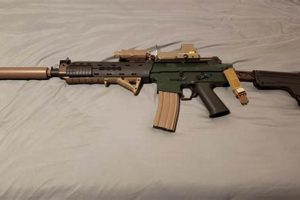
Tactical considerations in airsoft encompass a range of strategies, equipment modifications, and coordinated team movements employed to gain an advantage during gameplay. This involves utilizing cover effectively, employing communication protocols, and selecting appropriate gear to enhance performance in simulated combat scenarios. For example, a team might use flanking maneuvers to outwit opponents, leveraging knowledge of the playing field and coordinated fire support.
The application of tactical principles within airsoft enhances realism, promotes teamwork, and increases the strategic depth of the game. Historically, these tactical approaches have evolved alongside military simulations and law enforcement training exercises. Benefits include improved decision-making under pressure, enhanced communication skills, and a greater understanding of teamwork dynamics. The development of specialized equipment tailored for airsoft environments has also contributed to the increasing sophistication of tactical play.
With the foundational understanding established, the following sections will delve into specific aspects, including gear selection, team communication strategies, and advanced movement techniques utilized to optimize effectiveness within airsoft skirmishes.
Essential Considerations for Enhanced Performance
This section outlines practical advice to maximize effectiveness. Adherence to these guidelines can contribute significantly to a team’s success.
Tip 1: Prioritize Effective Communication: Clear and concise information sharing is paramount. Use pre-determined callouts and hand signals to relay critical details regarding enemy positions, movement, and engagement status. Regularly practice these communication protocols to ensure fluency under pressure.
Tip 2: Master Movement Techniques: Agile and strategic movement is critical. Practice utilizing cover effectively by slicing corners and minimizing exposure time. Vary movement patterns to avoid becoming predictable and vulnerable to suppression fire.
Tip 3: Select Appropriate Loadouts: Equipment choices should be dictated by the operational environment and individual role. Consider factors such as weapon range, maneuverability, and ammunition capacity. Periodically reassess loadout effectiveness and make adjustments as needed.
Tip 4: Develop Situational Awareness: Constant observation of the surrounding environment is vital. Maintain awareness of team positions, potential threats, and available escape routes. This heightened awareness facilitates rapid decision-making and proactive threat mitigation.
Tip 5: Practice Weapon Manipulation: Proficiency in weapon handling is essential for maintaining combat effectiveness. Regularly practice reloading drills, clearing malfunctions, and transitioning between weapons. Consistent practice improves reaction time and minimizes downtime during critical moments.
Tip 6: Emphasize Team Cohesion: A cohesive team operates with synchronized efficiency. Prioritize teamwork by coordinating movements, providing covering fire, and supporting teammates in distress. Effective teamwork amplifies individual capabilities and maximizes overall performance.
Tip 7: Adapt to Changing Circumstances: The battlefield is dynamic and unpredictable. Maintain flexibility and be prepared to adapt to evolving situations. The ability to quickly assess new threats, adjust strategies, and improvise solutions is a hallmark of successful operators.
Implementing these recommendations will contribute to a more strategic and effective approach. Continuous refinement and adaptation are essential for sustained improvement.
The final section will offer concluding remarks on the discussed material.
1. Communication Protocols

Communication protocols form the bedrock of effective tactical operations. Within airsoft, clearly defined and rigorously practiced communication systems are indispensable for coordinated movement, threat identification, and overall mission success.
- Standardized Terminology
The use of pre-determined terms for common observations, such as enemy positions (“Contact Left,” “Flanking Right”), enhances clarity and reduces ambiguity. Standardized terminology ensures all team members understand critical information without misinterpretation, particularly under stressful combat simulations. For instance, reporting “Contact, three Tangoes, grid square Bravo-Four” conveys specific enemy details and location rapidly.
- Radio Discipline
Maintaining radio silence except when transmitting essential information is crucial to prevent unnecessary chatter and potential interception by opposing forces. Disciplined radio usage maximizes bandwidth and prevents the communication network from becoming overloaded, ensuring timely delivery of vital updates. This discipline includes using brevity codes and minimizing non-essential conversation.
- Chain of Command Reporting
Establishing a clear chain of command for reporting allows for efficient dissemination of information and delegation of tasks. Each team member understands who they should report to and receive instructions from, preventing bottlenecks and ensuring timely responses to evolving situations. This hierarchical structure streamlines decision-making and facilitates coordinated action.
- Contingency Signals
Pre-arranged signals, both verbal and non-verbal (e.g., hand gestures), provide a means of communicating critical information when radio communication is compromised or unavailable. Contingency signals cover situations such as ambushes, flanking maneuvers, or the need for immediate extraction. These pre-planned signals offer a silent and rapid means of conveying essential instructions, ensuring the team can react effectively, regardless of communication limitations.
The effective implementation of standardized communication protocols significantly elevates team performance within airsoft environments. This includes heightened situational awareness, improved coordination, and the ability to react decisively to dynamic battlefield conditions. Without such protocols, teams risk confusion, disorganization, and ultimately, tactical failure.
2. Movement Coordination

Movement coordination serves as a cornerstone of effective team tactics within airsoft engagements. Properly executed movement, synchronized amongst team members, dictates the ability to outmaneuver opponents, secure advantageous positions, and minimize exposure to hostile fire. Deficiencies in movement coordination frequently result in tactical vulnerabilities, such as predictable patterns, compromised flanks, and an increased likelihood of casualties. This component is a direct application of military small-unit tactics adapted for the airsoft context, encompassing bounding overwatch, flanking maneuvers, and fire-and-movement drills.
Consider a scenario where a team attempts to advance on a fortified position. Without coordinated movement, individual players may move independently, creating gaps in the advance and exposing themselves to concentrated fire. Conversely, a well-coordinated advance might involve a leading element providing suppressive fire while a flanking element maneuvers to a more advantageous angle of attack. This coordinated action effectively divides the enemy’s attention, reduces the volume of fire directed at any single team member, and increases the probability of successfully breaching the defensive line. Furthermore, pre-planned routes and contingency plans for unexpected encounters contribute to seamless transitions between phases of the operation, maximizing team efficiency. For instance, if the leading element encounters heavy resistance, a pre-arranged signal can trigger the flanking element to accelerate its advance, creating a diversion and relieving pressure on the lead team. The utilization of smoke grenades or other visual obscurants, employed in conjunction with coordinated movement, can further enhance concealment and disrupt enemy target acquisition.
In conclusion, effective movement coordination is not merely about moving from one point to another; it is about achieving a synergistic interplay between team members that amplifies their individual capabilities. Challenges in implementing this coordination arise from communication breakdowns, inadequate training, and a lack of understanding of team roles. Addressing these challenges through consistent training exercises and fostering a culture of teamwork is essential for optimizing performance. The integration of well-defined movement coordination strategies into a team’s repertoire is directly linked to its overall effectiveness and success within the competitive landscape.
3. Equipment Selection

Equipment selection constitutes a critical component of effective tactical gameplay. The deliberate choice of gear, tailored to specific roles and operational environments, directly influences a player’s ability to execute strategies and achieve mission objectives.
- Weapon Platform
The primary weapon platform dictates engagement range, rate of fire, and maneuverability. A designated marksman rifle (DMR) favors long-range engagements and precision shots, while a submachine gun (SMG) excels in close-quarters combat (CQB) scenarios. Selecting the appropriate weapon for the intended role significantly impacts a player’s effectiveness in various tactical situations. For example, employing a DMR in a tight, confined building diminishes its advantages, making it a less suitable choice compared to an SMG.
- Protective Gear
Protective gear, encompassing eye protection, face coverings, and body armor, mitigates the risk of injury and enhances survivability. Eye protection is mandatory in all regulated games, while face coverings and body armor provide additional protection against high-velocity projectiles. The selection of appropriate protective gear must balance safety with maneuverability and comfort. A heavy, cumbersome plate carrier, while offering superior protection, can impede movement and stamina, potentially hindering tactical effectiveness.
- Load-Bearing Equipment
Load-bearing equipment, such as vests, chest rigs, and belts, facilitates the efficient carrying of essential gear, including magazines, grenades, communication devices, and medical supplies. The design and configuration of load-bearing equipment directly impact accessibility, weight distribution, and overall comfort. An ill-fitting or poorly configured system can lead to fatigue, restricted movement, and difficulty accessing essential equipment during critical moments. The modularity of modern load-bearing systems allows players to customize their loadout to suit specific mission requirements.
- Communication Devices
Communication devices, primarily radios, enable real-time information sharing and coordinated team movements. Clear and concise communication is paramount for effective tactical execution. The selection of a reliable radio system with adequate range and battery life is crucial for maintaining situational awareness and coordinating team efforts. Additionally, the integration of headsets and microphones enhances communication clarity and reduces external noise interference.
The selection of equipment should be viewed as an integral aspect of tactical planning, not merely a superficial consideration. A comprehensive understanding of the interplay between equipment capabilities, individual roles, and operational environments is essential for optimizing performance and maximizing the effectiveness of tactical strategies.
4. Situational Awareness

Situational awareness forms a critical foundation for effective tactical decision-making in airsoft. It represents the perception of environmental elements within a volume of time and space, the comprehension of their meaning, and the projection of their status in the near future. In the context of airsoft, a heightened awareness of the unfolding battle landscape translates directly into improved strategic positioning, threat assessment, and overall team performance.
- Environmental Scanning
Environmental scanning involves the continuous and systematic observation of the surrounding environment. This includes noting the positions of opposing players, identifying potential avenues of approach, and recognizing changes in terrain features. For instance, a player might identify a concealed flanking position, relaying this information to teammates to prevent an ambush. Failing to scan effectively can result in unexpected engagements and tactical disadvantages.
- Threat Assessment
Threat assessment requires the ability to accurately evaluate the capabilities and intentions of opposing players. This includes recognizing weapon types, observing movement patterns, and interpreting tactical maneuvers. For example, identifying that an opponent is equipped with a long-range rifle allows for the adjustment of engagement distances and the adoption of appropriate countermeasures. Inaccurate threat assessments can lead to misjudged engagements and unnecessary risk-taking.
- Team Awareness
Team awareness involves maintaining a constant understanding of the positions and status of friendly players. This includes knowing their current objectives, their equipment loadouts, and their overall tactical roles within the team. For example, knowing that a teammate is providing overwatch fire enables a player to advance with reduced risk. Lack of team awareness can result in friendly fire incidents and uncoordinated actions.
- Predictive Analysis
Predictive analysis involves the anticipation of future events based on current observations and known information. This includes forecasting enemy movements, predicting potential ambushes, and anticipating changes in the battlefield dynamic. For example, observing that opposing players are consistently utilizing a specific route allows for the placement of defensive measures to disrupt their advance. Failing to anticipate future events can result in reactive decision-making and missed opportunities.
The development and maintenance of strong situational awareness skills are essential for success. By effectively scanning the environment, assessing threats, understanding team positions, and anticipating future events, players can significantly enhance their tactical effectiveness. Neglecting situational awareness creates vulnerabilities and diminishes the overall performance of both individual players and the team as a whole.
5. Teamwork Dynamics

Teamwork dynamics within the realm of airsoft are not merely ancillary components, but rather represent the central nervous system through which tactical doctrines are implemented and operational objectives achieved. Effective teamwork transcends individual skill, creating a synergistic force multiplier capable of overcoming numerically superior or individually more skilled opposition.
- Coordinated Communication
Coordinated communication serves as the linchpin of successful teamwork. The rapid and unambiguous exchange of information, regarding enemy positions, flanking maneuvers, and objective status, enables a unified and adaptive response to dynamic battlefield conditions. For example, a spotter identifying an enemy sniper position can relay precise coordinates, allowing a designated marksman to neutralize the threat swiftly. Deficiencies in communication invariably lead to confusion, delayed reactions, and increased vulnerability.
- Shared Objectives and Roles
A shared understanding of team objectives and individual roles is paramount for cohesive action. Each member must recognize their assigned tasks, whether it be frontline assault, defensive perimeter maintenance, or logistical support, and comprehend how their contributions directly impact the overall mission. Discrepancies in objective comprehension or role ambiguity can result in duplicated efforts, neglected responsibilities, and compromised tactical integrity.
- Mutual Support and Trust
Mutual support and unwavering trust form the bedrock of a high-performing team. The willingness to provide covering fire, administer first aid, or sacrifice personal advantage for the benefit of a teammate fosters a climate of solidarity and resilience. This trust extends to relying on teammates to execute their assigned roles competently and adhering to established protocols. Erosion of trust undermines team cohesion and hinders effective tactical execution.
- Adaptive Leadership and Flexibility
Adaptive leadership, characterized by the ability to assess dynamic situations and adjust strategies accordingly, is essential for maintaining momentum and overcoming unforeseen challenges. Effective leadership empowers team members to take initiative within their designated roles, fostering a culture of adaptability and responsiveness. Rigid adherence to pre-determined plans, without accounting for evolving circumstances, can lead to tactical stagnation and missed opportunities.
In summation, the interplay of coordinated communication, shared objectives, mutual support, and adaptive leadership defines the efficacy of teamwork dynamics. These factors, when harmonized, elevate the collective tactical capability, transforming a group of individual players into a cohesive and formidable fighting unit. The integration of these principles is crucial for maximizing potential.
6. Cover Utilization
The effective utilization of cover constitutes a foundational element of tactical gameplay. Its strategic application significantly influences survivability, maneuverability, and overall effectiveness within simulated combat environments. Proficiency in cover utilization is inextricably linked to successful execution of any tactical plan, enhancing both individual and team performance.
- Material Selection and Ballistic Considerations
The selection of appropriate cover material is crucial, though limited by the nature of the game environment. While airsoft projectiles possess significantly less kinetic energy than real firearms ammunition, the principles of leveraging cover remain relevant. Solid structures, such as walls, trees, and vehicles, offer greater protection than thinner materials. Understanding the angle of incidence and the potential for ricochet is vital for minimizing exposure. For instance, positioning oneself directly behind a thin wooden fence offers negligible protection, whereas angling the body minimizes the profile presented to the opposition.
- Positional Awareness and Exposure Management
Maintaining awareness of one’s position relative to available cover is paramount. Minimizing exposure time and surface area reduces the likelihood of being targeted. Utilizing techniques such as “slicing the pie,” where the player incrementally exposes portions of their body to scan for threats while remaining predominantly behind cover, allows for threat assessment without full exposure. Overexposure, conversely, creates a vulnerability that skilled opponents can exploit.
- Movement Techniques and Cover Transitions
The ability to move effectively between cover positions is a key component of tactical maneuvering. Techniques such as bounding overwatch, where one player provides covering fire while another advances to the next position, facilitate safe and efficient movement. The swift and fluid transition from one cover point to another maximizes momentum and minimizes the time spent in vulnerable positions. Hesitation or clumsy transitions can result in unnecessary exposure and compromise the tactical advantage.
- Cover as an Offensive Tool
Cover is not solely a defensive measure; it can also be utilized offensively. Employing cover to mask movements, set up ambushes, or create flanking opportunities enhances tactical aggression. The strategic placement of smoke grenades in conjunction with cover can create temporary concealment, allowing for undetected advances. Utilizing cover as a firing platform provides stability and reduces recoil, improving accuracy and control.
The strategic integration of these facets of cover utilization fundamentally enhances tactical capability. Proficiency in selecting appropriate cover, managing exposure, executing effective movement techniques, and leveraging cover offensively elevates the effectiveness of any tactical strategy and significantly increases the probability of achieving favorable outcomes. Skillful cover utilization underscores its undeniable importance in navigating and dominating simulated combat scenarios.
7. Target Prioritization

Target prioritization, as a critical component of tactical gameplay, directly impacts operational effectiveness. Within airsoft, the identification and engagement of high-value targets can disrupt enemy strategies, demoralize opposing forces, and ultimately secure objectives. The allocation of resources and focus based on a target’s perceived threat level or strategic significance reflects a deliberate tactical calculus. Ignoring the principles of target prioritization often results in wasted ammunition, prolonged engagements, and increased vulnerability to counterattack.
Consider a scenario where a team is tasked with capturing a fortified position. Opposing elements may include a designated sniper, a team leader coordinating the defense, and several rank-and-file combatants. Effective target prioritization dictates that the sniper, capable of inflicting disproportionate damage, and the team leader, orchestrating the defensive strategy, represent the highest-value targets. Neutralizing these individuals significantly degrades the enemy’s capabilities, creating opportunities for successful assault. Conversely, focusing solely on engaging the rank-and-file combatants, while neglecting the more impactful threats, prolongs the engagement and increases the risk of casualties. In close-quarters scenarios, prioritizing targets armed with heavier weaponry or those positioned to provide covering fire allows for a more rapid and decisive advancement. Furthermore, the identification and elimination of medics can cripple the enemy’s ability to sustain operations. These strategic decisions directly translate to increased operational tempo and improved mission success rates.
In conclusion, target prioritization is not merely a matter of randomly engaging opponents; it represents a calculated decision-making process directly influencing mission outcomes. Its proper implementation requires a thorough understanding of enemy capabilities, battlefield dynamics, and the strategic value of individual targets. Mastering the art of target prioritization requires continuous practice and adaptation based on evolving battlefield conditions and enemy tactics. A failure to prioritize effectively diminishes tactical advantages and jeopardizes mission success.
Airsoft Tac
The following questions address common inquiries regarding tactical considerations within the airsoft environment. These answers aim to provide clarity on prevalent topics surrounding gameplay strategies and equipment utilization.
Question 1: What constitutes a tactical advantage in airsoft?
A tactical advantage encompasses any element that improves a team’s probability of success. This includes superior positioning, coordinated movement, effective communication, and the appropriate selection of equipment for the operational environment.
Question 2: How does communication impact tactical effectiveness?
Communication enables synchronized movement, rapid threat assessment, and efficient resource allocation. Clear and concise communication is essential for coordinating team efforts and adapting to dynamic battlefield conditions. The use of standardized terminology minimizes ambiguity and ensures all team members understand critical information.
Question 3: Why is equipment selection important for tactical performance?
The choice of weapon platform, protective gear, and load-bearing equipment directly influences a player’s ability to fulfill their assigned role. Selecting equipment suited to the operational environment and individual capabilities enhances tactical effectiveness. Mismatched equipment can hinder maneuverability and diminish overall performance.
Question 4: What are the key elements of effective movement coordination?
Effective movement coordination involves synchronized movement, strategic cover utilization, and clear communication. Techniques such as bounding overwatch and flanking maneuvers require coordinated team efforts to maximize effectiveness and minimize exposure to hostile fire.
Question 5: How does situational awareness contribute to tactical decision-making?
Situational awareness allows for the identification of threats, the assessment of enemy intentions, and the anticipation of future events. Maintaining awareness of the surrounding environment enables informed tactical decision-making and enhances the ability to react effectively to dynamic battlefield conditions.
Question 6: What is the role of teamwork in achieving tactical objectives?
Teamwork amplifies individual capabilities through coordinated communication, shared objectives, and mutual support. A cohesive team operates with synchronized efficiency, enabling the successful execution of complex tactical maneuvers and the achievement of challenging objectives.
These inquiries address fundamental aspects of airsoft tactical gameplay. Continued refinement and adaptation are essential for sustained improvement.
The subsequent section will present concluding remarks and offer recommendations for further exploration.
Concluding Observations on Airsoft Tac
This exploration has detailed the core components of effective tactical engagement. From communication protocols to cover utilization, and culminating in target prioritization, the successful implementation of these strategies demands rigorous training and adaptability. The application of these principles serves to elevate gameplay beyond mere recreational activity, transforming it into a simulation of calculated decision-making and strategic execution.
Continued focus on tactical refinement will inevitably shape the future of competitive airsoft. Mastering fundamental principles allows participants to not only enhance their individual capabilities but also contribute to the overall sophistication and realism of simulated combat scenarios. The pursuit of tactical proficiency, therefore, represents a commitment to the advancement and evolution of the game.