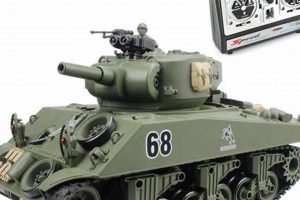
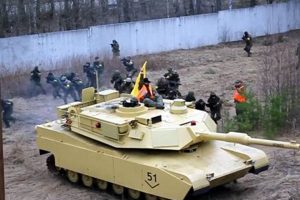
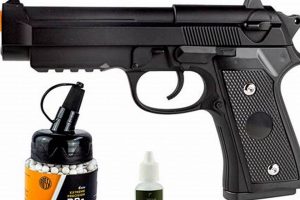
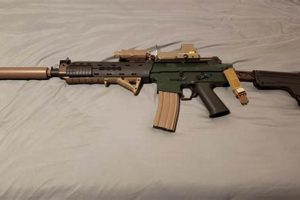
Items necessary for participation in the recreational activity of airsoft are crucial components. These encompass a range of equipment from protective gear, such as eye protection and face masks, to the devices used to propel projectiles, frequently resembling real firearms. Essential components also include the ammunition, typically 6mm plastic BBs, and power sources like batteries or gas canisters. For example, a player might require a replica rifle, BBs, a full-face mask, and a battery to power their weapon.
The availability of quality equipment is fundamental to ensuring safety and enhancing the overall playing experience. Proper protective measures mitigate the risk of injury, while reliable firing devices contribute to the realism and strategic depth of the game. Historically, the development of specialized equipment has mirrored the increasing popularity and sophistication of the sport, with advancements focusing on accuracy, durability, and player comfort.
The following sections will delve into the various categories of essential equipment, examining their specific features, functionalities, and the factors to consider when selecting appropriate options for optimal performance and safety during gameplay.
Guidance on Procurement and Maintenance
This section outlines crucial considerations for acquiring and maintaining the necessary equipment for participation in airsoft, emphasizing performance, longevity, and adherence to safety standards.
Tip 1: Prioritize Protective Gear: Eye protection meeting ANSI Z87.1 standards is non-negotiable. A full-face mask or lower face protection is strongly recommended to prevent injuries to the mouth and teeth. Consistent use of appropriate protection significantly reduces the risk of permanent damage.
Tip 2: Research Replica Firearms Thoroughly: Evaluate the internal mechanisms, construction materials, and reviews from experienced players before purchasing a replica. Understanding the technical specifications ensures informed decisions based on desired performance and reliability.
Tip 3: Select Ammunition Judiciously: Opt for high-quality, seamless BBs. Lower-grade ammunition can cause internal damage to the firing device and compromise accuracy. Using biodegradable BBs is also advised for outdoor play to minimize environmental impact.
Tip 4: Maintain Power Sources Properly: Lithium Polymer (LiPo) batteries require careful handling and storage to prevent fires. Utilize a LiPo-safe charging bag and avoid overcharging. Gas-powered devices necessitate regular cleaning and lubrication to maintain consistent performance.
Tip 5: Understand Equipment Compatibility: Ensure accessories such as magazines, sights, and tactical gear are compatible with the selected replica firearm. Incompatible components can lead to malfunctions and decreased effectiveness.
Tip 6: Adhere to Field Regulations: Always familiarize oneself with the specific rules and regulations of the chosen playing field regarding allowed power output, replica modifications, and safety protocols. Compliance is essential for ensuring fair play and preventing accidents.
Tip 7: Implement Regular Maintenance: Periodic cleaning, lubrication, and inspection of all equipment are crucial for preventing malfunctions and extending lifespan. This includes cleaning the barrel of the replica, lubricating gears, and inspecting seals for damage.
Consistently applying these recommendations will maximize the functionality, safety, and longevity of the necessary equipment, leading to an improved and more secure participation experience.
The final section will summarize the importance of selecting proper equipment and maintaining safety standards in the recreational activity.
1. Protection

In the context of recreational activity, “protection” represents a critical category of equipment intended to mitigate the inherent risks associated with projectile-based interactions. The availability and utilization of appropriate safeguards directly influence participant safety and compliance with established field regulations.
- Eye Protection Standards
Adherence to established safety standards, such as ANSI Z87.1, is paramount in selecting eyewear. These standards dictate minimum impact resistance, ensuring that the lens can withstand the impact of projectiles. Failure to utilize compliant eyewear can result in severe ocular injury, including permanent vision loss. For instance, polycarbonate lenses meeting the specified impact resistance provide a critical barrier against BB impacts.
- Facial and Dental Protection
Beyond eye safety, the lower face, including the mouth and teeth, is vulnerable to injury. Mesh masks or full-face masks offer essential protection against direct impacts. The use of such equipment prevents dental trauma, lacerations, and bone fractures. An example would be a steel mesh mask that covers the mouth and nose, deflecting incoming projectiles without shattering.
- Body Armor and Tactical Gear
While not always mandatory, body armor, such as vests or padded clothing, provides an additional layer of protection against the impact of projectiles. Tactical gear, including gloves and knee pads, protects extremities from abrasions, impacts, and environmental hazards encountered during gameplay. For example, padded gloves can protect hands from impacts and provide a better grip on replica firearms.
- Field-Specific Safety Rules
Airsoft fields often have specific regulations regarding protective gear requirements. These rules may stipulate minimum acceptable eyewear standards, mandate the use of full-face protection for minors, or prohibit certain types of protective gear. Compliance with these rules is essential for participation and reflects a commitment to safety within the broader community.
The integration of appropriate protective measures into the necessary components significantly reduces the risk of injury. Prioritizing protective equipment and adhering to safety guidelines fosters a secure environment and promotes responsible participation in the recreational activity.
2. Replica
The “replica” constitutes a primary element within the broader spectrum of airsoft components. Its selection and proper functioning are crucial determinants of gameplay realism, strategic execution, and adherence to field regulations.
- Authenticity and Design
The extent to which an airsoft device emulates the appearance and handling of a real firearm directly impacts the immersive quality of the experience. Replicas range from budget-friendly, basic models to high-end, meticulously detailed versions. Examples include accurate reproductions of M4 carbines, AK-47 rifles, and various pistol models. The level of authenticity often influences price point and collector appeal.
- Firing Mechanisms and Power Sources
Airsoft replicas employ various firing mechanisms, including electric (AEG), gas (GBB, NBB), and spring-powered systems. AEGs utilize batteries to power an internal gearbox, while GBB replicas use compressed gas to simulate recoil. Spring-powered models require manual cocking. The choice of firing mechanism affects rate of fire, range, accuracy, and maintenance requirements. For instance, GBB replicas offer a more realistic shooting experience but require frequent gas refills and maintenance.
- Materials and Construction
The materials used in construction determine the durability and weight of a replica. Common materials include ABS plastic, metal alloys, and polymers. Metal components often enhance realism and longevity but contribute to increased weight. Construction quality directly influences the replica’s ability to withstand the rigors of gameplay and resist wear and tear. A replica with a full metal receiver is more likely to withstand heavy use compared to one with a plastic receiver.
- Regulatory Compliance and Field Restrictions
Airsoft fields impose restrictions on replica power output, measured in feet per second (FPS). These regulations are designed to ensure player safety and prevent injuries. Additionally, certain fields may prohibit replicas that closely resemble real firearms, particularly in areas where open carry is restricted. Chronographs are used to measure FPS, and replicas exceeding the limit are typically disallowed from gameplay. It is incumbent upon players to understand and adhere to these rules.
These factors highlight the multifaceted role of the replica within the broader airsoft framework. Careful consideration of these elements is essential for selecting appropriate equipment that aligns with individual preferences, gameplay style, and adherence to safety and regulatory standards.
3. Ammunition

Ammunition constitutes a critical and consumable component within the broader category of airsoft supply. The selection of appropriate ammunition directly influences replica performance, accuracy, and potential for damage to both the device itself and other participants.
- BB Material Composition
Airsoft BBs are typically manufactured from plastic, with biodegradable options gaining prevalence. The composition affects fragmentation, biodegradability, and consistency. Low-quality BBs may have inconsistencies in size and shape, leading to reduced accuracy and potential jamming within the replica’s barrel. For example, using seamless, high-polish BBs contributes to consistent trajectory and minimizes the risk of internal damage.
- BB Weight and Trajectory
BB weight, measured in grams, influences trajectory and range. Heavier BBs are less susceptible to wind and maintain momentum over longer distances, but may require a higher power output from the replica. Lighter BBs offer increased velocity but are more easily affected by environmental factors. Choosing the appropriate weight depends on the replica’s power and the intended engagement distance. For instance, a sniper rifle may utilize heavier BBs for long-range accuracy, while an automatic electric gun may use lighter BBs for a higher rate of fire.
- BB Quality and Precision
High-quality BBs are manufactured to tight tolerances, ensuring consistent size and roundness. This precision directly impacts accuracy and reduces the likelihood of malfunctions. Low-quality BBs may have seams or imperfections that cause erratic flight patterns and increase the risk of damaging the replica’s internal components. The use of precision BBs contributes to a more predictable and consistent shooting experience, improving overall gameplay effectiveness.
- Field Regulations and Restrictions
Airsoft fields often impose restrictions on BB weight and type to ensure player safety and prevent damage to the playing environment. Some fields mandate the use of biodegradable BBs to minimize environmental impact. Compliance with these regulations is essential for participation and promotes responsible play. For example, a field may require the use of exclusively biodegradable BBs and prohibit the use of BBs exceeding a certain weight.
These elements demonstrate the central role of ammunition in the proper function and safety of airsoft. Ammunition selection should align with the specific replica, intended use, and the rules of the playing field, furthering the emphasis on responsible utilization and ensuring quality engagement within this recreational activity.
4. Power
The term “power,” when applied to airsoft components, signifies the energy source that propels projectiles from replica firearms. This aspect directly dictates the performance capabilities of the replica and requires careful consideration to ensure adherence to safety regulations and field restrictions.
- Battery Technology in AEGs
Automatic Electric Guns (AEGs) rely on rechargeable batteries to power an internal motor and gearbox. The voltage and capacity of the battery directly affect the replica’s rate of fire and trigger response. Common battery types include Nickel-Metal Hydride (NiMH) and Lithium Polymer (LiPo). LiPo batteries offer higher energy density and discharge rates but require careful handling to prevent damage or fire. A higher voltage battery can increase the rate of fire of the AEG, while a higher capacity battery extends the operational time before requiring a recharge.
- Gas Systems in GBBs and NBBs
Gas Blowback (GBB) and Non-Blowback (NBB) replicas utilize compressed gas, such as green gas or CO2, to propel projectiles and simulate recoil. The type of gas used affects the replica’s power output and performance in varying temperatures. Green gas is a common choice for its moderate pressure and compatibility with a wide range of replicas. CO2 offers higher pressure and increased power but may require reinforced internal components. A GBB pistol using CO2 will typically have a higher FPS than the same pistol using green gas.
- Spring Power and Manual Operation
Spring-powered replicas rely on manual compression of a spring to generate the force necessary to propel projectiles. These replicas are typically less powerful than AEGs or gas-powered models but offer simplicity and reliability. Sniper rifles often utilize upgraded springs to achieve higher FPS for long-range accuracy. The power output of a spring-powered replica is directly proportional to the force required to compress the spring.
- Power Regulation and Chronographs
Airsoft fields use chronographs to measure the FPS of replicas, ensuring compliance with safety regulations. These regulations typically establish maximum FPS limits for different types of replicas to prevent injuries. Replicas exceeding the FPS limit are typically prohibited from gameplay. The chronograph reading is a critical factor in determining whether a replica is field-legal, reflecting the importance of power regulation in maintaining a safe and fair playing environment.
In summary, the means by which replicas are powered represent a core consideration within the broader context of airsoft components. Power source selection must be informed by performance goals, replica compatibility, safety considerations, and adherence to field regulations, contributing to a secure and balanced recreational activity.
5. Maintenance
Effective maintenance is integral to preserving the functionality, safety, and longevity of airsoft equipment. Neglecting maintenance protocols can result in diminished performance, increased risk of malfunction, and potential safety hazards. Routine maintenance encompasses a range of procedures tailored to the specific type of equipment utilized.
- Cleaning and Lubrication of Replica Internals
Disassembly, cleaning, and lubrication of the replica’s internal components are critical for maintaining optimal performance. Dirt, debris, and dried lubricant can impede the movement of gears, pistons, and other mechanisms, leading to reduced power output and increased wear. Silicone-based lubricants are typically recommended for airsoft replicas to avoid damaging plastic or rubber parts. Failure to perform regular cleaning and lubrication can result in premature failure of critical components, necessitating costly repairs or replacements.
- Inspection and Replacement of Worn Parts
Periodic inspection of replica components, such as hop-up buckings, O-rings, and gears, is essential for identifying signs of wear or damage. Replacing worn parts promptly prevents further damage and ensures consistent performance. A cracked or degraded hop-up bucking, for example, can significantly reduce accuracy and range. Regular inspection and timely replacement of worn parts contribute to the overall reliability and lifespan of the replica.
- Battery Care and Storage
Proper handling and storage of batteries, particularly Lithium Polymer (LiPo) batteries, are crucial for safety and longevity. LiPo batteries require specialized chargers and must be stored in a cool, dry place to prevent degradation or fire. Overcharging, deep discharging, or physical damage can compromise battery performance and pose a significant safety risk. Implementing proper battery care practices maximizes battery lifespan and minimizes the risk of accidents.
- Gas System Maintenance
Gas-powered replicas require regular maintenance to prevent leaks and ensure consistent performance. Cleaning and lubricating the gas magazine valves and seals are essential for maintaining proper gas pressure and preventing malfunctions. Neglecting gas system maintenance can lead to reduced power output, inconsistent firing, and potential damage to the replica. Proper gas system maintenance contributes to the overall reliability and longevity of gas-powered equipment.
These maintenance practices are vital for ensuring airsoft equipment remains functional, safe, and reliable. Implementing a proactive maintenance schedule minimizes the risk of unexpected malfunctions, extends the lifespan of the equipment, and contributes to a more enjoyable and secure experience. The cost associated with maintenance is generally less than the cost of replacing damaged equipment, reinforcing the value of preventative measures.
6. Regulation
The existence and enforcement of regulation directly influence the composition, availability, and utilization of airsoft equipment. Legal frameworks governing replica firearms, power output, and protective gear impact manufacturers, retailers, and players. For example, certain jurisdictions restrict the sale of airsoft replicas that lack orange tips, necessitating manufacturers to incorporate this feature. Similarly, import regulations may limit the availability of certain high-powered replicas, affecting retail options and player choices. Consequently, adhering to regulatory frameworks represents a crucial element in the lifecycle of airsoft supply.
Field-specific regulations further shape the practical application of airsoft equipment. Rules regarding maximum FPS (feet per second), ammunition weight, and the mandatory use of protective gear dictate acceptable loadouts and gameplay parameters. A playing field restricting FPS to 400 with 0.20g BBs necessitates players to adjust their replicas accordingly, impacting internal upgrades and accessory choices. These field rules, while promoting safety and fair play, simultaneously impose practical constraints on equipment selection and usage. Ignoring such regulations can result in expulsion from the field and potential confiscation of non-compliant equipment.
In conclusion, the interplay between regulation and airsoft supply is dynamic and multifaceted. Legal frameworks, import restrictions, and field-specific rules profoundly influence equipment design, availability, and practical application. Understanding and adhering to these regulations is not merely a matter of compliance, but a fundamental aspect of responsible participation. Challenges remain in harmonizing regulations across different jurisdictions and ensuring consistent enforcement. Nevertheless, adherence to established guidelines remains paramount for fostering a safe and sustainable airsoft environment.
Frequently Asked Questions Regarding Airsoft Supply
The following section addresses common inquiries pertaining to airsoft equipment. This information is intended to provide clarity and promote informed decision-making.
Question 1: What constitutes essential protective gear for airsoft participation?
Eye protection adhering to ANSI Z87.1 standards is mandatory. Full-face masks or lower face protection are strongly recommended to mitigate the risk of dental and facial injuries. The use of appropriate protective gear is non-negotiable for safe participation.
Question 2: How is the power output of an airsoft replica firearm measured, and what are the implications?
Power output is measured in feet per second (FPS) using a chronograph. Most airsoft fields impose FPS limits to ensure player safety. Replicas exceeding these limits are typically prohibited from gameplay. Adherence to FPS regulations is essential for participation.
Question 3: What factors should be considered when selecting airsoft ammunition?
BB weight, material composition, and quality are key factors. Heavier BBs offer increased range and stability but may require a higher power output. High-quality, seamless BBs minimize the risk of malfunctions and improve accuracy. The use of biodegradable BBs is encouraged to reduce environmental impact.
Question 4: What are the common types of power sources utilized in airsoft replicas?
Automatic Electric Guns (AEGs) utilize rechargeable batteries. Gas Blowback (GBB) and Non-Blowback (NBB) replicas use compressed gas. Spring-powered replicas rely on manual compression. The choice of power source affects performance characteristics and maintenance requirements.
Question 5: What maintenance procedures are essential for prolonging the lifespan of airsoft equipment?
Regular cleaning and lubrication of internal components, inspection and replacement of worn parts, and proper battery care are crucial. Neglecting maintenance can lead to diminished performance and premature equipment failure. A proactive maintenance schedule is highly recommended.
Question 6: Are there legal restrictions on the ownership or modification of airsoft replica firearms?
Legal restrictions vary by jurisdiction. Some areas may require orange tips for identification purposes or prohibit modifications that increase power output beyond legal limits. It is incumbent upon players to understand and comply with all applicable laws and regulations.
The acquisition and responsible use of equipment are crucial for enjoying this recreational activity safely and within established regulations. Understanding these elements promotes informed decision-making and responsible participation.
The following section will summarize key concepts and offer concluding remarks regarding airsoft supply.
Conclusion
The preceding analysis has explored the multifaceted elements comprising airsoft supply. From protective gear mandated for player safety to the replicas themselves, and from the ammunition that fuels gameplay to the power sources that drive those replicas, each component plays a critical role. Essential maintenance protocols and adherence to both field-specific and legal regulations are of paramount importance. The responsible acquisition and utilization of airsoft supply ensures a safe, fair, and sustainable environment for all participants.
Continued diligence in understanding and upholding these principles is crucial. The ongoing evolution of airsoft technology and the expanding regulatory landscape necessitate a commitment to responsible engagement. This commitment will safeguard the integrity of the sport and ensure its continued viability for future participants.