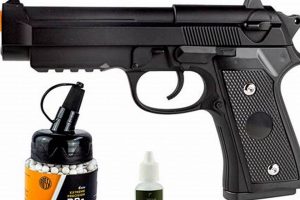
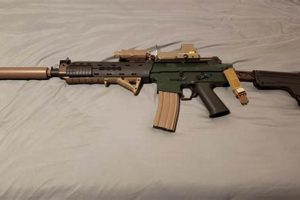
An airsoft mechanism that facilitates rapid firing is often categorized as a “repeater.” This typically refers to airsoft guns designed for semi-automatic or fully automatic operation, allowing for multiple projectiles to be launched in quick succession without manual cocking between shots. For example, an electric airsoft rifle (AEG) that can fire several BBs per second would fall under this classification due to its repeating capability.
The significance of a repeating airsoft gun lies in its enhanced effectiveness during skirmishes. The ability to rapidly deliver projectiles provides a tactical advantage in suppressing opposing players or quickly engaging multiple targets. Historically, the development of these mechanisms mirrors the evolution of firearms technology, with advancements in gas and electric systems enabling more efficient and reliable repeating action. These systems contribute to a more immersive and dynamic airsoft experience.
The remainder of this exploration will delve into specific types of repeating mechanisms, explore considerations for their maintenance, and examine their applications in various gameplay scenarios. This encompasses a detailed look at electric-powered (AEG), gas-powered (GBB), and spring-powered designs, focusing on their respective strengths and weaknesses regarding repeating functionality.
Airsoft Repeater
The following guidelines address effective use and proper upkeep for airsoft guns designed with repeating functionality. Adherence to these points will contribute to optimal performance and longevity of the equipment.
Tip 1: Battery Management (AEGs): Utilize high-quality batteries with appropriate voltage and discharge rates for electric airsoft guns. Over-discharging or using incompatible batteries can damage the motor and internal components, impacting repeating function.
Tip 2: Gas Pressure Regulation (GBBs/GBBRs): Maintain consistent gas pressure in gas blowback pistols and rifles. Fluctuations in pressure can lead to inconsistent cycling and reduced firing rates in repeating mode. Use regulated gas adapters where possible.
Tip 3: BB Quality & Compatibility: Employ high-grade, polished BBs that are compatible with the barrel diameter. Lower-quality BBs can cause jams and damage the internal mechanism, affecting the ability to repeat shots reliably.
Tip 4: Gearbox Maintenance (AEGs): Regularly inspect and lubricate the gearbox components of electric airsoft guns. Friction within the gearbox reduces efficiency and can lead to premature wear, hindering consistent repeating performance.
Tip 5: Magazine Reliability: Ensure magazines are clean and properly maintained. Faulty magazine springs or damaged feed lips can lead to misfeeds, interrupting the repeating cycle. Disassemble and clean magazines periodically.
Tip 6: Hop-Up Adjustment: Calibrate the hop-up unit appropriately for the weight of BBs being used. Incorrect hop-up settings can cause inconsistent trajectories and reduced range, diminishing the effectiveness of a repeating firing mode.
Tip 7: Cleaning the Barrel: Routinely clean the inner barrel to remove debris and residue. A dirty barrel can reduce accuracy and projectile velocity, impacting the overall effectiveness of the airsoft guns repeating function.
Consistent application of these maintenance procedures will ensure reliable repeating performance and extend the lifespan of relevant airsoft equipment. Prioritizing preventative care minimizes the risk of malfunctions during gameplay.
This concludes the section on practical advice for the optimal functionality of repeating mechanisms in airsoft applications. The following sections will cover advanced topics such as performance optimization.
1. Firing Rate Consistency

Firing rate consistency is a defining characteristic of a functional repeating airsoft mechanism. It is the measure of how steadily an airsoft gun can discharge projectiles within a given time frame. A consistent firing rate is imperative for maintaining a tactical advantage, as deviations can disrupt targeting, suppressive fire, and overall effectiveness in skirmishes. For example, an electric airsoft gun (AEG) exhibiting a fluctuating rate of fire, potentially caused by a failing motor or inconsistent battery output, will compromise its ability to consistently engage targets. This issue diminishes the benefits expected from a repeating platform.
Variations in firing rate stem from numerous factors, including inconsistencies in the power supply, mechanical wear within the gun’s internals, and even external factors like temperature impacting gas-powered systems. Therefore, understanding these factors allows for the implementation of targeted maintenance and upgrade strategies. Consider a gas blowback rifle (GBBR) experiencing cooldown effects in cold weather; the decreasing gas pressure directly impacts the firing rate, rendering rapid follow-up shots less reliable. Optimizing gas efficiency through the use of higher-pressure gases or insulated components can mitigate these fluctuations, thus promoting a more consistent firing rate.
In summary, firing rate consistency is integral to a repeating airsoft gun’s tactical application. Challenges arise from mechanical limitations, environmental variables, and maintenance neglect. Addressing these difficulties through proper maintenance, component upgrades, and environmental awareness ensures a reliable and predictable discharge rate, ultimately maximizing the benefit of the platform.
2. Mechanism Reliability

Mechanism reliability is fundamentally linked to the effectiveness of any repeating airsoft gun. The dependability of its internal mechanisms directly dictates its ability to consistently and accurately deliver projectiles. This section explores key facets of this relationship.
- Internal Component Integrity
The robustness of the internal components (gears, pistons, nozzles, and springs) within a repeating airsoft gun is essential for reliability. Weak or poorly manufactured parts are prone to failure under the stress of continuous operation. For instance, a stripped piston in an AEG will halt firing entirely, rendering the repeating function useless. Likewise, low-quality springs in a gas blowback system can lead to inconsistent cycling. Consequently, employing reinforced components, especially in high-stress areas, increases durability and reduces the likelihood of mid-game failures.
- Cycling Consistency
Cycling consistency defines the ability of the mechanism to complete each firing cycle in a predictable and repeatable manner. Erratic cycling can lead to misfeeds, jams, and inconsistent shot velocities, negatively affecting accuracy and overall performance. For example, a gas blowback system suffering from fluctuating gas pressure or a poorly tuned hop-up unit may exhibit inconsistent BB trajectory. Maintaining consistent cycling relies on proper lubrication, appropriate gas pressure (for GBBs), and well-matched internal components to ensure smooth, uninterrupted operation.
- Material Quality and Fatigue Resistance
The materials used in the construction of repeating mechanisms directly influence their resistance to fatigue and wear. Metal components, such as steel gears and aluminum alloy pistons, generally exhibit higher durability than plastic counterparts. Prolonged use of a repeating mechanism subjects its parts to repeated stress, leading to metal fatigue and eventual failure. The choice of materials, as well as design considerations, plays a crucial role in determining the service life of the airsoft gun’s repeating function.
- Proper Maintenance and Upkeep
Even the most robust mechanism requires consistent maintenance to ensure reliable operation. Neglecting lubrication, allowing debris to accumulate within the gearbox, or failing to replace worn parts significantly shortens the lifespan of the airsoft gun. For example, dried-out grease in an AEG gearbox increases friction, leading to overheating and premature wear of gears. Regular cleaning, lubrication, and inspection of critical components are crucial for sustaining the reliability of the repeating mechanism over time.
In conclusion, mechanism reliability is central to the functionality of any repeating airsoft gun. High quality components, consistent cycling, resistance to fatigue, and routine maintenance are key factors that influence reliability. The absence of any of these aspects compromises the repeating gun’s ability to perform effectively, ultimately impacting its utility in an airsoft environment.
3. Power Source Efficiency

Power source efficiency directly dictates the sustained performance of any repeating airsoft gun. The ability of the power sourcewhether a battery in an AEG, gas in a GBB, or spring in a spring-powered gunto consistently deliver energy over an extended period determines the airsoft gun’s effectiveness in skirmishes. Inefficient power sources lead to reduced firing rates, inconsistent projectile velocities, and a diminished overall operational lifespan. For instance, an AEG utilizing a low-quality battery may exhibit a significant drop in rounds per minute (RPM) as the battery discharges, negatively impacting its ability to provide sustained suppressive fire.
A critical factor influencing power source efficiency is the internal resistance within the power source itself. High internal resistance, commonly observed in substandard batteries or improperly maintained gas systems, leads to energy loss in the form of heat. This wasted energy not only reduces the available power for firing projectiles but also contributes to increased component wear and potential damage. To illustrate, a gas blowback rifle (GBBR) operating with a leaky magazine seal will experience a significant reduction in gas efficiency, resulting in fewer shots per gas charge and decreased consistency in each shot. Similarly, neglecting the lubrication of a spring-powered repeating system increases the force required to cycle the mechanism, reducing the user’s rate of fire.
Ultimately, the efficient use of power resources represents a pivotal component of a reliably functioning airsoft repeater. The selection of premium-quality power sources, alongside diligent maintenance to minimize energy loss, guarantees that the airsoft gun performs near its theoretical performance parameters. By understanding the relationship between power efficiency and operational performance, players can optimize their equipment setups to enhance their tactical effectiveness and avoid performance degradation during critical moments in gameplay. The ability to sustain a high rate of fire without significant power reduction directly affects an operator’s capability to suppress, defend, and engage targets, making efficient power management a cornerstone of successful airsoft repeater utilization.
4. BB Feed Integrity

BB feed integrity is a critical element directly influencing the reliable operation of any airsoft gun designed with a repeating function. The consistent and uninterrupted delivery of BBs from the magazine to the firing chamber is essential for maintaining the firing rate and overall effectiveness of these systems. Any disruption in this process compromises the gun’s ability to function as intended.
- Magazine Spring Tension
The spring within an airsoft magazine is responsible for pushing BBs upward towards the feed lips. Insufficient spring tension can result in weak feeding, causing misfires or inconsistent shot velocities. Over time, magazine springs can weaken, requiring replacement to maintain optimal feed performance. For example, a magazine that initially feeds flawlessly may begin to experience feeding issues after prolonged use, especially in high-capacity magazines that place greater stress on the spring. Proper spring tension is essential for a consistent and reliable feed cycle.
- Feed Lip Condition
The feed lips are the portion of the magazine that retains BBs before they are stripped into the firing chamber. Damaged, worn, or improperly shaped feed lips can impede the smooth release of BBs, leading to jams or double feeds. Cracks, chips, or distortions in the feed lips can disrupt the consistent positioning of BBs, negatively affecting the repeating function. For example, a magazine with cracked feed lips may release multiple BBs simultaneously, causing a jam in the hop-up unit or inner barrel.
- BB Quality and Compatibility
The quality and compatibility of BBs used in a repeating airsoft system directly impact the reliability of the feed cycle. Low-quality BBs with inconsistent sizing or surface imperfections can cause friction within the magazine and firing chamber, leading to jams and misfeeds. The BB size must also be compatible with the barrel diameter and magazine feed system to prevent obstructions. The usage of lower-grade ammunition will compromise the effective operation of a sophisticated weapon platform.
- Magazine Alignment and Seating
Proper alignment and secure seating of the magazine within the airsoft gun are essential for reliable BB feeding. A loose or misaligned magazine can disrupt the BB’s trajectory into the firing chamber, resulting in malfunctions. The magazine catch must securely engage the magazine to maintain consistent alignment and prevent wobble. For instance, if a magazine is not properly seated, the nozzle may not fully engage with the BB, leading to air leaks or inconsistent feeding.
These facets of BB feed integrity are interconnected and collectively determine the reliability of an airsoft repeater’s ability to consistently fire. Addressing potential issues in any of these areas will contribute to maximizing the performance and enjoyment derived from using these repeating platforms.
5. Internal Component Durability

Internal component durability represents a cornerstone of reliable airsoft repeater performance. The capacity of internal parts to withstand repeated stress under operational conditions directly determines the longevity and consistency of any such mechanism. Inferior component endurance leads to malfunctions, diminished firing rates, and ultimately, a shortened service life. The following details define specific facets of component durability in the context of airsoft repeaters.
- Gear Material Composition
The material composition of gears within an AEG (Automatic Electric Gun) gearbox is critical. Steel gears, for example, possess greater tensile strength compared to their polymer counterparts, enabling them to endure higher torque loads and resist wear over sustained operation. Polymer gears, while lighter and quieter, are prone to stripping or cracking under the cyclical stress of rapid firing. The selection of gear material directly impacts the reliability and service life of the repeating mechanism.
- Piston Head Integrity
The piston head, responsible for compressing air within the cylinder, experiences significant force with each cycle. A piston head constructed from brittle plastic may fracture under the impact, compromising the air seal and resulting in reduced projectile velocity. Upgrading to a reinforced piston head, often made from aluminum or durable polymers, enhances impact resistance and prolongs the component’s operational lifespan. This enhanced integrity ensures consistent air compression, essential for maintaining a stable firing rate in a repeating system.
- Nozzle Material and Design
The nozzle, which feeds BBs into the hop-up chamber, is subject to repetitive movement and friction. A nozzle constructed from flimsy plastic is susceptible to cracking or deformation, leading to misfeeds and air leaks. More robust nozzles, fabricated from metal or reinforced polymers with improved design tolerances, provide greater reliability and resistance to wear. The selection of quality nozzles will directly influence BB feed and sustained operational efficiency.
- Spring Fatigue Resistance
Springs within both AEGs and gas blowback systems are continuously compressed and released during operation. Over time, springs can lose their tension, resulting in reduced power output and inconsistent firing rates. The spring’s material properties and manufacturing process determine its resistance to fatigue. High-quality springs maintain their tension for a longer duration, ensuring consistent performance over extended use, thereby contributing to a more reliable repeating mechanism.
The preceding points illustrate the direct relationship between internal component durability and the overall reliability of an airsoft repeater. A strategic focus on component material composition, design, and fatigue resistance is crucial for optimizing airsoft gun performance and minimizing downtime due to malfunctions. Investments in high-quality parts are frequently reflected in the operational longevity and consistent performance of repeating mechanisms.
6. Trajectory Stability
Trajectory stability is a paramount consideration in the effectiveness of any airsoft repeater. It dictates the consistency and predictability of projectile flight paths, directly influencing a player’s ability to accurately engage targets. Variations in trajectory negate the advantages of a high firing rate, as the spread of projectiles renders precise targeting impossible.
- Hop-Up System Effectiveness
The hop-up system imparts backspin on the BB, creating lift and extending range. An improperly adjusted or malfunctioning hop-up leads to inconsistent backspin, causing BBs to curve unpredictably. Insufficient backspin results in BBs dropping prematurely, while excessive backspin causes them to rise excessively. For example, a worn hop-up rubber bucking may fail to grip the BB uniformly, producing erratic trajectories. Optimizing the hop-up system ensures a stable and consistent projectile path.
- Barrel Quality and Consistency
The inner barrel’s bore dimensions and surface finish significantly influence trajectory stability. A barrel with inconsistencies or imperfections can impart uneven friction on the BB, causing deviations from the intended path. For instance, a barrel with a tight spot can increase friction on the BB, causing it to veer off course upon exit. High-quality, precision-machined barrels promote consistent projectile flight, reducing the occurrence of erratic trajectories.
- BB Weight and Quality
The weight and quality of BBs directly impact their susceptibility to external factors like wind. Lighter BBs are more easily affected by wind, resulting in significant trajectory deviations. Unevenly manufactured BBs with inconsistent weights or surface imperfections can also contribute to trajectory instability. Utilizing heavier, high-quality BBs minimizes wind drift and promotes more consistent flight paths, especially in outdoor environments.
- Air Seal Consistency
Consistent air pressure behind the BB is crucial for repeatable shot-to-shot trajectories. Leaks within the air compression system cause pressure variations, leading to inconsistent velocities and trajectory instability. For example, a leaking piston head or nozzle in an AEG can reduce the air pressure behind the BB, causing it to travel a shorter distance with a less predictable path. Maintaining a tight air seal is necessary for achieving stable and repeatable trajectories, particularly in repeating systems where multiple shots are fired in quick succession.
These facets of trajectory stability directly influence the practical application of a repeating airsoft gun. Optimizing each aspect allows for more accurate and predictable shot placement, maximizing the effectiveness of the increased firing rate. Variations in these areas diminish the potential benefits of a repeating platform, rendering precision targeting unreliable.
7. Effective Range Maintenance
Effective range maintenance is intrinsically linked to the operational value of any airsoft repeater. The ability to consistently engage targets at a desired distance directly influences the weapon’s utility in diverse tactical scenarios. Neglecting factors that sustain effective range compromises the airsoft repeater’s suppressive capabilities and reduces its overall effectiveness.
- Hop-Up Unit Calibration
Precise calibration of the hop-up unit is paramount for maximizing effective range. This adjustment imparts backspin on the BB, counteracting gravity and extending its flight path. Improper calibration, whether insufficient or excessive, diminishes effective range by causing the BB to either drop prematurely or rise beyond the intended trajectory. For instance, in outdoor settings, seasonal temperature variations can influence hop-up rubber elasticity, necessitating recalibration to maintain optimal range performance. Hop-up adjustment serves as the initial step in range maintenance.
- Air Seal Integrity
Maintaining a consistent air seal throughout the air delivery system directly impacts projectile velocity and, consequently, effective range. Air leaks within the piston head, nozzle, or cylinder reduce the pressure propelling the BB, leading to decreased range. Routine maintenance, including lubrication and replacement of worn O-rings, is essential for preserving air seal integrity. A compromised air seal results in diminished performance of any airsoft repeater platform.
- Inner Barrel Condition
The inner barrel’s bore diameter and surface finish significantly influence effective range. A clean, polished barrel reduces friction, allowing the BB to travel more efficiently and maintain its velocity over a longer distance. Buildup of debris or imperfections within the barrel increases friction, slowing the BB and diminishing range. Regular cleaning and the use of high-quality inner barrels are crucial for sustained range performance. An airsoft repeater barrel free of obstructions ensures maximum velocity and range potential.
- Consistent Ammunition Quality
The weight, roundness, and surface finish of BBs directly impact their flight characteristics and, consequently, effective range. Variations in BB quality can lead to inconsistent trajectories and reduced range. Utilizing high-quality, precisely manufactured BBs minimizes these variations and promotes predictable flight paths. Choosing appropriate, high-grade BBs is vital to maintaining consistent shot placement and reliable extended range. Consistent BB quality enables repeatable performance.
These elements collectively contribute to the maintenance of effective range for an airsoft repeater. Addressing each facet through diligent maintenance and component selection ensures consistent performance at the intended engagement distances. Neglecting these factors diminishes the tactical advantage afforded by repeating fire, rendering the airsoft repeater less effective in diverse game scenarios. A well-maintained system equals greater distance accuracy and power.
Frequently Asked Questions
The following addresses commonly raised inquiries regarding airsoft mechanisms designed for rapid or sustained firing, often categorized under the descriptor “repeater.” These answers aim to provide clarity and dispel misconceptions about their operation and maintenance.
Question 1: What defines an airsoft gun as a repeater?
An airsoft gun qualifies as a repeater if it can fire multiple projectiles in rapid succession without requiring manual cocking or reloading between each shot. This functionality is typically achieved through gas-powered, electric-powered, or spring-powered mechanisms engineered for semi-automatic or fully automatic operation.
Question 2: How does a gas blowback (GBB) repeater function?
A GBB repeater utilizes compressed gas, typically CO2 or green gas, to propel BBs. Upon trigger pull, a portion of the gas is released to propel the BB down the barrel and cycle the action, cocking the hammer or striker for the next shot. The repeating action continues as long as the trigger is depressed and gas is available.
Question 3: What are common maintenance requirements for electric airsoft gun (AEG) repeaters?
AEG repeaters require regular maintenance of the gearbox, including lubrication of gears and piston components. Proper battery care, using the correct voltage and discharge rate, is also critical. Additionally, barrel cleaning and hop-up adjustment ensure consistent performance.
Question 4: What are the limitations of spring-powered airsoft repeaters?
Spring-powered repeaters typically require manual cocking between each shot, limiting their rate of fire compared to gas or electric models. Some advanced spring systems exist with mechanisms to increase firing rate, however spring mechanisms in general offer limited repeating functionality compared to other platforms.
Question 5: What factors affect the effective range of an airsoft repeater?
Effective range is influenced by factors such as BB weight and quality, hop-up adjustment, barrel length and quality, and air seal integrity. Optimal range requires a balanced configuration of these elements.
Question 6: What types of BBs are recommended for use in airsoft repeaters?
High-quality, polished BBs with consistent sizing and weight are recommended. Lower-quality BBs can cause jams, inconsistent trajectories, and potential damage to the internal mechanisms of a repeater.
Understanding these fundamental aspects enhances the user’s comprehension of airsoft repeater systems, fostering informed equipment choices and appropriate maintenance practices.
The following concluding thoughts will summarizes all about this article
Airsoft Repeater
This exploration of “airsoft repeater” mechanisms has highlighted the vital balance between firing rate, reliability, and maintenance. The effective utilization of such systems hinges on understanding their power sources, feed mechanisms, and the crucial role of internal component durability. Trajectory stability and effective range maintenance are also essential for maximizing tactical advantage. The variety of mechanisms is significant and should be taken into consideration.
The continued advancement of airsoft repeater technology promises enhanced gameplay experiences. By emphasizing responsible use, meticulous maintenance, and a commitment to quality components, players can ensure the longevity and optimal performance of these systems. Continued research and diligent care will sustain the role of the airsoft repeater as a valuable tool in simulated combat scenarios.